Nearly Showtime

With the extremely loud noise rumbling from the main theater, concrete dust in the air and 40-odd construction workers running around, one might think the Wells Fargo Center for the Arts would be clearing out its calendar. But in the lobby last week, wearing a hard hat and going over plans amid the constant clamor, executive director Rick Nowlin casually mentions—in a raised voice to cut through the noise—”We have a wedding here on Saturday.”

“Believe it or not,” adds Mark Hagenlocher, director of operations, “we’re in the home stretch here. Our first show is 16 days away.”

In the midst of a $2.8 million remodel that will give the main theater at the 30-year-old performing arts center new floor seats, a new sound system and a drastically overhauled stage and backstage area, the center’s staff is surprisingly calm. They’re confident that the center will reopen on schedule, with the changes boosting the center’s stature in an increasingly competitive industry.

“All of our wish list has been checked off,” says Hagenlocher.

For the main theater, this includes new seating on the floor that can be removed for standing-room-only shows; new raised ADA platforms; a new sound system and speakers; and the removal of two bulky speaker towers and piano storage boxes on either side of the stage, resulting in unobstructed views from the “cheap seats.” New LED aisle lighting, a new color scheme of gray and burgundy and a raised stage are all coming in the next week.

Behind the scenes are fixes that audiences may not notice directly, but will improve the booking capabilities of the center. A baptismal font from the building’s former use as the Christian Life Center has been removed, and along with it a nine-foot platform that performers once needed to walk over to get to the stage. Crews loading in equipment had to do so through the front doors and down the aisle of the theater; now, new eight-foot doors allow load-in from the outside. For the first time, fire sprinklers will be installed, and a raised heating and air conditioning system means 10 feet of extra space above the stage.

“When you have the Peking acrobats in here,” Hagenlocher says, “they’re not going to be scraping the ceiling.”

The remodel comes at a pivotal time for the center, after what Nowlin calls “a rough few years,” echoing most nonprofits weathering the recession. A sale of land for the construction of Sutter hospital next door gave the center a financial cushion, but about 20,000 square feet of the building, rented out to a series of private and charter schools over the years, has been mostly empty since 2011. “The loss of the school was a significant hit. That’s $700,000 of revenue,” says Nowlin. “It helped fund a lot of what we do.”

Then there’s the new Green Music Center at SSU, which in its first year hosted several acts that in the past had played the Wells Fargo Center. But because the Green Music Center’s specialty is in acoustic-based performance, Nowlin says, the Wells Fargo Center can focus now on amplified shows. (Removable seats to create a dance floor are long overdue; Hagenlocher predicts, “We’re gonna have a ballet one day, a hard rock band the next day and an educational show the next.”) The relocation of the Santa Rosa Symphony to the Green Music Center, too, allowed the Wells Fargo Center to rethink the acoustics of the theater, remove bulky choral risers and take over symphony storage.

“We really see ourselves as complementary to what they do,” says Nowlin.

Built in 1974 as the Christian Life Center before turning into a performing arts center in 1981, the former Luther Burbank Center entered into a naming-rights deal with Wells Fargo in 2005. Though that deal expires in 2015, “We’re in discussions right now with Wells Fargo to extend it,” says Nowlin.

Future phases of the center’s remodel include elevators, balcony and restroom renovation, landscaping, a new roof, new windows and doors, a paint job and repaving the parking lot. The total price tag for all phases is $10 million, to be raised from sponsors and community partners. (Like many performing arts centers, ticket sales pay for only a fraction of the center’s overall operating costs.)

The first show in the renovated theater is set for Aug. 16 with Patti LaBelle, in a theater finally distanced completely from its former life as a chapel.

Reminded of the long tradition of artists joking about performing inside a church, Nowlin nods knowingly. “Hopefully,” he says, in the final stretch of renovations, “we won’t hear that anymore.”

Rags to Romance

Like all media-based industries, publishing has seen its share of digital disruption. Unlike the music and film biz, however, the seismic shifts caused by Kindles, iPads and their lot have had direct benefit for the creative people behind the work. Writers, who often have stopped just short of human sacrifice to score a traditional publishing deal that would net a mere 7 percent royalty off the cover price, are now able to go it alone with little to no overhead and a worldwide market at their fingertips.

Among the thousands of authors successfully charting their own path is Sonoma-based author Bella Andre, who recently inked a seven-figure deal with romance imprint Harlequin MIRA for her popular series The Sullivans.

How, you ask, can Andre have her indie publishing cred and a major contract, too?

Andre is a “hybrid author,” the term publishing professionals use to describe writers whose careers straddle both the worlds of traditional and self-publishing. More to the point, as a hybrid, her deal represents only the print rights in the United States, Canada and Britain—the ebook, audio book, film, TV and foreign-language rights remain resolutely hers. This is significant because most publishing houses try to sew up these often lucrative rights, frequently leveraging the author’s ignorance of their worth in the process.

“I wouldn’t have done the deal otherwise,” says Andre, speaking by phone from a hundred-year-old log cabin in the Adirondacks, where her family spends their summers.

Andre had already been published by three of the big six New York publishers, but in 2010, Random House elected not to pick an option on a forthcoming slate of books. A colleague suggested that the author publish directly to Kindle e-readers using Amazon’s self-publishing platform. She posted some works from her back catalogue and soon saw results. They weren’t staggering numbers—at first—but they were sufficient for Andre to double-down on the prospect of self-publishing.

“I sold 161 copies that first month, and it was super-exciting. I was like, ‘Hey, I’m gonna do this thing,'” says Andre. “Fast forward three years, and I’m right around the 2 million mark on self-published ebooks.”

Last summer, Andre debuted on the New York Times bestseller list with three self-published ebooks from The Sullivan series simultaneously. All the major publishers expressed interest in working with her. “I was just very clear with all of them from the outset that ‘I’d love to see my books on bookshelves, but I’m not giving up my digital rights,'” says Andre, who wryly adds, “‘Really, you couldn’t afford them.'”

Harlequin MIRA “didn’t mess around,” says Andre. “They were like, ‘We get it. We understand that you are dead serious when you say that the only thing we can have are English-language print rights.’ So our negotiations from day one were just for that.”

Since June, Andre’s series has been rolled out in continuous back-to-back releases. The latest title, Can’t Help Falling in Love, just hit stores last week. Meanwhile, the ebook version of the tale about a San Francisco firefighter with professional boundary issues who emotionally obsesses over a mother and daughter he saves, is available online at Amazon, iBooks and a bevy of online retailers as an ebook, with profits going more directly to the author herself.

“I really am committed to the digital business that I run, and I do it very well,” Andre says. “I really like being in charge of that, and I just was not interested in passing that off.'”

Though excited early in her career to be published and have her books on bookshelves, the feeling waned as Andre grew frustrated with the lack of control she had over how her work was managed and marketed.

“I was never the author that they threw the money behind, that they threw the marketing behind,” says Andre. “When I started self-publishing, it was just exciting to be in charge of the covers, writing whatever I want, the title, the book descriptions, all the pieces that I always felt that perhaps I could do better because I knew my readership. I am my readership—I’m a romance reader—and I know them so well. I’m with them on Facebook and Twitter all the time, and email.”

Of course, the transition from author to a one-woman media empire takes a significant investment of time. By Andre’s estimate, she works 12 to 16 hours a day, seven days a week and has done so for the past three years. Somehow, she also manages to fit publishing conference keynote speeches into her schedule.

“I’m not gonna lie and say I’m not tired, because I am. I’m tired. But you know, when you have all these readers and they’re so excited—it’s like, I put the book out, and by the end of that day they’re asking when is the next one? I just have to say, ‘Soon, you know, because I have to write it!'” says Andre. “There’s never been a better time to be a writer.”

For more information, visit bellaandre.com.

Heaven’s Cate

Woody Allen’s Blue Jasmine, partially filmed in San Francisco and Marin, is more ambitious than his recent rom-com travelogues—it’s a tragi-comic rephrase of A Streetcar Named Desire. (The play means a lot to Allen; 40 years ago, he personally burlesqued Blanche DuBois in Sleeper.)

Cate Blanchett, who recently toured as Blanche in revivals of Streetcar from Sydney to New York City, plays the penniless Jasmine. With no choices left, she descends into the San Francisco flat of her all-forgiving sister, Ginger (Sally Hawkins of Happy-Go-Lucky), a friendly grocery store clerk in the Mission. Allen shuttles through time so we can see Jasmine when she was riding high a few years previously as the pampered, bubble-bath-soaked wife of Wall Street baron Hal (Alec Baldwin). Jasmine trusted him utterly, even while an Alec Baldwin character is never to be trusted.

Jasmine works her way back from this plummet, finding a last chance at love with a gentleman caller. The new man (Peter Sarsgaard) is a Tiburon princeling with political ambitions.

Allen splits the apish Stanley Kowalski figure into two separate men. Hawkins’ first husband is played in a comeback role by Andrew Dice Clay, who’s improved, though he’s still Andrew Dice Clay. Ginger’s later beau, Chili (Bobby Cannavale with an Italian version of a Human League haircut), is a garage mechanic who sees through Jasmine’s fancy airs and French perfume.

The Spanish cinematographer Javier Aguirresarobe tries to visualize the dull compliments Allen’s characters pay the City: “It’s so Mediterranean,” they exclaim. “If you can’t fall in love here, you can’t fall in love anywhere.” When on the Marin bay shore, Allen has the sense to turn the camera for a long appreciative view of the water. But he gets no excitement from the Mission. It’s as if Allen envisioned the area as Queens, and once he did, he couldn’t unsee that vision.

Jasmine is rich material for Blanchett. She doesn’t have Tennessee Williams’ language, nor the throbbing accent, but she gets to seethe with craziness, to mutter with it, to sweat through her Chanel suits. If Jasmine isn’t crushed, she gets mauled a little by a drippy pawing dentist, played richly by Michael Stuhlbarg: “You can learn an awful lot about people by looking at their mouths.”

Such gags work—they’re what Allen does best. And Blanchett’s acting will be aptly described as forceful when awards season comes. Yet maybe the word “forceful” isn’t analyzed as it ought to be—doesn’t it define a performer taking something unworkable and trying to beat it into submission?

‘Blue Jasmine’ opens Friday, Aug. 9, at Summerfield Cinemas, 551 Summerfield Road, Santa Rosa. 707.522.0719.

‘Like a Zombie Movie’

0

“We’re all very lucky to be alive,” says Kalei Yamanoha, accordionist for Gypsy-klezmer project Oddjob Ensemble, the day after a horrific car accident on I-80 in Nevada. The crash happened at about 5pm as the band, which features members of Church Marching Band and the Crux, headed to play some shows in Colorado.

“The driver hit the rumble strip on the side of the road, veered off and overcompensated,” says Yamanoha. “The car started veering back and forth, lost control and we flipped four times into the median.”

Everyone was wearing their seatbelts, and once the 1995 Mercedes station wagon stopped—landing upside down—all inside were able to walk away. “When we all crawled out of the car, we were covered with blood and dust,” explains Yamanoha. “It was like a scene out of a zombie movie.”

Within minutes, about 10 Samaritans, including an off-duty EMT, stopped to help. Clarinetist Travis Hendrix busted his lip, fiddler Annie Cilley hit her head and cut her shoulder on a broken window, trumpeter Josh Jackson got minor abrasions to the head and arms, and Yamanoha suffered tissue damage in his back. An upright bass and violin were destroyed, and the car was left totaled in a Nevada tow yard.

But the accident won’t stop the musicians from getting back out on the road. There’s a Crux tour in a month, and Church Marching Band plays the Wunderkammer Festival in Santa Rosa’s Railroad Square on Aug. 25.

“The way the accident happened, I’m surprised we’re all walking and OK,” adds Yamanoha, the shock still evident in his voice. “This is what we do for a living, so we’re not going to stop.”

Going Hungry

As the hunger strike by California state prisoners protesting solitary-confinement conditions entered its third week, at least six activists blocked the entrance to the state building in downtown Oakland on Aug. 5. Around 300 prisoners continue to refuse food as part of a mass statewide protest that began at the Pelican Bay State Prison solitary unit, where some prisoners have been held for years (one inmate has been in solitary for 42 years, according to a recent Mother Jones article) without access to phone calls or family. Carl Patrick, a Petaluma-raised activist, told a reporter from CBS that the goal of Monday’s protest was to call on Gov. Brown and the California Department of Corrections and Rehabilitation to enter into “meaningful negotiations with the prisoners.” By the end of the day, at least seven arrests had been made after activists entered the lobby of the building.

OCCUPY MEDIA

Want to learn how to get your point across to newspapers, radio and other media outlets? Peter Phillips, professor of sociology at Sonoma State University and former director of Project Censored, leads a basic media skills training on Aug. 12. Attendees will get tips on how to write press releases and public service announcements, how to organize a media campaign and how to develop interview skills and talking points. The pre-registration deadline is Aug. 9; donations are requested. The event is sponsored by Occupy Sonoma County on Monday, Aug. 12 at the Unitarian Universalist Congregation. 547 Mendocino Ave., Santa Rosa. 6:30pm. $5–$20 donation. For more information, contact em*****@****co.org.

Spirit Works

0

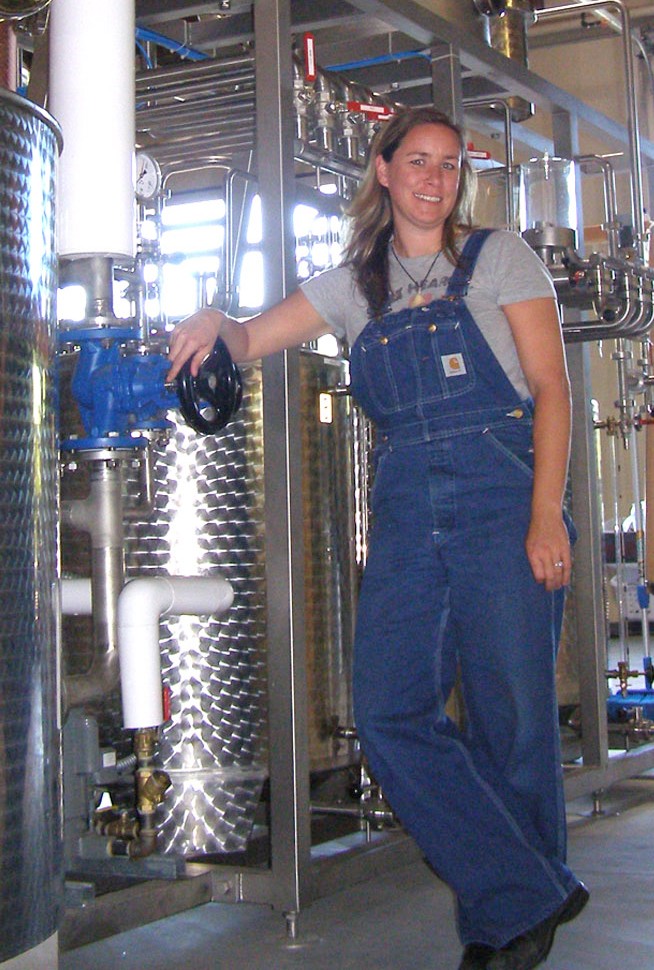
Gin. Blamed for the ills of society in the 1700s, studiously eschewed by young drinkers today in imitation of a fictional secret agent’s preference for vodka martinis—shaken, not stirred—the spirit has hardly been hailed except as a melancholy pairing with an anti-malarial tonic favored by British colonials. But, says a young couple now bringing craft-made gin to Sebastopol, you don’t know proper gin until you’ve sampled a dram of theirs.

Husband and wife team Timo and Ashby Marshall recently opened Spirit Works Distillery in Sebastopol’s Barlow project after a four-year journey that began when they decided, “Let’s make gin.” Timo’s from southern England, where his family has made sloe gin for years. But it’s Ashby who became the master distiller, after the couple took distilling courses and apprenticeships to learn the craft. “We’re very lucky,” says Timo, who does much of the talking while Ashby covers most of the wry smiling. “She’s got the skills.” In distilling, they say, there’s a knack for it which mere instruction can’t provide.

At first, the Marshalls cast about for a distillery to partner with, but they couldn’t find any in California up to their standards. “There’s a lot of smoke and mirrors in spirits,” says Timo. For instance, many craft distillers use bulk alcohol from a factory. The Marshalls decided to make theirs from grain to glass. With the help of family-and-friends investors, they installed a gleaming set of German-made tanks and copper rectification columns in their Barlow warehouse.

Each batch starts with a one-ton pallet of organically grown, California red winter wheat. After being distilled to a purity of 95 percent, then cut with filtered water, it’s vodka, a small sample of which is as pure and creamy as straight booze can be on the palate. A signature blend of herbs and citrus rind, which Ashby zests on production days, go into the final gin cook.

If you thought Bombay Blue Sapphire was as good as it gets, here is new territory on your tongue. With a deep note of citrus and ethereal notes of juniper and herbs, it’d be a shame to dirty this up with olives and whatnot, whether stirred or shaken. Under current law, Spirit Works cannot sell product out of the tasting room (“A Fair Pour,” Bohemian, April 3, 2013); it’s going for about $28 at Santa Rosa’s Bottle Barn.

Luckily for the G&T crowd, yes, artisanal tonic made in California is now available. Straight wheat whiskey is on the way, which will be aged in charred American oak barrels, plus sloe gin—”Not the stuff,” says Timo, “you drank in high school.”

Spirit Works Distillery, 6790 McKinley St., Ste. 100, Sebastopol. Thursday–Monday, 11am–4pm. No fee. 707.634.4793.

Magic Act

0

‘Torture! That’s the best word for it. Torture!”

Rohnert Park actor and educator John Craven is describing the wildly complicated character of Prospero, the primary protagonist of William Shakespeare’s tragicomic play The Tempest.

“And if torture is what Prospero is feeling, then that’s exactly what I’m feeling,” Craven says with a gentle laugh. “This is a very tough role, Prospero. It’s a real challenge, and every rehearsal brings huge new discoveries. It’s pretty tough.”

Ah, the life of a Shakespearean actor.

The Tempest—with Craven in the lead, Sheri Lee Miller directing and a crack team of local all-stars filling out the colorful cast—opens a three-week run this weekend at Sebastopol’s Ives Park, part of Main Stage West’s Sebastopol Shakespeare Festival. Of course, along with its complexity and depth, and despite the sufferings of its central character, The Tempest is also one of Shakespeare’s sweetest, funniest, most magical, most emotionally satisfying plays.

Once the Duke of Milan, the embittered magician Prospero has spent years on a mysterious island. Marooned long ago by traitors (Peter Downey, Anthony Abate), Prospero has raised a daughter (Rachel Quintana), all while mastering the art of magic, preparing for the day he might exact revenge on those who put him there. When those enemies, traveling across the sea, finally do sail within sight of his island, Prospero summons the tempest of the play’s title to shipwreck them all—and what begins as Prospero’s revenge turns into something different, as the old man discovers a long lost sense of hope, humanity and forgiveness.

And then there’s some stuff about a drunken butler (Eric Thompson), a troubled monster named Caliban (Keith Baker) and the beautiful spirit Ariel (Danielle Cain), who is smarter than everyone and does awesome magic tricks. Beneath it all, says Craven, the play is about growing old, but it’s also about growing up and growing wise.

“Prospero,” Craven explains, “has come to a place where he’s wrestling with all kinds of different feelings, struggling with his own sense of wounded humanity. He knows he couldn’t survive without forcing the two residents of the island, Ariel and Caliban, to work for him, and that eats at him, it bothers him. And at the same time, he has a daughter to bring up, and the fear that he might die and leave her alone on this island—well, there’s the torture again.”

Though Craven—long considered one of the best and most dependable actors in Sonoma County—has played many parts over the years, he’s only tackled Shakespeare twice. He played King Leontes in The Winter’s Tale at Cinnabar and the melancholy Jacques in As You Like It at the Sebastopol Shakespeare Festival. But he’s never faced a Shakespearean character as complex and rich as Prospero. It’s largely through the guidance of director Miller, Craven says—with whom he’s worked extra hard to dig beneath the surface—that he’s come to understand Prospero, whom he says he never really thought about playing until asked.

“I’m part of a company,” he says simply, “and they decided to do this play, and I said yes. I never dreamed of playing this part, like some actors do, but now that I’m doing it . . . well, it’s like I said.”

Yes, of course—torture. But, in this case, it’s the very best kind of torture. And just like Prospero, Craven knows that it is never too late to learn new things.

“Every day, at every rehearsal,” Craven says, “I go in with a blank slate, ready to work with Sheri, ready to engage with the cast, ready to learn.”

Flavor Trippin’

0

Hey, you. ‘Sup? Do you party? Yeah, me too. Hey, I’ve got something I bet you’ve never tried. Wanna go into the kitchen and take a hit? Yeah, it’s just this little red tablet. Let it dissolve on your tongue—don’t rush it, or it won’t work. Now taste this lemon and try not to freak out, OK? Weird, right? It’s sweet! It’s not sour at all! Here, try a lime.

The tablet I gave you is Synsepalum dulcificum, sold as miracle fruit, a completely legal, organic berry that can be grown in your house, even. It turns sour into sweet, but preserves all other flavors that go into your mouth. That means that, though it will be sweeter, the banana will still taste like banana, the strawberry like strawberry and the snozberries taste like . . . well, you get the picture. Cool, right? Keep eating stuff, try different things. It’ll last for about two hours or so, but be careful not to eat too many lemons—just because you can’t taste the sour acidity doesn’t mean it won’t burn a hole in your gut if you eat too much.

Have you ever had pineapple—on miracle fruit? Oh, man, it’s, like, soooo much more intense. It’s like someone put a pineapple inside a pineapple and covered it with a pineapple-reduction sauce. The sweetness is unreal, it’s like a different kind of sweet, like stevia or agave or something. It’s not quite like sugar, but it doesn’t taste fake like Splenda, either. Oh, and Greek yogurt is like soft serve ice cream. Just right out of the container. The best kind is the nonfat, because it’s a little more sour. The more sour something is, the sweeter it tastes when you’ve popped a miracle fruit.

Let me warn you, though: everyone has a different reaction. Some feel a stronger flavor shift, and some apparently taste bitter foods as somewhat sweet. I don’t have that reaction. I tried balsamic vinegar, like someone suggested, and, damn, it was nasty. It was like taking a sip of really bad vinegar, like worse than normal. And onions? Forget it. It enhanced the spiciness and raw flavor of the onion. It was pretty much unbearable. Some people say Guinness beer is tastier on miracle fruit, but I think it still tastes like delicious Guinness beer, with little or no change.

The berry comes from West Africa, and has been eaten there by indigenous peoples for hundreds of years. It was discovered by the Western world by explorers in the 18th century. It works through the protein miraculin, which binds to taste buds and induces sweetness when it comes in contact with acids. Sounds like a James Cameron movie, right? Too fake to be real, like mining an alien world for “unobtanium.” But it’s real, and I can get it for you whenever you want. Just give me, like, $2 per hit. That’s the friend price, you know.

Of course there are other foods that change the chemistry of flavor. Anyone who’s eaten spicy food knows the relief that comes from sugar, especially dairy sugar. I once absentmindedly touched my finger to my lips after cutting habañero peppers, and spent the next hour with my face covered in yogurt and sour cream, moaning in pain and screaming at everyone, “This isn’t funny! It hurts!” Dairy was the only thing that helped.

And there’s salt to counteract bitterness. I used to get the weirdest looks when I’d go into the coffee shop by the office and put a dash of salt into my black coffee. But, hey, the coffee shop made bitter coffee and I didn’t like cream, so this helped me get a caffeine fix without sacrificing too much taste.

But, boy, this miracle fruit. Ya know how pot is used to help cancer patients and stuff? Miracle fruit could seriously help diabetics curb their sugar craving. Instead of satisfying a sweet tooth with a cookie-inspired insulin spike, pop a miracle fruit and eat some unsweetened Greek yogurt. It’s nutritious and has probiotic properties, which aids in digestion. It’s all good, right? Wrong.

Even though it’s legal to buy, consume and sell, its extract is classified as a food additive and would be subject to USDA review, which would take years. In fact, in 1974 Robert Harvey was all set to launch a company selling the berry’s extract, primarily marketing it as a health product to diabetics. The USDA had been on his side, leading him to believe it would be labeled “generally recognized as safe.” He was all set to market products like “miracle berry lollies,” which tested better than regular ones with focus groups.

But a week before the launch, the USDA changed its mind and classified it as an additive, requiring more years of testing. Harvey couldn’t afford it, and the company folded before it even began—some say because of behind-the-scenes finagling from the Sugar Association, a sugar-industry lobbyist (not a soul pop group from the ’70s, as I first suspected).

But, hey, at least we can still get the tablets and berries for home use. I’m gonna get some people together and have a flavor-tripping party. Put a bunch of sour stuff out and give everyone a hit of miracle berry. Wanna come? It’s just two bucks a hit—friend price.

Me + Eat = Meat

0

There are two ways to view Cochon 555 Heritage Fire in St. Helena. With close-up photos of chefs, maybe set to some Ratatouille-esque jazz and lots of posed, happy smiles, it looks like a high-end, winery food event. But that wouldn’t be Cochon.

No. It’s so tied to fire and meat that it used to be called “Primal.” Cochon tours 13 cities and crowns a “King and Queen of Porc” (won in 2011 by Santa Rosa’s Duskie Estes and John Stewart of Zazu). Because of this, it’s best imagined through photos of wide-eyed chefs in bloody butcher coats, knife in hand, laughing maniacally while staring at a flayed-out side of beef on a makeshift cross tilted over a massive bonfire while huge, slow, doom-metal guitar riffs from Sunn o))) and Isis shake rib cages of the living. Specters of slaughtered pig, goat, squab, thresher shark, sturgeon, duck, cow, rabbit, lamb, lobster and chicken haunt the grounds, their spirits permeating the bones of all who consume them. Oh, and there’s wine, too. Like, really, really good wine.

The chef list reads like a who’s who of cooking, with meat masters from the Thomas, A16, French Laundry, CIA at Greystone, Fifth Floor and many others. Cochon 555 Heritage Fire takes place Sunday, Aug. 11, at Charles Krug Winery. 2800 Main St., St. Helena. 3pm. $125–$200. 707.967.2200.

Angry Grousing About Housing

0

Marinwood is a quiet suburb between San Rafael and Novato, where three-bedroom homes with backyard pools circle green, undeveloped hills. On a Wednesday evening in June, it was also the setting for a town hall meeting that would later be likened to a lynch mob.

Held by Supervisor Susan Adams, the gathering at the Marinwood Community Center on June 26 began with a simple presentation on proposed zoning changes but quickly devolved into hysterics. Residents packed the large room, standing in doorways and leaning in open windows, waving signs that said “Democracy, Not Autocracy” and showed apartment homes crossed out. Shouts of “No, no, no!” drowned out the official when she tried to speak. One woman commandeered the microphone, taunting Adams by pretending to hand it back again and again as the supervisor grabbed at air.

Finally, in a line that would echo infamously through the fair-housing community, real estate agent Melissa Bradley told Adams she’d “volunteered Marin for the ghetto.” Throughout the hour and 45 minutes, Adams tried to answer questions, looking flustered as she lost control of the room.

That housing is a big deal in no-growth Marin is hardly news. Spurred by the perceived threat of apartment complexes, communities in the wealthy county have so far neglected to zone for low-income housing, in violation of state law, and then been sued; zoned for low-income housing on the sites of existing businesses that may not intend to sell; and, in the case of Corte Madera, withdrawn altogether from the regional planning agencies that oversee this kind of zoning.

Still, recent months have seen this polarized debate give rise to behavior that is downright bizarre—not just in the form of meetings like the one described above, but also in a recall effort against Adams, which would cost as much as $250,000 and oust the supervisor from office only months before she faces a general election anyway.

How did this happen? After all, as Carla Marinucci pointed out in a recent San Francisco Chronicle piece on the county’s current incivility, Bush-era Marin County was supposed to be a Greenpeace mecca of laissez-faire hippies soaking in backyard hot tubs. It continues to be caricatured as a rosy-vibe utopia policed by the handholding Kumbaya Patrol, not a place where mob mentality sweeps town halls.

Is this chaotic mass opposition to housing the byproduct of top-down leadership on the part of local government, as some claim? Is it hysterical fear of Big Development in the wake of mortgage plummets, national bailouts and an economic machine that many no longer trust? Or is it really as ugly as it looks from the outside—wealthy suburban privilege at its worst, organizing to keep renters, low-wage workers and recent immigrants far, far away.

A common theme at meetings in Marinwood and elsewhere is the notion that information is being withheld. Carol Sheerin, one of the founders of the Susan Adams recall effort, says the anger on display in Marinwood comes partly from a feeling of futility: suddenly there appears to be all this compounded development, without the type of public process neighbors feel that they deserve.

“Just in general, people feel like they have not been made aware,” she says.

Stephen Nestel, the founder of SaveMarinwood.org, seconds this. “Our community, like most around the Bay Area, should have been brought into the planning process at the very earliest time, about 10 years ago,” he writes in an email, adding, “This is undemocratic and an affront to citizens.”

So what, exactly, is being proposed in Marinwood? Is it the acres upon acres of concrete, high-rise slums that many speak of as though the first cinderblock is about to be laid?

No, it isn’t. As Adams explained at the meeting, one developer has turned in an application to renovate the derelict Marinwood Plaza, and that application will be subject to all the public processes—EIR certification, design review—that developers are subject to under California law. But what has so many homeowners up in arms is a little thing called a PDA, or a priority development area, and that concerns zoning, not actual development.

A word on zoning. Under state law, government entities are supposed to zone their communities cyclically to plan for future growth. (These same entities do not build housing, which is the domain of private or nonprofit developers.) One of the ideas behind housing element law is integration. Public entities are supposed to make sure that zoning does not “unduly constrain” development of multifamily housing, where people who cannot afford to buy a three-bedroom home with a yard can live. Government is supposed to match projected growth for all income levels with fair zoning.

[page]

This is a huge problem in Marin County, where, as one advocate wrote, the poor are “zoned out.” According to a county document prepared for the U.S. Department of Housing and Urban Development, multifamily housing is clustered in only a few areas like Marin City and San Rafael’s Canal District, where racial and ethnic minorities tend to live. According to a study funded by the Marin Community Foundation, 60 percent of Marin’s workforce lives out of the county and commutes in daily, holding jobs that tend to pay under $50,000, like residential care and retail.

The study also notes the environmental hazards of such a freeway clog—an unnecessary 2.4 million pounds of carbon pouring into the atmosphere every day. This is a rough equivalent—daily—to the emissions produced by 42,000 U.S. households in a year.

As Adams points out, none of the zoning in Marinwood has been proposed in secret. Though audience members at the town hall shouted “You did not come to this community, you did not notice this community!” she replied that every meeting where potential zoning was discussed had been done in a public. Discussions over the housing element update—public. Board of supervisors meetings, where Marin’s 101 corridor was discussed as a place to concentrate future growth because so much of the rest of Marin is preserved as open space—public.

“There have been public meetings, with audio streaming and webcasting, so you can see not only all the documents discussed, but the conversation around those documents,” she tells me on the phone.

She’s right. I’ve been covering land-use issues in Marin for three years, and none of the zoning changes discussed at the Marinwood meeting were new to me. Still, audience members seemed to feel that public process wasn’t enough.

“It’s not our full-time job!” one audience member yelled. “It’s your job as supervisor to come to us when there are major land-use issues at stake in our community!”

There was a chorus of applause.

I asked Sheerin how she thought Adams should have “noticed” the Marinwood community. “I can’t say putting it in the newspaper, because no one reads the newspaper,” she says. “Maybe sending out postcards.”

In a background conversation, another person at that meeting told me nearly the exact same thing: “Nobody reads the newspapers,” she said. “Maybe if it had been on TV.”

As Adams says when I told her about these responses: “‘Notice’ is a two-way street.”

Another common theme at the Marinwood meeting, and others that I’ve covered, is more understandable. It’s the notion that the numbers governing this whole process are off.

Two speakers addressed this eloquently.

When Adams stated that a “low-income” designation in the wealthy county caps at around $65,000, one man protested, “We are that bracket.” Another man from the crowd called out, “That’s us!”

It’s true. Just as the tech boom has wildly inflated rent in San Francisco, Marin County’s extremely high median earning—$130,000—has hiked the low-income line past what many living in market-rate housing make. And the idea of somehow subsidizing families making more than you do in low-income apartments is hardly popular.

The supposed “low-income” number comes from an organization called ABAG, which, lately, seems to be Marin County’s least favorite four-letter word. The acronym, short for the Association of Bay Area Governments, refers to the planning organization that puts out another acronym, the RHNA. This Regional Housing Needs Allocation is the all-holy number of units that each government needs to zone for every few years, to match projected growth.

[page]

If this number were some kind of omniscient data set, all would be well and good. But it’s not. Spurred by Mark Luce, the president of ABAG who called the process a “black box” when I interviewed him last summer, and Bob Ravasio, council member of Corte Madera and a member of ABAG who told me “If you find out how the RHNA works, let me know,” I drove to Oakland to visit ABAG. There, I sat in an office and looked over at least 10 sheets of paper as planning director Hing Wong explained the “formula” used to calculate RHNA. It took an hour. And it’s wasn’t a formula, really—it was determined by months and months of meetings, in which government officials, fair-housing lawyers, developers and transit workers decide the “fair share” of how much each region should get.

But though ABAG has a reputation for strong-arming development onto unwilling towns, the RHNA process can be arbitrary in unexpected and troubling ways.

Because housing, particularly affordable housing, has historically been so unpopular in Marin, elected officials can push back against this fair-share mentality. And thus, despite its high in-commuting numbers, parts of Marin received unusually low numbers in the most recent cycle, compared to recent years.

As we reported last year, Wong told me that in Novato, this was at least partly because “a councilwoman wanted very low numbers.”

The lack of good, unbiased data means that vast conspiracies have sprung up in which Marin’s lack of affordable housing and clogged freeways aren’t really problems—they’re considered smokescreens for developers who just want to make a buck.

“Everyone says ‘You’re in the pocket of the developers,'” affordable-housing advocate Lynne Wasley says. “I’ve never been given a dime.”

Op-eds are written in which supervisors, characterized as “well-to-do progressives,” and developers seem to be in cahoots. And during the Marinwood meeting, Bradley and several others alluded to the study conducted by Marin County for HUD—which found that minorities and multifamily units had been clustered due to discriminatory zoning—as an affirmative action document, implying that it was a tool to bring in “underrepresented minorities [from] outside Marin County.”

And so a strange and sour attitude comes into play at public meetings, which tend to be overwhelmingly middle-class and white. It’s an attitude that doubts the very existence of low-income workers and residents in Marin—an attitude that might explain something like the farcical post on Nestel’s SaveMarinwood.org.

“Wanted” it reads. “Gay Eskimos for Marinwood Village Affordable Housing Complex.”

At Novato’s affordable housing meetings, which I covered back in 2010, it took the form of comments like “I heard that we recruited people from Richmond to come here tonight to fulfill our need for affordable housing” and “All of these people who need a place to live, where are they now?”

And the answer mirrors this systemic issue. They’re not at evening Marin meetings, because though they work in Marin, they don’t live there.

Or else, as a troubling press conference recently implied, they’re too scared to come.

At a very different meeting than the ones described above, a group of fair-housing advocates and grass roots organizers came together in the Marin Civic Center garden on a Tuesday morning. They spoke quietly, waited their turn to speak and punctuated each comment with well-mannered applause. No one hissed, booed or called the police.

And the tenor of the gathering felt like a PTSD support group.

John Young, leader of Marin Grassroots, recalled talking to a colleague during a public meeting—before someone called the sheriff and asked that he be kicked out. A black man who describes himself as a big guy, Young said he felt afraid.

“This was a room full of 200-plus European Americans,” he says.

An Asian-American man shares a similar experience. He recalls getting up to speak in favor of affordable housing and being heckled with the words: “You don’t belong here.” Wasley, who was in attendance, says she hasn’t been to a public meeting in Novato in two years, after being booed and hissed in numerous town halls. She was even hissed at the grocery store wearing a sticker in favor of affordable housing, she says.

And then Gail Theller, a spokesperson for Community Action Marin, says something that does not bode well for the future of public discourse in Marin.

“The public areas in which these discussions are taking place have gotten to be so threatening that I’m unable to organize a group of people who are low-income to come,” she says.

The group announced that it was going to write a letter to Gov. Jerry Brown about the fact that all sides of Marin’s housing debate are not being heard. But in the meantime, meetings take place in suburbs like the one described at the beginning of this piece, where homes sell for an average of $650,000 a pop and beautiful community halls are packed with angry people, holding signs and shouting about apartment buildings.


Nearly Showtime

With the extremely loud noise rumbling from the main theater, concrete dust in the air and 40-odd construction workers running around, one might think the Wells Fargo Center for the Arts would be clearing out its calendar. But in the lobby last week, wearing a hard hat and going over plans amid the constant clamor, executive director Rick Nowlin...

Rags to Romance

Like all media-based industries, publishing has seen its share of digital disruption. Unlike the music and film biz, however, the seismic shifts caused by Kindles, iPads and their lot have had direct benefit for the creative people behind the work. Writers, who often have stopped just short of human sacrifice to score a traditional publishing deal that would net...

Heaven’s Cate

Woody Allen's Blue Jasmine, partially filmed in San Francisco and Marin, is more ambitious than his recent rom-com travelogues—it's a tragi-comic rephrase of A Streetcar Named Desire. (The play means a lot to Allen; 40 years ago, he personally burlesqued Blanche DuBois in Sleeper.) Cate Blanchett, who recently toured as Blanche in revivals of Streetcar from Sydney to New York...

‘Like a Zombie Movie’

"We're all very lucky to be alive," says Kalei Yamanoha, accordionist for Gypsy-klezmer project Oddjob Ensemble, the day after a horrific car accident on I-80 in Nevada. The crash happened at about 5pm as the band, which features members of Church Marching Band and the Crux, headed to play some shows in Colorado. "The driver hit the rumble strip on...

Going Hungry

As the hunger strike by California state prisoners protesting solitary-confinement conditions entered its third week, at least six activists blocked the entrance to the state building in downtown Oakland on Aug. 5. Around 300 prisoners continue to refuse food as part of a mass statewide protest that began at the Pelican Bay State Prison solitary unit, where some prisoners...

Spirit Works

Gin. Blamed for the ills of society in the 1700s, studiously eschewed by young drinkers today in imitation of a fictional secret agent's preference for vodka martinis—shaken, not stirred—the spirit has hardly been hailed except as a melancholy pairing with an anti-malarial tonic favored by British colonials. But, says a young couple now bringing craft-made gin to Sebastopol, you...

Magic Act

'Torture! That's the best word for it. Torture!" Rohnert Park actor and educator John Craven is describing the wildly complicated character of Prospero, the primary protagonist of William Shakespeare's tragicomic play The Tempest. "And if torture is what Prospero is feeling, then that's exactly what I'm feeling," Craven says with a gentle laugh. "This is a very tough role, Prospero. It's...

Flavor Trippin’

Hey, you. 'Sup? Do you party? Yeah, me too. Hey, I've got something I bet you've never tried. Wanna go into the kitchen and take a hit? Yeah, it's just this little red tablet. Let it dissolve on your tongue—don't rush it, or it won't work. Now taste this lemon and try not to freak out, OK? Weird, right?...

Me + Eat = Meat

There are two ways to view Cochon 555 Heritage Fire in St. Helena. With close-up photos of chefs, maybe set to some Ratatouille-esque jazz and lots of posed, happy smiles, it looks like a high-end, winery food event. But that wouldn't be Cochon. No. It's so tied to fire and meat that it used to be called "Primal." Cochon tours...

Angry Grousing About Housing

Marinwood is a quiet suburb between San Rafael and Novato, where three-bedroom homes with backyard pools circle green, undeveloped hills. On a Wednesday evening in June, it was also the setting for a town hall meeting that would later be likened to a lynch mob. Held by Supervisor Susan Adams, the gathering at the Marinwood Community Center on June 26...
12,117FansLike
4,907FollowersFollow
6,928FollowersFollow