Humpback Haven: Whales Overtaking Local Shorelines

Humpback whales have begun to make the Bay Area their home this fall, and their spouts are a daily sight across the area and even into the bay itself. 

Stretching from Monterey to Bodega Bay, videos and images have been going viral with whales breaching beside whale watching boats and surfers. A video, shown on the West Marin Feed Instagram, even showed a humpback whale breaching some 40 feet from a whale watching ship just south of Stinson Beach. If one is looking to see whales in Sonoma, the best spot to see them is Bodega Head. In Marin County, one can see whales best off the Marin Headlands coast and at Stinson Beach.

However, much of the attention toward the whales has been on Pacifica in the south bay, where photographers have been flocking to docks and shorelines to view the consistent sights of spouting humpbacks very close to shore. Even the local Facebook group has become overrun with people not local to the area, excited to learn and share their photographs, according to the Mercury News

While the main concentration and marvel have been in the south bay, where the whales have come very close to shore, there have been many near shore sightings. Many we have spoken with in Pacifica, San Francisco Bay and near our homes in Marin and Sonoma, have noted that the whales are much more near shore than most years.

Most significantly, whales have been consistently seen from Marin in the San Francisco Bay itself, which has not been historically common. 

“This is something new as of 2016, so it’s very exciting from a personal perspective,” said Kathi George, whale conservationist at the Marine Mammal Center, located in Sausalito. “Like how awesome is it that you can go stand on the Golden Gate Bridge and see a whale, or be in San Rafael or San Francisco and be able to see whales? That’s amazing.”

George was quick to point out that it is not all great news for the whales.

“It’s also a cause for concern, because these are very busy urban waterways with recreational boaters, commercial vessels, ferries and a lot of fishing. These activities will increase the risk for both people and the whales,” George said.

Due to the high number of whales in the bay, crossing over busy and vital shipping lines for international container ships, the National Oceanographic and Atmospheric Association (NOAA)  requested in August that vessels must slow down when around the Bay Area

“When encountering marine mammals, slow down and operate at no-wake speed. Put your engine in neutral when whales approach to pass,” said a NOAA press release in August. This is out of concern for the humpback whales’ safety and numbers, which are still returning to their old counts after being listed as endangered in 1973. 

The new protocol for vessels will last through November, when the whales typically leave our shores.

“This slowdown would give the whale potentially time to get away, or if there was a strike, it would be a likely, not a lethal strike on that whale,” George said. 

Ship strikes are far from the only concern for the whales. Whales are often entangled in fishing nets, which can trap them, leading to an untimely end. According to the International Whaling Commission, around 300,000 whales and dolphins are killed annually due to entanglement. Seeing that fishing nets and lines are such a threat to whales around the world, NOAA has begun and ended different fishing seasons whenever a significant number of whales are present. 

Each year, more whales arrive on the California coast, raising increased concern about ship strikes and entanglements. Yet, this is also a sign of significant hope for humpback and gray whale populations making their steady comeback after a close call with extinction. 

Ever since 1971, when the last whaling operation on the west coast, out of Richmond, was forced to close, the numbers of whales in the eastern Pacific Ocean have increased greatly. Some specific populations of humpback whales have even been removed from the endangered species list.

However, other groups of humpbacks, such as ones that breed off the coast of Mexico and another group that breeds in Central America, are still making their way back to their historically high numbers. These two populations are the whales we see today on our coastlines.  

Tim Markowitz, UC Berkeley professor and field research associate for the Marine Mammal Center, says the possible reason these populations have had a slower return to their high numbers is due to these shipstrikes and entanglements with fishing equipment, pointing out why NOAA has implemented a slowdown of ships in and around the San Francisco Bay Area.

As for why they are here now, Markowitz points mostly toward their food. Since humpbacks often hunt krill and northern anchovies, Markowitz, along with George, has pointed to a high number of anchovies being the greatest “driver” of the whales being so close to shore. 

Their presence also is an indication of the overall health of the marine ecosystem.

“These are flexible foragers who go where the food is,” Markowitz said. “As such, they are indicators of environmental health. Whales inshore likely mean either less food offshore, more food inshore or both.”

Climate change could also likely be a factor. However, with the growing length of time whales spend in the area, there is no significant evidence at this time pointing to it as a major influence. Markowitz did note that other marine mammals, such as California bottlenose dolphins, have moved their range more northward as water temperatures have increased, and climate change appears to be a factor.

All of this points to a golden future for the whales that have now found feeding under the Golden Gate, yet shipping companies may find it a slight annoyance. With these humpbacks listed as threatened and endangered, these slowdowns, which NOAA has implemented, will likely become a more common occurrence, slowing down an incredibly busy international shipping lane.

However, whales dying in fishing nets will have a greater impact on  our local communities. 

For the past few years, whales have begun to strain the Bay Area Dungeness crabbers. Humpback and gray whales are spending more time in the Bay Area, leaving in December rather than early November, as they have historically done. So the California Department of Fish and Wildlife has for the past couple of years started the crabbing season in the latter part of December, cutting into the peak holiday season for crabs in the area.

But all of this, ultimately, shows that conservation efforts are working. With the end of all whaling on the west coast in 1971, and the increased conservation efforts of the 1970s, along with the creation of the Endangered Species Act of 1973, whales, and many other species, have been saved from human-caused extinction. If the trend continues, humpbacks may become a Bay Area mainstay.

Opera, Drama, Music & Wine

0

Larkspur

Opera Glasses in Fashion 

Marin’s own Lark Theater just released a stellar lineup of entertainment for the coming year, including performances live from the stages of New York and London. Upcoming theatrical highlights include the Live from the MET HD experience, offering theater guests the opportunity to stream eight operatic performances throughout the season. Each opera will screen twice—the first screening of each show will take place at 10am on Saturdays, which allows guests to experience the performance live from the Metropolitan Opera. The second, recorded showing of each operatic performance will take place at 6:30pm on Wednesdays. The lineup begins with the Oct. 5 and 9 showing Les Contes de Hoffman (The Tales of Hoffman), followed Oct. 19 and 23 with Grounded, Nov. 23 and 27 with an encore performance of Tosca, and Dec. 7 and 11 showings of The Magic Flute encore performance. The Lark is one of a few select theaters in the nation to offer these viewing experiences. Tickets to the Met series and others, like the National Theatre Live from London series, are selling out fast. Buy tickets by visiting the website at larktheater.net. The Lark is located at 549 Magnolia Ave. in Larkspur.

Guerneville

Play Time

The much-anticipated Tapas Short Play Festival is perfect for those who enjoy typical human pleasures like entertainment, laughter and commiserating/celebrating together in the true human condition. This year marks the 16th (almost) annual rendition of the festival, which is put on by the Pegasus Theater Company. Guests who attend this nearly month-long event can watch any/all of the seven short plays as written by seven different Bay Area playwrights. Opening night will begin with The Last Drop, a short play opening the entire series themed around marriage, family and finding one’s heart’s desire in a world with dwindling resources. Time is finite and may be spent on entertainment and pleasure, starting with the Tapas Short Play Festival. The Pegasus Theater Company’s short play festival will run from Sept. 27 through Oct. 20. Showtimes are 7pm on Fridays and Saturdays and 2pm on Sundays. Tickets may be bought for $25 online or at the door for cash only and with limited seating. To learn more or purchase tickets online, visit pegasustheater.com. The festival is located at the Russian River Masonic Lodge at 14040 Church St. in Guerneville.

San Rafael

Jazz It Up

Marin Jazz is the new nonprofit putting some soul back into the community…one jazz show at a time. This week opens the season with Latin Jazz virtuoso Tito Puente Jr. A second-generation musician, he, and the seven-piece band that plays alongside him, are promising to bring a taste of Cuba right into California. A portion of the show’s box office proceeds will, in accordance with the Marin Jazz mission, go toward supporting local children in afterschool performance arts programs. So, it’s time to come out and support children’s access to the arts by enjoying performances showcasing and preserving food for the soul (i.e., jazz, soul, blues, cabaret, R&B and more). Tito Puente Jr. will play from 8 to 10pm on Friday, Oct. 4 at the Marin Center Showcase Theatre at 20 Ave. of the Flags in San Rafael. To purchase a ticket for $65 or to learn more about Marin Jazz, visit marinjazz.com.

Santa Rosa

Wine About It

Kendall-Jackson Wine Estate & Gardens is hosting a special farm-to-table dinner. This fall al-fresco foodie event will be complete with free-flowing wine and not one, not two but three celebrity guests cooking gourmet dishes. The special culinary stars include chef Casey Thompson of Folktable Restaurant, executive chef Tracey Shepos Cenami and master culinary gardener Tucker Taylor. To make this evening even more tempting, the dishes cooked by the celebrity guest chefs will be prepared from ingredients harvested directly from the estate’s four-acre culinary gardens. Guests are invited to dress up for the occasion and enjoy an evening of seasonal food and wine and an ambiance of autumnal abundance and celebratory spirit. The Kendall-Jackson Wine Estate & Gardens is set to host this special harvest dinner starting with a garden reception at 5:30pm and ending around 9pm on the evening of Saturday, Oct. 5. Tickets are available for online purchase at $300 per person or $3000 per six-person table. Visit kj.com/events to purchase a ticket or learn more about the winery and its events.

Your Letters, 9/25

Faux Show

Regarding the “linear reasoning” of Joseph Brooke in response to the assessment by Libby Hicks that the assassination attempt of Donald Trump was fake (“Info Wars,” Sept. 11): Everything is not a WAR, Mr. Brooke. Ms. Hicks’ “experience” with gunfire and bullets whizzing past her at “2,000 feet per second” is irrelevant. The “rest of the world” knows the attempt was fake if they simply watch the replay. 

Let’s look at the facts presented in the video of the event. Forget the attached narrative or the follow-up assessment by media “experts.” Our sharpshooter, a young fellow with an agenda, somehow managed to place himself on the most obvious perch for a crazed assassin to carry out his deed. How he got there without notice from the “Secret Service” overwhelmingly suggests it was staged.

Not only did he “just miss” his target, but he managed to hit the “only body part” that is easy to conceal with “fake blood.”

If anyone has zero experience with gunfire or being grazed by a bullet, it is Trump, who avoided military service as one of his first deceptions. Who knew he was just getting started. Certainly, he would not have been standing up full-face in the direction of the “gunfire” if the experience you had described, Mr. Brooke, had actually occurred. 

The fact that the whole ruse was played out “just prior” to the Republican National Convention and never before in the myriad of Trump rallies preceding it suggests that unmitigated political deception runs deep. Our Donald had no problem speaking freely in public shortly after that.

I invite everyone to reexamine the event and their stance on the state of this nation.

Truth stands alone, Mr. Brooke. It does not require rules.

J.D. Moore

San Rafael

Grown-Up Gratitude: Remembrance of things past

For me, humor has long been a tool of survival. I recall a specific moment when I was four years old, standing in our living room on Baker Street in the Marina, looking at my parents and my older sister, and thinking, “These people are crazy, and I do not belong in this house.”

It’s been 69 years since that moment, but it’s as clear in my mind as if it happened this morning. Our house was an IED before anybody knew what that meant (improvised explosive device). It could blow at any time. I was raised by people who should never have formed a couplehood and for whom stable parenthood was an impossibility. They were poster children for the Parental Peter Principle: They rose, or descended, to their proper level of incompetence. I forgave them a long time ago for being humans with flaws. Experience, as they say, comes along shortly after you need it.

The combination of a Jesuit accountant with a rage problem and a beatnik artist with an alcohol problem was never going to work. That they never divorced was more a product of the times, the post-war boom, than any conscious decision they would have made together simply because they wouldn’t have had the skills or courage to discuss it.

The irony of it all is that along with the powder keg waiting to blow was the almost constant presence of real, hard laughter. In observing how my parents interacted with their parents and the whole pack of aunts, uncles and cousins, while it was clear that nobody liked anybody else, all they did when they got together was LAUGH HARD WITH AND AT EACH OTHER. It was actually a pretty good show, and I paid attention to every word and nuance.

It was confusing for a shy and fearful little boy. I can tell you that. So, as a young person, I went looking for sane people who might show me the way, and they ended up being teachers, coaches, cops, priests and the parents of my friends, who knew a troubled child when they saw one.

They all saved me from, if not a life of crime and punishment, a life of unimaginable emotional torment. This is the first step toward a full expression of profound gratitude to those people.

Craig Corsini is a writer in San Rafael.

‘Legally Blonde’ at Lucky Penny

Legally Blonde has had an immense cultural impact. So it was no surprise that “The Musical” was added to its title.

It’s rare for such an adaptation to bring a distinct voice and insight. Legally Blonde the Musical (music and lyrics by Laurence O’Keefe and Nell Benjamin, book by Heather Hatch, based on Amanda Brown’s novel and the movie), now playing at Lucky Penny Community Arts Center in Napa through Sept. 29, is one of the rare ones that’s also a joy to watch.

Elle Woods (Kirstin Pieschke) is dumped by Warner Huntington III (Ethan Bell) because she doesn’t fit his plans. To show Warner she can fit into his world, Elle applies to Harvard Law.  Getting accepted to Harvard, she is made a laughing stock by the Ivy League hoi polloi, most notably by Warner’s new girlfriend, Vivienne (Morgan Bartoe).

Then, teaching assistant Emmett (David Aragon) decides to help after she gets kicked out of Professor Callahan’s (Scott Schwerdtfeger) class. With help from Emmett, her new bestie Paulette (Dae Spering) and the Greek chorus of Omega Nu sisters Margo (Charlotte Borlek), Serena (Macey Cook) and Pilar (Zakiya Ruff), Elle rises to the challenge, turns the ivory tower on its head and learns that she is worth more than Warner.

Director Dae Spering has pulled together a strong ensemble, metaphorically and literally. The song “Whipped into Shape,” led by Brooke (Tracey Freeman-Shaw), displays aerobic fitness that left the audience gasping! Also, the chorus (Borlek, Cook and Ruff) has a palpable unspoken bond that keeps their scenes funny without becoming cringy. 

Despite all that is good here, the show’s production elements were less cohesive. It suffered from open static, dropped mics and uneven sound. In a show this good, the audio issues are even more noticeable and disrespectful to their artists.

Similarly, the costumes on this show were a mixed bag. Barbara McFadden did a fabulous job except for the wigs. It’s hard to do wigs in a show with such a large cast and so many quick changes. But Vivienne’s wig was so obviously a wig that it drew attention away from Bartoe’s performance. Brooke’s wig had two inches of unsecured lace visible on her forehead, fully at odds with the character’s careful appearance. 

Despite the hiccups, the chemistry and talent Pieschke and Aragon share are amazing. Both fully embody the iconic characters in a believable way that makes everything else seem inconsequential. Only Rufus (Mattingly) and Bruiser (Scrappy Doo Clark) were charismatic enough to steal the spotlight from Pieschke and Aragon consistently. Then again, how can anyone pay attention to anything except these two good boys wagging their way through the performance?

They can’t. And one shouldn’t miss the opportunity to see them and their talented castmates either.

‘Legally Blonde the Musical’ runs through Sept. 29 at the Lucky Penny Community Arts Center, 1758 Industrial Way, Napa. Thurs-Sat, 7:30pm; Sun, 2pm. $24-$47. 707.266.6305. luckypennynapa.com.

Family Farm Fracas: Sebastopol Opposes Measure J

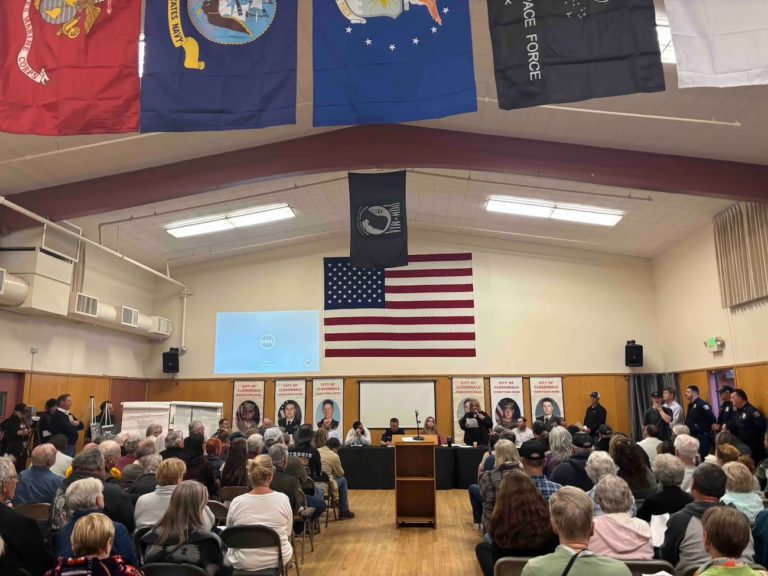
On Tuesday, Sept. 17, Sebastopol joined the cities of Cloverdale, Rohnert Park, Santa Rosa and Sonoma by having their City Council pass a resolution opposing Measure J, a measure on the Nov. 5 ballot that would phase out or scale down an estimated 21 animal farms in Sonoma County.

The city of Cotati decided to take no position, and the council in the town of Windsor will consider it soon.

Measure J targets large and medium-sized concentrated animal feeding operations or CAFOs. The U.S. Environmental Protection Agency defines a CAFO as any farm that keeps animals stabled or confined for 45 days or more during a 12-month period in an area where no significant vegetation can grow.

The measure’s opponents in Sebastopol argued in defense of legacy farm families. Several farmers spoke at the City Council meeting and said most of the county’s farms are certified organic and subject to strict regulations regarding the treatment of animals and waste. They also said it would impact farmworker housing and result in import truck traffic.

Measure J’s supporters said the ordinance would prevent the growth of more CAFOs. They pleaded with the council to remain neutral, saying the city had no business making a decision intended for the voters.

They argued that an analysis of Measure J presented to the county’s Board of Supervisors in May overestimated its economic impact.

In an email before the meeting, Cassie King of the campaign in support of Measure J said the measure’s opponents have deep pockets.

“They’ve raised over a million dollars,” King said. “The trade group Western United Dairies donated $300,000 to the opposition. The opposition also got $50,000 from Perdue’s Petaluma Poultry and $50,000 from the National Pork Producers Council in Iowa.”

The Democratic and Republican Parties of Sonoma County have also stated their opposition to Measure J.

The city of Petaluma published an online statement saying that the measure’s 45 days per year limit on confinement would make dairy and poultry farming at any scale impossible because ranchers must house their animals against the elements in the winter months. Measure J includes an exception for animals that are moved to a temporary evacuation area in the case of natural disasters, which adds nuance to compliance.

Measure J also includes directives to the Sonoma County Department of Agriculture, Weights and Measures to enforce the new law and retrain factory farm workers. Sonoma County Agricultural Commissioner Andrew Smith said the measure would only add expenses.

“If Measure J were to pass, then we would need the county to use general fund dollars to pay for the development of a system for receiving, investigating, and retaining complaints related to CAFOs as defined in the ballot initiative’s language,” he said in an email, adding that job training is not historically the responsibility of agricultural commissioners’ offices.

Smith also said that reducing the number of livestock operations in the county might impact agricultural support services and supply chain businesses.

The Measure J campaign literature says CAFOs generate environmental waste and greenhouse gasses. Methane emitted from cows and manure is 80 times more potent than carbon dioxide emissions. 

The U.S. Environmental Protection Agency says researchers have found that 36% of methane pollution from human activity comes from livestock and agriculture. Still, the research does not say how much methane is produced from animal agriculture in Sonoma County.

Proponents also point to concerns about the density of animals conveying disease. Last year, an avian flu outbreak triggered the county Board of Supervisors to declare an emergency. Supervisor David Rabbitt said in December he was concerned because there were a million farm birds within five miles of one of the infected facilities.

The Coalition to End Factory Farming, which collected signatures to put Measure J on the ballot, is a coalition of small farm advocates and various animal rights groups, including Direct Action Everywhere, whose activism involves trespassing to obtain video footage inside farms and rescuing animals.

Their co-founder, Wayne Hsiung, was arrested last November on suspicion of felony trespassing at chicken and duck farms in 2018 and 2019. The coalition’s website highlights Sunrise Farms in Petaluma, which houses half a million chickens; Mertens Dairy in Sonoma, which has 900 cows in a dirt lot; Reichardt Duck Farm in Petaluma, which has 200,000 ducks on wire flooring; and various suppliers for Perdue chicken.

One of the public commenters at the Sebastopol meeting said the coalition just wants people to become vegetarians. Although plant-based meat alternatives are appearing in more grocery stores and on menus, the mass move away from meat is not substantial. A recent Gallup poll shows just 4% of Americans identify as vegetarian. A similar percentage was found by the Baltimore nonprofit the Vegetarian Resource Group, which also found that three-fifths of U.S. households now eat vegetarian at least on occasion.

Legacy, Business and Generational Change  

In Sonoma County, where the vines run deep, and the family ties run even deeper, wineries aren’t just businesses—they’re legacies, passed down like cherished heirlooms. But it’s not just about wine. 

Across industries, family-owned businesses face the same challenges and rewards: keeping the family name alive while navigating the tricky waters of succession, growth and modern industry demands. Many of the region’s most storied vineyards have resisted the corporate buyout trends, choosing instead to remain family-run. These wineries are models for any family-owned business looking to thrive through generations.

Take Pedroncelli Winery in Geyserville, for instance. Established in 1927, this landmark vineyard has weathered Prohibition, economic upheavals and seismic shifts in the wine industry—all while staying firmly in the hands of the Pedroncelli family. Now in its fourth generation of ownership, Pedroncelli continues to produce wines that reflect a steadfast connection to the land and commitment to the values that shaped the business from the start. 

For the Pedroncellis, longevity is no accident—it’s the result of generations working together, passing down not just a vineyard but a philosophy of hard work, collaboration and a deep respect for tradition.

And it’s not just wine. Across industries, family businesses like Pedroncelli face similar challenges. Succession planning, generational shifts in vision and external pressures from competitors or the economy can make ensuring a business survives through the years difficult. However, for those who do, success lies in keeping the family involved and the lines of communication open.

Drs. Lucia Albino Gilbert and John Gilbert, writing for the wine trade publication Grape Collective, explored the generational-transition stories of family-owned wineries in Napa and Sonoma County.

“Our Sonoma County and Napa Valley conversations were characterized by remarkable similarities. Wine quality, sustainable agriculture and organic farming practices informed financial planning, and passion for continuing their legacy as a family-owned winery were all paramount,” wrote the Gilberts in a recent email exchange.

“The families’ respect and care for the land and their embrace and love for the lifestyle were unmistakable, despite the hard work involved and the on-going challenges they faced. Most notable was each family’s deep passion for caring for the land and farming, and modeling this passion to their children early on,” they continued.

Another phenomenon the Gilberts observed was that successful intergenerational ventures generally had an “open door” policy for offspring—meaning they could enter when they were ready rather than being pushed into a business in which they hadn’t yet cultivated an interest.

“Indeed, a clear theme was not pushing their children to be interested in farming and joining the family business, but instead allowing their children the freedom to find their own way, including a college education and time away, and giving them the space and tools to find their own path back home,” wrote the Gilberts.

This begs the question, however, about the specific challenges family-owned wineries face when passing the intergenerational reigns.

“Perhaps not surprisingly, significant challenges are associated with the influx of outside money, corporate and private, where the goal is profit rather than caring for the land and crafting quality wine,” the Gilberts suggested. “A related concern is providing small family wineries with a level playing field given the myriad of new regulations.”

Moreover, corporate enterprises’ acquisition of once-family-owned wineries has led to issues for brands bearing family monikers. B.R. Cohn and Kunde Family Winery were among the trove of local name brands subject to auction when Vintage Wine Estates, their owners, filed for Chapter 11 bankruptcy in July.  Adair Winery Inc., owned by A. Jayson “Jay” Adair, a top executive at Copart, a national automobile salvage yard venture, purchased the storied holdings.  

Running a family business—a vineyard, a restaurant or a manufacturing company—comes with its own unique set of challenges. If the business remains in the family, succession planning, in particular, can be tricky. Without careful preparation, even the most successful family operations can stumble when it comes time to pass the torch. Family dynamics, generational differences in vision and external pressures all add complexity to an already delicate process.

Successful family businesses align around a few key principles. McKinsey & Company, a global management consulting firm with offices in San Francisco, points out that smooth generational transitions are built on five critical elements: strong family relations, sufficient capital for growth, sound governance, professional wealth management and a commitment to preserving family values. The core message is clear: It’s not just about handing over the keys to the business; it’s about ensuring the next generation is prepared, motivated and equipped to take it forward.

But there is a different path for family-owned businesses that aren’t pursuing a traditional legacy plan or even a corporate buyout. Wm Cofield Cheesemakers in Sebastopol has another idea for its long-term succession plan.

“Co-workers are the key to the whole thing; we do our best to treat and pay them well,” says owner Keith Adams. “Ultimately, if it works out, I’d sell the company to the workers.”

Wm Cofield’s approach offers a refreshing alternative to the conventional family legacy model. By considering a worker-owned future, they’re fostering a sense of shared ownership and responsibility, ensuring the business remains in the hands of those who know it best. It’s a strategy that reflects the values of many family-run enterprises in Sonoma County—a deep respect for tradition paired with an openness to new ideas that ensure long-term sustainability.

Whether it’s passing the reins to the next generation or finding innovative ways to secure the company’s future, the key is balancing continuity with adaptability. Family businesses like Pedroncelli and Wm Cofield serve as reminders that legacies aren’t just about maintaining the status quo—they’re about evolving while staying true to the values that built the foundation. 

After all, the future of these businesses depends on honoring the past while embracing change.

Art on Wheels with Fernando Hermosillo, Rosetown Connection

One may have seen more lowriders on the cruise lately. This Jan. 1, State Bill AB 436 became law, legalizing lowriders and striking down all local ordinances against car cruising. 

In celebration, The Museum of Sonoma County has organized a major art show and calendar of fiestas celebrating the lowrider and the culture from which it rose up, dropped down and bounced, bounced. Most of our 20-odd local clubs have chosen to participate, offering stories and memorabilia about this history of the cruise. 

For this interview, I spoke to the president of Rosetown Connection, Fernando Hermosillo, and the crew whose club contributed a cherry ’63 Impala to the art gallery.

Before continuing into the interview, I wanted to make a note on this museum show’s rich subtext. Art museums have traditionally and conventionally been given the power of defining what art is (i.e., “art is whatever is displayed in an art gallery”), so there is an element  of this institution declaring that lowriders are fine art with this show (hurray/duh). 

And, as institutional art museums are part of the power structure, there is also an element of an apology for the ban, which had confused these artists and all-American car nuts with gangsters and brought in a 30 year period of official harassment.

CH: How do y’all feel as you walk around this art show?

FH: We love it. The highlight is having our car participating in this museum show. Something we thought never was going to happen. It’s very welcoming. We’re being embraced; our culture is being embraced.

CH: Your club member, Alberto Chavez, put a lot of love into this Impala. Can you tell us a bit about the building of a low rider, using his ride ?

FH: He basically bought it as a junkyard car. Some features he added to it were two-tone trim, engraved chromium parts, wire wheels, new chromed engine, LED lights, massive sound system, and an air ride system to raise and lower it. He’s put maybe six years into it, but the work is never really finished.

CH: You told me it also costs between 20 and 70 K to trick-out. Not something you would want to risk in some jack-fool gangsterism.

FH: Exactly.

See this historic show. It continues at The Museum of Sonoma County until the end of November with a big block party Oct.19. Also peep at the Rosetown Connection IG. This link and QR code will take you there : linktr.ee/CruisinLINKS.

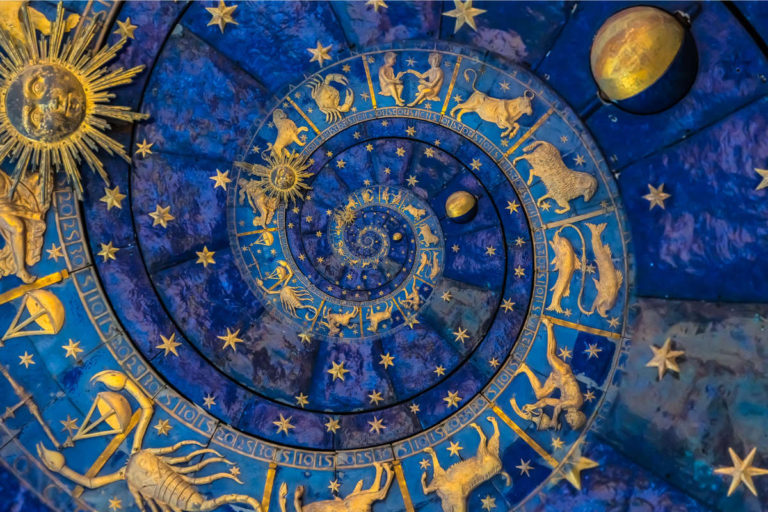
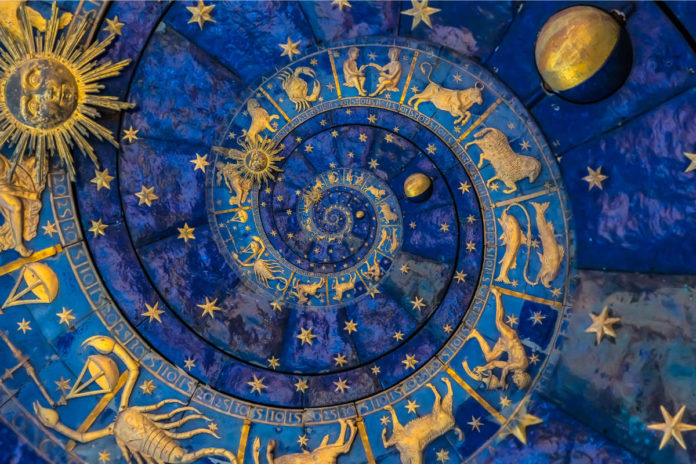
Free Will Astrology: Week of Sept. 25

0

ARIES (March 21-April 19): Here comes the Hating and Mating Season. I want to help you minimize the “hating” part and maximize the “mating” part, so I will offer useful suggestions. 1. To the degree that you can, dissolve grudges and declare amnesty for intimate allies who have bugged you. 2. Ask your partners to help you manage your fears; do the same for them. 3. Propose to your collaborators that you come up with partial solutions to complicated dilemmas. 4. Do a ritual in which you and a beloved cohort praise each other for five minutes. 5. Let go of wishes that your companions would be more like how you want them to be.

TAURUS (April 20-May 20): Many fairy tales tell of protagonists who are assigned seemingly impossible missions. Perhaps they must carry water in a sieve or find “fire wrapped in paper” or sort a heap of wheat, barley, poppyseed, chickpeas and lentils into five separate piles. Invariably, the star of the story succeeds, usually because they exploit some loophole, get unexpected help or find a solution simply because they didn’t realize the task was supposedly impossible. I bring this up, Taurus, because I suspect you will soon be like one of those fairy-tale champions. Here’s a tip: They often get unexpected help because they have previously displayed kindness toward strangers or low-status characters. Their unselfishness attracts acts of grace into their lives.

GEMINI (May 21-June 20): You are in a phase with great potential for complex, unforeseen fun. To celebrate, I’m offering descriptions of your possible superpowers. 1. The best haggler ever. 2. Smoother of wrinkles and closer of gaps. 3. Laugher in overly solemn moments. 4. Unpredictability expert. 5. Resourceful summoner of allies. 6. Crafty truth-teller who sometimes bends the truth to enrich sterile facts. 7. Riddle wrestler and conundrum connoisseur. 8. Lubricant for those who are stuck. 9. Creative destroyer of useless nonsense. 10. Master of good trickery. 11. Healer of unrecognized and unacknowledged illnesses.

CANCER (June 21-July 22): Tanzanite is a rare blue-and-violet gemstone that is available in just one place on earth: a five-square-mile region of Tanzania. It was discovered in 1967 and mined intensively for a few years. Geologists believed it was all tapped out. But in 2020, a self-employed digger named Saniniu Lazier located two huge new pieces of tanzanite worth $3.4 million. Later, he uncovered another chunk valued at $2 million. I see you as having resemblances to Saniniu Lazier in the coming weeks. In my visions of your destiny, you will tap into resources that others have not been able to unearth. Or you will find treasure that has been invisible to everyone else.

LEO (July 23-Aug. 22): Marathon foot races are regularly held worldwide. Their official length is 26.2 miles. Even fast runners with great stamina can’t finish in less than two hours. There’s a downside to engaging in this herculean effort: Runners lose up to 6% of their brain volume during a race, and their valuable gray matter isn’t fully reconstituted for eight months. Now here’s my radical prophecy for you, Leo: Unless you run in a marathon sometime soon, your brain may gain in volume during the coming weeks. At the very least, your intelligence will be operating at peak levels. It will be a good time to make key decisions.

VIRGO (Aug. 23-Sept. 22): Is there a greater waste of land than golf courses? They are typically over 150 acres in size and require huge amounts of water to maintain. Their construction may destroy precious wetlands, and their vast tracts of grass are doused with chemical pesticides. Yet there are only 67 million golfers in the world. Less than 1% of the population plays the sport. Let’s use the metaphor of the golf course as we analyze your life. Are there equivalents of this questionable use of resources and space? Now is a favorable time to downsize irrelevant, misused and unproductive elements. Re-evaluate how you use your space and resources.

LIBRA (Sept. 23-Oct. 22): On the morning of January 27, 1970, Libran songwriter John Lennon woke up with an idea for a new song. He spent an hour perfecting the lyrics and composing the music on a piano. Then he phoned his producer and several musicians, including George Harrison, and arranged for them to meet him at a recording studio later that day. By February 6, the song “Instant Karma” was playing on the radio. It soon sold over a million copies. Was it the fastest time ever for a song to go from a seed idea to a successful release? Probably. I envision a similar process in your life, Libra. You are in a prime position to manifest your good ideas quickly, efficiently and effectively.

SCORPIO (Oct. 23-Nov. 21): You have passed the test of the First Threshold. Congratulations, Scorpio! Give yourself a kiss. Fling yourself a compliment. Then begin your preparations for the riddles you will encounter at the Second Threshold. To succeed, you must be extra tender and ingenious. You can do it! There will be one more challenge, as well: the Third Threshold. I’m confident you will glide through that trial not just unscathed but also healed. Here’s a tip from the Greek philosopher Heraclitus: “Those who do not expect the unexpected will not find it.”

SAGITTARIUS (Nov. 22-Dec. 21): What development are you so ready for that you’re almost too ready? What transformation have you been preparing for so earnestly that you’re on the verge of being overprepared? What lesson are you so ripe and eager to learn that you may be anxiously interfering with its full arrival? If any of the situations I just described are applicable to you, Sagittarius, I have good news. There will be no further postponements. The time has finally arrived to embrace what you have been anticipating.

CAPRICORN (Dec. 22-Jan. 19): Capricorn screenwriter and TV producer Shonda Rhimes has had a spectacular career. Her company Shondaland has produced 11 prime-time TV shows, including Grey’s Anatomy and Bridgerton. She’s in the Television Hall of Fame, is one of the wealthiest women in America and has won a Golden Globe award. As you enter into a phase when your ambitions are likely to shine extra brightly, I offer you two of her quotes. 1. “I realized a simple truth: that success, fame, and having all my dreams come true would not fix or improve me. It wasn’t an instant potion for personal growth.” 2. “Happiness comes from living as your inner voice tells you to. Happiness comes from being who you actually are instead of who you think you are supposed to be.”

AQUARIUS (Jan. 20-Feb. 18): I have performed in many poetry readings. Some have been in libraries, auditoriums, cafes and bookstores, but others have been in unexpected places: a laundromat, a bus station, a Walmart, a grocery store and an alley behind a thrift store. Both types of locations have been enjoyable. But the latter kind often brings the most raucous and engaging audiences, which I love. According to my analysis, you might generate luck and fun for yourself in the coming weeks by experimenting with non-typical scenarios—akin to me declaiming an epic poem on a street corner or parking lot. Brainstorm about doing what you do best in novel situations.

PISCES (Feb. 19-March 20): I have two related oracles for you. 1. During the unfoldment of your mysterious destiny, you have had several homecomings that have moved you and galvanized you beyond what you imagined possible. Are you ready for another homecoming that’s as moving and galvanizing as those that have come before? 2. During your long life, you have gathered amazing wisdom by dealing with your pain. Are you now prepared to gather a fresh batch of wisdom by dealing with pleasure and joy?

Homework: Maybe it’s time to fix a seemingly unfixable discomfort. Do it! Newsletter.FreeWillAstrology.com

Culture Keeper: Nicole Myers-Lim of CIMCC

In joyful anticipation of California Native American Heritage Day this Sept. 27, I had a conversation with Pomo and Miwok leader Nicole Myers-Lim. 

Myers-Lim is an attorney with the National Indian Justice Center, working cases in the meshing and clashing intricacies of intersecting federal and tribal law—effectively negotiating tribal sovereignty. Our conversation here focuses on her roles as administrator and educator as the executive director of the California Indian Museum and Cultural Center. 

For those new to the know, CIMCC is a local institution and engine of Native cultural preservation, visibility, and, in their own words, renaissance. In 2000, it moved to Larkfield-Wikiup from San Francisco’s Presidio.

CH: What attracted you to work at this museum and cultural center?

NML: It was very important to me, growing up in Sonoma County, to create a resource for tribal youth where they could come and learn their history and engage in their culture because I was born to generations of people who weren’t allowed to do those things.

CH: Yes, you are referring to the long and dark period of forced cultural assimilation and hiding here and in California just now ending.

NML: We’re still here. And we didn’t just survive—we are doing cultural burns on the land, we’re celebrating our heritage through fashion and art, we’re revitalizing our language, we’re bringing our traditional foods back—all the things that were taken from us. What a story of resilience—what a story of hope! And it’s critical for our children to understand that they have that strength within them.

CH: Breathtaking. Tell me, how does your work at the museum relate to your career as an attorney with the National Indian Justice Center?

NML: The pursuit of social justice for Native American people is intrinsically tied to education and knowledge about us.

CH: Whether for tribal youth or settler adults, there are some exceptional exhibits and displays. I understand an aim of this Native owned and staffed museum is to employ and train a growing cohort of Native curators and preservationists.

NML: Yes, and we are partnering with the Lawrence Hall of Science, CAL Academy and UC Berkeley to bring Californian tribes into consultation and try to decolonize some of those institutions. 

CH: Wow.

Listen up. Hear Nicole Myers-Lim talk more about the colonial history of California and the North Bay, the local and national Native American cultural renaissance and how to visit CIMCC this Californian Native American Heritage Day. linktr.ee/CIMCClinks.

Humpback Haven: Whales Overtaking Local Shorelines

Humpback whales have begun to make the Bay Area their home this fall, and their spouts are a daily sight across the area and even into the bay itself.  Stretching from Monterey to Bodega Bay, videos and images have been going viral with whales breaching beside whale watching boats and surfers. A video, shown on the West Marin Feed Instagram,...

Opera, Drama, Music & Wine

Larkspur Opera Glasses in Fashion  Marin’s own Lark Theater just released a stellar lineup of entertainment for the coming year, including performances live from the stages of New York and London. Upcoming theatrical highlights include the Live from the MET HD experience, offering theater guests the opportunity to stream eight operatic performances throughout the season. Each opera will screen twice—the first...

Your Letters, 9/25

Faux Show Regarding the “linear reasoning” of Joseph Brooke in response to the assessment by Libby Hicks that the assassination attempt of Donald Trump was fake (“Info Wars,” Sept. 11): Everything is not a WAR, Mr. Brooke. Ms. Hicks’ “experience” with gunfire and bullets whizzing past her at “2,000 feet per second” is irrelevant. The “rest of the world” knows...

Grown-Up Gratitude: Remembrance of things past

For me, humor has long been a tool of survival. I recall a specific moment when I was four years old, standing in our living room on Baker Street in the Marina, looking at my parents and my older sister, and thinking, “These people are crazy, and I do not belong in this house.” It’s been 69 years since that...

‘Legally Blonde’ at Lucky Penny

Legally Blonde has had an immense cultural impact. So it was no surprise that “The Musical” was added to its title. It’s rare for such an adaptation to bring a distinct voice and insight. Legally Blonde the Musical (music and lyrics by Laurence O’Keefe and Nell Benjamin, book by Heather Hatch, based on Amanda Brown’s novel and the movie), now...

Family Farm Fracas: Sebastopol Opposes Measure J

On Tuesday, Sept. 17, Sebastopol joined the cities of Cloverdale, Rohnert Park, Santa Rosa and Sonoma by having their City Council pass a resolution opposing Measure J, a measure on the Nov. 5 ballot that would phase out or scale down an estimated 21 animal farms in Sonoma County. The city of Cotati decided to take no position, and the...

Legacy, Business and Generational Change  

In Sonoma County, where the vines run deep, and the family ties run even deeper, wineries aren’t just businesses—they’re legacies, passed down like cherished heirlooms. But it’s not just about wine.  Across industries, family-owned businesses face the same challenges and rewards: keeping the family name alive while navigating the tricky waters of succession, growth and modern industry demands. Many of...

Art on Wheels with Fernando Hermosillo, Rosetown Connection

One may have seen more lowriders on the cruise lately. This Jan. 1, State Bill AB 436 became law, legalizing lowriders and striking down all local ordinances against car cruising.  In celebration, The Museum of Sonoma County has organized a major art show and calendar of fiestas celebrating the lowrider and the culture from which it rose up, dropped down...

Free Will Astrology: Week of Sept. 25

Free Will Astrology: Week of Sept. 25
ARIES (March 21-April 19): Here comes the Hating and Mating Season. I want to help you minimize the “hating” part and maximize the “mating” part, so I will offer useful suggestions. 1. To the degree that you can, dissolve grudges and declare amnesty for intimate allies who have bugged you. 2. Ask your partners to help you manage your...

Culture Keeper: Nicole Myers-Lim of CIMCC

In joyful anticipation of California Native American Heritage Day this Sept. 27, I had a conversation with Pomo and Miwok leader Nicole Myers-Lim.  Myers-Lim is an attorney with the National Indian Justice Center, working cases in the meshing and clashing intricacies of intersecting federal and tribal law—effectively negotiating tribal sovereignty. Our conversation here focuses on her roles as administrator and...
11,084FansLike
4,606FollowersFollow
6,928FollowersFollow