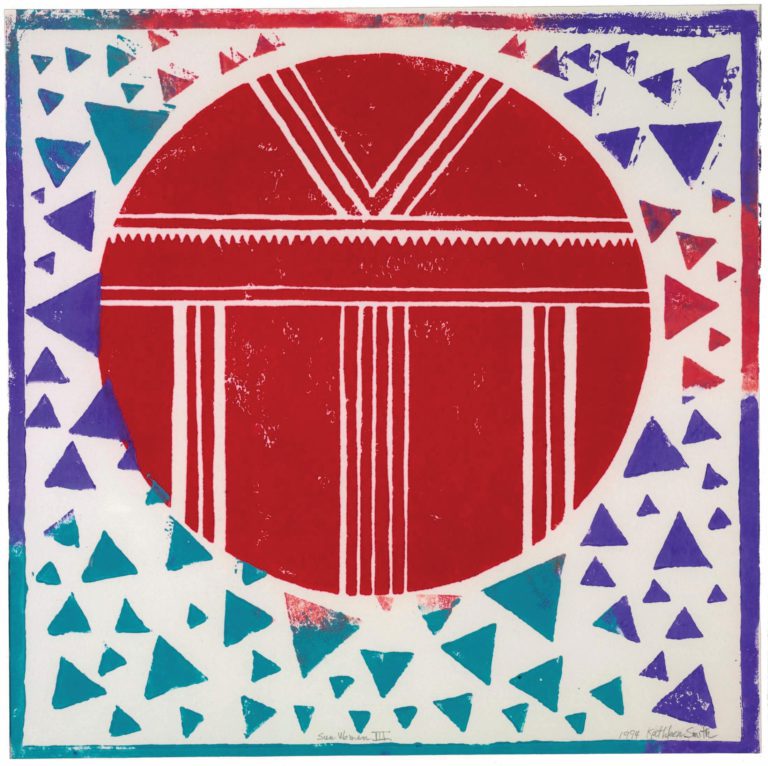
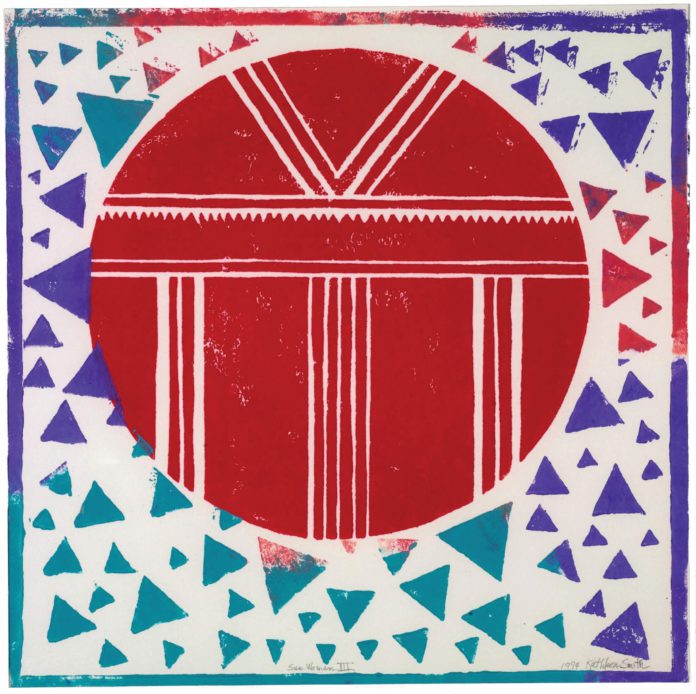
Gallery Route One invites art and culture lovers out to West Marin to experience Maakon/Yowa: Grounded in Coast Miwok, a vibrant art exhibition featuring a collection of contemporary works by 13 Indigenous Californian artists. Curated by Meyokeeskow Marrufo, the show centers on the theme of land and showcases the various artists’ paintings, basketry, regalia and more. The celebration continues with the Maakon Yowa Art Festival, a lively outdoor gathering with traditional dancing, artist vendors, acorn processing, basket weaving, food and plenty of community connection and cultural appreciation. The exhibition runs through May 11 at Gallery Route One, located at 11101 Highway One in Point Reyes Station.
The gallery is open Thursday through Monday from 11am to 5pm. The Maakon Yowa Art Festival will take place on Saturday, May 10, from 11am to 4pm on The Green in Point Reyes. For more information, visit galleryrouteone.org.
Glen Ellen
Acoustic Sunsets
Sonoma Botanical Garden’s Acoustic Sunsets outdoor music series is back at it again with immaculate summertime vibes, live tunes and a weekly Wednesday night wine ’n’ dine invite that’s simply divine. Guests of the garden can come on out and enjoy live performances in the outdoor amphitheater, with its lovely view perfect for unwinding with family and friends (and furry loved ones, too, since well-behaved, leashed dogs are welcome). Expect a rotating lineup of local artists spanning genres like pop, rock, folk and Americana, along with the addition of some special events one may not want to miss. Think concert series meets community experience with more than a splash of wine and endless celebration of local Sonoma culture and tradition to match.
The series runs every Wednesday from 5 to 8pm starting May 7 and running until Oct. 29. Admission is included with general entry and is free for Sonoma Botanical Garden members. The garden is located at 12841 Hwy. 12 in Glen Ellen. For more information, visit sonomabg.org.
Santa Rosa
Blues, Brews, BBQ
Every Wednesday this summer, one new Santa Rosa restaurant, Downtown Barbecue, is settin’ up to transform into the city’s central honky-tonk hub—not with bull riding or rodeo clowns (unless someone gets ambitious), but with the welcomed addition of Downtown Barbecue’s upcoming Summer Concert Series. Hosted on a spacious outdoor patio conveniently located across from Courthouse Square, Downtown Barbecue’s Summer Concert Series pairs live country and blues music with breweries on tap each and every week. The best part? It’s free. The second-best part? It syncs up perfectly with the Wednesday Night Market, so one may two-step their way through town square tacos and small-batch IPAs before posting up for a patio show under the stars.
The Country Blues and Brews Downtown Barbecue is free to attend and will take place from 4:30 to 8:30pm every Wednesday in May, June and July at 610 3rd St. in Santa Rosa. Visit downtownbarbecue.co to learn more.
Tiburon
AAPI Festival
May is Asian American and Pacific Islander (AAPI) Heritage Month, a time to honor the rich histories, diverse cultures and significant contributions of AAPI communities across the United States. At 1pm on Saturday, May 17, Zelinsky Park in Tiburon will host the Tiburon AAPI Heritage Festival 2025. This free event features a rich lineup of performances, including Qi Gong, Tai Chi, Kung Fu, lion dances, stilt walkers and hula. Emcees Felicia Lowe and Albert Yu will guide attendees through the festivities. Local organizations such as the Marin Chinese Cultural Association and the Asian American Curriculum Project will have exhibits, and food vendors like Mama Yali’s Dumplings and Bai Cha Boba Thai will offer culinary delights.
For more information, contact the Tiburon Diversity Inclusion Task Force at di******@************er.org or visit Tiburon Chamber of Commerce.
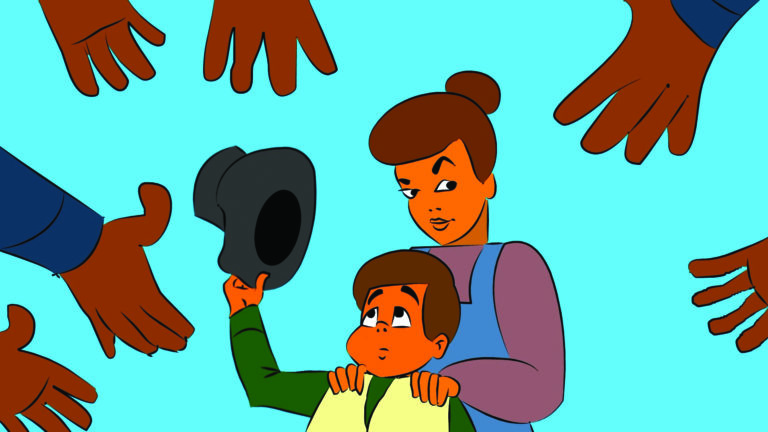
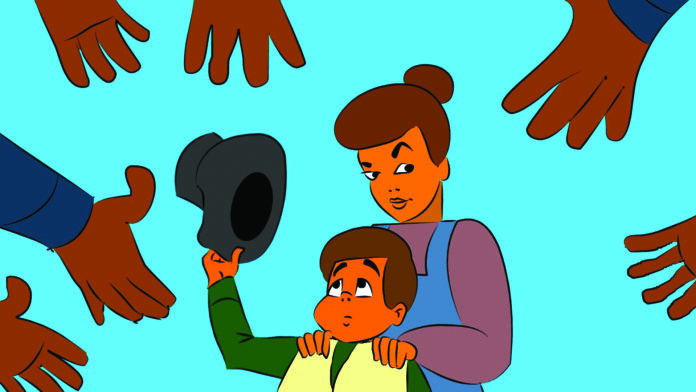
In a village where people have lost the ability to dream, one old man dons a magic hat to dream on their behalf.
When the time comes to pass his mantle to a young successor, corporate forces, of course, want in.
This is the premise of Petaluma animator Gene Hamm’s new hand-drawn feature, The Dream Hat, screening May 10 at the Petaluma Arts Center.
If the plot sounds like an allegory—capitalism versus creativity—one is not wrong. But it’s also a celebration of storytelling, music (17 original songs) and the singular passion of an artist who has spent nearly five decades drawing his dreams into reality.
“I’ve been an animator since 1978 when I got my first job on Ralph Bakshi’s Lord of The Rings,” says Hamm, who has called the North Bay home since his “Gumby” days. That’s right; he also worked on the beloved stop-motion, green clay dude with the convex arc head—and his horse, Pokey.
His early credits read like a kid’s Saturday morning fever dream: Smurfs, Superfriends, Plastic Man, FangFace, and music videos for Michael Bolton (Everybody’s Crazy) and Big Trouble in Little China. He even worked under a young James Cameron in the art department of Battle Beyond The Stars.
“Everything I learned in school; they teach you how to be a starving artist,” Hamm says with a laugh. “But at Hanna-Barbera, I took classes at night and learned from some of the best teachers. One of my teachers [worked on] Betty Boop and Popeye cartoons. They taught me how to get 30 usable drawings out of me a day. That was really valuable.”
Hamm later taught animation at Academy of Art University for 15 years. But it wasn’t until he embraced newer technology that he fully seized control of his storytelling destiny.
“The cool thing is that because of the new technology, you can be a one-man show,” Hamm says. “It used to be only rich people could make films. Now you can do stuff on your own, and it doesn’t have to have a big budget.”
Hamm’s first solo feature, Hell Toupee—animated entirely in his apartment during the pandemic—is currently streaming on TubiTV, SmashTV and Fawesome. “When it was a 28-minute work-in-progress, it won Best Animation at the Hell’s Kitchen Festival in New York City,” he notes.
For The Dream Hat, Hamm animated using a graphics tablet (a computer input device that allows users to create digital artwork) and Adobe Animate (a multimedia authoring program—formerly known as “Flash”). It’s not his first go at the story—he originally created a shorter version decades ago, only for the computer company behind his software to go bust mid-production. “The new one is 77 minutes long, and it’s done the way I always wanted to do it,” he says.
The DIY spirit extends to casting. “You can source talent from all over the world. They can literally phone their performances in, record at home and send them to you,” he explains. The film also boasts a marquee voice actor: Julie Newmar, best known as Catwoman from the 1960s’ Batman TV series.
Looking ahead, Hamm is already deep into his next feature—another musical odyssey he describes as his “Yellow Submarine.” Fortunately, he doesn’t need to don a magic hat to dream big—just a graphics tablet and vision.
The Dream Hat plays at 5:30pm, Saturday, May 10 at the Petaluma Arts Center, 230 Lakeville St. Tickets are $15-$20 and available at bit.ly/dream-hat.
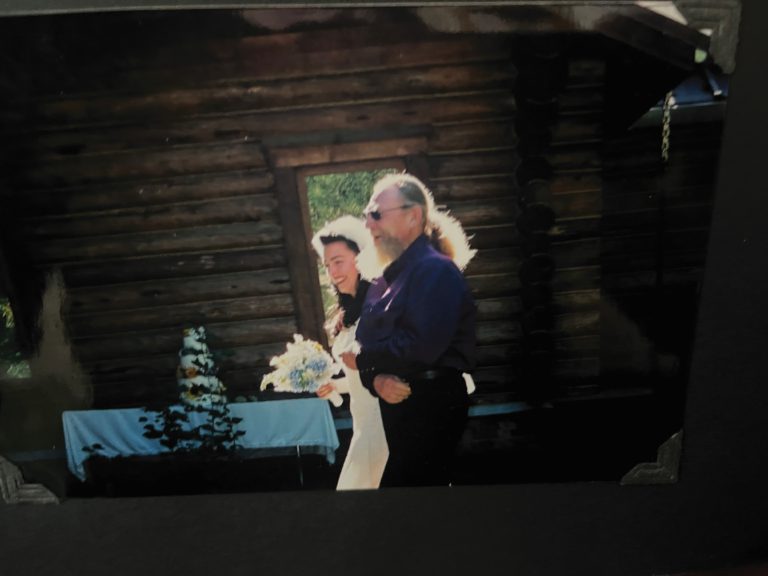
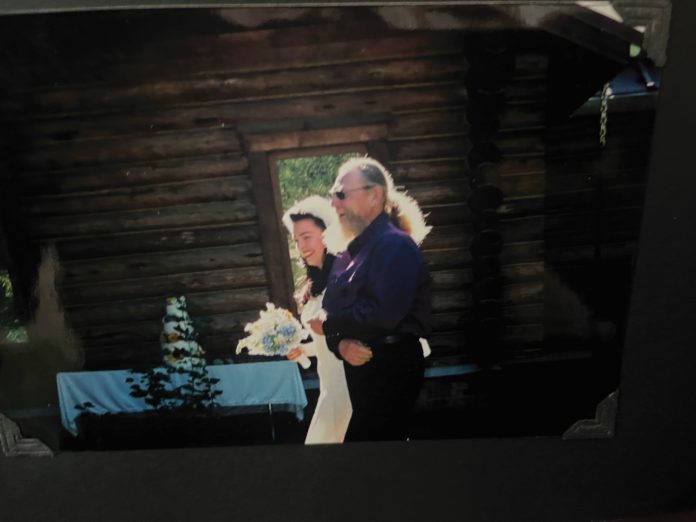
Last December, my father died. And as my family arranges his memorial—an event set to be larger and more emotional than any of our weddings—I’m brought up short by the realization that his life might never have included any of us.
I am the adopted child of a formerly incarcerated man. And if my father had faced the conditions in California prisons today, I would not have had a father at all.
All I will ever see inside prisons are people who need help, so they can get back home to build sets for their kids’ dance performances, coach pee-wee soccer, build a beautiful house in a forest and live a good life. That’s my father’s story, and my own.
When he was incarcerated in the 1960s, the state of California had different, more rehabilitative policies, and he got some of the help he needed. According to the National Library of Medicine (NLM), “The 1966 Narcotic Addiction Rehabilitation Act (NARA) authorized the civil commitment of narcotic addicts, and federal assistance to state and local governments to develop a local system of drug treatment programs.”
Furthermore, states the NLM, “The NARA legislation imposed the following contract requirements on treatment centers: (1) thrice-a-week counseling sessions; (2) weekly urine tests; (3) restorative dental services; (4) psychological consultations and vocational training; and (5) the treatment modalities of drug-free outpatient, therapeutic community, and methadone maintenance.”
My dad, using some of these supports, changed his life. He did not support the use of methadone, and was too insubordinate to make use of those psych consults, but worked with NARA in various capacities. Without it—under the conditions that currently exist—he probably would have remained in prison.
All incarcerated people deserve support and rehabilitation. My father never needed prison; he needed help. That’s only one reason I can’t accept the dangerous situation in prisons today, but it’s the one that chills me.
A 2010 paper from the NLM states: “At 1-, 3-, and 6-month follow-up, patients who received methadone plus counseling were significantly less likely to use heroin or engage in criminal activity than those who received only counseling. The potential exists for immediate adoption of methadone maintenance for incarcerated persons with opioid addictions, but most prison systems have not been receptive to this approach.” Mom says Dad wasn’t “receptive” to it either, but the point is, it was there.
Compared to the mid-1960s, the state of California’s approach to incarcerated people today is to punish them, keep them as long as possible behind bars and to deny them almost any help. This is true of drug offenders, but it’s also true of everyone else.
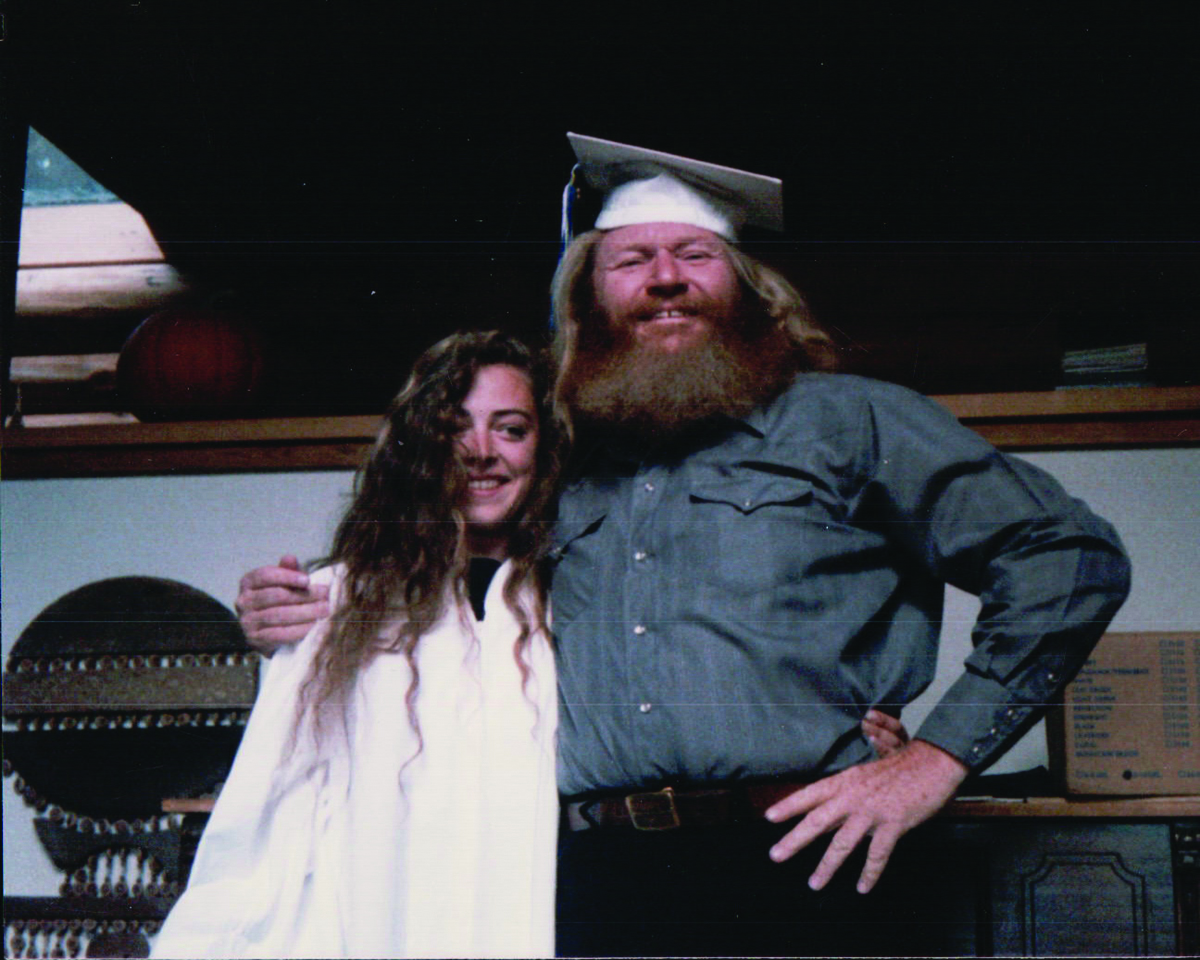
FAM (From left) Hiya Swanhuyser, and her father, Peter Swanhuyser, share a milestone moment in the ’80s. ‘If my father had faced the conditions in California prisons today, I would not have had a father at all,’ says Hiya Swanhuyser. Photo courtesy of Dee Swanhuyser.
I see him, the other him, unhelped, in photos of people in prison, and I mean precisely. Dad never “looked like” anything other than someone who had done hard time; this is how he wanted it. His three earrings, long hair, large beard, tattoos and leather vest caused him problems. This was especially true the time he was officially dismissed from coaching youth soccer, at a meeting he came home from with a look on his face I had never seen. To this day, no one will tell me exactly what words were said at that meeting, but I had to go to high school with kids whose parents had said them.
Other times, it was only that men spontaneously tried to fight him. He didn’t mind this so much. Those men needed to know what it was like to step up to a real-life badass. They found out he explained to them he wasn’t going to fight them right then, because he didn’t feel like it, and he was busy having a family. And he did this while still frightening them.
In spite of this type of interaction, Dad never changed the way he looked and didn’t explain his choice to anyone. So he always had that look about him. As a result, I reflexively feel warmth and trust in people who look intense, an impulse that has served me well.
But if Peter Swanhuyser maintained his tough-guy looks, he had changed everything else about himself: He relaxed with friends, he laughed aloud, he had nice clothes to wear at festive events, and he drove his family to the coast on Sundays. None of that happens in prison.
I also see the other path, the other Peter Swanhuyser, in people living rough, people whose bad times separate them from their families and friends. He could easily have been among them his whole life. I recognize him in their gravelly voices and hard eyes, in their swagger that says, “I can hurt you quick.” My dad had those.
And let me be clear: He had been a person who made really bad choices, and who hurt people. He was far worse than, for example, the “no angel” public-opinion conviction that made nice people think it was OK for officer Darren Wilson to kill Michael Brown in Ferguson, Missouri in 2014.
Yes, I don’t remember learning what “an addict” was, because I just always knew. Yes, there were drugs in my childhood home. Yes, the hate that people had for him was sometimes directed at me and hurt me.
But now look at that guy again, the bad guy. And try to realize: In 1977, my mother picked me up from the first day of first grade at Harmony School in Occidental. When we got home, my dad was waiting for me, kneeling down, with open arms. “Hey. How’s my big first-grader?” he bellowed, swooping me up in his strong arms. It seemed like an important celebration. I was proud of myself. Peter Swanhuyser continued to show up for my brother, my mother and me for the next 48 years.
Through the years, he built houses from the ground up, got his contractor’s license and founded Oasis Construction, when he’d come home covered in sawdust, exhausted. On weekends, my parents forged a partnership with the normal-looking nextdoor neighbors to create an informal co-op farmstead, with a giant vegetable garden, a chicken coop, pig pen, steer pasture and roaming geese, plus all the trucks, compost piles, weed whackers and post-hole diggers a farm requires. Those neighbors may have recoiled from our hippie appearance at first, but they became our weed-pulling, dirt-smeared compadres.
It was hard work, but Dad loved it. He swore at the old machinery we often had to use, but he was fascinated and gratified to put his hands in the soil, and learn what would grow.
Graduations, performances, soccer games, summer camping trips with our arms out the windows and The Eagles on the tape deck. Sunday drives to see the ocean, Easter egg hunts, massive Christmases with trees we cut in our own forest, when he loved to “play Santa” and hand out gifts, sitting cross-legged under the tree.
Birthday parties, family outings to the annual Occidental Volunteer Fire Department barbecue in Union Hotel Grove, dropping us off at Harmony School on misty West County mornings after a trip to the Land House bakery for one of their legendary bear claw pastries. It was all pretty normal paterfamilias behavior, as much nostalgia as I have for it all now, in the wake of his death.
All this is to say: Look at someone who has been labeled human garbage. Look at what one despises about them, their scary tattoos, their lawless behavior, their arrogant hatred of normal people. And now try to realize—anyone can come back from it. I know they can, because it is the only life I know, the whole life I know.
Some people would have put him behind bars and tossed the key. But not me.
Donations in Peter Swanhuyser’s memory are welcome at the Last Mile, thelastmile.org, ‘a team of social innovators who are breaking the cycle of incarceration with technical education and training that champions students’ success after their release.’
The Healdsburg Wine & Food Experience returns May 15-18 and promises a robust lineup of culinary star power.
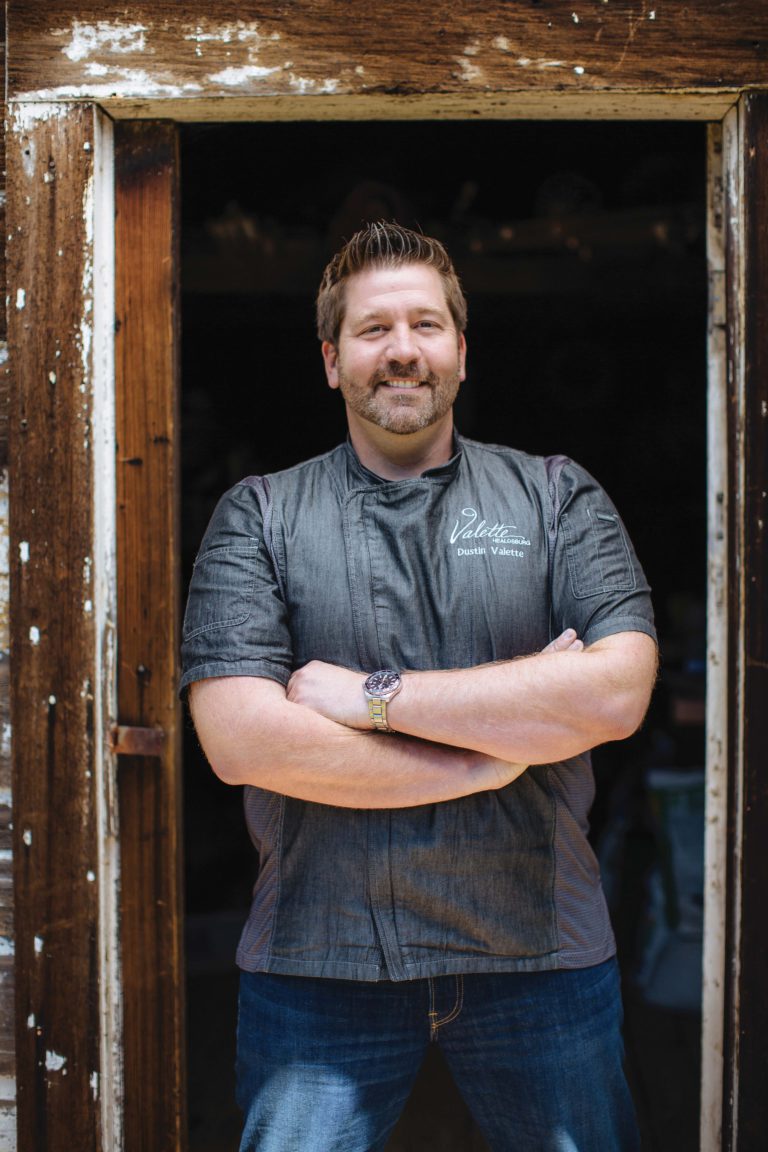
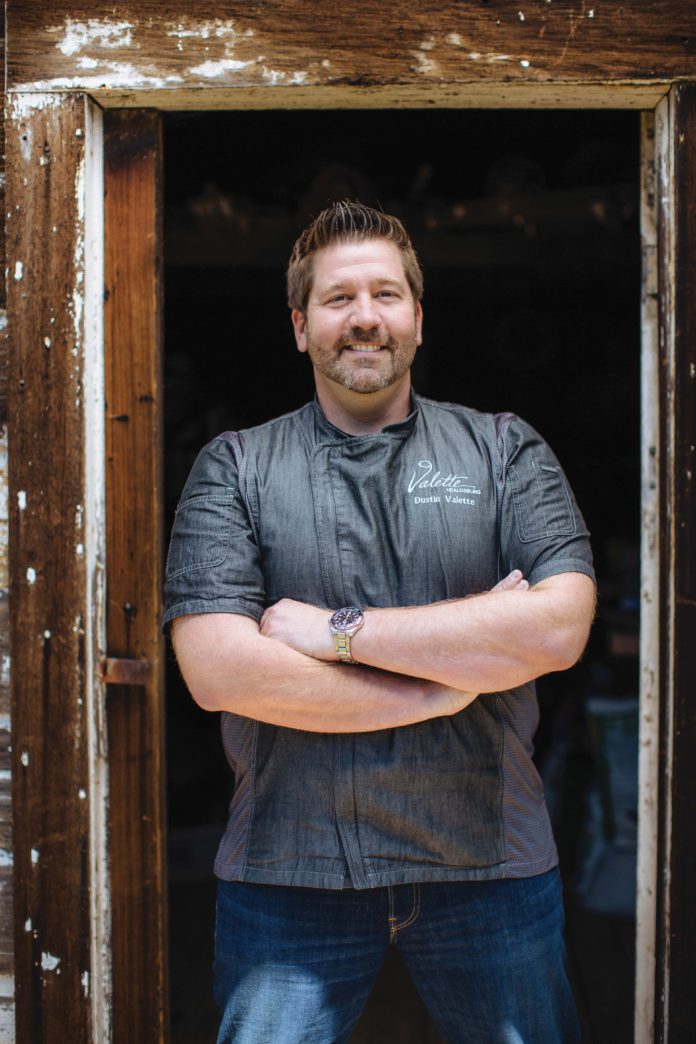
And the big-ticket event already generating buzz is the Saturday night Big Bottle Party at The Matheson, where hometown hero Dustin Valette will be joined by Top Chef favorite Lee Anne Wong, Iron Chef America victor Viet Pham and none other than mayor of Flavortown himself, Guy Fieri. Yes, that Guy.
Yes, there will be magnums. Yes, the Wonder Bread 5 will play until late. And yes—one may want to grab a ticket now.
Now in its fourth year, the festival showcases Sonoma County’s best alongside a who’s who of international winemakers and chefs. The aim? To celebrate the region’s farmers, growers, vintners and chefs while highlighting sustainable farming and Sonoma’s agricultural connection to the world.
“The rising tide raises all boats,” says Valette. “It’s 100% true with all of us here in the ’Burg.” And if one thinks it’s all competition in the kitchen, they may want to think again. Just last month, Valette found himself borrowing a live lobster from fellow chef Mark Stark at Willi’s Seafood. “Now walking down Healdsburg Ave. with a live lobster must have been a sight to see,” he adds.
Valette’s schedule for the weekend could make a sous-chef break into a cold sweat. At 11am, Saturday, May 17, the Reserve Lounge at The Matheson Rooftop opens, offering exclusive wines, spirits and chef-created bites in a luxe, above-it-all setting (sponsored by First Citizens Wealth and Silicon Valley Bank). The lounge will stay open until 5pm, giving guests plenty of time to unwind—or gear up—for the evening’s festivities.
At 7pm, The Matheson hosts an Exclusive Pre-Party, where Valette joins Wong and Pham for an extravagant spread paired with rare reserve large format wines. But the real headliner kicks off at 9pm, when Fieri rolls in for the Magnum Party, known formally as the Big Bottle Party. One can expect large-format wines from iconic Sonoma County winemakers and global producers, late-night bites from the all-star chef team and music that will keep the crowd going until the wee hours.
“A chef’s secret is espresso,” Valette jokes when asked how he stays vertical during the marathon weekend. “That and copious amounts of Santo Tequila.”
Valette is used to sharing the stage with big names. But when asked what bit of kitchen smack-talk he might offer his high-profile colleagues, he confesses: “Don’t screw up; just don’t screw up … that seems to get in everyone’s head. And maybe the occasional adding sugar to someone’s salt.”
Despite the long hours and high profile, Valette insists Healdsburg’s culinary scene remains rooted in camaraderie. “The best part of Sonoma County is that we are all here showcasing our craft and supporting each other,” he says.
That collaborative spirit, however, doesn’t mean the job is easy. When pressed, Valette admits it’s a toss-up whether keeping his kitchen staff happy or coaxing cooperative grapes from the vineyard is more challenging. “Wow, knock on wood, though; we are lucky. We have an amazing culinary staff, and our winery partners are beyond exceptional,” he says.
And what does he wish more visitors understood about Sonoma County dining? Says Valette: “We have a nationally recognized, world-class culinary scene. We have a three-star Michelin, multiple one-stars and I think eight Michelin-recognized restaurants in a town of 10,000.”
The Healdsburg Wine & Food Experience runs Thursday, May 15 through Sunday, May 18, with seminars, tastings and events at various locations throughout town. While Valette’s events are among the most anticipated, the full schedule offers everything from sustainability panels to farm tours to grand tastings. For the curious and the culinary-obsessed, there’s truly something for everyone. And for a full schedule and tickets, visit healdsburgwineandfood.com.
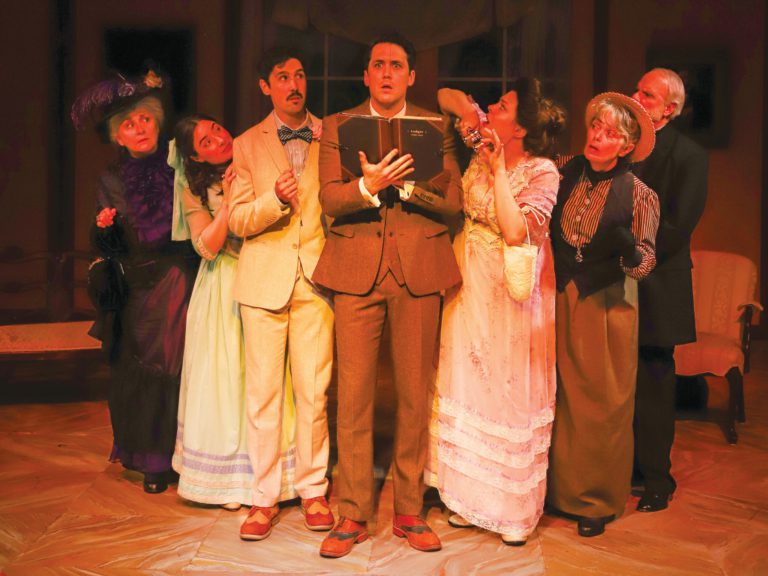
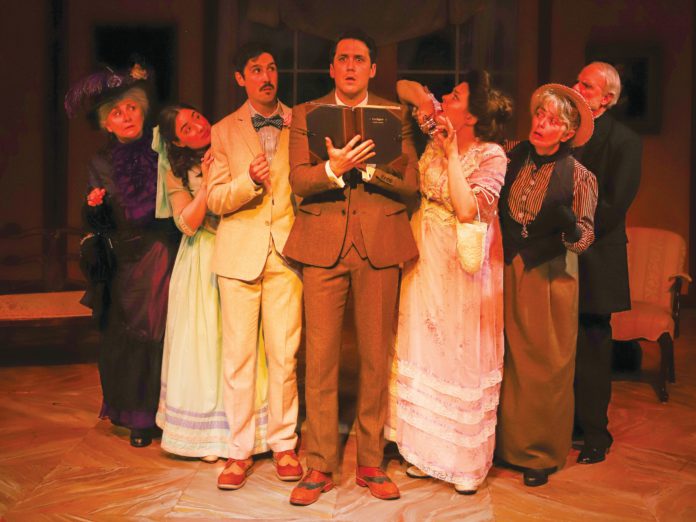
Anchored by two stellar performances and a set that looks like a rose garden vomited in the best possible way, 6th Street Playhouse’s current production of Oscar Wilde’s iconic classic, The Importance of Being Earnest,will make one smile like a dolt. The show runs in Santa Rosa on 6th Street’s Monroe Stage through May 11.
Classic, farcical scripts don’t always hold up over the generations. But Wilde’s tale of two scheming charmers who call themselves “Ernest” and the two very romantically specific women who lust over them still does, with its brilliant wit and sharp social commentary.
Every word spoken is a straight zinger. Director Lauren Heney dashes her production with anachronistic and fanciful flair in the form of a rose-bedecked ceiling, conveniently appearing props and classically inspired pop instrumentals while keeping the set (with its rich floral motif by Laurynn Malilay) and costumes (by Mae Heagerty-Matos) properly Victorian.
This is a play that actors love, as the characters offer lots of opportunity for physical and vocal comedy. The ensemble is successful in their energy and camaraderie, with scene-stealing work by Eileen Morris (best accent of the cast) and Be Wilson. Mary Gannon Graham will have one in stitches with merely one word (they’ll know it when it happens) while David Noll plays it (mostly) wonderfully straight.
The four principals execute their roles quite smartly with a variety of choices. Katherine Rupers gives her naive Cecily Cardew a twisted Disney-princess edge, while Damion Matthews seems to be channeling several Monty Python characters in both voice and mannerism, with his Jack Worthing building up to a frenzied crescendo over muffins.
But the show belongs to Drew Bolander and Sarah Dunnavant as the wily and stylish Algernon Moncrieff and the imperious but refined Gwendolyn Fairfax. They personify an actor’s commitment from their first entrances and never let up.
Dunnavant chews all the scenery, imbuing Gwendolyn with an aggressive intensity that is bonkers but truthful to Wilde’s eccentricity and slyness. Bolander is more subtle and period-appropriate but never misses a knowing beat as he glides around the stage, clearly relishing the role. Their performances alone make this production more than worth the price of admission.
And remember, it feels SO good to laugh right now.
‘The Importance of Being Earnest’ runs through May 11 on Monroe Stage at 6th Street Playhouse, 52 W. 6th St., Santa Rosa. Thurs-Sat, 7:30pm; Sat & Sun, 2pm. $29-$48. 707.523.4185. 6thstreetplayhouse.com.
A task force helmed by Attorney General Pam Bondi and focused on “eradicating” anti-Christian bias in the government held its first meeting recently.
While Donald Trump’s government is retreating from any effort by the federal government to pursue racial justice, it is leaning hard into ending what it sees as anti-Christian bias.
So, anti-Jew, anti-Hindi, anti-Muslim, etc. What were these groups thinking if any of them voted for this charlatan?
There’s a pattern—most every town and county in the North Bay has an “arts council”—a non-profit art agency-advocate.
These plucky non-profits are typically represented by a downtown office and arts-space displaying local art. Typically, they are woefully underfunded for their mission—in the pattern of nonprofits. When, 10-plus years ago, Sonoma’s struggling all-county arts council finally heaved up and broke apart, local arts activists took the problem before their board of supervisors.
This put in train a creative solution: Make their county’s “art council” part of the government. Thus began Creative Sonoma. The new all-county arts council would have closer relations with the granters of government largesse and a guaranteed budget of $1 million annually. The downside could be a governmental remove from the community as the “council” was swallowed up by the bureaucracy.
We are now 10 years into this experiment. To learn more about Creative Sonoma, I solicited an interview with artist Tara Thomson, who is settling into her second year as the director of its staff of three government employees. In our conversation, I found her highly competent, transparent and circumspect.
Cincinnatus Hibbard: Tara, on your Creative Sonoma website, your general strategy is laid out as [more] public art, [more] early arts education, [more] professional development for artists and [more] money for public artists and arts organizations in the form of grants. Key to all this is your definition of “good” public art—as that would be the art that wins your grants.
Tara Thomson: I would not say that public art is “good” or “bad” but more or less meaningful to a community. The key word in public art is public. It is meant for the community to experience and enjoy. In my opinion, the community should be involved in the generation of the idea, its type, its location and the section of the artist.
I think what a lot of people think of when they think of government public art is that the government is deciding what art goes where and just puts it there. Community involvement creates ownership of public art. It creates identification, mutual understanding and social cohesion. And I think that’s what’s needed here. And not necessarily a sculpture or a mural. What the community might need is a pop-up event or a series of musical performances in their public spaces.
For examples of this definition, I see in your pipeline that the supervisors have tasked you with a Tubbs Fire Memorial. Also that Supervisor (Lynda) Hopkins has allocated for your direction public art grants for public art in unincorporated West Sonoma County this summer. Tara, I don’t know that Creative Sonoma is a household name yet—even in the arts community. But probably you are best known for your money grants to local artists.
Yes. We have just announced the recipients of our 2025 arts impact grants. This is 4K for art or general operating expenses for each of 45 artists and art—or cultural organizations.
Tara, you told me that in your short tenure you have worked to better realize the potential of being a part of government and its resources. What are you currently working on in this vein?
I am working on a new public art plan to put art in all local government buildings.
Another effort to approach other county agencies—such as parks or HR— to involve
local artists in their efforts to fulfill their own missions. Artists have a way of synthesizing information and communicating with people that typical government outreach lacks.
Think resisting authoritarianism is too big of a lift? Think again. This spring, while the U.S. resistance movement may not be in full bloom, it is blossoming.
The “3.5% rule”—identified by political scientist Erica Chenoweth—should be on the lips of every American anxious about the Trump administration’s headlong drive to replace our democracy with authoritarianism. After studying more than 300 nonviolent resistance campaigns, Chenoweth and colleagues’ research revealed a startling truth: When just 3.5% of a population engages in sustained, strategic civil resistance, authoritarian regimes fall.
Think about it. Not 50%. Not 30%. Just 3.5%. The message is clear: When enough people turn out—repeatedly and nonviolently—democracy wins.
When people commit to showing up—demonstrating creatively and persistently—history is on our side. Nonviolence trainer, activist and writer Rivera Sun, whose YA novels address peace-building, highlights the “imagination” side of movements—that we must not only resist but also build the world we want to live in.
The implications for the nation are profound. We’re a country of 330 million, so 3.5% equals 11.5 million people. That’s the number we need to side with democracy over authoritarianism. That’s not fantasy. It’s strategy. In many, many communities—well beyond western Massachusetts—it’s growing. Person by person, town by town.
What’s needed now is not despair, but determination. Not hand-wringing, but hand-raising. Where I live, it’s one in every 28 standing up consistently and courageously as agents of change, transforming darkness into light. What is it where you live?
In the fall of 2020, during the reign of deep Covid, I worked in-person as a frontline behavioral healthcare counselor at a residential facility for adults with serious mental illness.
It was a strange time to be a commuter. And as I drove from my apartment in Rohnert Park to the facility in Santa Rosa on the deserted 101, it was hard not to imagine that the world had ended right under my nose.
I fell into a sort of paranoid solipsism on these drives, lost in an anxious dream that people would never leave their houses again, that we had been placed in a continuous stasis from which there was no escape. That is, until I started noticing the strange evidence of other people along the highway, proof that I was not alone in the world.
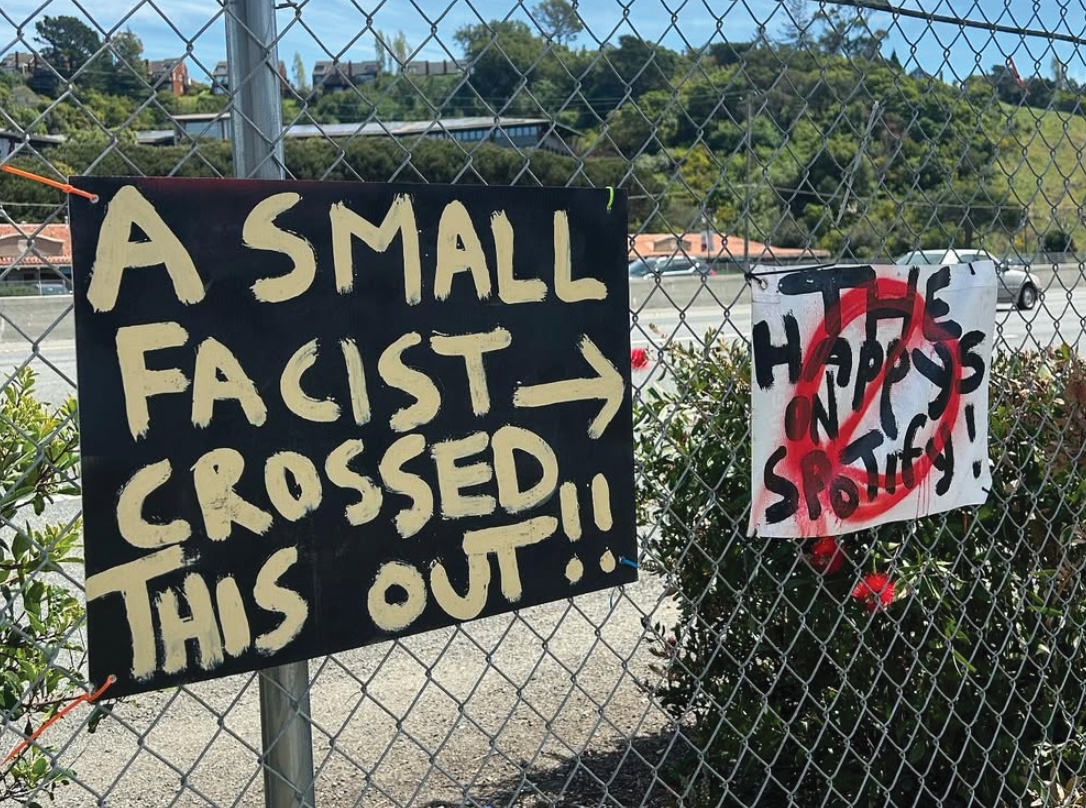
Bedsheets and torn cardboard canvases, affixed with twine to chain-link fences, began appearing at freeway onramps and along frontage roads. All of them bearing the same hastily scrawled or spray-painted message: “Listen To The Happys.”
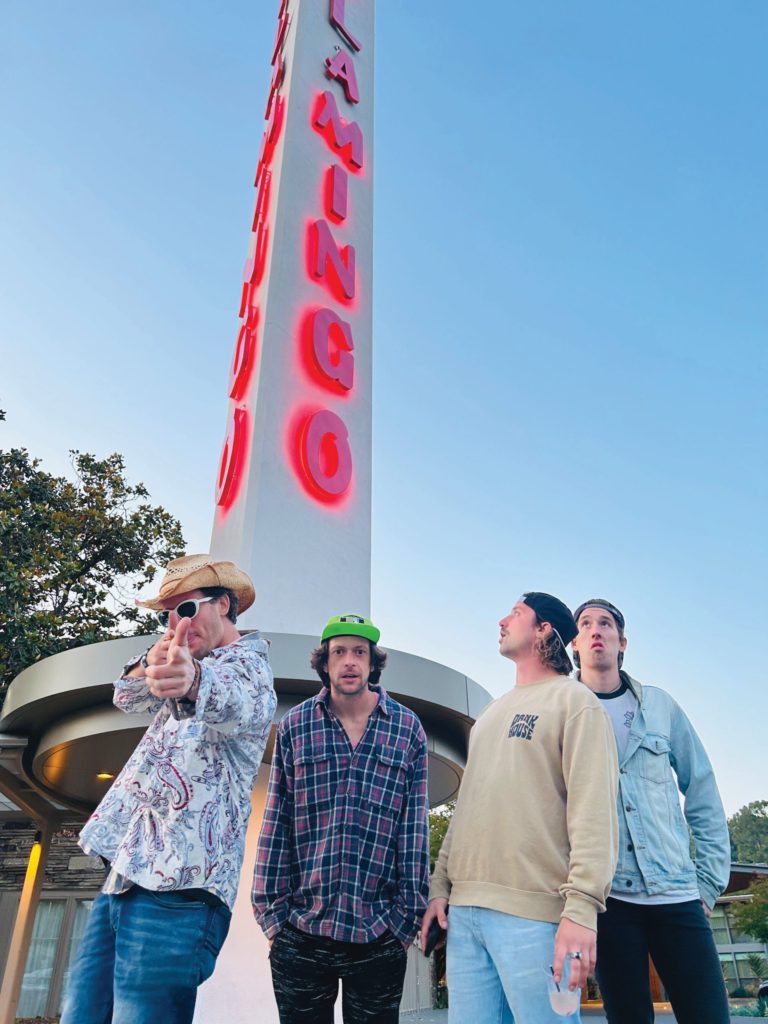
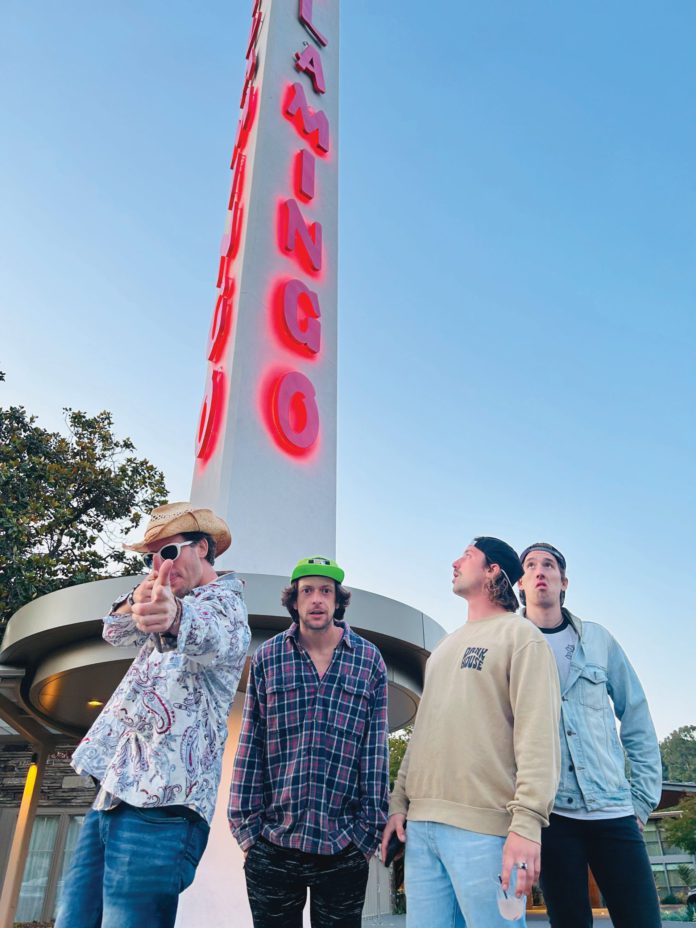
Nick Petty came up with the idea to start a band in 2012 while living in a halfway house in San Francisco. He had recently been released from jail and was doing his best to envision life free of the OxyContin and heroin habit that had been following him for years. While discussing potential names with a friend, he landed on The Happys as a tongue-in-cheek description of the music he wanted to make and the conditions he currently found himself in.
Now, in 2025, sitting in the attic of a barn on the property of the San Rafael Elks Club, The Happys’ current rehearsal space, Petty tells me, “Writing is what kept, and keeps, me sane.” As he tells it, he has been clean from opiates since that stint.
The current lineup of The Happys comprises Brett Brazil (bass/vocals), Alejandro Sanchez (lead guitar/vocals), Elijah Smetzer (drums) and Petty (songwriter/lead vocals). The band prides itself on having a wide range of influences and a somewhat chameleonic sound.
During the interview, they cite Kurt Cobain, Eliot Smith and Sublime as influences, and their most popular songs on Spotify tilt from surf-rock to post-punk to arena-rock anthems. It is hard to pin down their specific genre within the vague boundaries of “rock.” This amorphousness works, though, as it is undergirded by excessive energy and dedication from every member of the band. “All of us are all in on this,” Sanchez tells me. “We are in it for the long run.”
In 2019, Petty’s father passed away, and he was pushed into a bit of an existential crisis. “I just started thinking about the time I have left and what I wanted to do with it,” Petty notes. He decided to channel this angst into The Happys, a project that had already ferried him through one crisis years earlier. Starting around this time, The Happys crew started putting up makeshift signs around the North Bay, encouraging anyone and everyone to listen to them.
“The signs were inspired by graffiti,” Petty says. “And garage sale signs,” Brazil adds. The idea was guerrilla and anti-algorithm. In an age where musicians are encouraged to have an online presence and market themselves to specific demographics, The Happys decided to aggressively market themselves to literally whomever happened to be driving down the freeway that day.
After an especially long overnight shift back in 2020, I drove by another sign that read, “Listen to The Happys,” and finally caved. I loaded up their music on the spot and started listening. Several months later, as the world began coming back into focus, I saw a flyer advertising a live performance by The Happys in front of George’s Nightclub in San Rafael as a part of the Dine Under the Lights event series. Dear reader, I went and saw The Happys live. I bought a bumper sticker that says, “Listen to The Happys,” and it is still on my car. If anyone has ever wondered if this sort of marketing works, it at the very least did on me.
Sanchez claims that over the past five years, any time there is a Happys show in or around the Bay Area, they are approached by people who claim they came because of all the signs. “People come up to us and are like, ‘I’ve been waiting to meet you guys,’” he says with a nervous chuckle. He is also quick to qualify that he doesn’t think the signs are solely, or mainly, responsible for the growing success they’ve been experiencing over the past half-decade. “What helps us is that we are down to play a show anywhere and everywhere,” he states.
“I don’t think people understand how hard we work at this,” Petty adds. Outside of traditional venues, The Happys have played shows at Petaluma High School, non-profit organizations and substance use facilities. When Jack White played a pop-up show at the Phoenix in Petaluma in October 2024, The Happys played a pop-up show outside it for people waiting to get into the show.
At this point in the interview, I ask Petty if he feels like he might have some obsessive tendencies about the band. He responds by nodding and offering me a fist-bump.
It didn’t feel right to just interview the band about the signs. Obviously, they were going to have a positive pitch. I wanted to hear a counter opinion, a voice from the community on how they feel about the presence of so much DIY marketing. So I turned to the only reliable source of information gathering I could think of: Reddit. Creating a burner account, I posted on the Sonoma and Marin County subreddits asking what people thought of the signs.
CRITIQUE Not all North Bay residents are fans of The Happys’ marketing efforts. Screengrab from instagram.com/thehappys.
As it stands at the time of writing this, the threads have a combined total of more than 200 comments. Some commenters hate the signs and think they are just litter; others respect the hustle but aren’t a fan of the music. Others still love the signs and encourage everyone to see The Happys live, promising an excellent show. One commenter in particular observed that a real journalist wouldn’t lazily poll Reddit for opinions. Ouch.
Judgments aside, one thing is irrefutable: People know who The Happys are and feel passionate one way or the other about their presence in the North Bay.
Petty is quick to address the litter question when I ask about it. “We take trash that is already there and make signs out of it. I’ve also hauled a bunch of litter off the highway to try and clean it up,” he states. The signs, then, are part of a green mindset: Reduce, Reuse, Recycle. As far as the people who hate the signs and call them a nuisance, he says quite matter-of-factly, “Some people hate to see other people following their dreams.”
Speaking of following dreams, in the past five years, The Happys have released a full-length album, sold out Sweetwater Music Hall in Mill Valley and have performed as openers for The Mad Caddies, Hobo Johnson and Sublime with Rome. They are currently preparing for an East Coast tour, which will be the first part of a nationwide tour, and will be releasing a new album in the coming months, titled Listen to The Happys.
When I ask the members about their long-term plans for the band, Sanchez and Brazil tell me they value the possibility of longevity. Smetzer says he wants to reach as wide an audience as he can. When I ask Petty the same question, he smiles for a second and then says, “Biggest band in the world.”
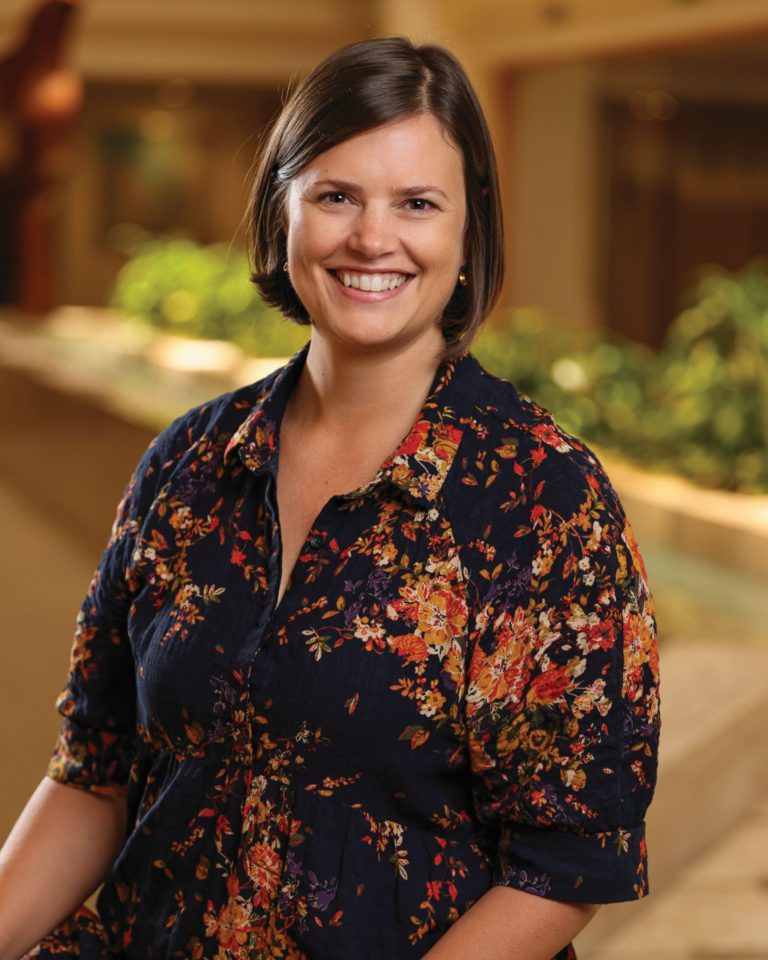
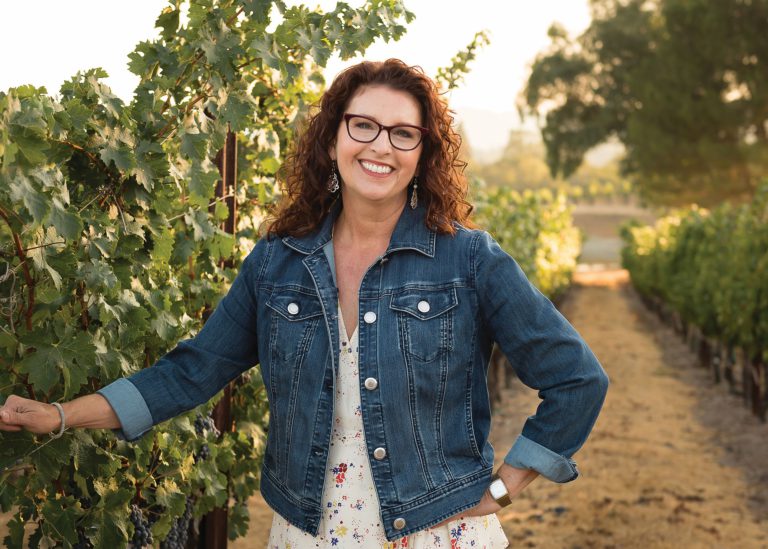
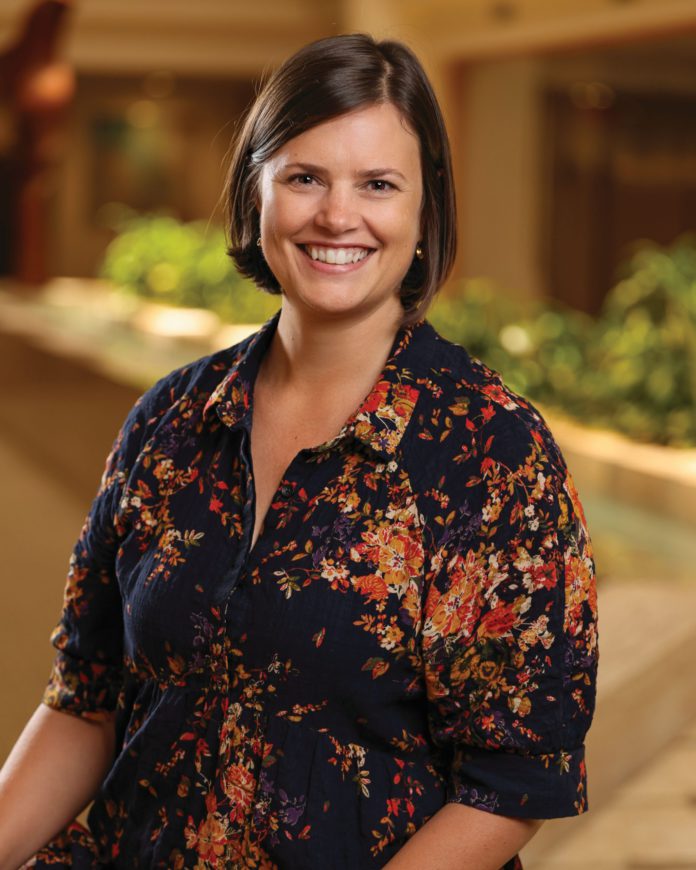
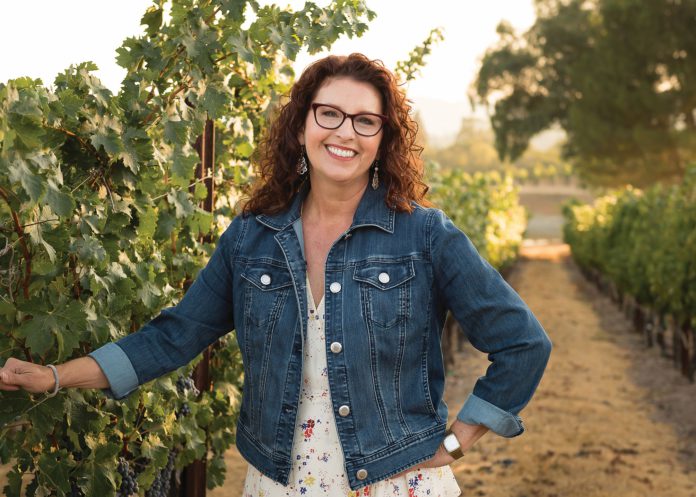
Kim Stare Wallace was born into the wine business, but when in college, first pursued fashion.
Her design expertise led to creating Dry Creek Vineyard’s iconic nautical labels when she joined as marketing director. Now president and second-generation owner, she serves on multiple Sonoma County boards, including Sonoma County Vintners and Santa Rosa Junior College Shone Farm Foundation.
Amber Turpin: How did you get into this work?
Kim Stare Wallace: I was literally raised among the vines in the Dry Creek Valley. My childhood was filled with watching my dad, David Stare, pioneer Dry Creek Vineyard as the first new winery to be built in the region following Prohibition. I worked when I was a teenager in the office, the cellar and on the bottling line …
Did you ever have an “aha” moment with a certain beverage? If so, tell us about it.
Growing up in the wine industry, I was lucky to be exposed to some amazing wines at a young age. But one of the most memorable was a 1937 Saviennières from Domaine Baumard that I tasted in the Loire Valley with Jean Baumard, who was a dear friend of my father.
We were visiting their home, tasting a bunch of wines at the dining room table, while Jean told stories of how his father hid their wines from the Nazis during WWII.
Hearing this story, while tasting a white wine (chenin blanc, no less) that had aged so beautifully made me fall in love with not only that varietal, but the power that wine has to capture moments in time, preserve history and communicate stories. That is one of the reasons I decided to join the family business.
What is your favorite thing to drink at home?
This is very hard to answer, but the wines I tend to drink the most of are either our Fumé Blanc or Dry Creek Valley Sauvignon Blanc, or our Heritage Vines Zinfandel. When I’m not drinking wine, I’m usually sipping tea.
Where do you like to go out for a drink?
For a glass of wine or a cold beer, the Bar at the Dry Creek General Store can’t be beat. I love that I still run into people that I rode the school bus with, growers, old friends, etc. And, if I’m really feeling festive, Barn Diva has a Champagne cocktail called “Bitches of the Seizième” that reminds me of Paris, one of my favorite cities.
If you were stuck on a desert island, what would you want to be drinking (besides fresh water)?
Absolutely no question: a really good, expressive sauvignon blanc.Dry Creek Vineyard, 3770 Lambert Bridge Rd., Healdsburg, 707.433.1000. drycreekvineyard.com.
Point Reyes
Indigenous Art
Gallery Route One invites art and culture lovers out to West Marin to experience Maakon/Yowa: Grounded in Coast Miwok, a vibrant art exhibition featuring a collection of contemporary works by 13 Indigenous Californian artists. Curated by Meyokeeskow Marrufo, the show centers on the theme of land and showcases the various artists’ paintings, basketry, regalia and more. The...
In a village where people have lost the ability to dream, one old man dons a magic hat to dream on their behalf.
When the time comes to pass his mantle to a young successor, corporate forces, of course, want in.
This is the premise of Petaluma animator Gene Hamm’s new hand-drawn feature, The Dream Hat, screening May 10 at the...
Last December, my father died. And as my family arranges his memorial—an event set to be larger and more emotional than any of our weddings—I’m brought up short by the realization that his life might never have included any of us.
I am the adopted child of a formerly incarcerated man. And if my father had faced the conditions in...
The Healdsburg Wine & Food Experience returns May 15-18 and promises a robust lineup of culinary star power.
And the big-ticket event already generating buzz is the Saturday night Big Bottle Party at The Matheson, where hometown hero Dustin Valette will be joined by Top Chef favorite Lee Anne Wong, Iron Chef America victor Viet Pham and none other than...
Anchored by two stellar performances and a set that looks like a rose garden vomited in the best possible way, 6th Street Playhouse’s current production of Oscar Wilde’s iconic classic, The Importance of Being Earnest, will make one smile like a dolt. The show runs in Santa Rosa on 6th Street’s Monroe Stage through May 11.
Classic, farcical scripts don’t...
Bias Bait
A task force helmed by Attorney General Pam Bondi and focused on “eradicating” anti-Christian bias in the government held its first meeting recently.
While Donald Trump’s government is retreating from any effort by the federal government to pursue racial justice, it is leaning hard into ending what it sees as anti-Christian bias.
So, anti-Jew, anti-Hindi, anti-Muslim, etc. What were these...
There’s a pattern—most every town and county in the North Bay has an “arts council”—a non-profit art agency-advocate.
These plucky non-profits are typically represented by a downtown office and arts-space displaying local art. Typically, they are woefully underfunded for their mission—in the pattern of nonprofits. When, 10-plus years ago, Sonoma’s struggling all-county arts council finally heaved up and broke apart,...
Think resisting authoritarianism is too big of a lift? Think again. This spring, while the U.S. resistance movement may not be in full bloom, it is blossoming.
The “3.5% rule”—identified by political scientist Erica Chenoweth—should be on the lips of every American anxious about the Trump administration’s headlong drive to replace our democracy with authoritarianism. After studying more than 300...
In the fall of 2020, during the reign of deep Covid, I worked in-person as a frontline behavioral healthcare counselor at a residential facility for adults with serious mental illness.
It was a strange time to be a commuter. And as I drove from my apartment in Rohnert Park to the facility in Santa Rosa on the deserted 101, it...
Kim Stare Wallace was born into the wine business, but when in college, first pursued fashion.
Her design expertise led to creating Dry Creek Vineyard’s iconic nautical labels when she joined as marketing director. Now president and second-generation owner, she serves on multiple Sonoma County boards, including Sonoma County Vintners and Santa Rosa Junior College Shone Farm Foundation.
Amber Turpin: How...