June 15: Erik Jekabson and John Santos at Silo’s

0

erik_jekabson5.jpg

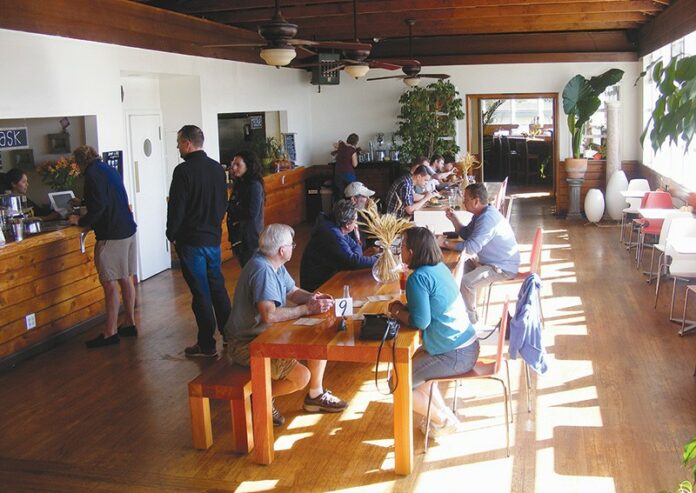
Trumpeter Erik Jekabson and drummer John Santos are North Bay institutions, each of whom has a loyal following and a career of exciting collaborations and experimental projects. This week, the two team up for a special afternoon concert that will explore diverse and engaging jazz. Jekabson’s quartet makes smart, post-bop jazz that’s both melodic and avant-garde. Santos is known for his Afro-Latin-jazz fusions and sharp drumming. Together, the two will push the boundaries of their talents for a day of music presented by the Napa Valley Jazz Society. The Erik Jekabson Quartet and John Santos perform on Sunday, June 15, at Silo’s, 530 Main St., Napa. 4pm. $20—$40. 707.251.5833.

Return of the NorBays!

The NorBays, the Bohemian‘s annual celebration of local music and all-around good time, is coming to Sebastopol’s HopMonk on Aug. 16.

We’ll be handing out gold record awards for the best bands in nine different categories of music, honoring the top talents in Sonoma, Marin and Napa counties. We’re also returning with another 24-Hour Band Contest.

Here’s how it works. Preliminary write-in voting for the NorBays is live now on bohemian.com. Tell us your favorite bands in genres ranging from folk to world to rock-and-roll. If you’re a band, tell your fans. If you’re a fan, tell your friends. The bands with the most write-ins go on to the final voting round on July 2. Voting ends July 23. The winners will be announced and awarded at the show.

As before, the 24-Hour Band Contest is taking sign-ups from all skill levels. Tell us who you are and what you play. On Aug. 15, we’ll pick names at random to form bands made up of complete strangers. You then have one earthly rotation to come up with two original tunes and perform them at the show the next night at the NorBays. Sign up now at bohemian.com and keep rockin’ in the free world.

Click here to vote for your favorite band and here sign up for the 24-Hour Band contest.

The 2014 North Bay Music Awards and 24-Hour Band Show happens Saturday, Aug. 16, at HopMonk Sebastopol, 230 Petaluma Ave., Sebastopol. $10 (all ages).

San Francisco Quirk

0

‘This is a very busy time for me, shows opening all over,” enthuses Bay Area playwright Peter Sinn Nachtrieb, speaking from Wooly Mammoth Theater in Washington, D.C., where his newest show,
The Totalitarians, opened recently. “It’s a dark comedy,” Nachtrieb says of the sharp-witted political satire.

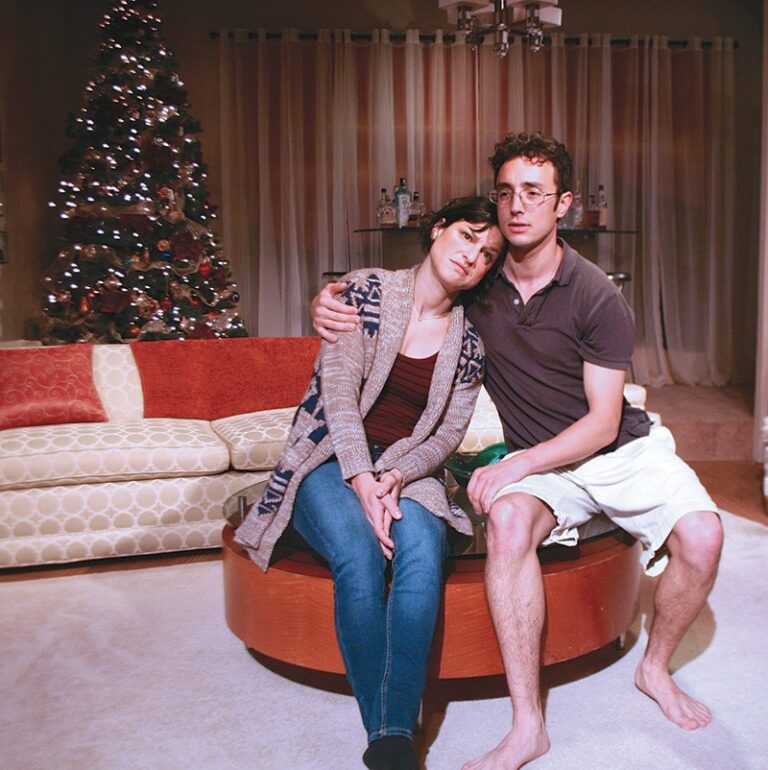
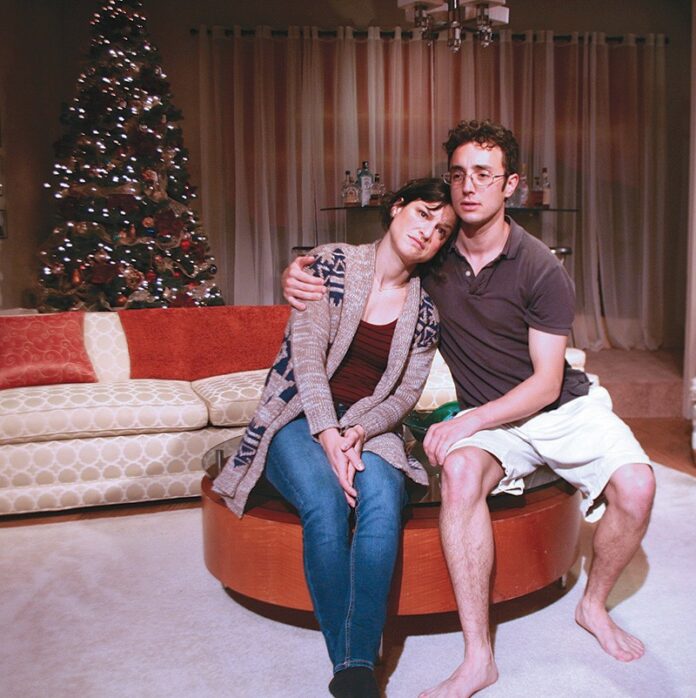
Of course, the phrase “dark comedy” pretty much describes everything Nachtrieb writes, including the offbeat T.I.C. (Trenchcoat in Common), opening this weekend at Main Stage West in Sebastopol.

Directed by Sheri Lee Miller, the play features Ivy Rose Miller as a teenage girl who starts a blog about the strange people who live in her San Francisco apartment building.

“It’s got every archetype of a Bay Area inhabitant you can think of,” says Nachtrieb. “I wanted to populate the play with lots of different types, people we don’t really know very much about, but who we see every day.”

Asked if his characters spring from his imagination or are suggested by real folks he’s actually encountered, Nachtrieb laughs.

“Well, I don’t know that many flasher-exhibitionists,” he allows, referring to one colorful character played by Gary Grossman. “That character did emerge out of my own head, but most of the other characters are suggested by people I’ve observed, people who just seem very serious, very single-minded and driven by different causes, though I don’t always know what those causes are.”

In the case of T.I.C., those “causes” take the story in some pretty unexpected directions, plunging our young protagonist into a weirdly funny, but potentially dangerous, world. As a playwright specializing in dark comedies, Nachtrieb knows he must maintain a very a careful balance between what is funny and what is “dark.”

“It’s that tension between the lighter moments and the darker ones that I really like exploring,” says Nachtrieb, who honed his skills writing for the beloved Bay Area comedy troupe Killing My Lobster. “My background is in writing sketch comedy, so the funny stuff is kind of my ‘sweet spot.’ With my plays, I always want to tackle serious issues, serious ideas, but it’s always through the lens of comedy, because that’s just how I see things.”

It has been pointed out that many of Nachtrieb’s characters are, for lack of a better terms, a little “inappropriate,” like the flasher in T.I.C.

“Yes,” he laughs. “And one thing I’ve found is that the characters who are the most fun to write, are the ones who are the most inappropriate.”

‘T.I.C. (Trenchcoat in Common)’ runs Thursday–Sunday, June 13–June 29 at Main Stage West. 104 N. Main St., Sebastopol. Thursday–Saturday, 8pm; 5pm matinees on Saturday and Sunday. $15–$25. 707.823.0177

Who Is Levine?

0

Assemblyman Marc Levine sailed to an easy primary victory last week, earning what will almost certainly be a second term in the Sacramento statehouse. He’ll square off in November against Republican challenger Gregory Allen.

But Levine, who represents Marin and parts of Sonoma County, has peeved area progressives since he was first elected in 2012 after serving as a San Rafael city councilman.

In almost any other part of the country than hyper-liberal Marin and Sonoma, Levine’s positions on many issues would make him the most progressive pol on the block.

Yet detractors say he’s a prime example of a politician with excessive fealty to anti-environmental interests, a charge that stems in part from a vote he abstained from that would have granted the California Coastal Commission the right to levy fines on eco-violators without a court order. He had originally supported the bill.

Pulitzer Prize–winning journalist Gary Cohn argued in a well-traveled piece on capitalandmain.com that Levine embodies the California “corporate Democrat.”

Veteran progressive activist and media critic Norman Solomon, an occasional contributor to these pages who ran for Congress in 2012, says Levine is cut from the same cloth that elevated Jerry Brown to the governorship.

Solomon, who lives in Inverness and supported Diana Conti over Levine this year, says that “the Jerry Brown situation is part of a pattern that is replicated by Marc Levine. It’s seen as a winning approach—talk progressive and govern corporate centrist.”

Leo Wallach, a political consultant for Levine, roundly disagrees with the “corporate Democrat” tag and says the report was a “cooked-up hit piece on Marc.”

“I don’t think Marc likes labels,” he says, “but the accurate label would be ‘progressive independent Democrat.'”

Wallach says that label inspires some voters while making others nervous about Levine’s principles. “He didn’t take the interest-group path to Sacramento,” Wallach says. “He has progressive values and an independent approach.”

You might say the same of Brown, who also cruised to a primary victory last week and will face moderate Republican Neel Kashkari in November.

But in one critical way it is difficult to equate Levine as a sort of Mini Moonbeam beholden to corporate interests: Big Oil is the state’s largest and most powerful special-interest lobby. A recent California Common Cause study of the lobby’s influence found the oil and gas lobby, led by the Western States Petroleum Association, had spent nearly $15 million in 2013–14.

Levine has accepted zero dollars from the gas and oil lobby. By contrast, Brown has taken more than $2 million from the industry in recent years.

The “corporate Democrat” tag represents a curious evolution of descriptors, when you consider that a similar “new Democrat” designation was applied to Bill Clinton in 1992, when none other than Jerry Brown was seen as the great progressive antidote to Clinton-style centrism. Brown’s campaign that year was a model of pre-big money politics; he vowed to accept individual donations of no more than $100, and roared into the Democratic convention with hundreds of delegates in his camp.

Now the local media has taken to calling Levine a “new-style Democrat,” who has accepted contributions from various real estate interests, the California Chamber of Commerce and a hedge-funder or two.

But he has offered legislation that flies in the face of the “corporate Democrat” charge, says Wallach. The first bill Levine offered this session would have banned plastic shopping bags in big retailers. Opposed by the chamber, it petered out in the Assembly and Levine sent it to the “inactive file.”

Levine also played into the hands of the tax-and-spend-liberal crowd when he pushed a bill that would double fees on automobile registration to support fingerprint identification programs. It passed.

Critics of Levine point to his vote last year on a bill that set the stage for an expansion of fracking in the state. Levine had previously offered a bill of his own that would have put a moratorium on the practice, and says he still supports a moratorium. This year, the Press Democrat reported that a pro-fracking supporter paid for anti-fracking materials on his behalf, raising the ire of local progressives.

To opponents, the Coastal Commission non-vote was faux-progressivism of the worst sort. Yet Wallach says it signaled Levine’s deep-dive into the details of the bill, which, Wallach says, would have “created some bad incentives and unintended consequences” had it passed.

Wallach insists that Levine supported the principle driving the bill. “Some of these things are very technical, and it’s very important to have a legislator who is willing to look past the title of a bill.”

But the anti-Levine forces are not assuaged. U.S. Congressman Jared Huffman was one of numerous statewide Democrats to endorse him this year, a move Solomon calls “unconscionable.”

“Progressive independent Democrat” or company man? If reelected, Levine’s next term will be revealing.

Beat the Heat

0

President Barack Obama and the leaders of the industrialized (read: carbon emitting) nations of the world have
failed to turn the planet away from its plunge off the climate-change cliff. Fortunately,
there are people showing
them the way.

Here in the North Bay, efforts to combat the climate crisis are in full effect. We profile three of them in this year’s annual Green Issue. (Also read this week’s Open Mic from the Climate Protection Campaign’s Ann Hancock, p6). While none of these groups can save the world on their own—at least not yet—their actions are essential for showing the rest of us and our ineffectual leaders what can and must be done.

The stakes couldn’t be higher. The effects of climate change are already upon us—extreme weather, changing ecosystems, mass extinction, failing crops. The doomsday scenarios will continue to unspool.

Is it too late? Maybe. But isn’t it better to do what we can? Let those leading the fight against climate change in the North Bay serve as our inspiration.
—Stett Holbrook

MARIN CARBON PROJECT

Most efforts to cool the planet focus on reducing greenhouse gas emissions and switching to cleaner, more energy efficient technologies. But there’s another approach that gets far less attention: carbon sequestration, which involves taking carbon out of the atmosphere and putting it into the ground, where most of it came from.

The Marin Carbon Project (MCP) has been quietly doing that work for the past six years. When the Bohemian first reported on the project in our 2012 Green Issue, they were very much in the proof-of-concept stage. They have since scaled up and taken the show on the road.

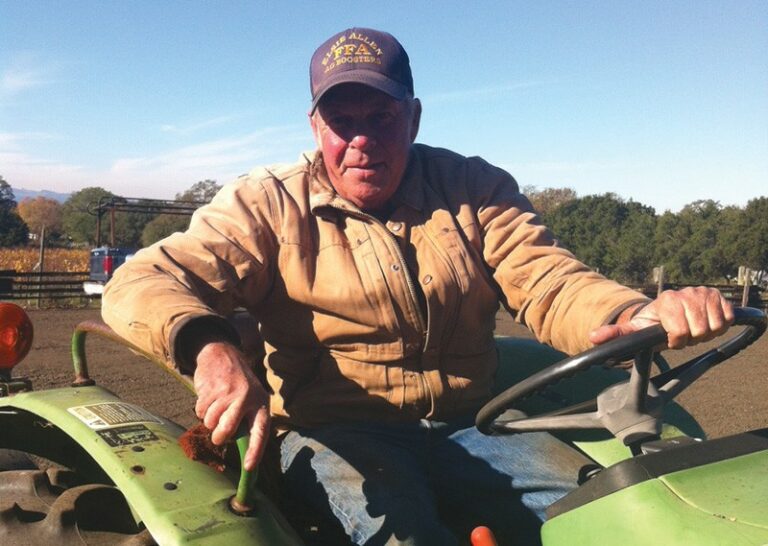
“It’s better than successful,” says co-founder John Wick.

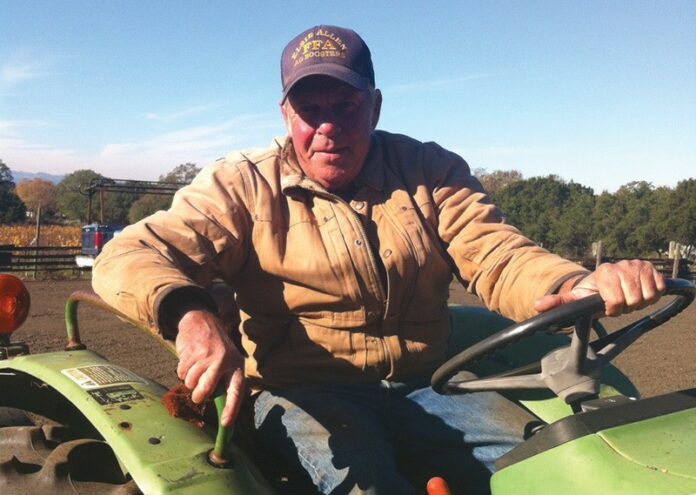
The project began after researchers noticed that dairy ranches with high concentration of manure spread over them had high levels of carbon and organic matter in the soil, greener grass, and greater water retention. Guided by UC Berkeley scientist Whendee Silver, the researchers applied a half inch of compost to a test plot on Wick’s ranch in West Marin to see what was going on. They were thrilled by what they discovered underground.

After one year, test plots showed at least one ton of carbon per hectare. A year later, without adding additional compost, they found another ton of carbon in the soil. Same thing the year after that. And on it went.

If adopted widely enough, Wick believes the technique can make agriculture a global carbon sink and bring atmospheric carbon down.

“We can actually do this,” he says.

Tory Estrada, who serves on the MCP’s steering committee and is policy director for the Carbon Cycle Institute, the nonprofit organization that oversees the MCP, is working with ranchers to show them what compost and a host of techniques like restoring native plants and waterways will do for their soil—and their bottom lines.

Not all farmers are concerned about climate change, so he doesn’t always lead with benefits to the climate, but ranchers are very concerned about the cost of importing hay during times of drought. According to MCP research, using their techniques results in an average of 50 percent more grass growth because the soil holds more water. And banked carbon in the soil will become a valuable commodity as the cap-and-trade market grows.

Disseminating these practices via local resource conservation districts throughout the country could kickstart a whole new approach to farming—and a cooler climate. Estrada hopes better soil and pasture management will lead to agriculture being seen as an incentivized climate solutions, like electric vehicles and solar power, which both enjoy public subsidies.

“That’s when this thing will go viral,” he says.

Meanwhile, Wick is working with San Francisco to help nullify the city’s carbon emissions to make it the world’s first “climate beneficial city.” He’s also talking with Levi’s, the North Face and Patagonia to explore sourcing wool from carbon sequestering farms. Cool stuff for a hot planet.—Stett Holbrook

[page]

DAILY ACTS

Trathen Heckman is in his backyard micro-ecosystem with the buzzing honeybees and the kiwis, the root medicines and the roosters, as he explains the mission of Daily Acts, the Petaluma organization he founded.

Heckman, a former pro snowboarder and happy refugee from corporate America, decided about 10 years ago that he wanted to become “less a part of the problem,” as he puts it, and set his shoulder to the wheel of activism with a plan to give people the tools and skills to act locally while fretting globally. He was feeling, he says, “a lack of connection, a lack of vitality.”

He was out there slogging away in the Babylonian trenches, until 9-11 and the death of his mom, twin events which became the catalyst for Heckman to zero-in on how he wanted to live. He sought out pioneer activists in what was then a new world of backyard wetland-to-forest systems, admired their spirit and sensibilities and wondered, he says with a gleam and a laugh, “what’s in their Wheaties?

Enter Daily Acts, a nonprofit that offers workshops, actions, networking and other activities to help engender a shared sense of connectivity, vitality and a general community joie de vivre that is heavy on volunteer labor and cross-generational appeal. Among its other successes, Daily Acts has spearheaded legislative efforts in Sonoma County, for example, to make it easier for people to set up graywater-reuse systems in their homes, through a project called the “Laundry to Landscape” program.

This is the lingo of the lush and fecund backyard ecosystem, replete with propagation guilds and edible landscapes, sustainability tours and “mulch madness” parties. Daily Acts also brings the edible-ecosystem model to schools, churches, government plots and, critically, minority communities. Heckman’s wise to the elitism critique and notes that the organization recently put together its 100 Salsa Gardens project that came complete with lots of donated wine barrels and buy-in from the county’s large Latino population. Add “ecological equity” to the vernacular.

We’re living in a period characterized by a “confluence of crises unlike anything we’ve seen in human history,” Heckman says as he plucks raspberries and boysenberries from his backyard food forest. With a sweep of his arms, he describes the layers, from the root medicines down below to the top of a lone towering redwood, with layers in-between yielding a bounty that Heckman says runs from between 500 and 1,000 pounds of food a year.

It’s a living embodiment of human-scaled efforts to combat climate change, a marvel of sustainable cool that pushes back against hardened notions of suburban life.

The “crabgrass frontier,” as described by Kenneth Jackson in his landmark 1985 study of the same name on the social construct of suburbia, is giving way, slowly, to an actual model of down-home “conservative” values that highlights, well, actually conserving things, appreciating their value, and reusing resources instead of wasting them.

Heckman’s efforts speak to a curious—and welcome—turn of events in the development of the American suburb.

The suburban boom in the
U.S. kicked into gear in the post–WW II era, when cookie-cutter neighborhoods were carved out of farm fields for returning veterans. The war years themselves had seen the phenomenon of the “Victory Garden,” where Americans were encouraged to do their part to beat fascism by growing lettuce and tomatoes at home. Once the war ended, the homegrown gardens gave way to grass planted on former farmland, and the eco-nighmare lawnmowers invaded, like Patton.

Nowadays, efforts such as Heckman’s are part of a new push to achieve victory over the global scourge of rising temperatures and sea levels which has, despite the best efforts of the climate-change deniers, manifested in tangible impacts, such as the drowning of the Florida Keys and hundred-year storms that happen every three years.

For his part in this new war effort, Heckman installed a 1,500-gallon water tank that captures rainwater from his gutters and recirculates it throughout the property. The tank helps create the ground-level wetland that supports all measure of berries, fruits and veggies, stuff like jasmine, garlic and Pakistani black mulberries, and a plum tree that’s been grafted so several varieties grow from the main trunk.

Daily Acts’ offices are several blocks away from his homestead, and Heckman notes that you can see what his organization’s efforts have yielded. Most of the homes here in pretty Petaluma hew to standardized suburban practices of green lawns and mowers thereon, but every so often, there’s a wildflower outlier that’s been given over to an edible front yard.

“It was such a different world a decade ago,” he says.—Tom Gogola

[page]

SONOMA BIOCHAR PROJECT

There is a substance that’s easy to make that could reverse the trend of global warming, increase plant production, retain water and eliminate the need for chemical fertilizers. No, it isn’t that magic extraterrestrial spice from Dune; it’s something everyone can make in their own backyard. It can be scaled up for large projects. It can even be made as a byproduct of energy production. It’s virtually unknown to most of the world. It’s biochar.

“It seems too good to be true,” says David Morell, former Environmental Protection Agency administrator and project manager of the Sonoma Biochar Project. “If it’s as good as its proponents say, why isn’t it used everywhere? And it feels like magic—we’re sequestering carbon, capturing energy, helping plants grow, saving the planet, yadda, yadda. And that makes something hard to sell.

“I’ve actually run seminars on this,” adds Morell. “‘If it’s such a good idea, why aren’t we doing more of it?’ The answer has to do with marketing.”

Let’s back up a step. First of all, what is biochar? It’s basically charcoal made from biomass like plants and trees that have been pyrolized—that is, burned at very high temperatures (650–930 degrees) without fire. “The heat drives off all the gasses that are in the wood, leaving pure, elemental carbon behind,” explains Morell. Carbon is retained much more efficiently through this process, and that sequestered carbon can be buried in the earth, where it retains about 80 percent of its carbon for at least a hundred years, according to Johannes Lehmann of Cornell University, one of the nation’s leading biochar scientists.

Lehmann theorizes that 10 to 12 percent of the world’s carbon emissions can be offset by replacing a slash-and-burn technique with slash-and-char, which would turn the waste plants into biochar through on-site pyrolisis units. So far, biochar has proven to be the most realistic—if not the only—carbon-negative energy production method we’ve ever known.

The idea of burying charred wood goes back to about 2,500 B.C.E., when indigenous peoples in the Amazon rainforest began making and burying primitive biochar to make the notoriously infertile soil better for growing crops. They didn’t worry about carbon sequestration, however. Atmospheric carbon dioxide has increased from 280 ppm in 1750 to 367 ppm in 1999, according to data from Cornell University, and the levels of today have not been exceeded at any time in the past 420,000 years.

But the data on biochar’s big four benefits—carbon sequestration, soil health, water conservation and energy production—only goes back about 15 or 20 years, says Morell. His work focuses largely on water retention, which he says has shown, in some cases, to be as high as 8 percent more than non-biochar soil.

The Sonoma Biochar Project kicked into gear with a $75,000 federal grant in October—which was matched by the Sonoma County Water Agency and by passionate experts like Morell and farms like Green String and Swallow Valley—to build the county’s first integrated biochar production system. It makes about 500 pounds of biochar per day, enough to just about cover a quarter-acre. Even with this breakthrough—they designed and built the unit from scratch to ensure minimal air emissions—they’re on “the low end” of biochar production. “It’s like buying a car that you have to crank on the front,” says Morell, adding that the top-tier units cost upwards of $250,000.

As for marketing, that’s something Raymond Baltar has been working on as director of the Sonoma Biochar Initiative, the nonprofit arm of the Sonoma Ecology Center which oversees the Sonoma Biochar Project. “There is not a huge market right now for biochar,” he says. “It’s growing, but it’s still pretty small compared to other soil amendments out there because it’s so new.”

For his MBA thesis at Dominican University, Baltar wrote a business plan for a gassification program at the Sonoma County landfill that also produced biochar. “We showed pretty conclusively that in order to make the project work you needed biochar and the electricity generation portion of it,” he says.

“Initially, I think, biochar caught wide attention because of the potential for carbon sequestration,” says Morell. “Putting carbon effectively into the ground is an attractive process. But the economics of that is near zero. In the U.S., we have no carbon credits. We have no ability to generate economic return from dealing with the planet’s climate challenge. That’s kinda crazy, but it’s true.”

One of the downsides raised about biochar is that if this is done at scale, people might start farming trees just to make biochar.

“But that might help carbon dioxide absorption anyway,” Baltar says.—Nicolas Grizzle

Climate Change

0

Recently, we were scouting for outstanding climate-protection solutions that we could import here. We contacted communities nationwide that excel in reducing greenhouse gas emissions. We spoke with a person in the Washington, D.C., area who said, “You’re from Sonoma County? Why are you asking us about solutions? Everyone knows that Sonoma County is the leader.”

This reaction reinforces what we’ve heard for years. Sonoma County is known as the California of California, meaning that as California is the nation’s climate-protection leader, Sonoma County is California’s climate-protection leader. We can take pride that we inspire other communities.

Why is this happening here? I believe it’s because business people, policymakers and citizens care about more than themselves and what’s immediately in front of them. The evidence is everywhere from the extraordinary level of volunteerism to our climate leadership.

The most recent example is Sonoma Clean Power. The creation of this new public agency is the result of collaboration among government, business and the community over many years. Because California now has two successful “community choice” programs—Marin’s and Sonoma’s—the model is gaining momentum.

Some 12 other California communities are now starting up community choice programs. (But AB 2145 will limit consumer choice. Please check out www.no2145.org. )

Although we can take pride in Sonoma County’s accomplishments, we have a lot more to do to leave our children a life-sustaining planet. The concentration of greenhouse gas in the atmosphere continues to rise, increasing the blanket of heat-trapping gas that causes global weirding, such as the drought, Superstorm Sandy and other extreme weather events. We must keep pushing solutions commensurate with the scale of the crisis.

Please join us.

Ann Hancock is the co-founder and executive director of the Climate Protection Campaign. www.climateprotection.org.

Open Mic is a weekly feature in the ‘Bohemian.’ We welcome your contribution. To have your topical essay of 350 words considered for publication, write op*****@******an.com.

Emphasize Eco

0

In the small town of Fairfax, community comes first.

This weekend’s Fairfax Festival presents a special focus on environmental issues, with the 10th annual Ecofest taking place both days, June 14–15. Fairfax has long set the standards for leading GMO-free campaigns and limiting large chain stores from sterilizing the economic and social landscape. Exhibitors from around Marin will be offering organic wine and beer, innovative environmental practices and interactive family fun that highlights the significant ways the community is moving toward sustainability.

Throughout the weekend, the festival offers food, wine, art and live music on multiple stages, featuring favorite local acts like Danny Click and Beso Negro; the live acts continue through the night in Fairfax’s vibrant downtown clubs. Saturday features the annual parade that draws out the entire town. This year’s grand marshal is Phyllis Gould, a veteran of the Sausalito shipyards during WWII à la “Rosie the Riveter.” The Friday before the festival also boasts Fairfax history night, held at the Women’s Club, that explores 100 years of colorful characters and iconic memories as well as fun film showings at Central Field.

The Fairfax Festival and Ecofest take place Saturday–Sunday, June 14–15, throughout downtown Fairfax. 10am–6pm. Free.
www.fairfaxfestival.com.

Debriefer: June 11, 2014

0

VOTE. OR ELSE.

Last week’s primary election saw some dismally low percentages of people making it out to the polls—the worst ever, according to some reports.

Well, it’s a good thing Assemblywoman Mariko Yamada isn’t in charge, because all you non-voters would have gone to jail!

OK, that’s overstated. But Yamada, D-Davis, said in a recent interview that Americans might consider a compulsory-voting system similar to Australia’s.

Her suggestion came in the context of a discussion where Yamada lamented Supreme Court campaign-finance rulings, and voter-suppression efforts. Yamada noted that one solution to voter apathy would be to penalize non-voters, though she didn’t say what form the penalty would take. Australians can be fined for not voting in federal elections. Repeat offenders are forced to listen to Olivia Newton John records.

Yamada hasn’t offered any legislation, so stop freaking out, we were just talking. She is terming-out of Sacramento this November. We’ll be checking to see if she takes any fact-finding holiday trips to Australia.
—Tom Gogola

CHEESE POLICE

For centuries, the process of making cheese has involved aging the wheels on wooden racks. But thanks to a ruling last week by the FDA, the process of aging on wood may soon be outlawed.

“This could potentially shift the entire industry, nationally,” says Sheana Davis, owner of the Epicurean Connection cheese shop in Sonoma and producer of the city’s annual cheese industry conference. Many local cheese makers, like Matos St. George, Vella Cheese Co. and Bellwether Farms use wood to age their cheese.

The FDA cited several companies after an inspection of upstate New York cheese production facilities, prompting a request for clarification from state officials, who had been allowing the process of aging cheese on wood, as had cheese-friendly states like Wisconsin and California. The response from the FDA cites a rule requiring that food-making equipment be able to be adequately cleaned, and “wooden shelves or boards cannot be adequately cleaned and sanitized,” says the agency in a statement.

The government’s primary concern is the bacteria listeria. On March 11, the FDA suspended production at Roos Foods, Inc. due to an outbreak stemming from the company’s “Hispanic-style cheese products” that resulted in one death and at least eight infections.

Listeria is not the only microbe capable of growing on wooden cheese boards. In fact, many microbes that inhabit the cheese’s resting place are essential to the unique flavor and texture of a given cheese.

“It’s potentially pretty devastating to cheese makers,” says Gordon Edgar, San Francisco author of Cheesemonger: Life on the Wedge. “This is a tradition that’s been going on for, really, a thousand years.” New regulation might force cheese makers to change their recipes, and it could prove too expensive for small businesses to buy new equipment.

The FDA was reportedly in the process of issuing an updated statement to its ruling Tuesday, but details were not available before deadline. Calls to the USDA were not returned by press time.—Nicolas Grizzle

K&L Goes XL

0

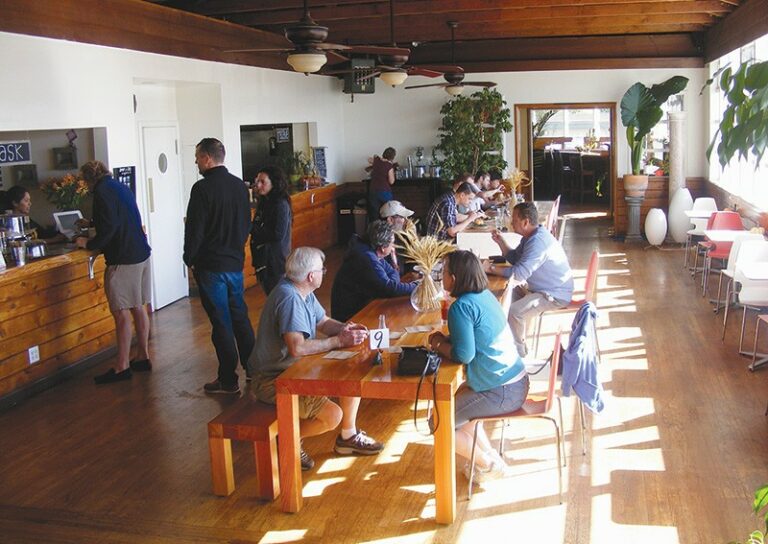
When Sebastopol’s Barlow development got underway last year, there was talk that downtown restaurants would suffer as the masses headed to the shiny new project and its ample parking. But if K&L Bistro was feeling any trepidation, you wouldn’t know it now. The 12-year-old restaurant just completed an extensive renovation, and the place looks reborn. Owners Karen and Lucas Martin (K&L, get it?) had long been eyeing the knitting shop next door. Thanks to an improving economy and a friendly landlord, they broke down the walls to add some needed space. The restaurant reopened
May 26.

The restaurant tripled in size and is now 3,200 square feet with space for a hundred diners. There’s a gorgeous, 26-foot-long copper bar (and a new full liquor license), an oyster bar, booth seating and outdoor dining. The tiny kitchen got an upgrade too.

The restaurant’s menu of bistro classics, however, remains largely the same, but there is now an eclectic bar menu (i.e., corned beef tongue sliders, Korean fried chicken, pork belly and watermelon salad) and nine craft beers on tap.

Is Lucas Martin worried about the Barlow siphoning away business?

K&L Bistro, 19 S. Main St., Sebastopol. 707.823.6614. klbistro.com.

Letters to the Editor: June 11, 2014

Why I Like You

The Bohemian is always a pleasure to read. I prefer hard copy to any online experience, and the quality of the paper, the layout and organization never fail to please. Yours is the only publication I look at that does not have typos, grammatical errors and ridiculously bad writing. Please take a look at SFGate.com and the Pacific Sun for thousands of bad examples of what I mean. The Bohemian is obviously staffed by intelligent people who care about producing a quality publication. When I open an issue, I know I am in good hands and will have a good time reading through all the thoughtful and accurate info. Thank you for the weekly pleasure.

Mill Valley

Climate-Friendly Food

I am delighted that the EPA has finally moved to abate the disastrous impacts of climate change by regulating carbon-dioxide emissions from power plants. But given the adverse reaction from the coal industry, the agency should have issued parallel regulations on emissions from meat-industry operations. Each state could then determine its own strategy for curbing greenhouse gases.

A 2006 U.N. report estimated that meat production accounts for 18 percent of man-made greenhouse gases. A 2009 article in the respected World Watch magazine suggested the contribution may be closer to 50 percent.

The meat industry generates carbon dioxide by burning forests to create animal pastures and by combustion of fossil fuels to confine, feed, transport and slaughter animals. The much more damaging methane and nitrous oxide are discharged from digestive tracts of cattle and from animal waste cesspools, respectively.

In the meantime, each of us can reduce the devastating effects of climate change every time we eat. Our local supermarket offers a rich variety of plant-based lunchmeats, hotdogs, veggie burgers and dairy-product alternatives, as well as ample selection of vegetables, fruits, grains and nuts. Product lists, easy recipes and transition tips are readily available online.

Santa Rosa

Share the Road

Assuming every motorist is a careless idiot, and getting out of their way will never shift bicyclists out of second-class citizenship (Open Mic, May 21)—this is a civil rights issue, as much as it is an issue about access to education, because transportation is vital to economic and social opportunities in this sprawling society. It’s also a health issue, since regular exercise while commuting would eradicate America’s obesity epidemic.

Sharing the public roads is possible without friction, but not without education. A motorist is legally required to provide three feet of clearance to cyclists in a traffic lane. That can be done without crossing double yellow lines by most cars. My 1983 bike route sign introduced both Share the Road, a meme gone national, and three feet clearance, now the law in 23 states, including California.

Sure, cyclists like the tech titan in Mill Valley and neon-clad crews blowing through stop signs and red lights give riders a bad name. But bicyclists aren’t killing 30,000 motorists a year, along with several hundred pedestrians and bicyclists.

The documented failure to charge motorists who’ve killed pedestrians or cyclists with their vehicle reflects the motor-vehicle bias of our entire transportation system. Engineered solutions, such as bike lanes and separate paths, have not increased safety over sharing existing roads legally and visibly. Education of motorists and cyclists on how to share the road has been squeezed out by engineering costs for separate but unequal bike facilities. The carnage in crosswalks demonstrates pedestrians’ need for traffic-calming and pedestrian-friendly sidewalks.

Stinson Beach

Open Our Hospital

My husband and I attended our first Palm Drive Hospital community meeting and came away delighted. The Open Our Hospital campaign created by the allied physicians of Palm Drive and the Palm Drive Health Care Foundation makes sense on a business level. It is so refreshing to see fiscal responsibility embraced. Spending wise money by hiring professionals with successful track records such as nationally recognized hospital-turnaround expert Terry Newmyer is a good move. His excellent presentation showed various cutting-edge ideas to make Palm Drive the state-of-the-art hospital our community can get behind.

Imagine marketing a “no wait” emergency room. St. Helena Hospital did this with great success. Imagine our already in-place, award-winning stroke and orthopedic surgery specialists turning Palm Drive into a “destination hospital.”

I’m excited by the possibilities and I want to be involved. The difference now is that rather than feeling pity for a dead horse being beaten, I can envision the jewel just waiting to be polished within those hospital walls.

Susan Bendinelli

Sebastopol

Write to us at le*****@******an.com.

June 15: Erik Jekabson and John Santos at Silo’s

Trumpeter Erik Jekabson and drummer John Santos are North Bay institutions, each of whom has a loyal following and a career of exciting collaborations and experimental projects. This week, the two team up for a special afternoon concert that will explore diverse and engaging jazz. Jekabson’s quartet makes smart, post-bop jazz that’s both melodic and avant-garde. Santos is known...

Return of the NorBays!

The NorBays, the Bohemian's annual celebration of local music and all-around good time, is coming to Sebastopol's HopMonk on Aug. 16. We'll be handing out gold record awards for the best bands in nine different categories of music, honoring the top talents in Sonoma, Marin and Napa counties. We're also returning with another 24-Hour Band Contest. Here's how it works. Preliminary...

San Francisco Quirk

'This is a very busy time for me, shows opening all over," enthuses Bay Area playwright Peter Sinn Nachtrieb, speaking from Wooly Mammoth Theater in Washington, D.C., where his newest show, The Totalitarians, opened recently. "It's a dark comedy," Nachtrieb says of the sharp-witted political satire. Of course, the phrase "dark comedy" pretty much describes everything Nachtrieb writes, including the...

Who Is Levine?

Assemblyman Marc Levine sailed to an easy primary victory last week, earning what will almost certainly be a second term in the Sacramento statehouse. He'll square off in November against Republican challenger Gregory Allen. But Levine, who represents Marin and parts of Sonoma County, has peeved area progressives since he was first elected in 2012 after serving as a San...

Beat the Heat

President Barack Obama and the leaders of the industrialized (read: carbon emitting) nations of the world have failed to turn the planet away from its plunge off the climate-change cliff. Fortunately, there are people showing them the way. Here in the North Bay, efforts to combat the climate crisis are in full effect. We profile three of them in this...

Climate Change

Recently, we were scouting for outstanding climate-protection solutions that we could import here. We contacted communities nationwide that excel in reducing greenhouse gas emissions. We spoke with a person in the Washington, D.C., area who said, "You're from Sonoma County? Why are you asking us about solutions? Everyone knows that Sonoma County is the leader." This reaction reinforces what we've...

Emphasize Eco

In the small town of Fairfax, community comes first. This weekend's Fairfax Festival presents a special focus on environmental issues, with the 10th annual Ecofest taking place both days, June 14–15. Fairfax has long set the standards for leading GMO-free campaigns and limiting large chain stores from sterilizing the economic and social landscape. Exhibitors from around Marin will be offering...

Debriefer: June 11, 2014

VOTE. OR ELSE. Last week's primary election saw some dismally low percentages of people making it out to the polls—the worst ever, according to some reports. Well, it's a good thing Assemblywoman Mariko Yamada isn't in charge, because all you non-voters would have gone to jail! OK, that's overstated. But Yamada, D-Davis, said in a recent interview that Americans might consider a...

K&L Goes XL

When Sebastopol's Barlow development got underway last year, there was talk that downtown restaurants would suffer as the masses headed to the shiny new project and its ample parking. But if K&L Bistro was feeling any trepidation, you wouldn't know it now. The 12-year-old restaurant just completed an extensive renovation, and the place looks reborn. Owners Karen and Lucas...

Letters to the Editor: June 11, 2014

Why I Like You The Bohemian is always a pleasure to read. I prefer hard copy to any online experience, and the quality of the paper, the layout and organization never fail to please. Yours is the only publication I look at that does not have typos, grammatical errors and ridiculously bad writing. Please take a look at SFGate.com and...
11,084FansLike
4,446FollowersFollow
6,928FollowersFollow