Floor-Lickin’ Good

0

Chile verde is a simple dish, but so rich and complex that one might expect it to be harder to prepare than it is. The ingredients in my chile verde combine into something greater than the sum of their parts in remarkable fashion, such that the finished product can make an average cook look like a genius.

I call it “my” chile verde recipe, but it’s adapted from bits and pieces I’ve picked up from various other recipes. I kept messing with my recipe until it got to the point of such awesomeness that, when a housemate once knocked a finished batch off the counter before dinner one night, the five-second rule was cast out the window. We scooped it off the floor and into bowls with a spatula, and ate it with the abandon of desperate drug addicts sharing a soiled needle.

Pork is typically used, but most any meat will do. I like it with venison, and recently made a batch with lamb, which resulted in a dish that tasted like something from an Indian restaurant. It seems that chile verde can do
no wrong.

The tomatillos’ tartness penetrates the meat, tenderizing it and creating new flavor combinations. Meanwhile, the tomatillo becomes transformed into a surprisingly rich and edible version of itself, with a softer, less tart and less strange flavor.

Floor-Lickin’ Chile Verde

1 pound tomatillos

1 pound meat (pork, lamb, venison, beef)

1 pound chile peppers (the more variety, the better)

2 c. cilantro, chopped

1 large onion, chopped

1 head garlic, peeled

5 bay leaves

red wine for cooking

1 quart chicken broth

1 tbsp. cumin powder

1 tbsp. garlic powder

Cut the meat into one-inch (or smaller) cubes, and brown it in the pan or under the broiler. Using a tender cut of meat makes the job a bit simpler. After browning, tough cuts of meat should be braised in three parts water and one part red wine, with five or so bay leaves and a sprinkle of salt. Bake at 300 degrees in a covered dish until the meat softens, adding more water and wine as necessary.

With your meat in an oiled pan on medium heat, cook until it begins to sizzle and add the onion and garlic. Savor the aroma as you stir.

Season with salt, pepper, garlic powder and cumin. When the onions are translucent, add one quart of chicken stock (or jus from your braising) to the pan. Simmer for 30 minutes.

As the meat simmers, the next steps take place in the food processor. Remove and discard the husks from the tomatillos, slice them in half and purée, along with the cilantro, garlic and chile peppers, trimmed and de-seeded as necessary per your heat tolerance.

Stir this mush into the meat pan and simmer for another hour or two on low heat, seasoning with salt and pepper, stirring frequently and adding water or stock as necessary. When you’re ready to finish cooking, stop adding water and allow the gravy to thicken a bit. Serve with tortillas or rice, or in a bowl like soup.

Whether made with a succulent piece of pork or a slow-cooked lamb shank, chile verde is a dish worth waiting for. And if necessary, it’s a dish worth eating off a dirty floor.

Top Torn Tickets

0

It’s that time again. Each December, as the year draws to a close, I always take a moment to sort through the numerous tickets stubs I’ve saved from the 80-something shows I’ve seen over the previous 12 months.

Carefully, I recall each show, assembling the torn tickets in order, with my 10 favorites on top—my top 10 torn tickets. While many of these could arguably be called the best of they year, my choices are a highly personal assortment, the shows that I most enjoyed experiencing, the plays I couldn’t stop talking about, the ones I often wished I could go back in a time machine and watch all over again.

As usual, some very good shows did not make this list. Spreckels Theater Co.’s delightful Annie Get Your Gun and its moving Book of Matthew, for example, along with Cinnabar’s luminous Marriage of Figaro, the Imaginists’ highly innovative War Circus and Marin Theater Company’s eye-popping Lasso of Truth. I liked those shows. A lot. I just liked these other 10 a little bit more.

And with that, here are my personal top 10 torn tickets of 2014.

1. ‘Of Mice and Men’ (Cinnabar Theatre)

“Tell me again about the rabbits, George.” Propelled by heart-wrenching performances from Samson Hood (the iconic man-child Lenny) and Keith Baker (George, the patron saint of difficult choices), John Steinbeck’s aching American masterpiece was resurrected with grace, verve and raw emotional poetry by director Sheri Lee Miller. Shepherding a strong cast of local character actors, with emphasis on the gritty humanity that defines and unites Steinbeck’s broken men and desperate dreamers, this lyrical Cinnabar production opened in March, and nothing that I saw since could unseat it as my favorite show of the year.

2. ‘The Whale’ (Marin Theatre Co.)

Samuel D. Hunter’s scathingly humane tale of an obese shut-in’s clumsy attempt to connect with his angry, estranged daughter was unlike any other play about father-child relationships I’ve ever seen. As directed by Jasson Minadakis, with an astonishing performance by Nicholas Pelczar, this show transcended the conspicuous trappings of Pelczar’s fat suit, refusing to present typical theatrical resolutions, breaking our hearts as we watched one very large heart break before our stunned and freshly opened eyes.

3. ‘Next to Normal’ (Novato Theater Co.)

A searing rock musical about manic-depression and shock therapy, this one is so far beyond the capabilities of most community theater companies, there is no way it should have worked. And yet it did, rocked hard by a compassionate, power-voiced cast who were nothing short of electrifying, helmed with passion and panache by director Kim Bromley. It was crazy good.

4. ‘Return to the Forbidden Planet’ (Novato Theater Co.)

Shakespeare + outer space + classic rock tunes + sexy robots on roller skates = one loony-tunes delight of a mashup musical.

5. ‘Other Desert Cities’ (Main Stage West)

Jon Robin Baitz’s 2012 Tony nominee (and Pulitzer Prize short-lister) was every theater company’s favorite in 2014. This year, I saw three productions of this sly and shattering comedy-drama in the North Bay alone, including a very good one at Pegasus Theater. My favorite was Main Stage West’s vibrant staging. With masterful direction by Beth Craven, a sensational ensemble of local veterans (John Craven, Laura Jorgenson, Sheri Lee Miller) and relative newcomers (Sharia Pierce, Sam Coughlin) found the right balance in Baitz’s tricky tale of ancient family secrets, luring us with laughter before smacking us with truth.

6. ‘An Ideal Husband’ (Marin Shakespeare Co.)

Nearly 120 years after its creation, Oscar Wilde’s sneaky examination of political power and those who would use secrets as leverage against the decent politician still stands as a broad comedy on the surface, but as directed by Robert Currier (and with a spot-on cast including Nick Sholley, Cat Thompson, Darren Bridgett and Marcia Pizzo), it played out as an edge-of-seat thriller, with one supremely satisfying conclusion.

7. ‘Journey’s End’ (Ross Valley Players)

The alternating boredom and terror of war, as sharply illustrated in R. C. Sherriff’s outstanding WWI trench drama, is at its most excruciating when nothing at all is happening. It’s the experience of waiting underground for the next battle, and the way soldiers fill the spaces between, that made RVP’s season opener so gripping, tense, funny and devastating. With a fine ensemble led by David Yen, Steven Dietz and Tom Hudgeons, director James Dunn expertly paced his claustrophobic tale, a rare story of action in which little ever happens until suddenly, and violently, it does.

8. ‘Mother Jones in Heaven’ (Main Stage West)

Irish-American activist Mary Harris Jones may have been the subject of Si Kahn’s skillful musical monologue, but make no mistake: this was Mary Gannon Graham’s show. Set in Heaven’s tiniest whiskey bar, Kahn’s affecting biographical theater piece, directed with laser-focused energy by Beth Craven, was packed with historical details of Jones’ life as a voice of justice, and punctuated with great songs, but it was Graham’s twinkly, transcendent, angry, loving, raw and nakedly brilliant performance—along with her emotionally engaging singing voice—that coaxed Mother Jones’ spirit and legacy back to sweet, breathtaking life.

9. ‘The Beauty Queen of Leenane’ and ‘Lonesome West’ (6th Street Playhouse)

Two plays by Martin McDonagh—both set in the same Irish village, with overlapping characters and references—were presented in repertory at 6th Street. Essentially one story told in two parts, The Beauty Queen of Leenane (directed by Bronwen Shears) and Lonesome West (directed by Chris Ginesi) were memorably off-the-wall, violent, profane, hilarious and riveting.

10. ‘T.I.C. (Trenchcoat in Common)’ (Main Stage West)

It wasn’t the classiest or most coherent play of the year, but Peter Sinn Nachtrieb’s outrageous comedy thriller was possibly the strangest. Equal parts madness, mayhem and mystery—with one particularly well-timed instance of full frontal nudity—Nachtrieb’s unpredictable fantasia on boredom, bombings and teenage angst was directed by Sheri Lee Miller, and showcased Ivy Rose Miller as the only sane person in an apartment complex crammed with oddballs.

Crass and Grace

0

‘The thing about Edith Piaf,” notes musician Al Haas, of the North Bay music trio Un Deux Trois, “is that her life was really the most interesting thing about her, even more interesting than her music.”

Haas, co-musical director of Cinnabar’s Theater’s upcoming Beneath Paris Skies: The Life of Edith Piaf, does not mean to devalue the worth of Edith Piaf’s musical legacy. The iconic artist’s songs, including the indelible “La Vie en Rose,” are among the most beloved French cabaret tunes of all time.

“But her life was very dramatic,” Haas continues. “To be literally born on the street, to be raised by prostitutes, with a father who was a tightrope walker, learning as a child to perform on the streets to make money—that’s just the beginning of a very colorful, very dramatic life.”

The world premiere show was written for Cinnabar by Michael Van Why, Valentina Osinski and Lauren Lundgren; Van Why and Osinski appeared in last year’s Jacques Brel Is Alice and Well and Living in Paris.

“They really wanted to do something similar but original, as a kick-off to the 2015 year,” says Robert Lunceford, co-musical director with Haas. “A lot of it was inspired by the book Piaf, by Edith Piaf’s half-sister Simone Berteaut. What’s interesting is that, in the show, Edith Piaf is played by four actors, two women and two men, who each play different pieces of Edith Piaf’s personality.”

The play alternates between scenes of Piaf’s life and performances of her best-known songs, with a few lesser-known tunes tossed in for good measure, including the obscure “The Woman in White,” a song about psychiatric nurses.

“It’s a very chaotic song,” laughs Lunceford.

“It’s like Edith Piaf on LSD, is what it is,” says Haas. “It’s fantastic!”

In many ways, the song is a perfect summation of Piaf’s life, which included a stint in an asylum.

“Her life is full of paradoxes,” acknowledges Haas. “Her life story is packed with pain, but there’s also sweetness and romance and beauty. There is crassness and crudity, but then there’s elegance and grace. Bit by bit, as her career rose from the streets, she found teachers and supporters who got a hold of her and taught her what she needed to know to be successful in ‘polite society.’ But she maintained her original crassness all the way through.”

“And for what it’s worth,” Lunceford laughs, “some of that crassness has ended up in the show.”

Smile On

It’s official as of Friday Jan. 2: The legendary Smiley’s Saloon in downtown Bolinas will change hands and operate under new ownership. San Francisco attorney Leila Monroe, 35, bought the place, and the ownership transfer’s been a slow-roll over the past month or so.

BoBo locals absolutely love the place, and there was a big musical throw-down last Saturday night to celebrate the 25-year run of the outgoing owner Don Deane.

Word on the street is that Deane transformed Smiley’s from a grim and abject coke-hole to a space wholly dedicated to ramping up the live music—and the gesture was much appreciated in this town of troubadours. So on any given weekend, Thursday included, the joint offers great bands galore, a Sunday night open mic, and by all means, your dog is welcome.

There was a really sweet report on Monroe and the bar in the Marin Independent Journal a few weeks back. The paper noted that Monroe, an environmental lawyer and a surfer, also started a nonprofit organization called Project AMPLIFI, which “stages concerts and events with independent musicians to raise money for worthy grassroots organizations and to heighten awareness of issues facing artists and others of modest means,” according to the Marin paper of record. That’s awesome and explains a lot of the “she’s cool” comments coming from the locals.

I chatted up a Smiley’s regular out on the front deck not long ago, a guy with lots of deep interest and some apparent knowledge of the local history here.

The legend of Smiley’s is that it may be the oldest continuously operating saloon in the state. There are 14 bars in California that have been around for at least a century, the IJ recently reported. But my guy says the history is even deeper, longer and richer than all of that. Smiley’s, he says, may be the oldest continuously operating business of any kind in the state. What?!

The building’s been around since about 1851, and Smiley’s likes to remind you that it served its first drink before Abraham Lincoln was president.

But then they had this thing called Prohibition back in the last century, for a little while anyway. Alcohol exceptions were added to laws written after the constitutional amendment was enacted. Barbers and doctors, for example, could have alcohol on-premises, for sanitizing purposes.

As the story goes, Smiley’s
set up a barbershop in the
front of the saloon when the 18th Amendment took hold.

The Smiley’s regular noted that the bar never closed, it just moved out back and became a speakeasy. Haircuts up front, hoppy ales out back. When Prohibition was repealed, the barbershop closed and the drinking action moved back to front and center.

And that’s the story, dear readers, of why nobody in the hippie utopia of Bolinas has gotten a haircut in 100 years.

The Leftovers

0

It was the day after Christmas and the Tupperware tub was loaded with the last of the Dungeness. I had a mess of crab to contend with, all pre-cooked, cracked and cleaned at wondrous Oliver’s Grocery.

The refrigerator was a little bare beyond the crab, but I did spy the remains of an extra-pungent hard slab of goat cheese, also from Oliver’s. A plan formed in the hungry mind.

Bounce quick to the Bolinas People’s Store for some bacon, eggs, butter, milk. Grab a bouquet of parsley and some fruit. You see where this is going: frittata country, by way of a pastry-free quiche—through the corridor of an attempted omelet. I broke out the junior skillet and sawed off a quarter of the bacon.

Into the pan: some scalloped sweet potato and an old red onion from the larder, diced. Into the bowl: four eggs, a splash of milk, a fistful of chopped parsley, and all the rest of the crab, shredded. Let the baconian activities in the skillet proceed awhile. You’ll know when it’s time. Pour the eggs into the sizzle, add the goat cheese. This is getting good. Let it burble a little while longer.

Now transfer the skillet to the oven for a proper finish, 10 minutes at 350 works for me. In the meantime, make some toast and coffee while cranking Big Mama Thornton’s “Wade in the Water.” Think about the government, or a woman you met. Chunk up a cantaloupe for a refreshing counterpoint to the rich burbling mess in the pan. Eat the damn thing.

The Eyes Have It

Tim Burton’s mid-’60s comedy Big Eyes is about a fad many would prefer to forget—the reign of the highly marketable art of Walter and Margaret Keane. The Northern California–based couple are played by a luminous, frail Amy Adams and the ever vinegary Christoph Waltz. The Keanes’ specialty was figures of starving children with vastly oversized, pleading eyes, black holes in which gibbous-moon crescents of gold glowed.

The funny thing is that the highly sly script by Scott Alexander and Larry Karaszewski withholds judgment on the paintings. The film is a story of abuse, fraud and the nigh impossibility of fighting back against cuteness. Mostly, though, Big Eyes is a comedy of the ancient endless vaudeville of body and soul.

Margaret, a single mom in an era when that label really stung, is a pure creature who allows herself to be deluded by Walter’s scheming. She ends up enslaved in the attic, cranking out big-eyed kids as if they were SOS messages. Eventually, this soulful painter has her revenge on her greedy, slicker husband. There is a classic film’s faith here that the truth will out, with help from a self-satisfied but dogged press: Danny Huston as San Francisco Examiner columnist Dick Nolan, and Terence Stamp as art critic John Canaday.

It’s also a great movie about San Francisco, envisioned with great nostalgia and depicted with the belief that the past was a more colorful place. The movie pops the eyes in Kodachromish Hawaiian scenes and a tiki mansion in Hillsborough illuminated by a Matisse-blue swimming pool, and the city’s snobby veneer of sophistication instantly dissolves under a cascade of kitsch.

If the gear-shift from tragic-comedy into courtroom comedy is a little strained, Big Eyes is in the zone right between animator Frank Tashlin and genre-busting director Preston Sturges.

‘Big Eyes’ is playing in wide release in the North Bay.

Smoke Signals

0

The line between what is legal and illegal when it comes to cannabis in California—and the nug-lovin’ nation at large—gets blurrier with every joint-passing minute. The question is: How, when and where will the big repressive pushback come? Oklahoma and Nebraska?

I was one of the 10,000 people to attend this year’s Emerald Cup at the Sonoma County Fairgrounds, earlier in December. A very enjoyable day, no doubt, but one thing that struck me is how much of a “separate but equal” set-up there is to the festival.

This is a matter of legal necessity, wrapped in an enigma of festival logistics. Medical cannabis is legal in California, so if you had your medical marijuana card, you could enter the area of the Emerald Cup where, let’s face it, most of the real fun was taking place. Where all the good medicine was being dispensed.

If you didn’t have a card, you could buy a pipe and a T-shirt if you wanted. Or you could pay something like $200 and get your card on the spot. I don’t know, doesn’t that just seem a little silly?

The Emerald Cup mirrors how a new day in national cannabis policy is unfolding. Entire states have legalized recreational use, while others continue with an anti-cannabis posture that’s sure to reach some kind of critical mass.

And away we go. Just a couple days before the conference, Nebraska and Oklahoma, red states to the brutal core, announced a lawsuit against Colorado over its legalization move. They said the cannabis had spilled across their borders, but offered scant detail in the suit, just a lot of blowhardification about how cannabis is illegal under federal law, and therefore—wait for it!—Colorado is being very unconstitutional.

Colorado’s telling the Okies to stick it and counting the $300 million in pot taxes it collected this year. Meanwhile, Oklahoma’s still trying to figure out whether to be a Free State when it joins the Union. Get with the program, guys. The culture war is over, and you lost.

Tom Gogola is the news editor of the ‘Bohemian.’

Open Mic is a weekly feature in the ‘Bohemian.’ We welcome your contribution. To have your topical essay of 350 words considered for publication, write op*****@******an.com.

Letters to the Editor: December 31, 2014

Let’s Get Physical

Body Deja Vu (“Body Conscious,” Dec. 24) is so much fun! I love the music, the choreography isn’t so complicated that it takes forever to learn the steps, but it’s more creative than most exercise dance classes. You will sweat and have fun! The atmosphere is friendly and accepting of all, no need to worry about being a beginner, or carrying some extra pounds. I’ve been coming to Body Deja Vu since it opened, and I feel great! And I’m getting better and better!

Via Bohemian.com

Awesome! Love these guys, and their studio is amazing. So much fun!

Via Bohemian.com

Fun! someone should bring it to Parkpoint health clubs in Santa Rosa to help it catch fire.

Via Bohemian.com

Block by Block

If we are going to spend billions every year on healthcare and food assistance programs, then we need to start investing more of that money into sustainable projects that are nearly free or can pay for themselves over time. Community farms on every block would boost every local economy in this country.

I don’ot think it makes sense that we pay farmers to desist from growing certain crops while people go hungry. Farmers should be paid for their surpluses instead. Until we meet the needs of our own people, we are a poor example to the world. Not for long, though—this generation is here to unite us.

This is how we put people back to work. We just need a New Deal that will allow us to build the food system in this country block by block, just like we built up the roads and bridges. It is our most pressing need. Any initial costs would be made up after harvests and sales in the first year.

It will change our society when there is a local food system for every person. God willing, the people will eat and no one will go hungry. Everyone and everything will be free to live in social harmony when our basic needs are met.

Orange City, Fla.

Go Meatless in 2015

It’s time for New Year’s resolutions, particularly those about our health. Although gun violence remains the leading cause of death among young people, our most dangerous weapon is still our fork. Forty-five times as many die of chronic diseases linked to a diet containing animal products, sugar and salt. Hardly a month goes by without another study linking consumption of animal products with obesity, high blood pressure, diabetes, heart disease, stroke and certain cancers.

But times are changing. Hundreds of schools, colleges, hospitals and corporate cafeterias, have embraced Meatless Monday. According to a Gallup poll, 22 percent of American consumers are avoiding meat and 12 percent are avoiding dairy products. Harris Interactive claims that 47 percent of American consumers are reducing consumption of animal products. Accordingly, plant-based alternatives to meat and dairy products are growing explosively, propelled by investments from Microsoft, Paypal and Twitter founders. Fast food chains like Chipotle, Subway and Taco Bell are rolling out vegan options.

Let this New Year’s resolution be about exploring the rich variety of plant-based entrées, lunch meats, cheeses, ice creams and milks in our supermarket. The internet offers tons of recipes and transition tips.

Santa Rosa

Naked Is Beautiful

There’s nothing unbeautiful about any body on the face of this planet (“Twelve Days of Debriefer,” Dec. 24). God made those bodies, therefore there’s nothing ugly underneath your clothing. If you’re looking to ease your way into the nudist lifestyle, nudist resorts, nudist beaches and nudist dating sites (Google “localnudistsingle.com“) are available that offer a slightly less adventurous experience.

Via Bohemian.com

Write to us at le*****@******an.com.

Rearview Mirror

0

You hear about this thing called a “California drought” and think—how bad could it be, really?

We were outside of Bakersfield, hurtling north on what would be the final day of a weeklong drive from New Orleans to the Bay Area. First stop: Berkeley.

We were treading light on American roads lit up with the Fear, or that was the idea, anyway: terrorists at every gas station, illegal aliens in every barn, you know the picture.

I just wanted to find some good doughnuts out here, and maybe some of that Kerouac apple pie and vanilla ice cream business from On the Road, but minus the speed and its manic edge.

It was me and the dogs, a cheap guitar and a bag of clothes in the trunk, not much else. Johnny Cash was the main soundtrack for the ride, his record that was made at the Orleans Parish Prison in the early 1970s. The prison crossroadss marks one of the endpoints of the legendary “blues highway” across America, and here we were, at the other end of it somewhere.

The Man in Black was in the metaphorical rearview as I rolled through Texas and beyond, thinking about new opportunities, or a righteous and legendary death on the Donner Pass, whichever came first.

But here’s the thing: All through the drive west, I was expecting to find—and I mean this literally, in the figurative sense—the last of the Okie Joad family holed up in a barn when we got to California. I was vibing Shangri-La lush as I thought about the Central Valley of lore and John Steinbeck’s descriptions of it. Pendulous plums dripping dew in the grand fecundity of the Eternal Renewal, that sort of thing. I was ready for it.

Instead, I got the Fear: “The dawn came, but no day,” is the first line of Steinbeck’s Grapes of Wrath, which kicks off deep in Dust Bowl Oklahoma. Yet that line ramshackled itself clear across the country, with visions of the creaky Joad caravan playing ghost-roller in the breakdown lane.

The miles of dusty grape vines along the highway should have tipped me off that something was quite amiss in California. But before I knew it, there were signs looming with the orange-glow letters, big roadside portents of badness: “Warning: Dust Storm Ahead.” I thought, oh, these wussy Californians with their overdone warning systems. There was a little bit of wind, some whipped-up dust. No big deal.

Hey, dogs, look at those cool windmills! Just look at them spin! Then we were in it, just like that. The full-on dust storm, a rust-tinged dirt mist of scary blackout proportions, for miles up and down the highway.

Noon broke, but there was no day. The traffic had slowed to a crawl, the wind howled scary, and tumbleweeds the size of Toyotas rolled across the highway. Big freaking tumbleweeds that would have been mesmerizing were it not for the immediate menace of traffic, dust and wind. Welcome to California: Have you heard about the drought?

Grip the wheel and pay attention to the three feet of visibility that you do have. Turn off the Johnny Cash and focus on the road. Eventually, the dust settled.

This was late January 2014, the early days of what would be become the year in fear—and doughnuts. At least there were the doughnuts.

So we made it through the California dust bowl scene and got settled in at the Bohemian just in time for the torrent of terror and weirdness that was to come in 2014: Isis and Ebola, the midterm election meltdown, black kids getting shot and choked everywhere, earthquakes and fires and immigrant haters and radioactive tsunami ramen-wrappers washing up on the beach. At least that last one was just a rumor.

Oh, and good doughnuts, from Tan’s Donuts in Santa Rosa. With all this chaos and uncertainty swirling around, the bilious fear-mongering on your public media outlets, the anonymous shriekers commenting furious on the news sites as they reach for the Klonopin, it is important to remained grounded in the mindful doughnut—if not the moment.

“Hope and fear cannot alter the season.” That’s a line from the late Tibetan Buddhist Chögyam Trungpa, from his Shambhala: The Sacred Path of the Warrior. Chögyam, the founder of Naropa University, is credited as being one of the bigt ambassadors of Eastern thought to Western minds.

It’s a resonant line for the obvious reason that it’s true, but the aphorism also—and quite unintentionally methinks—makes a statement in reverse about global climate change. The ding-dong denialists want you to be afraid—very afraid—of people who would insist that there’s Weird Things Happening with the weather. Maybe there are, and maybe there aren’t, but Why do you hate America?

[page]

That line from Chögyam also makes me think of Rubin Carter, who passed on in this year in fear. Carter was a middleweight prizefighter convicted of triple homicide in the late 1960s, and was later vindicated largely through the efforts of one Bob Dylan and his song “Hurricane.”

The song’s been in heavy rotation in the car over the past few months during the commute, and serves as a combined protest song and investigative inquiry into the New Jersey murders, for which Carter was unjustly charged and imprisoned. “Hurricane” Carter was cause célèbre in the 1970s, thanks in no small part to Dylan’s efforts to highlight the injustice that befell the man.

If you read about it now, there’s a through-line about the song which heavily implies that Carter’s case had almost been forgotten by the time Dylan sang “To see him obviously framed / Couldn’t help but make me feel ashamed to live in a land / Where justice is a game.” Forgotten because of the utter banality of framing uppity, outspoken blacks for crimes they didn’t commit, a specialty of 1960s police culture.

Sound familiar? Carter’s story had resonance in 2014. The boxer-activist was exonerated and released from prison in 1985. He died on April 20, 2014, just as questionable police and prosecutorial activities again take front and center in protest, if not protest song, “just like the time before, and the time before that,” as Dylan sang in 1975.

It’s incredible but not surprising that in these “false equivalency” days of the irrational argument delivered with maximal self-assured pugnacity, you can find all sorts of people on the internet who still cast doubt on Carter’s innocence. The times, they ain’t a-changed much.

This was the year, too, that the last of the Angola Three found some justice. Albert Woodfox was the last man still serving time in the notorious Louisiana prison over a bogus armed robbery conviction.

Woodfox’s conviction was overturned in late November—ending what’s been widely reported as the longest bid anyone in U.S. history had spent in solitary confinement. He has not yet been released.

Carter’s death and Woodfox’s vindication were, of course, overshadowed by present-day outbursts of race revanchism, disguised as “fairness.”

In 2014, policing was a big and scary issue, and not just because of a generalized assumption that the police like doughnuts. Or because of all that military hardware they’ve been stockpiling.

Michael Brown and Eric Garner, now household names, were both killed at the hands of police officers who were just “doing their jobs.” Garner was choked to death for the crime of selling loosies. His last words are now immortalized: “I can’t breathe.”

The furor over Brown’s death and the failure of a grand jury in St. Louis to indict now-retired officer Darren Wilson kept the tension ratcheted high in the Year in Fear, and now there’s a sick hook to bring it all back to Rubin Carter.

The New Jersey police and the district attorney who framed Rubin Carter (“He ain’t no Gentleman Jim”) did so with the help of two white crooks and a white woman named Patty Valentine. They’ve maintained that Carter was the killer, even though he wasn’t.

As if on cue, the district attorney in St. Louis took a page from the accepted “false equivalency” construct of American justice, circa 2014, and allowed a woman, “Witness 40,” to lie, lie and then lie some more to the grand jury about what she saw the day Brown was shot by Darren Wilson.

She didn’t see anything but says she saw everything.

Bob McCulloch, the St. Louis district attorney, gave an interview before Christmas, and in it said he wanted to see all sides represented. McCulloch admitted that he let the grand jury hear this woman’s testimony, even though he knew she was a liar. Sandra McElroy is the Patti Valentine of her generation.

[page]

I think it’s time for a doughnut, or at least to think about one, to calm the nerves and maintain perspective. Skip to that next track on Desire and move on, deeper into the Year in Fear.

Mondays and Tuesdays at the Bohemian offices are big days for doughnuts. Copy editor Gary Brandt knows I’m partial to the maple bar, and when he strolls into the office with the big pink box, stained with fryer grease and sugar, you know it’s going to be a good day. The maple bar is delicious, decadent and large. I do not fear it.

“Hurricane” kicks off Desire, released in early 1976, and it straight-up punches you in the gut with the news. And the second song on the album? That one’s called “Isis.”

Long before there were Sunni fanatics hell-bent on beheading infidels and creating a scary caliphate from whence to destroy the West, there was Isis.

She was the Egyptian goddess of marriage, health and wisdom, and by most accounts, Isis was all right. But not in the Year in Fear.

Pagans these days still like to gather at her feet, according to the gods of Wikipedia, but don’t tell that to Pat Robertson or he’ll try to convince you that Hillary Clinton is a lesbian separatist who’ll separate Christians from their heads if she’s anointed president.

Such are the times we live in. Perhaps you’ve not been paying attention to Old Goat Robertson lately. He’s laying out the Heavy Fear. And the fear fingers are pointing at Africa as the very heart of darkness.

Of course they are. In the current meta-media conspiracy of race-baiting spectacle and bad faith, Barack Obama is to blame for all of it. Six years into his presidency and it all makes sense, finally: Ebola, Obama, Africa, AIDS, Isis, Muslim, the Other, O’Bummer. And of course you heard, thanks to Rand Paul: He’s coming for your doughnuts!

Obama said he’d alter the tattered American season, if not the century, with some hope. Hope is always preferable to fear. But let’s face it, Obama’s “Audacity of Hope” was never really audacious. It did offer a bucketload of pleasing rhetoric for susceptible, weepy liberals like myself, and a welcome tonic to the Dick Cheney doctrine, which, as I understand it, goes something like this: If there’s a
1 percent chance some bad terror episode is going to go down, you have nothing but fear to hope for.

The Dark Lord Cheney was unloosed following the news that the Bush administration and CIA went hog-wild with the torture after 9-11. I’ll just highlight here the torture of at least 26 innocent people, on top of all the rest of the reasons to hate the “enhanced interrogation” neo-fascist death posture this country’s slipped into.

Another day, another doughnut—and one more Dylan indulgence, if you’ll excuse it. The third song on Desire is “Mozambique,” which is a country in Southeast Africa where Ebola is not raging.

I read somewhere recently, probably Wikipedia, that the lyrics to “Mozambique” came out of a game. Dylan and co-songwriter Jacques Levy came up with a bunch of words that rhymed with “-ique,” and conjured a song out of it.

The Ebola fear-mongers of America seem to have have used that same method to try and figure out where all that scary Ebola was coming from. Mozambique, it sort of rhymes with the Congo, unless you’re so tone-deaf to raw racist blabbering as to not care that it doesn’t.

And then there were the midterm elections, which ended all talk of Ebola the minute after the GOP took the Senate.

Ebola and incoming Sen. Joni Ernst, R-Nutjobistan, are to be feared, but numerous stories jostled for top honors in the Year in Fear.

Was it The Interview and a bellicose North Korean dictator outraged at the Katy Perry jokes made at his expense? Nope. A new Cold War to fear as Vlad Putin goes insane in the Ukraine? Nah. Crusty old Cuban exiles freaking out in Florida and loading the cigars with cyanide again? Doubtful.

I fear we’ve run out of doughnuts.

Scene Setters

0

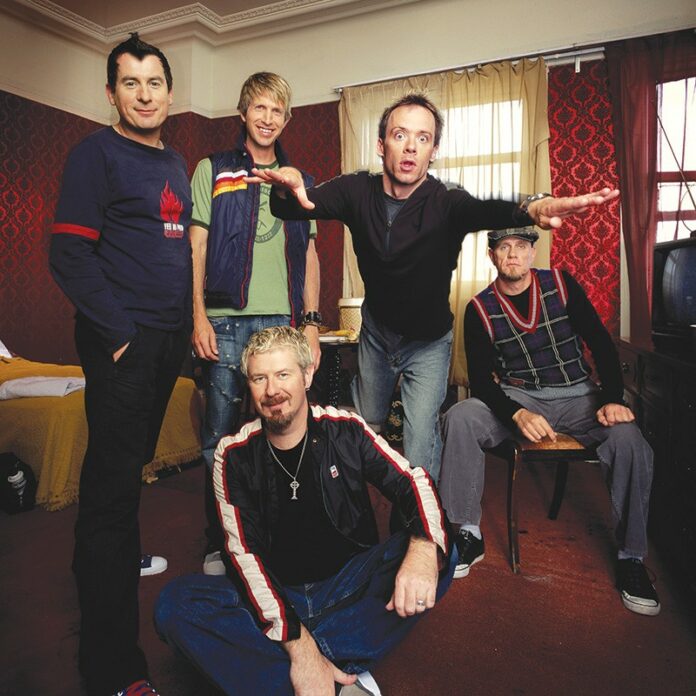
With the growing popularity of Irish-influenced rock and the considerable visibility of groups like Flogging Molly and the Dropkick Murphys, Young Dubliners frontman Keith Roberts on occasion finds he has to set the record straight about his group’s place in the Irish rock genre.

“I’ve done interviews before and people are like, ‘Flogging Molly, I love them. What influence were they on you?’ And I’m like, ‘You’ve got to read Wikipedia,'” Roberts good-naturedly observes in a recent phone interview, as he remembered his band’s beginnings in the early 1990s.

“I had a bar for three years [Fair City Dublin, in Santa Monica], and every Saturday night was the Young Dubliners and the opening band was the Dave King Band,” says Roberts. “Dave King is the lead singer of Flogging Molly. The Dave King Band was a rock and roll band. He played with us for three years and his manager finally suggested that he embrace the Irish side of him. Dave is one of the best songwriters I’ve ever known, and I love him to death. We had such a great three years. But if there was any influence, it was the other way around.”

Flogging Molly and the Dropkick Murphys may have attained greater success, but the Young Dubliners have the longer history and are also doing just fine. After raising money for recording expenses through fan donations, the group last March self-released its first studio album in four years, Nine.

“By releasing our own album, we’ve increased the profit potential now of record sales,” Roberts said. “It’s so dramatically different, the profit margin on a record that you release yourself versus on a record that [record companies] release.”

Roberts and his band mates—bassist Brendan Holmes, guitarist Bob Boulding, violinist/multi-instrumentalist Chas Waltz and drummer Dave Ingraham—took their time making Nine because they knew a self-released album needed to stand up to the group’s eight previous albums and EPs. Roberts thinks the band achieved that goal.

“We feel proud of it,” Roberts said. “It’s got depth to it, it’s got the variety of sound that we like, but it’s also very raw for us. We didn’t overdo it.”

Fans who see the Young Dubliners live can expect a spirited but also well-conceived and well rehearsed show. “I love these bands that say, ‘We never do the same set twice in a row,'” Roberts said. “And that to me is a little bit hard to believe. I want it to be structured, and we’re very kind of into playing as well as we can every night and having things being tight.”

Floor-Lickin’ Good

Chile verde is a simple dish, but so rich and complex that one might expect it to be harder to prepare than it is. The ingredients in my chile verde combine into something greater than the sum of their parts in remarkable fashion, such that the finished product can make an average cook look like a genius. I call it...

Top Torn Tickets

It's that time again. Each December, as the year draws to a close, I always take a moment to sort through the numerous tickets stubs I've saved from the 80-something shows I've seen over the previous 12 months. Carefully, I recall each show, assembling the torn tickets in order, with my 10 favorites on top—my top 10 torn tickets. While...

Crass and Grace

'The thing about Edith Piaf," notes musician Al Haas, of the North Bay music trio Un Deux Trois, "is that her life was really the most interesting thing about her, even more interesting than her music." Haas, co-musical director of Cinnabar's Theater's upcoming Beneath Paris Skies: The Life of Edith Piaf, does not mean to devalue the worth of Edith...

Smile On

It's official as of Friday Jan. 2: The legendary Smiley's Saloon in downtown Bolinas will change hands and operate under new ownership. San Francisco attorney Leila Monroe, 35, bought the place, and the ownership transfer's been a slow-roll over the past month or so. BoBo locals absolutely love the place, and there was a big musical throw-down last Saturday night...

The Leftovers

It was the day after Christmas and the Tupperware tub was loaded with the last of the Dungeness. I had a mess of crab to contend with, all pre-cooked, cracked and cleaned at wondrous Oliver's Grocery. The refrigerator was a little bare beyond the crab, but I did spy the remains of an extra-pungent hard slab of goat cheese, also...

The Eyes Have It

Tim Burton's mid-'60s comedy Big Eyes is about a fad many would prefer to forget—the reign of the highly marketable art of Walter and Margaret Keane. The Northern California–based couple are played by a luminous, frail Amy Adams and the ever vinegary Christoph Waltz. The Keanes' specialty was figures of starving children with vastly oversized, pleading eyes, black holes...

Smoke Signals

The line between what is legal and illegal when it comes to cannabis in California—and the nug-lovin' nation at large—gets blurrier with every joint-passing minute. The question is: How, when and where will the big repressive pushback come? Oklahoma and Nebraska? I was one of the 10,000 people to attend this year's Emerald Cup at the Sonoma County Fairgrounds, earlier...

Letters to the Editor: December 31, 2014

Let's Get Physical Body Deja Vu ("Body Conscious," Dec. 24) is so much fun! I love the music, the choreography isn't so complicated that it takes forever to learn the steps, but it's more creative than most exercise dance classes. You will sweat and have fun! The atmosphere is friendly and accepting of all, no need to worry about being...

Rearview Mirror

You hear about this thing called a "California drought" and think—how bad could it be, really? We were outside of Bakersfield, hurtling north on what would be the final day of a weeklong drive from New Orleans to the Bay Area. First stop: Berkeley. We were treading light on American roads lit up with the Fear, or that was the idea,...

Scene Setters

With the growing popularity of Irish-influenced rock and the considerable visibility of groups like Flogging Molly and the Dropkick Murphys, Young Dubliners frontman Keith Roberts on occasion finds he has to set the record straight about his group's place in the Irish rock genre. "I've done interviews before and people are like, 'Flogging Molly, I love them. What influence were...
12,118FansLike
4,924FollowersFollow
6,928FollowersFollow