Jinxed in Mendo

Eccentric millionaire and accused murderer Robert Durst awaits extradition from Louisiana to California for the alleged killing of his confidante Susan Berman in December 2000.

Meanwhile, sources with knowledge of the case indicate that federal investigators continue to focus on Durst as a “person of interest” in the unsolved disappearance of Eureka teenager Karen Mitchell in 1997.

Durst, the subject of the six-part documentary series The Jinx, and whose wife, Kathie Durst, first went missing in 1982 in a case that remains unsolved, was arrested in Louisiana last month just before the climactic episode of the HBO series. He was charged by Louisiana officials on drug and weapons charges which were dropped this past week and by federal prosecutors for possession of a firearm following a felony conviction.

The Bohemian obtained a previously unreleased report from the Mendocino County Sheriff’s Office detailing Durst’s arrest in May of 1995 (first reported by the Bohemian on March 25) for “driving under the influence” and possession of marijuana just outside of Mendocino.

Durst’s presence in—and familiarity with—Northern California plays a critical role in the current murder charges he is facing in Los Angeles.

According to the seven-page report, on May 10, 1995, Durst was spotted by a member of the Mendocino County Sheriff’s Office on Lansing Street standing outside his light blue Ford Taurus. According to the report he then “staggered to the rear of the vehicle” and was “swaying side to side.” He got back into the Taurus, headed north, and then “crossed over the yellow line three times.”

The sheriff’s officer had trouble getting Durst to pull over, as he seemed “confused as to my demands.” Once stopped, Durst, reeking of alcohol, according to the report, “staggered” toward the officer. He had difficulty finding his wallet and, in “a slurred speech,” asked the officer why he had been stopped. Durst acknowledged that he had consumed “a bottle of wine” at Cafe Beaujolais, a popular upscale restaurant in Mendocino.

Durst then failed a series of field sobriety tests administered at the scene: he couldn’t keep his balance on one leg; he had trouble counting; he couldn’t stand without swaying; he couldn’t touch the tip of his nose. The officer had to stop him from walking into traffic. Durst was subsequently taken to the sheriff’s substation in Fort Bragg, where he was administered a urine test.

An envelope containing $3,700 in cash and a baggie with less than an ounce of marijuana was found in Durst’s trunk—a combination that would repeat itself in Durst’s encounters with the law for the next two decades. Then, in classic Durst fashion, with phrasing familiar to anyone who watched The Jinx, Durst uttered that “the money and marijuana is mine and that I have always smoked it, even as a kid. . . . So what’s the big deal?”

Durst was released the following morning on $9,500 bail. The result of the urine test showed he was below the legal blood alcohol limit. The next day, Durst’s father Seymour suffered a debilitating stroke. Within a matter of a few days, Durst appeared in New York City at the hospital bed of his stricken father, who died on May 15, shortly after his eldest son’s visit.

Only months prior to his arrest in Mendocino, Durst had purchased an ocean-view home in the rural outpost of Trinidad on the Humboldt coast. His move west came immediately after leaving his position with the Durst Corporation and losing a contentious internal battle with his younger brother, Douglas Durst, for control of the family’s billion-dollar Manhattan real estate empire. Durst lived in his coastal retreat off and on until the killing of Berman in the winter of 2000.

In November 1997, 16-year-old Karen Mitchell disappeared after getting into a car with an older male when she left her aunt’s store at a mall in Eureka. According to Matt Birkbeck, author of the bestselling profile, A Deadly Secret: The Bizarre and Chilling Story of Robert Durst (just re-released by Berkeley/Penguin), Durst—often dressed as a woman—frequented a shoe store owned by Mitchell’s aunt and a homeless shelter at which Mitchell volunteered.

Birkbeck also noted that a composite drawing of the suspect last seen with Mitchell bears a striking resemblance to Durst, in particular, the broad wire-rimmed glasses that Durst wore at the time of Mitchell’s disappearance.

While officials in Humboldt County have refused to acknowledge the whereabouts of Durst at the time of Mitchell’s disappearance, Birkbeck told the Bohemian that he has seen credit card records of Durst’s indicating that “Durst arrived in Eureka on the morning of Mitchell’s disappearance.”

When Durst was arrested in New Orleans last month, authorities found two copies of Birkbeck’s book in his possession. According to Birkbeck, during Durst’s trial for murder, Durst—based on his reading of Birkbeck’s book—expressed concern to a member of his defense team that he would soon be indicted for the murder of Mitchell.

Real estate records obtained by the Bohemian indicate that Durst also owned a pair of properties in San Francisco during the late 1990s and early 2000s. He used dozens of different aliases as he zigzagged across the country, living what Birkbeck characterizes as a “strange vagabond life, using false identities for reasons unknown to anybody.”

In 2001, Durst relocated to Galveston, Texas, where in September his neighbor and so-called best friend, Morris Black, was found dismembered in garbage bags that had been dumped into Galveston Bay. Durst, who had also dressed as a woman in Galveston and used the name Dorothy Ciner, was acquitted on first-degree murder charges based on self-defense.

Prosecutors believe that Durst flew into the Arcata-Eureka Airport around Dec. 19, 2000, and then drove to Los Angeles to kill Berman. Phone records place Durst in Garberville the following morning, on his way down Highway 101 heading south. A letter, alleged in The Jinx to have been written by Durst which directly links him to Berman’s murder, was mailed on Dec. 23, the day before Berman’s body was discovered.

In The Jinx, an irritated Durst asserts that he arrived in Trinidad “long before December 23rd, long before Christmas.” It couldn’t have been that long. According to numerous news sources, Durst was married to his current wife, Debrah Lee Charatan, in Manhattan on December 11.


Horn of Plenty

0

Chupacabra stalks the Carneros. Covered in froth, as black as a moonless night shrouded in fog, this chupacabra is . . . surprisingly mellow.

For all of its badass name, Carneros Brewing’s Chupacabra Stout tips the deft hand of brewmaster Jesus Ceja, showing freshness tinged with black, roasted barley instead of power, alcohol and hops. Although the brewery’s homegrown hops are a point of pride (see “Getting Hopped Up—Again,” Bohemian, Sept. 18, 2013), not to mention a key feature of the landscaping—growing to Jack and the Beanstalk heights on a trellis that towers above nearby vineyards—this California microbrewery appears to be fashioned in a distinctively German tradition.

Or Mexican, take your pick.

In the main, it was los inmigrantes alemanes who built modern breweries and fashioned beer tastes around the world, and Ceja has worked as a lead brewer for some of their more successful legacies: Coors and Anheuser-Busch. As brewmaster of one the nation’s few Mexican-American-owned breweries, Ceja fills the taps with a Californian take on German styles, and a subtle take on craft brew standards, using about 30 percent homegrown hops.

The taproom is located just off Highway 121 at Burndale Road (the Burndale entrance is easier to access), with Ceja Vineyards and the yet-to-open Hanson vodka tasting room as neighbors. A hacienda-styled partition separates the bar from the industrial setting, while off to the right, brewers may be tinkering with a mash tun or hauling out spent grain. Because of zoning, nosh options are limited to pretzels, jerky and a cheese plate, but on weekends you may get lucky and find a food truck parked on the premises.

You can count on street food by Barrio Marin and tri-tip sandwiches from Tri Tip Trolley on May 2, 2015, when Carneros Brewing celebrates a Cinco de Mayo fiesta, with entertainment by Charros San Rafael Archangel and piñatas filled for “both young and old.”

Every day it’s $15 for five samplers of beer in generous, five-ounce pours. The Keller Pilsner is citrusy, with a nice sour tang to it; the Negra IPA darkened with roasted barley, but not heavy. Labeled with perhaps the sexiest sheep in the craft-beer world, for what that’s worth, malty Morena Ale is a mellow take on California amber ale, but the Carneros Bock is the most wildly flavorful and mouth-filling. Take a growler or 22-ounce bottle for a fiesta of your own.

Carneros Brewing Company, 22985 Burndale Road, Sonoma. Monday–Friday, noon–5:30pm; Saturday-Sunday, 10am–5:30pm. Cinco de Mayo Fiesta, May 2, noon–5:30pm. 707.938.1880.

Dry FYI

0

Life, John Lennon sang, happens when you’re busy making plans.

It’s also what happens when a group of 20 authors spend seven years updating the California Master Gardener Handbook. The text was first published 10 years ago and served as the go-to book for the more than 6,000 master gardeners and countless backyard gardeners in California.

The new edition has been significantly updated and revised to make it more reader-friendly and comprehensive. It took so long because each of the 21 chapters had to be peer-reviewed. But now that the 755-page tome is finally out in print and online (for the first time), we find ourselves in a nasty drought.

Is a book about planting things and watering them hitting the shelves at exactly the wrong time? Not at all, says Dennis Pittenger, co-author and editor of the book.

Pittenger, area horticulturist for the UC Cooperative Extension in Los Angeles County, is a lifelong Golden State gardener. He points out that drought is common in California. So are floods and fires. But none of those phenomena means gardening has to go. It can actually help alleviate the drought and climbing temperatures.

In conjuction with Copperfield’s Books, Pettinger will be appearing at the Seed Bank in Petaluma April 30 to talk about the new book and how North Bay gardeners can cope with the drought. One thing you should not do is abandon your yard, he says.

“I think there’s a lot of potential to save water without totally renovating your landscape,” Pettinger says.

Fixing leaks and clogged emitters and correcting overspraying can yield water savings of about 10 percent. Another tip is not to overwater. Obvious, but Pettinger says too often gardeners water their grass with the rest of the yard. Lawn and turf need the most water so should be watered separately. Flowers
and woody plants need about 40
to 50 percent less than lawns.

And what about lawns? Shouldn’t people who water their lawns be rounded up and locked away?

No, says Pittenger.

There are several warm-weather varieties of grass like buffalo, Bermuda and St. Augustine that use 20 percent less water than others varieties. The downside is they turn brown in winter.

He also recommends letting grass grow as long as possible. Longer grass holds more water. Rock gardens aren’t necessarily a solution. Rather than letting water rush off into the gutter during a storm, a lawn can draw water deep into the soil where it can used.

“Grass has benefits, but we don’t need wall-to-wall turf,” Pettinger says.

No one knows when this drought will end, but it surely won’t be the state’s last. The time to learn about how to live with it and within our means is now.

“The drought is a timely and a timeless topic,” says Pittenger. “It’s a good educatable moment.”

It’s High Time

More marijuana is grown in Northern California counties than anywhere else in the nation. Since voters of California passed Proposition 215 in 1996, medical-marijuana cultivation and consumption have exploded, both in California and around the country.

Aside from local zoning regulations, this legal, multibillion dollar industry is completely unregulated. And unfortunately, the North Coast has seen first-hand the environmental devastation that illegal, rogue grows have had on our communities, rivers and forests.

That’s why I have introduced SB 643, the Medical Marijuana Public Safety and Environmental Protection Act. With multiple propositions coming forward attempting to legalize recreational use, we need to work together to create a statewide regulatory framework, now. After nearly 20 years without any industry oversight, it’s time for comprehensive medical-marijuana legislation. Senate Bill 643 outlines regulation for medical marijuana, including environmental protection and water regulations, licensing, public health related to edibles and product testing, law enforcement, taxing, transporting, zoning, local control and resale.

Illegal diversions from trespass grows and rogue operators are sucking Northern California rivers dry, and threatening rural communities and endangered species. The impact of the state’s four-year drought, along with countless diversions, dried up the Eel and Mattole rivers for the first time in memory.

Many of the medical-marijuana growers on the North Coast are running small family-farm operations. Senate Bill 643 would also provide a legal framework for those farmers to comply with state and local regulations and ensure that corporate farm operations don’t take over if legalization of recreational marijuana is ultimately approved by California voters.

Senate Bill 643 creates a statewide comprehensive regulatory program for medical marijuana that’s 20 years overdue. I would be grateful to work with you to preserve local control and to protect our communities, our environment and patients.

State Sen. Mike McGuire, D-Healdsburg, represents the 2nd Senate District, which includes Del Norte, Trinity, Humboldt, Lake, Mendocino, Sonoma and Marin counties.

To have your topical essay of 350 words considered for publication, write op*****@******an.com.

I, Robot

The Latin phrase deus ex machina describes a theatrical device in which an actor in the role of a god appears onstage to neatly wrap things up. Alex Garland’s science-fiction film Ex Machina—a masterpiece if ever I’ve seen one—seemingly clips the god from the equation in depicting a bad demiurge in the form of a high-tech tycoon.

Nathan (Oscar Isaac) is the founder of Bluebook, named in honor of Wittgenstein’s privately circulated journals on human consciousness. This search engine, with its 94 percent market share, has left Google, Baidu and all the rest in the dust.

Nathan lives in what seems like a recycled, eco-friendly boxcar built over a mountain stream. This cyber-lord is attractively brutish, muscled and bearded with a close-cropped head. He has the patronizing assumption of homo-superior status on the simple grounds that he knows how to click a keyboard the right way. And he has that greedy paranoia barely masked as coolness.

Far away from the world, Nathan is hiding his insanely great development: artificial intelligence in a human frame. The intelligence is called Ava (Alicia Vikander), and she is as beautiful as she is strange. She’s the most chilling nonhuman I’ve seen since video artist Elizabeth King’s creation in the 1991 clip “What Happened.” Ava is like that toy model in biology class, the Visible Woman, come to life; she has glass limbs, and you can just hear the soft soughing of rotors as she moves. Vikander was a ballerina once, and her movements have just enough stiffness to be unnatural. Mutely, she beseeches for freedom.

I’ve read the counter critiques—one critic called this story misogynist, but that misses the point: Ava isn’t a woman. We know why Frankenstein’s monster rampages: he’s alone and hurt and badly treated. Ex Machina hits you: Is there a right way to treat such a creature? Would kindness even matter?

‘Ex Machina’ opens Friday, April 24, at Rialto Cinemas, 6868 McKinley St., Sebastopol. 707.525.4840.

Letters to the Editor: April 29, 2015

Encore

It’s a shame that the Moody Blues feel that new music is not what their fans want (“True Blues,” April 22). Maybe for the band’s 50th anniversary in 2017, they could come up with something extra special that would be fantastic.

Via Bohemian.com

Napa Needs Airbnb

According to the website www.napanow.com/whovisits.html, Napa Valley currently receives 1.7 million overnight visitors each year, and the average length of stay for overnight visitors
is 2.9 days. That statistic suggests
4.93 million visitor-nights per year. That’s right: there is a need for almost
5 million overnight rooms each year. Divide that by 365. There is currently a need for about 13,000 rooms every night of the year in Napa Valley.

The Visit Napa Valley website reports that there are about 5,000 overnight rooms in Napa Valley, including B&Bs. When demand for overnight accommodations outstrips supply by about 8,000 units every night, there is absolutely no credibility to the claim that Airbnb is decimating anyone’s tourist hosting business.

I am truly embarrassed to have to think that I live in a town that has elected a city council that is trying to pimp this lie off onto the community. Vice-Mayor Scott Sedgley proposes making Airbnb into yet another privilege for the rich, by limiting Airbnb rental properties to historic Victorians in the downtown area—all of which just happen to be owned by the rich people that he serves, and who don’t need the money anyway.

City council member Mary Luros proposes perhaps allowing a number of Airbnbs that is effectively equal to zero. But by suggesting a number slightly greater than zero, she can proudly tout how reasonable she is. Councilmember Juliana Inman already makes money off of her own short-term rental. It’s easy to see why she opposes the competition presented by Airbnb. It’s nothing more than simple self-interest.

If the city council is going to claim these rentals are disruptive, they need to publish a clear and explicit report of specific incidents that supports this contention. Proscription without proof is bad governance.

There is no reason why Airbnb hosts can’t comply with fire inspections and other permitting issues. Homeowners insurance and renters insurance both provide liability coverage for bodily injury to a guest. Read your policy.

Renting a spare room is a great way to meet new people. It helps older city residents avoid the isolation that comes from living in an unfriendly town. And it’s a great way to bring young people who have lots of energy but limited financial means into our city.

The Napa City Council seems bound and determined to make it impossible to live here unless you’re rich. That is not their charge. If they disallow Airbnb, they clearly are not serving the greater population of this city, and I would hope voters will remember that come election time.

Napa

Write to us at le*****@******an.com.

MelodyMakers

0

Two new Marin County shows, neither a traditional musical, each use music in unexpected ways to tell stories about strong, resilient people battling impossible odds.

In Mona Mansour’s intriguing but unsatisfying The Way West, at Marin Theatre Co., Mom (a forceful Anne Darragh) won’t let anything get her down. Her Fresno home is being foreclosed upon. She has a mysterious illness. But as long as she can pick up a ukulele and sing songs about the early pioneers—survivors who sustained themselves on sheer grit and optimism—she’ll get by.

Her daughters aren’t so sure.

Manda (Kathryn Zdan), a high-earning grant writer, is appalled at her mother’s ambivalence in the face of looming disaster, and Meesh (Rosie Hallett) is just looking for the next eBay scam to earn a few dollars of her own. Mom’s friend Tress (a marvelous Stacy Ross) has taken what little is left of her friend’s money to invest in a cutting-edge weight-loss business at a local strip mall.

From this promising set-up, a rather rocky, rambling story unfolds, one that frustrates as much as it entertains. Like the less fortunate pioneers Mom loves to sing and talk about, this one just doesn’t have what it takes to make it all the way to the end.

Rating (out of 5): ★★½

In James Baldwin’s marvelous Amen Corner (AlterTheater), Gospel music underscores the roiling emotions lurking beneath the surface of a small storefront church in Harlem in 1953. Directed with strong attention to emotional detail by Jeanette Harrison, this production unfolds, with minimal props and set pieces, in a cramped corner of the Body Kinetics health club, lending an appropriate sense of urban place to the story.

Sister Margaret (Cathleen Riddley, sensational) is the impassioned shepherd of her flock, leading by example as much as by the fire of her sermons. When her long-estranged jazz-musician husband Luke (Chauncey Roberts) suddenly appears, Margaret fears he might pull their son David (Rotimi Agbabiaka) from God’s path. She never suspects that it’s her congregation, gradually incited by what they’ve learned about their leader’s past, she should be wary of.

Insightful and lyrical, with strong supporting performances anchoring the rising drama, The Amen Corner is sensitive, insightful and powerfully moving, and like a good gospel tune, it’s impossible to get out of your head.

Rating (out of 5): ★★★★

Spice Is Nice

0

Yelp reviews are, for the most part, a helpful tool. Sometimes they can save you from a bad decision; other times, they can help you discover a gem. But when reviews are mixed, you find yourself on your own, cursing your stars—or, more accurately, those damn three and a half stars.

The residents of Sebastopol gave their new Indian bistro Marigold precisely that. But what does it mean, exactly? A little over a month after Marigold’s opening, it was time to find out.

Marigold, located on a busy culinary stretch, is one of those modern, minimalistic Indian restaurants that has only muted music and a couple of painting to signify its ethnicity. A smiling waiter informed us about the special, tandoori rack of lamb, and added that the restaurant is in a trial-and-error period of sorts. Especially popular daily specials will eventually be added to the menu, while less favorable dishes may get the boot, which gave the whole dinner a fun “is it a keeper or not” angle.

The samosa chat appetizer ($5.99) would definitely be staying on the menu. Layers of papadum wafers, chickpeas, potatoes, yogurt and chutney were gone in an instant and left us craving more. The artichoke kulcha ($3.99)— fluffy, naan-like dough stuffed with an artichoke spread—seemed timid and a little forgettable at first, but it grew on us the way artichoke-based things do: quietly and persistently.

Sipping pleasantly spiced chai masala, we moved to the main program. As Marigold is, according to its website, a restaurant that “infuses traditional Indian food with modern and creative cooking,” the staff will ask you about your tolerance for spiciness. I always thought there was something apologetic about this practice. Why not go ahead and spice the dish according to the chef’s vision or, better yet, according to tradition?

Not that it mattered. The lamb special ($20) was absolutely perfect and couldn’t possibly be ruined by a cowardly “medium” spice choice. The rack, deconstructed for more comfortable eating, was coated in crunchy spices and arrived smoking theatrically. Hitting the right balance between juicy and meaty, the dish was a standout headed straight for the regular menu.

Alas, the same couldn’t be said of the vegetarian tikka masala ($13.99), which lacked flavor and flair. But Marigold was back on track with the inventive chicken apricot ($14.99). It was very good and indeed unlike anything I have ever eaten at an Indian restaurant. Mildly sweet, with an exotic fruity zing along with flavors of curry and coconnut, it was served with brown rice and proved to be another winner. We finished with a non-Indian yet worthwhile dessert: a luscious chocolate mousse topped with raspberry sauce ($3.49).

After trying Marigold, the mixed reviews are easier to understand. The best dishes are the daring and unexpected ones, while the classics may disappoint. But if Marigold plays its cards smartly, and refines the menu as promised, it may very well become a local staple and even— forgive the Yelp pun—a star in its own right.

Marigold, 7225 Healdsburg Ave., Sebastopol. 707.329.6965

Debriefer: April 29, 2015

When school ends and summer begins, many kids are left with nothing to do and nowhere to go, putting them at risk of being unsupervised, unsafe and vulnerable to “summer learning loss.”

Most students lose about two months of grade level equivalency in math skills over the summer. Low-income students also lose more than two months in reading achievement, while middle-class peers make slight gains. Low-income youth are nearly three grade equivalents behind their more affluent peers in reading by the end of the fifth grade due to summer learning loss, reports the U.S. Census Bureau.

To help turn these statistics around, the Boys & Girls Club of Sonoma County recently launched its Great Summers campaign to give every child access to high-quality summer learning activities. More than 80 percent of the kids the organization serves come from low-income homes.

The Boys & Girls Clubs of Central Sonoma County hosts seven summer camps throughout the six communities it serves. It costs $1,000 to send one kid to summer camp for nine-weeks, five days a week, including breakfast and lunch. The Boys & Girls Club is working to send 250 additional youth to camp this summer.

The organization is convening public, private and nonprofit partners throughout our community to ensure every child has access to engaging summer activities. The nonprofit will host its Great Summer Kickoff at Paradise Ridge Winery on June 12 to conclude its 60-day “countdown to summer.”

For more information, go to bgccsc.org or call 707.528.7977.

Kinky for President

0

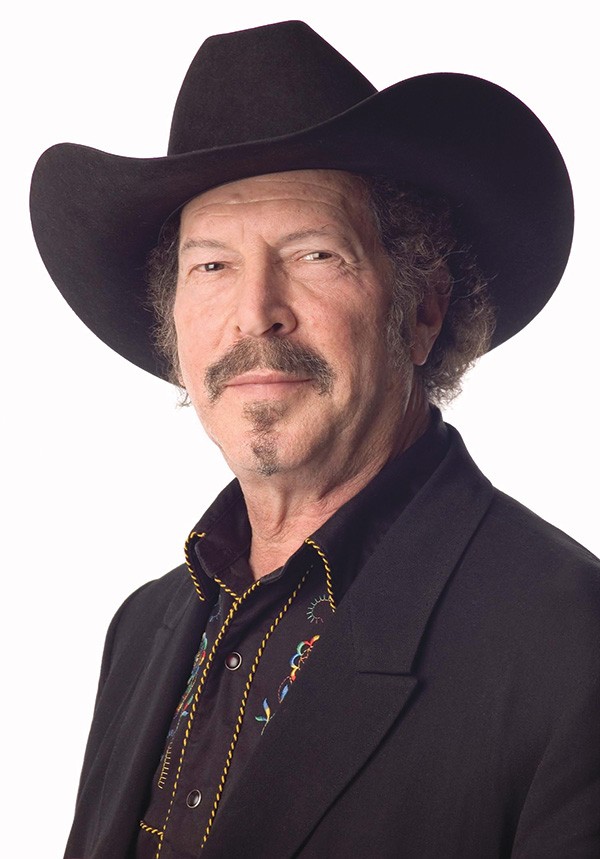
‘I’m doing everything but politics,” says Kinky Friedman.

Speaking by phone from his ranch near San Antonio, the cigar-chomping, tequila-swigging, decidedly nonpolitically correct Jewish-cowboy country star is in the middle of a career renaissance. He is currently wrapping up his first studio album in over three decades, finishing up his latest detective novel and working on a top-secret television project that’s still under development.

Friedman will bring some of his new material and shows off a slew of his classic songs when he comes to Sebastopol on May 8.

Still, even with all of these projects and his claim to not be running for any office, it’s hard for Friedman to talk anything other than politics.

“I’m going deaf, which I like, because I don’t have to hear all the bullshit of the world,” says Friedman. “I’m just amazed at how lousy the quality of people running for office is. Truly, it is what George Carlin said, the illusion of choice out there politically.”

Friedman has long been a politically active figure, especially in Texas, where he made a run for governor as an independent in 2006 with a pro–gay marriage and marijuana decriminalization platform. As a states’ rights advocate, Friedman mourns the homogenization of American culture and political apathy.

“You don’t see a person that truly inspires anywhere in office today,” explains Friedman. “We have completely inverted what JFK said he wanted us to do. JFK wanted us all to get into politics, to get involved—it’s what inspired me to join the Peace Corps. And what’s happened today is just the opposite. You have a classless class of people in office today.”

Creatively, Friedman credits his current resurgence with a recent tour he did through Europe. “In Germany, I feel like the thinking man’s David Hasselhoff,” Friedman jokes. “I was very inspired by the Germans. That may be the one place on Earth that truly understands me.”

Sadly, Friedman’s upcoming show in Sebastopol has recently taken a somber turn. It was originally planned as a birthday celebration for North Bay Live concert booker and promoter Laurie Schaeffer, but news came late Friday, April 24, that Schaeffer passed away unexpectedly after suffering organ failure.

Now, Friedman plans to pay tribute to his longtime friend, and the community is coming together to celebrate Schaeffer’s life and remember the passionate, dedicated woman who brought so much great music to the North Bay for so many years.

Jinxed in Mendo

Eccentric millionaire and accused murderer Robert Durst awaits extradition from Louisiana to California for the alleged killing of his confidante Susan Berman in December 2000. Meanwhile, sources with knowledge of the case indicate that federal investigators continue to focus on Durst as a "person of interest" in the unsolved disappearance of Eureka teenager Karen Mitchell in 1997. Durst, the subject of...

Horn of Plenty

Chupacabra stalks the Carneros. Covered in froth, as black as a moonless night shrouded in fog, this chupacabra is . . . surprisingly mellow. For all of its badass name, Carneros Brewing's Chupacabra Stout tips the deft hand of brewmaster Jesus Ceja, showing freshness tinged with black, roasted barley instead of power, alcohol and hops. Although the brewery's homegrown hops...

Dry FYI

Life, John Lennon sang, happens when you're busy making plans. It's also what happens when a group of 20 authors spend seven years updating the California Master Gardener Handbook. The text was first published 10 years ago and served as the go-to book for the more than 6,000 master gardeners and countless backyard gardeners in California. The new edition has been...

It’s High Time

More marijuana is grown in Northern California counties than anywhere else in the nation. Since voters of California passed Proposition 215 in 1996, medical-marijuana cultivation and consumption have exploded, both in California and around the country. Aside from local zoning regulations, this legal, multibillion dollar industry is completely unregulated. And unfortunately, the North Coast has seen first-hand the environmental devastation...

I, Robot

The Latin phrase deus ex machina describes a theatrical device in which an actor in the role of a god appears onstage to neatly wrap things up. Alex Garland's science-fiction film Ex Machina—a masterpiece if ever I've seen one—seemingly clips the god from the equation in depicting a bad demiurge in the form of a high-tech tycoon. Nathan (Oscar Isaac)...

Letters to the Editor: April 29, 2015

Encore It's a shame that the Moody Blues feel that new music is not what their fans want ("True Blues," April 22). Maybe for the band's 50th anniversary in 2017, they could come up with something extra special that would be fantastic. —Gillian Alcock Via Bohemian.com Napa Needs Airbnb According to the website www.napanow.com/whovisits.html, Napa Valley currently receives 1.7 million overnight visitors each year,...

MelodyMakers

Two new Marin County shows, neither a traditional musical, each use music in unexpected ways to tell stories about strong, resilient people battling impossible odds. In Mona Mansour's intriguing but unsatisfying The Way West, at Marin Theatre Co., Mom (a forceful Anne Darragh) won't let anything get her down. Her Fresno home is being foreclosed upon. She has a mysterious...

Spice Is Nice

Yelp reviews are, for the most part, a helpful tool. Sometimes they can save you from a bad decision; other times, they can help you discover a gem. But when reviews are mixed, you find yourself on your own, cursing your stars—or, more accurately, those damn three and a half stars. The residents of Sebastopol gave their new Indian bistro...

Debriefer: April 29, 2015

When school ends and summer begins, many kids are left with nothing to do and nowhere to go, putting them at risk of being unsupervised, unsafe and vulnerable to "summer learning loss." Most students lose about two months of grade level equivalency in math skills over the summer. Low-income students also lose more than two months in reading achievement, while...

Kinky for President

'I'm doing everything but politics," says Kinky Friedman. Speaking by phone from his ranch near San Antonio, the cigar-chomping, tequila-swigging, decidedly nonpolitically correct Jewish-cowboy country star is in the middle of a career renaissance. He is currently wrapping up his first studio album in over three decades, finishing up his latest detective novel and working on a top-secret television project...
12,118FansLike
4,924FollowersFollow
6,928FollowersFollow