A Dream We Dreamed: The Legacies of Phil Lesh 

0

In 2010, I was the city librarian of San Rafael, and Phil Lesh and his wife, Jill, were working on starting a new restaurant and nightclub in Fairfax. There was opposition from the locals, who feared excessive crowds and noise from such a venture. 

By all reports, Lesh was getting discouraged. So, I sent him an email asking if he might be open to considering San Rafael as a possible location. He replied with enthusiasm, and I connected him with our city economic development director, Nancy Mackle, who then worked with the Leshes to create the dream-come-true that was Terrapin Crossroads. 

That is, I believe, one of the highlights of my career as a civil servant. I had left the city’s employ by the time TXR opened in March 2012, but Lesh generously invited me to attend the opening run of shows—a highlight of my career as a Deadhead. 

That Deadhead part of my life began in 1976 at a concert at the Oakland Coliseum when the Dead opened for The Who. I was transformed, hooked, and I have spent the bulk of my musical attention and music budget ever since on Grateful Dead music and have had a small role in contributing to the written literature about the band. I even played keyboard in a Grateful Dead tribute band called Dead Again for several years. 

And always, running as a constant thread beneath it all, was the bass playing of Phil Lesh. 

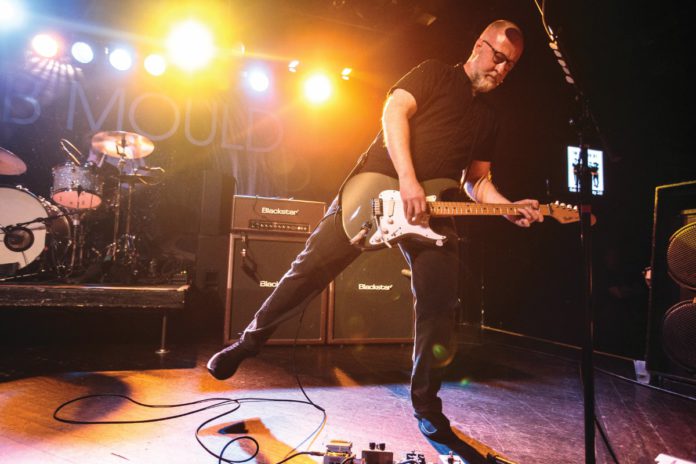
There was nothing like it. It was not “normal” bass playing. Lesh’s playing was melodic as much as rhythmic, and his playing was a constant musical conversation with whomever he was playing with. Most notably, Jerry Garcia. Bob Weir once described his role in the band as figuring out how to connect Lesh and Garcia’s playing in a constant state of improvisation. 

Lesh’s deep background in music theory set him apart from the folkies and rockers he was playing with, and he took the band in new directions while honoring the roots that made them a part of the American musical traditions of folk, country, blues and bluegrass. And he knew how to unleash the occasional booming bass note that would shake the walls of whatever old ice rink or basketball stadium the band was playing: The Phil Bomb. 

After Garcia’s death in August 1995, it fell to the band’s surviving members to decide what might be next for the traveling circus enterprise, the Grateful Dead. Fortunately for all of us, the remaining band members formed a succession of bands that carried on as, variously, The Other Ones, The Dead and Furthur. They capped it with a series of shows in 2015 called Fare Thee Well, with concerts in the Bay Area and Chicago. I attended the Chicago shows, saying goodbye to this aggregation of players who had been the soundtrack of my life for nearly 40 years at that point. 

But the music never stopped. Lesh kept playing with a cavalcade of musicians who were up for the adventure. His club hosted countless nights of never-before and never-again-heard music. He lit up the room with his fierce, smiling joy at the sounds they were creating together. 

Each time he played, he took a moment at the end of the show for what became known to us as his “Donor Rap.” And this may turn out, ultimately, to be Lesh’s most significant legacy to humankind: He encouraged hundreds of thousands of concert attendees to become organ donors because his own life had been granted a reprieve when he received a liver transplant in 1998, thanks to the family of a young man named Cody. 

Lesh would stand center stage and relate the circumstances that saved his life, and he would thank Cody and tell us all to become organ donors. He would let us know that we needed to tell those closest to us that that was our wish and had us turn to each other right then and there, if we were in attendance with those loved ones, and tell them that we wanted to be organ donors. 

I like to think of the ripple effect of his actions, an unbroken chain of cause and effect that will allow for so many to receive extended lives. Lesh himself was able to continue playing music for 26 more years, thanks to Cody. 

Lesh’s songwriting, though not as prolific as his bandmates Garcia and Weir, was nevertheless a key part of the legacy of the Grateful Dead. He composed the incredible musical adventure that is “Unbroken Chain.” He was at home in the bouncy, bluesy feel of “Pride of Cucamonga.” He somehow came up with “Passenger” in order to get the band back into more rock ’n’ roll during the Terrapin Station sessions. 

And his singing added more than most of us realize—in the early days, holding the highest parts of the harmonies (he had perfect pitch), and then later, with crowds chanting “Let Phil sing!” with rousing numbers like “Gimme Some Lovin’” or “Ballad of a Thin Man.” 

His signature song, “Box of Rain,” set to the beautiful lyrics of another San Rafael resident, Robert Hunter, was written as his father was dying, and contains words of comfort that allude to the impermanence of life on the “ball of rain” (Hunter changed that to box of rain because it “sang” better) that is planet Earth: “Such a long, long time to be gone, and a short time to be there.” 

Philip Chapman Lesh died on Oct. 25, 2024, at the age of 84. 

Thank you, Phil, for, well, everything. So glad you made it. 

David Dodd is the author of ‘The Complete Annotated Grateful Dead Lyrics.’

Weed Weirdos: Republicans Get More Outlandish on Cannabis


While it’s true that cannabis is one of very few issues where the major political parties find some common ground, on both sides of the question, it should come as no surprise that, as the Republican Party gets nuttier and nuttier, the things Republicans say about weed become ever more outlandish.

The latest bit of lunacy came recently from J.D. Vance, who has been spewing all kinds of weird stuff since Donald Trump picked him as his running mate, while other weird stuff he’s said in the past has come to light. For instance, he believes that “childless cat ladies” have “no stake” in America, and that “post-menopausal” women are useless unless they’re helping to raise grandchildren.

Compared to that kind of stuff, his thoughts about pot might seem almost normal. But they’re really not. On Aug. 16, Vance appeared at an event put on by the Milwaukee Police Association—the cop union. There, he claimed that a cop had told him that “we’ve got fentanyl in our marijuana bags that our teenagers are using.”

This either didn’t happen or the cop who supposedly said that to Vance made it up. The “pot laced with dangerous drugs” myth is a very old trope. As a parent of “three young kids,” Vance told Milwaukee’s finest, he was “certain” that “one day, one of my kids is going to take something or do something that I don’t want them to take. But I don’t want that mistake to ruin their life.”

That’s rather hard to parse, but it seems like Vance is convinced that his kids—now ages seven, four and three—will one day smoke weed, and he’s very worried that there might be fentanyl in “the marijuana bags” that their kids will eventually get their pot in.

While anybody can lace anything with anything, and weed with other drugs mixed into it is not unheard of—though usually with the consent of the user—the story of fentanyl-laced weed came about simply because fentanyl is the most recent scare-drug for prohibitionist types who know that everyone by now knows how relatively harmless pot itself is. At the moment, fentanyl is the scariest thing they can conjure up. You might have seen the stories of people declaring, falsely, that merely touching the stuff can kill you.

Last year, New York State’s Office of Cannabis Management reported that there have been zero confirmed cases of fentanyl-laced pot.

Meanwhile, the obvious response to this myth is to note that legalization would solve the whole thing. Nobody at the local dispensary is likely to lace their strawberry kush with hard drugs.

Vance’s record on cannabis is mixed-to-negative, if that even matters. He has generally opposed reform bills that make it to Congress, but he has also stated that states should be allowed to legalize and that criminal convictions for pot crimes should be expunged. But he’s also said that using weed can “lead to violence.”

In Milwaukee, Vance’s weirdness continued. He blamed President Joe Biden’s “border policies” for this fentanyl-containing cannabis that worries him so. And in another hard-to-parse statement, he declared that “I want [kids] to learn from it. I want their parents to be able to punish them. I don’t want our kids to make mistakes on American streets and have it take their lives away from them.”

Most often, such myths seem to originate with cops and prosecutors. Since people in those positions are widely seen as trustworthy, and are often quoted with no pushback by credulous journalists, the myths take off and become part of the national political dialogue. Last year, Rep. Vern Buchanan of Florida proposed an amendment to direct the Government Accountability Office to study the fake problem of fentanyl-laced weed. Buchanan’s colleagues quickly put the kibosh on that.

And what happened after Vance’s appearance before the Milwaukee Police Association, where he spewed a bunch of lies and made a bunch of weird statements about weed and other things? The police union endorsed the Trump-Vance ticket, of course.

It Counts: Every vote, in every way

0

With Vice President Kamala Harris and former President Donald Trump locked in a statistical tie as we head toward the national election, the truth is clear: Every vote counts. And this year, it’s not just about choosing a candidate; it’s about choosing democracy itself.

Trump’s rhetoric has intensified, hinting at a chilling future. His talk of a “last election” isn’t about 2020, which he lost and then misrepresented to the point of inciting a violent insurrection. Instead, he’s speaking of 2024 as a possible final election—final as in “no more voting” and “no more democratic choice.” The implications are stark. This year’s vote could very well define our future.

Meanwhile, tech billionaire and media clown Elon Musk audaciously tweeted that Trump must win the election in November if America wants to preserve its democracy. “Very few Americans realize that, if Trump is NOT elected, this will be the last election,” Musk posted on his social platform, X. This is propaganda and a lie (and reason enough to be grateful Musk has maintained the platform’s character limit).

One might say that this is politics as usual. But it isn’t. It matters. Why does this matter? Trump has been called a fascist by his former defense secretary, former chief of staff and former chairman of the Joint Chiefs of Staff. According to a recent ABC News/Ipsos poll, half of Americans share grave concerns about his autocratic tendencies. His words hint at a shift in the democratic landscape and the unsettling question, “What if?”

“What will he do this time?” asks Rep. Jamie Raskin of Maryland, a January 6 Select Committee member. “No one knows exactly what Trump’s attack on the electoral system will be in 2024,” he noted recently in an interview with Politico. That question—what Trump will do, indeed—casts a shadow over our democracy, and the only countermeasure is participation.

In this high-stakes election, voter turnout could reinforce democracy or accelerate its unraveling. Now is the time for every voter to consider not just who they’re voting for but what they are actually voting for. It’s more than a ballot—it’s an act of defense for our collective future.

Your McLetters

McOutbreak

There is a problem with our food systems. The recent E. coli outbreak linked to McDonald’s Quarter Pounder hamburgers has led to illness, hospitalization and even death. The CDC, FDA and other health agencies are investigating, with fresh slivered onions and quarter-pound beef patties as the suspected sources of contamination. This isn’t the first time we’ve seen outbreaks linked to meat-based products, and it underscores a more significant issue with food safety in animal agriculture.

There is a better way. By embracing a plant-based diet, we can avoid these risks and enjoy delicious foods that are safe and optimum for human health, the planet and the animals. Now is the time to explore plant-based alternatives and make compassionate choices for a better future.

Steven Alderson

Santa Rosa

McDon

The former president was furious when he learned he would not be named McDonald’s Employee of the Month for October due to his diagnoses of  “thin skin” and “excessive ego.”

Craig J. Corsini

San Rafael

Cocktails, Poetry, and All That Jazz

0

Petaluma

Cocktail Time

Bottoms up for Petaluma’s first-ever Cocktail Week, a new event that is bringing Whiskey Sours to the city’s bars between Nov. 8 and 17. This event highlights the city’s vibrant craft cocktail scene and will put a spotlight on local bars as they each put their unique spin on the classic Whiskey Sour. Participating bars will craft their own versions of the Whiskey Sour in the hope of fostering a sense of community and support among local establishments. To help participants navigate the festivities, a printed card will be available detailing the participating bars and their special offerings. This is the time to come on out and discover Petaluma’s cocktail culture (and connect with local bartenders at the same time). For more information and updates, stay tuned on social media and get ready to sip in style. To learn more and share one’s own cocktail experiences, visit the event’s Instagram account, @petaluma_cocktail_society.

Petaluma

Lost & Found

Found Poets! is reading in Petaluma on Nov. 2 from 3 to 6pm at The Big Easy. Headlining the event is Jamie DeWolf, an award-winning Bay Area performer, filmmaker and arts educator. DeWolf will be joined by a lineup of openers including Bernice Espinoza, Joseph Jason Santiago LaCour, Original Giotis, Lorriechange, Rebel Fagin and Anna Simson. This showcase promises a variety of impactful readings, making it perfect for both poetry lovers and newcomers alike. Admission is $15 at the door, and the event is open to all ages, though some mature content may be included. Guests can experience a diverse and inclusive atmosphere at The Big Easy, which also offers a full dinner menu and a selection of local wines and craft beers. This is a chance to experience the magic of performance poetry, by grabbing tickets and being part of the poetic revolution. For more info or to purchase tickets, visit bigeasypetaluma.com. The Big Easy is located at 128 American Alley in Petaluma.

Mill Valley

Where to Be

Calendars are now being marked for Craig Jessup, a cabaret and musical theater performer who is set to present his latest show, “Where I Want to Be,” at Throckmorton Theatre in Mill Valley at 8pm on Saturday, Nov. 16. The performance will feature timeless classics from the Great American Songbook and Broadway favorites, alongside Jessup’s original works and surprise selections from artists like Billy Joel and ABBA. Jessup will be accompanied by musical director Noah Bossert, bassist Daniel Fabricant and drummer Nathaniel Welch. Tickets cost between $45 and $55. For more information, visit the website at throckmortontheatre.org or call 415.383.9600.

St. Helena

Let’s Make Some Music

Vocalist Gale Terminello will join jazz pianist Mike Greensill and his quartet for a local performance of American Songbook favorites on Friday, Nov. 1. Terminello began her career at 20 in San Francisco’s top venues and is known for her heartfelt interpretations of the songs she performs. Greensill boasts a background as a musical director and arranger for prominent orchestras and has played at venues such as Carnegie Hall and Blue Note Napa. Joining them are musicians Ruth Davies (bass), Noel Jewkes (sax and clarinet) and Jack Dorsey (drums), each with extensive performance histories. This performance is taking place at the Cameo Cinema Theatre at 1340 Main St. in historic downtown St. Helena. Doors open at 6pm, with the show starting at 7pm on Nov. 1. Tickets are priced at $40 per person. For more information and to purchase tickets, visit cameocinema.com.

Answer Is…‘Women in Jeopardy’ comedy in Napa

It is every woman’s biggest dilemma: what to do if one suspects one’s friend’s new lover is a deranged serial killer. They can’t just tell her; she may never speak to them again. This is the problem in Wendy MacLeod’s Women in Jeopardy, now at the Lucky Penny Community Arts Center through Nov. 3.

In this zany comedy billed as Thelma and Louise meets The First Wives Club, Mary (Taylor Bartolucci) and Jo (Sarah Lundstrom) don’t like their friend Liz’s (LC Arisman) new boyfriend, Jackson (John Browning). On top of his odd humor, obsession with teeth and questionable taste in movie lending, there is a lurking suspicion that he murdered his dental hygienist.

Since Liz won’t listen to reason, there is only one (or two or three) thing(s) to do. These include trying to turn Liz’s dim daughter, Amanda (Emma Sutherland), into a covert operative; going to police Sgt. Kirk Sponsüllar (also John Browning) to point fingers and maybe get a date; or involving Amanda’s ex-boyfriend, Trenner (Mateo Escobedo), in increasingly convoluted and kooky attempts to save Liz, save the hygienist and return in time to do their Fun Run for Cervical Cancer while they’re at it.

The script is a fun, fluffy bit of escapism, and director Alexander Gomez’s cast does the comedy well. It’s worth repeating: Comedy is hard. It takes a specific sort of mathematical precision to get comedy right. With impeccable timing creating a consistently funny show, this cast shows their proficiency in comedic arithmetic.

Bartolucci and Lundstrom have great chemistry and balance each other well on stage. LC Arisman is a fearless performer. Her portrayal of Liz was somehow over the top yet completely in control. Sutherland’s Amanda is silliness in a push-up bra that somehow feels both innocent and risqué and is a lot of fun to watch. Escobedo’s youth works in his favor to create a believable relationship misunderstanding, but his portrayal also shows some surprising vulnerability, which keeps his stereotypical F-Boy character sympathetic. 

Then there is Browning. He has become an ubiquitous actor in the North Bay. Chances are that most audience members would have seen him in one comedy or another, which makes sense. As this play showcases, he is exceptionally skilled at silliness.

For those who want a cozy mystery with a light-hearted feel instead of a more traditional spooky season show, this feel-good, laugh-out-loud show is the one. 

‘Women in Jeopardy’ runs through Nov. 3 at the Lucky Penny Community Arts Center. 1758 Industrial Way, Napa. Fri–Sat, 7:30pm; Sun, 2pm. $30 – $40. 707.266.6305. luckypennynapa.com.

Santa Rosa’s Day of the Dead Celebrates 25th Year on Old Courthouse Square

This year’s Dia De Los Muertos Santa Rosa will have an intensified aura of celebration, as it marks its 25th year on Old Courthouse Square. 

With solemn feeling, I remark that at the time of its establishment, it was uncommon to stage large-scale Mexican heritage events, and its placement on the square (aligned with Mendocino and Santa Rosa Avenue, City Hall and holy Mount Taylor, in the heart of Sonoma County) met with resistance. 

Since Dia De Los Muertos Santa Rosa’s establishment, many other town celebrations followed in its wake. But the Santa Rosa tradition remains, perhaps, the most spiritual, largely due to its founder and moving spirit, Luz Navarrette (formerly of the Santa Rosa Junior College). From its 25 years, powerful stories of tears, catharsis and supernatural wonder are now endless.

CH: Luz, although this is a celebration of Mexican culture, you have welcomed all the region’s communities?

LN: Yes, it is becoming an inclusive multicultural celebration of loved ones that have crossed over.

CH: We are united in the common experience of death. Luz, I understand you are assisted in your work by loved ones who have crossed over. How do you stay open and receptive to signs and communications from the other side?

LN: When I wake up in the morning, I say hello to everyone on the other side—by name. First, I connect with God, and do a blessing—of everything. I start up there, then I come down from the sun and the moon and the stars, into the atmospheric energy of the Earth, and the clouds and the rain, and come down with the rain to the birds in the sky—I connect with everything until I connect with the core of the Earth, which connects with the core of my being. 

I do all of this in a ritual that connects me to everything. And then I begin to connect with all of the people on my altar—all the people that have crossed over generations back. The ancestors. I ask them that if they have any desire to communicate with me or guide me; I welcome that. If they’re not busy, perhaps they can come and help me. I burn my incense, then I go about my day.

Learn more Follow the below link or the paths of marigold petals to Old Courthouse Square, Fourth Street and Santa Rosa Avenue, Santa Rosa, Nov. 1 and 2. Bring photos of your dead as well as the lightness of reminiscences and the weight of your grief. bit.ly/3UwFQjo

CA Congress Peeps Against Certifying the Election

In January 2021, seven of the 11 California Republicans in Congress refused to certify the 2020 presidential election results, boosting former President Donald Trump’s false claim that he lost in a rigged vote.

As Trump attempts to return to the White House, only a third of California’s Republican U.S. representatives have pledged to certify the results this November. 

Only four of the 12 GOP incumbents—seeking another term—have promised to uphold the election results. Of the three GOP challengers in California’s most competitive districts, two—Scott Baugh in Orange County and Kevin Lincoln in the Central Valley—made the same pledge in response to an inquiry. And in California’s U.S. Senate race, GOP candidate Steve Garvey committed in February.

The refusal to commit by most GOP congressional candidates comes as Trump and his allies are already casting doubt on the outcome of the November election, stoking fear among election officials of disruptions and violence.

Eight of California’s current Republican members of Congress were in office, but only Rep. Young Kim—who flipped her northern Orange County seat in 2020—voted to certify the results without casting doubt on the election outcome. “The Constitution does not give Congress the authority to overturn elections. To take such action would undermine the authority of the states,” she said in a statement in 2021. 

She said she plans to uphold the results of this election as well.

Rep. Tom McClintock was the only other California Republican to vote to certify the election. But he said it was because he believed Congress did not have the constitutional authority to reject the electoral votes—not because he didn’t have concerns about how the election was conducted. 

In December 2020, however, McClintock was one of four California Republicans in Congress to file an amicus brief with the U.S. Supreme Court to challenge the election outcome in Pennsylvania, arguing that mail balloting “invites fraud and incubates suspicion of fraud” and claiming that “ballot harvesters” collected ballots with “no chain of custody.” Multiple fact checks found no evidence of widespread ballot harvesting or voter fraud during the 2020 election, and courts rejected more than 50 lawsuits Trump and his allies brought to challenge the election results. 

McClintock said he will vote to uphold the electoral votes for the upcoming election. “Congress’ only role in the matter is to witness the counting of the ballots. Period,” he said. 

In 2022, Congress passed the Electoral Count Reform Act, which made it more difficult for Congress to object to election results and clarified the vote-counting process. All California Republican incumbents who were in office at the time voted against it. 

But even with that new guardrail, political experts say efforts to overturn the election are to be expected now. That’s a stark departure from a decade ago, said Kim Nalder, a political science professor at California State University in Sacramento.

“It’s really kind of horrifying that we’ve normalized this abnormal sort of situation,” she said. “We can’t survive with this level of distrust in our basic institutions, and I don’t know what will give to change that, but something has to.”

Lobbyist Chris Micheli said the presidential election results could be challenged again, partly because of how close polls say the race is in seven battleground states. Both Kamala Harris and Trump are preparing legal teams in the case of a challenge. 

“It’s definitely a dark period of American history, both what transpired on Jan. 6, but also earlier that prior December, when members of Congress voted against certifying the election of the clear victor in the presidential election,” Micheli said. “Those votes raised the ire of a lot of voters, particularly in California.”

The state Republican Party is firmly behind Trump, who—despite losing to Biden 63% to 34% in 2020—still won more votes in California than any other state. In a new Public Policy Institute of California poll released last week, Harris leads Trump 59% to 33% among likely voters. But in the swing congressional districts, likely voters are generally evenly divided.

Rep. Ken Calvert, who represents the 41st District in Riverside County, is the only California Republican member of Congress to commit to certifying the presidential election results this time after objecting four years ago. He also joined the court brief challenging Pennsylvania’s results in 2020 and advocated for a “thorough investigation” of voter fraud allegations in 2021. 

Calvert’s campaign did not say why his position has shifted from four years ago. 

Rep. Jay Obernolte, who voted to object to the count, told Southern California News Group in 2022 that he still had “serious constitutional reservations about the things that happened in those two states”—Arizona and Pennsylvania.   

Reps. David Valadao and Michelle Steel missed the vote in 2021. Steel said she had tested positive for Covid, while Valadao had not been sworn in yet because he also tested positive. However, Valadao said on social media he would have voted to certify the election.

The three incumbents who took office in 2023 will face that decision for the first time if they win re-election. But not everyone is answering the question:  Rep. John Duarte—a Modesto farmer facing a fierce challenge from Democrat Adam Gray—is the only one to state his position publicly, telling The Sacramento Bee he would vote to certify the presidential election. (Duarte did not respond to an inquiry.)

Reps. Kevin Kiley, Vince Fong, Doug LaMalfa, Darrell Issa and Mike Garcia, and Obernolte and Valadao did not respond to inquiries. Ditto Matt Gunderson, a candidate for the toss-up 49th District in San Diego County.

Nalder said Republicans running in swing districts will decide whether to uphold the election outcome based on which voters they want to court. 

“Coming out strongly in support of certification would make sense if the goal was to recruit some moderate voters or some voters from the other party in these close races,” she said. “But if the strategy is more about turnouts amongst their base … it probably makes sense to equivocate.”

For GOP members of Congress in safe Republican districts, however, the calculation is more about their “future in the party,” Nalder said.

“Assuming Trump wins, they will need to have loyalty exhibited within the party, and so having committed beforehand to something that the party maybe goes against later would not be helpful for their political career,” she added. 

The radicalization of Elon Musk

Two decades ago, Elon Musk was 33 years old and had just pumped a $6.5 million investment into a fledgling electric-car company called Tesla. That made him the firm’s largest investor and put him well on his way to taking over Tesla and ousting the company’s two founders. The money came from the sale of PayPal, which he started by merging his own online financial firm with one owned by Peter Thiel, only to himself be deposed as PayPal CEO by Thiel.

That was pretty much Musk’s life in those days: One high-powered Silicon Valley deal after another. Politics, the business of the country and of the wider world at large, didn’t concern him much, except as it affected his high-tech business ventures. He said so himself at a conference in 2015. What political beliefs he did hold were basically mainstream Democratic. He was particularly concerned about climate change, saying in 2018 that continued use of fossil fuels could lead humanity into a new “Dark Ages.”

He voted “100%” for Democratic candidates, at least according to his own statements. While he wasn’t a big political donor, he gave money to candidates in both parties.

In the 2004 presidential election, for example, Musk—a South African immigrant who became a United States citizen in 2002—gave $2,000 each to Democrat John Kerry and Republican George W. Bush. Early in that primary season, he also gave $2,000 to Gen. Wesley Clark, who briefly ran for the Democratic nomination. He said he voted for Barack Obama in both 2008 and 2012. After the 2020 election Musk claimed on multiple occasions that he voted for Joe Biden—but later told his biographer, Walter Isaacson, that he didn’t vote at all.

Now, here we are in 2024 and Musk has left any vestige of his previous vaguely liberal politics behind. To say that Musk has gone all-in for Donald Trump would be a drastic understatement. What happened? What is he doing to make sure Trump gets another term in the White House? More importantly, why? What would a Musk-backed second Trump term mean for the country? 

Musk Is Driving the Trump Train

As of Oct. 24, Musk had ascended, like one of his own SpaceX rockets, to become Trump’s second largest donor, mainly through donations to pro-Trump political action committees. In just over the first two weeks of October, he poured $43.6 million into America PAC, a Trump-supporting group he founded along with a few other Silicon Valley multibillionaires. That brought his total America PAC donations to $119 million. Only Timothy Mellon, the 81-year-old heir to the Mellon family fortune, has spent more to put Trump in the White House, giving about $150 million to various pro-Trump PACs.

Musk has not drawn the line at writing fat checks. While billionaires and corporate CEOs don’t shy away from supporting candidates, they typically remain behind the scenes. But in October, with just weeks to go before the Nov. 5 election, Musk hit the campaign trail for Trump—mainly in the crucial swing state of Pennsylvania, which some experts say will be the state that decides the next president.

He literally jumped on stage with Trump at an Oct. 5 rally in Butler, Pennsylvania, the site of an assassination attempt against Trump on July 13. Then Musk went out on his own to stump for Trump across the Keystone State. He held four “town hall” events the week of Oct. 21. In his most outrageous stunt—one that drew a warning from the U.S. Justice Department—his America PAC ran a $1 million-per-day lottery drawing for registered voters in specific swing states who sign a “petition” to support “free speech” and the “right to bear arms.”

Offering financial incentives to vote or to register to vote, or to influence votes, violates federal law. By offering the lottery prize to voters who sign a petition, Musk walks a fine line between legal and illegal, but he appears unconcerned. The Justice Department warned him on Oct. 23 that he may be breaking the law, but after a one-day pause when no $1 million winner was announced, America PAC gave out two such prizes the next day.

Musk has also offered voters in Pennsylvania a quick $100 for signing the “petition,” and $47 in other battleground states.

Just this past Sunday, Musk appeared at Trump’s Madison Square Garden rally in New York City.

Mark Cuban, the 66-year-old billionaire tech entrepreneur and former owner of the Dallas Mavericks NBA basketball team, has made personal appearances campaigning for Trump’s opponent, Vice President—and former California senator—Kamala Harris. But Cuban has no record of making political money donations, and says he has given no cash to Harris or anyone else in the 2024 election cycle.

Musk’s Journey to the Right—what Happened?

How did Musk take such a hard right turn, politically speaking, that he ended up devoting himself to reinstalling Trump as president? Without access to the inner workings of Musk’s mind, it’s impossible to say for sure. But the change has been drastic. Before his 2022 purchase of the social media platform Twitter, Musk had achieved fame as CEO of Tesla, the country’s leading maker of electric vehicles. And yet, Trump has long made a practice of deriding and ridiculing EVs, and continued to do so even after Musk stated earlier this year that he would spend $45 million per month supporting Trump.

Musk’s concern about climate change also puts him in conflict with Trump, or seems to. In 2017, Musk resigned from two of then-President Trump’s advisory councils in protest of Trump’s decision to pull the U.S. out of the Paris Climate Agreement.

“Climate change is real,” Musk said at the time. “Leaving Paris is not good for America or the world.”

Trump believes, as he has frequently stated, that climate change is a “hoax.” As recently as September 2024, in the aftermath of Hurricane Helene which wreaked destruction and claimed 116 lives across the southeast, Trump declared climate change “one of the greatest scams of all time.”

Musk’s own stated views on climate change have softened considerably since he threw his lot in behind Trump. In 2006 he said the reason he got involved with Tesla was to “expedite the move from a mine-and-burn hydrocarbon economy towards a solar electric economy, which I believe to be the primary, but not exclusive, sustainable solution.” And in 2015 he said that “the goal is to exit the fossil fuel era as quickly as possible.”

In 2024, as he stands in Trump’s corner, he now says he is concerned about those who “vilify” the fossil fuel industry because “if we were to stop using oil and gas right now, we would all be starving and the economy would collapse.”

Another of Musk’s recent major concerns has been what he calls the “woke mind virus.” He has even seemingly implied that this “woke mind virus” is the real reason for his political turn to the right.

This “virus,” he said in a July 2024 interview with conservative commentator Jordan Peterson, is what “killed” his son. In fact, the son Musk referred to is not dead, but has transitioned to identify and live as a woman. Musk claimed he was “tricked” into allowing his son to transition.

“I lost my son, essentially. They call it ‘deadnaming’ for a reason,” Musk told Peterson. “The reason they call it ‘deadnaming’ is because your son is dead.”

Musk declared that he “vowed to destroy the woke mind virus after that.”

Musk in the Time of Covid

Musk’s turn rightward, however, can be traced to the Covid-19 pandemic and the various restrictions on business and personal activity that accompanied it. Musk was not alone in that. According to a study by researchers at Simon Fraser University in Canada, pandemics historically have “produced demonizing and scapegoating,” and during the Covid pandemic “violent right wing extremist” online posting activity showed a sharp increase.

A 2021 United Nations report also warned of a rise in violent extremism, and another researcher, Jacob Davey of the United Kingdom-based Institute for Strategic Dialogue, found “quite significant spikes in extremist activity and also conspiracy theories” during the pandemic. According to the U.N. report, enforcement of Covid public health restrictions, the rising economic inequality driven by those restrictions and the overall “erosion of trust in government” were the primary drivers of the spike in extremism.

While it would be neither accurate nor fair to call Musk a “violent extremist,” he did publicly blast Covid restrictions, and his whole world-view appeared to slide to the right during that time. In May of 2020, just three months into the pandemic emergency, Musk announced that he would defy stay-at-home orders and restart production of Tesla cars at the company’s Fremont plant.

His stance was not a surprise. On March 6, 2020, just as it became clear that the mysterious coronavirus illness was a global pandemic and five days before the World Health Organization declared it one, Musk took to his Twitter account to state, “The coronavirus panic is dumb.” About 100,000 people worldwide had already died of the new disease at that point.

In a call with Tesla investors in April, Musk called Covid restrictions “fascist,” and railed that governments should “give people back their goddamn freedom.”

But Musk’s reasons for backing Trump may be more straightforward than any of that. He wants regulations on his products and businesses lifted, or eased up. Musk seems especially eager to make sure that Tesla’s driverless cars avoid regulations. So far, just 19 states have approved the driverless cars to run on public roads.

“National approval is important,” Musk said on an Oct. 23 earnings call. “If there is a Department of Government Efficiency, I will try to make that happen.”

What if Musk Becomes ‘Secretary of Cost Cutting?’

There is no such thing as the “Department of Government Efficiency,” but in his live-streamed conversation with Trump in August, Musk said there should be. Trump seemed to be enamored of the idea because a couple of weeks later, while stopping short of promising a new “department,” he said that if elected he would establish a “government efficiency commission,” and that Musk would be in charge.

A month later, in mid-October, Trump again said that Musk would take a significant role in his administration when it comes to slashing the federal budget. In fact, Trump said that Musk would have “a new position: Secretary of Cost-Cutting.”

Trump at the time claimed Musk had told him, “I could cut costs without affecting anybody.”

But if Musk actually said that, he has since changed his tune. In a “telephone town hall” interview on Oct. 26, Trump said his plans to reduce government spending would cause “temporary hardship.” Musk did not say who would suffer this hardship. With his net worth of $270 billion, it seems fair to say it won’t be him.

So what happens if Musk takes such a prominent economic role in a new Trump administration? We can’t know for sure unless it actually happens, but a look at other situations where Musk’s approach has been applied may give some indication. And the indication is that the country would be in for a severe austerity program with rising poverty and declining social services.

When Musk took over Twitter he laid off about 80% of the social media company’s employees. He also renamed the platform X, which was also the name of his online financial platform he then merged into PayPal. He also slashed costs throughout the organization to the point where some employees brought their own toilet paper to work, according to a report by Fortune Magazine, for fear that the company wouldn’t buy any for its restrooms.

Musk has also said that government employees who are laid off due to his “cost cutting” would receive sizable severance packages, up to two years worth of pay. “The point is not to be cruel or to have people not be able to pay the mortgage,” he said at one rally, as quoted by CNN.

But Musk also offered severance pay to laid-off Twitter employees, a minimum of six months’ worth. In many cases, he never paid any severance at all, according to lawsuits filed by former Twitter employees. In all, more than 2,000 former employees complained that Musk stiffed them on their severance pay.

Even with all of the slashing and burning, Twitter, a.k.a. X, continues to lose money and, according to the trade news site Social Media Today, faces such a significant loss in 2024 that it “could even result in bankruptcy for the former bird app.”

Musk has cut costs at Tesla too, but a large portion of those cuts came by moving production to China. Tesla built an automotive “gigafactory” in Shanghai in 2019—the same year that Trump, as president, ordered U.S. companies to move production out of China. Whether he had the authority to do so remains unclear. The plant produced almost 950,000 cars in 2023.

But moving to China is not much of a solution for increasing U.S. government efficiency, and if Musk’s track record in business cost cutting is any indication, turning him loose on the federal budget would be a risky move, to say the least.

Argentina: Musk-Style Cost Cutting in Action

Another way to see what it might mean if Trump put Musk in charge of “government efficiency” is to look at a country where a leader heartily endorsed by Musk has put a radical program of Muskian cost-cutting into effect.

That country is Argentina, whose new president, self-described “anarcho-capitalist” Javier Milei, has been compared to Trump. After his election in November of 2023, Milei got an enthusiastic thumbs-up from the former president, who told the 53-year-old Milei, via social media, “I am very proud of you. You will turn your country around and truly Make Argentina Great Again!” Milei’s unofficial nickname is “the madman,” and he boasts of taking “a chain saw to the state.”

Musk and Milei have formed sort of a bromance, with Musk hosting Milei at his Austin, Texas, Tesla plant in April where the Argentine president lavished praise on Musk for “everything you are doing for the world,” and the pair “bonded over their support for free markets, the role of tech in development, and the need to cut red tape in order to entice investors,” according to a Buenos Aires Herald report. Musk and Milei said that they would organize “a large event” in Argentina to “promote the ideas of liberty.”

Argentina is not an exact analogy with the United States. The country’s inflation made even the worst U.S. post-pandemic inflation look mild. U.S. inflation peaked at 9.2% in June of 2022. But in Argentina, inflation ran between 40 and 50% during the post-pandemic period, and instead of then cooling off as it did in the U.S., where inflation stood at 2.4% in September, it skyrocketed. In the 12 months leading up to the November 2023 election, Argentine inflation hit 160%.

Milei fired up his “chain saw” as soon as he took office, and during the 11 months since has shut down nine of the country’s 18 government ministries and fired 30,000 public employees. He also chopped the government assistance on which 60% of Argentines depend for health care, electric bills, gasoline and other fundamentals of daily life. His favorite slogan, “No hay plata!” translates as “There is no money!”

What have been the results? The massive, sudden spending cuts have produced Argentina’s first government surplus since 2012, albeit a slight one—0.4% of gross domestic product. The monthly inflation rate has dropped from 26% when Milei assumed office to 4% in August 2024—though the annual inflation rate, which is what most of the world, including the U.S., refers to when talking about inflation rates, still stands at 237%.

Meanwhile, 60% of Argentines now live in poverty, compared to an already-high 44% when Milei took office. With the end to electricity subsidies, typical power bills spiked about 150 percent.

He vetoed a law that would have increased subsidies to public universities, allowing them to keep up with inflation. Public universities have been free for Argentinians, but that system may be forced to change, making higher education and the opportunities for economic advancement that come with it less accessible.

Subway fares in the country’s capital city of Buenos Aires suddenly went up 360% even as the system, used by the city’s low-income residents to get to work and back every day, has become decrepit.

“By slashing state spending, Milei helped send the country into a deep recession,” according to a report by the journal Foreign Affairs. “The government projects a 3.8% decrease in GDP for 2024.”

Will Musk follow the Milei model if he somehow ends up as Trump’s “secretary of cost-cutting?” Trump has to get elected first—and that is exactly what Musk is trying to make happen. But he, and his fellow tech billionaires, may have other reasons for wanting Trump to take the White House again.

The Billionaires’ Tech-xit

If Trump wins the presidential election on Nov. 5, he will become the oldest person ever elected president at age 78—surpassing Joe Biden, who was still 77, though three weeks shy of his 78th birthday, when he was voted in on Nov. 3, 2020. Trump has never released his medical records, but his strange and erratic behavior during the 2024 campaign has prompted nearly 450 doctors and professional health care providers to write an open letter calling on Trump to make his health information public.

From his public assertion that the audience at his debate with Harris “went crazy” when there was no audience there, to a recent campaign rally that ended with Trump on stage swaying to a playlist of recorded pop music for 39 minutes, to his strange insistence that his lengthy, rambling monologues are actually a deliberate rhetorical technique called “the weave,” to his out-of-nowhere comments on late golfer Arnold Palmer’s alleged penis size at another recent rally, Trump “is falling concerningly short of any standard of fitness for office and displaying alarming characteristics of declining acuity,” the health professionals wrote.

But if Trump gets elected and ends up incapable of running the country due to a breakdown in his mental or physical health, what happens?

If Trump is truly incapacitated or dies, under the Constitution Vice President JD Vance would ascend to the presidency. Vance spent five years as a Silicon Valley venture capitalist, and though he didn’t accomplish anything noteworthy in that role, he did do an excellent job of making connections with the tech industry’s heavy hitters. Billionaire Peter Thiel, co-founder of PayPal, early investor in Facebook and current co-founder and chair of Palantir Technologies, was the single largest donor to Vance’s 2022 Senate campaign.

By backing Trump with more than $100 million, Musk is also underwriting Vance’s path to the vice presidency. Why are tech billionaires like Musk so interested in this guy? According to a Washington Post report, Thiel and others called Trump personally, “imploring him to add the onetime Silicon Valley investor [Vance] to the ticket.” Trump did just that.

One clue may have come during a recent Fox News appearance by Trump when he said that Musk promised him that a SpaceX rocket would reach Mars before he left office. But for Musk, the goal has never been simply to send a rocket to Mars, but to build an entire city, a colony of one million human beings there.

The dream of separating from the rest of human society is not Musk’s alone, though his plan to do it on Mars is the most outlandish. Thiel in 2008 founded The SeaSteading Institute, which plans to build a self-governing colony on an island, or multiple islands, in the ocean—though his plan to take over an island in French Polynesia was shot down by the local government.

A group of Silicon Valley heavyweights including venture capitalist Marc Andreesen; LinkedIn founder Reid Hoffman; and Laurene Powell Jobs, widow of Steve Jobs; starting in 2018 spent nearly $1 billion to buy land in Solano County with the plan to build a “megacity” there. That plan also ran into local government problems. And Trump himself has also pushed the idea of building “freedom cities” on federal land.

Perhaps the end result of Musk’s all-in effort to elect Trump is not simply to make life easier for his own businesses, to push a right-wing agenda or to slash the federal budget to the point where the government can barely function—but to break free of the United States and even Planet Earth altogether, and create a version of utopia where the tech billionaires finally rule.

Going Bat Sh-t Crazy with Flying Folklore

Where do they come from, these mad ideas of ours? All those capricious cravings, phantasmagorical follies, fugitive fancies, inspired lunacies and brilliant brain flashes? 

What makes us stare into an empty cupboard only to make something out of nothing and dine like a gourmand? What brings the vision of a beloved hobby turned viable enterprise? And where exactly do all our paintings, novels and musical compositions actually come from? Do we really create them in our minds, or is it more like we tap the right frequency and pull them out of the sky? 

It’s as if ideas come to us like bats in the night. That’s how this story came to me one evening in Santa Rosa cemetery. In the twilight time between the sun and moon, the two luminaries fecundated each other and sent fluttering bats across my field of vision, whose eccentric flight stimulated my imagination, which lit up like a jack-o-lantern. 

A moment later, it was as if one had landed on my shoulder and whispered in my ear, in a thick Transylvanian accent, “How about a bat story for Halloween?”

Then life’s soundtrack cued up amid the chorus of frogs and crickets, playing that bewitching chord progression—E minor to A-flat minor—made famous in Gustav Holst’s 1911 piece, “Neptune,” and employed ever since in horror films to convey that goose-pimply eeriness best described as “supernatural presence.” 

And so, on this Hallow’s Eve of 2024, let us get a brief introduction to our local bat population, which comes out every evening at dusk to swirl about. Many probably don’t even notice, any more than they notice where their creative inspiration comes from. 

So perhaps bats can teach us something about listening to the inner rhythms vibrating below our awareness, so we can start snatching more inspiration from the mysterious realm from which they come. 

* * *

All it takes is a small gap near a chimney for one to get “bats in the belfry,” my grandparents’ expression for idiosyncratic behavior. North Bay bats will gladly make a home in rafters and attics, especially during the long, hot summer when they’re birthing baby bats. There are about a dozen species in our area, with Mexican free-tail bats the most common to invite themselves into a home, followed by the pallid bat, which is California’s new state bat (that’s right, we have one). 

Their nocturnal behavior is just one of the reasons bats cemented themselves into folklore, says Austin Robinson, an exclusion technician—which means he’ll humanely rid a property of skunks, raccoons and bats—with Sonoma County Wildlife Rescue. 

“Evolutionarily, bats are based on nocturnal hunting for safety, when owls are really their only main flying prey. Their position in folklore is probably due to the mystery about them. They come out at night and are difficult to catch, so they’re hard to look at closely. In the past, people would see them flying around, but nobody knew anything about them, which just made them dark and interesting,” notes Robinson.

Bats use echolocation for hunting, snatching moths and mosquitoes out of the air, turning their wings into a kind of net. They even have a touch of eternity about them, making them the ideal animal for Halloween, when spirits wander. “Their lifespan was the most surprising thing to me,” says Robinson. “One of the oldest ever recorded was a bat caught and tagged and then found 41 years later two states away.”

Robinson employs a variety of ingenious methods for encouraging house-squatting bats to move out. But as some homeowners come to develop a fondness for the creatures, save for the creepy rustling in the walls and foul smell, he has set up a side gig building bat houses.

“It’s the same concept as barn owl boxes,” he says, “so there’s no guarantee bats will come and make a home in them. But while some people are pretty much just done with bats after I’ve finished, a few have no real problem with them, aside from their pooping in the walls.”

* * *

Amid the Industrial Revolution, the Anglosphere developed a counter-balancing fascination with the otherworldly. In America, Edgar Allan Poe gave us “The Raven,” whose dolorous protagonist slips into a state of mind in which a black bird seems to taunt him over the death of his beloved, while England piled every manner of ghost story into the prevalent penny periodicals. 

In the early stage of the Rise of the Machines, these popular stories assuaged the longing for contact with the supernatural dimension that looms invisibly over us.

The word for this otherworldly presence, now all but forgotten, is numinous. 

This word comes from the Latin numen, which expresses the Roman conception of the spiritual dimension. The numen is simply the background energy powering our reality, divine presence beyond any particular god, archetype or tradition. It is something like the screen in a movie theater, with each of us so caught up in the story of life as it unfolds that we fail to see how the whole thing works. 

But the numen is active and intelligent, which is why the term in Latin means “to nod,” and is surely the origin of the expression, “a wink and a nod,” to indicate awareness of another level of reality beyond the one perceived. 

Those able to access the frequency of the nume—snatching glimpses of it in action like bats fluttering by—come to understand that all the unexplainable serendipities and synchronicities in the lives of the acutely aware are winks and nods from numina, the plural form of the intelligent energies guiding those who wish to be guided, which we call angels when their polarity is benevolent, demons when malevolent and spirits when neutral. 

Hallow’s Eve has always been the night in which the veil separating the numinous from the material becomes opaque. It occurs when the sun is in the sign of Scorpio, which rules dark, hidden and mysterious knowledge beyond the earthly conception of life and death. 

Bats seem to fly through the numen, guided by their strange power of sonar, coming out to surprise us—tangling in our hair, at least in a horror movie—at the intersection between day and night. Likewise, our creative ideas come from the same sphere, whether for higher good or selfish evil. 

And the more closely we watch for it, seeking to unravel how inspiration operates, the more deeply we find ourselves drawn into the twilight zone between heaven and Earth, the realm of the great Mystery. 

A Dream We Dreamed: The Legacies of Phil Lesh 

In 2010, I was the city librarian of San Rafael, and Phil Lesh and his wife, Jill, were working on starting a new restaurant and nightclub in Fairfax. There was opposition from the locals, who feared excessive crowds and noise from such a venture.  By all reports, Lesh was getting discouraged. So, I sent him an email asking if he...

Weed Weirdos: Republicans Get More Outlandish on Cannabis

While it’s true that cannabis is one of very few issues where the major political parties find some common ground, on both sides of the question, it should come as no surprise that, as the Republican Party gets nuttier and nuttier, the things Republicans say about weed become ever more outlandish. The latest bit of lunacy came recently from J.D....

It Counts: Every vote, in every way

With Vice President Kamala Harris and former President Donald Trump locked in a statistical tie as we head toward the national election, the truth is clear: Every vote counts. And this year, it’s not just about choosing a candidate; it’s about choosing democracy itself. Trump's rhetoric has intensified, hinting at a chilling future. His talk of a “last election” isn’t...

Your McLetters

McOutbreak There is a problem with our food systems. The recent E. coli outbreak linked to McDonald’s Quarter Pounder hamburgers has led to illness, hospitalization and even death. The CDC, FDA and other health agencies are investigating, with fresh slivered onions and quarter-pound beef patties as the suspected sources of contamination. This isn’t the first time we’ve seen outbreaks linked...

Cocktails, Poetry, and All That Jazz

Petaluma Cocktail Time Bottoms up for Petaluma’s first-ever Cocktail Week, a new event that is bringing Whiskey Sours to the city’s bars between Nov. 8 and 17. This event highlights the city’s vibrant craft cocktail scene and will put a spotlight on local bars as they each put their unique spin on the classic Whiskey Sour. Participating bars will craft their...

Answer Is…‘Women in Jeopardy’ comedy in Napa

It is every woman’s biggest dilemma: what to do if one suspects one’s friend’s new lover is a deranged serial killer. They can’t just tell her; she may never speak to them again. This is the problem in Wendy MacLeod’s Women in Jeopardy, now at the Lucky Penny Community Arts Center through Nov. 3. In this zany comedy billed as...

Santa Rosa’s Day of the Dead Celebrates 25th Year on Old Courthouse Square

This year’s Dia De Los Muertos Santa Rosa will have an intensified aura of celebration, as it marks its 25th year on Old Courthouse Square.  With solemn feeling, I remark that at the time of its establishment, it was uncommon to stage large-scale Mexican heritage events, and its placement on the square (aligned with Mendocino and Santa Rosa Avenue, City...

CA Congress Peeps Against Certifying the Election

In January 2021, seven of the 11 California Republicans in Congress refused to certify the 2020 presidential election results, boosting former President Donald Trump’s false claim that he lost in a rigged vote. As Trump attempts to return to the White House, only a third of California’s Republican U.S. representatives have pledged to certify the results this November.  Only four of...

The radicalization of Elon Musk

The radicalization of Elon Musk
Two decades ago, Elon Musk was 33 years old and had just pumped a $6.5 million investment into a fledgling electric-car company called Tesla. That made him the firm’s largest investor and put him well on his way to taking over Tesla and ousting the company’s two founders. The money came from the sale of PayPal, which he started...

Going Bat Sh-t Crazy with Flying Folklore

Where do they come from, these mad ideas of ours? All those capricious cravings, phantasmagorical follies, fugitive fancies, inspired lunacies and brilliant brain flashes?  What makes us stare into an empty cupboard only to make something out of nothing and dine like a gourmand? What brings the vision of a beloved hobby turned viable enterprise? And where exactly do all...
11,084FansLike
4,446FollowersFollow
6,928FollowersFollow