Double Feature

0

A buddy and I meet for a movie about once a month at Sebastopol’s Rialto Cinemas. We generally go to one of the last shows on a weeknight, around 9:30pm or so, after the kids are tucked away in bed and all is clear. The plan is grab a beer, maybe a bite to eat and then watch some kind of violent movie our wives would never want to see. Trouble is, food and drink options near the theater get rather sparse after 9pm on weeknights, and the nearby Barlow can feel like a ghost town. What to do?

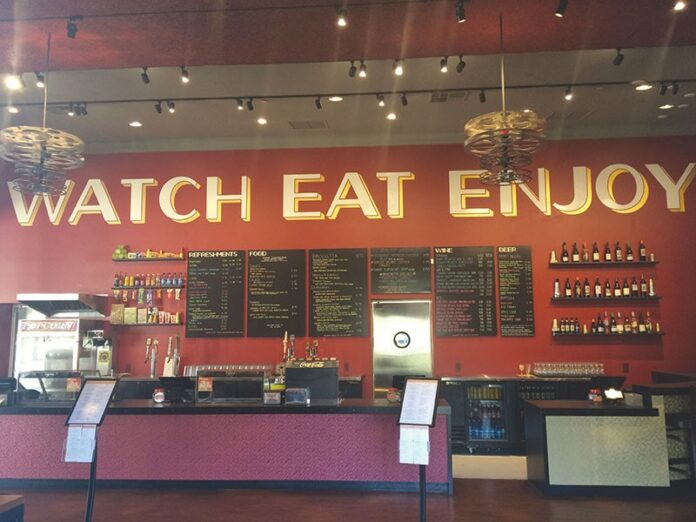
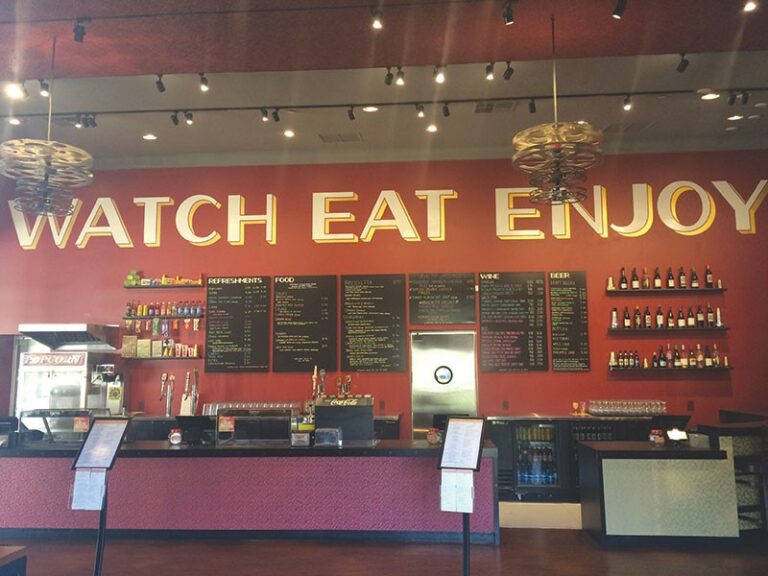
That problem is now a thing of the past, thanks to the Rialto’s recently completed remodel. In addition to a new façade and updated interior, the theater now has a cafe that serves wine and beer. It’s open as long as the theater is open, which is later than just about anyplace else nearby. And it serves everyone, not just moviegoers. The food menu goes way beyond popcorn and Twizzlers. There are soups (black bean and lentil, roasted red pepper; $5.50), paninis ($8.95), various bruschettas ($9.95) and sharable snacks like deviled eggs ($5.95), a Middle Eastern plate ($5.95) and even nachos ($10.95) made with mozzarella and cheddar instead of the dayglow “cheese” dispensed out of a hand pump.

The drink menu is top notch, too. There are more than half a dozen beers on tap, like Moonlight Brewing Co.’s Death and Taxes, Henhouse’s saison and Bear Republic’s
Racer 5 IPA. Wines by the glass include Longboard Vineyards Point Break Red and Sauvignon Blanc, Shannon Ridge Petit Sirah and a Pali Pinot Noir.

The best part? You can bring your pint or glass of wine into the theater and enjoy it with your movie. My pint of Death and Taxes fit right into the cup holder on the armrest. How civilized.

Rialto Cinemas, 6868 McKinley St., Sebastopol. 707.525.4840.

An Author’s Journey

In May 1957, a 31-year-old woman entered the New York City offices of publisher J. B. Lippincott, and said to the receptionist, “Good mornin’. I’m Nelle Harper Lee. I’m here for my appointment.”

“Good morning, Miss Lee. The editors are waiting for you.”

Thus started Nelle’s journey as an author. When she entered the conference room, she faced several male editors and one woman. The woman’s name was Theresa von Hohoff, but she preferred to be called Tay Hohoff. Nelle was told that the manuscript her agent had sent them, Go Set a Watchman but retitled Atticus, was “more a series of anecdotes than a fully conceived novel,” but since they did like her writing style, they assigned Tay to work with Nelle.

Over the next three years, Nelle’s journey, working hand-in-hand with Tay, led to the 1960 publication of one of the most popular and respected books of our time, To Kill a Mockingbird. There are no detailed written records of the work between the two, but by all accounts, they created an enduring work of fiction .

Generations have elevated Atticus Finch to folk-hero status, aided by Gregory Peck’s portrayal in the 1962 movie. Parents named their sons “Atticus”; young people were so taken with the character that they chose to pursue a legal career; author Ron Hansen titled his book Atticus in the fictional lawyer’s honor; and now a stage play is destined for Broadway produced by Scott Rudin and written by Aaron Sorkin.

Nelle Harper Lee, your author’s journey is done. Rest peacefully and enjoy the company of Atticus, Scout, Jem, Calpurnia, Tom, Dill, Boo, and even Bob and Mayella. We are forever indebted to you for your wonderful characters, who instilled in my generation a higher sense of morality and understanding as the difficult years of the Civil Rights revolution unfolded. And future generations continue to learn the same lessons as well.

Waights Taylor Jr. lives in Santa Rosa, and is originally from Birmingham, Ala. He is the author of the award-winning ‘Our Southern Home: Scottsboro to Montgomery to Birmingham.’

Open Mic is a weekly feature in the ‘Bohemian.’ We welcome your contribution. To have your topical essay of 350 words considered for publication, write op*****@******an.com.

Dinner to Go

0

Every year, Baum+Whiteman, a nationally renowned restaurant consulting firm in Brooklyn, issues its list of food trends.

The No. 1 trend this year is “Amazoning and Uberizing” in the form of tech-driven, food-delivery services. Unlike pizza delivery, the food is meant to be high-quality and prepared with flair. The goal is to offer a gourmet experience, minus the restaurant wait list, or a hearty homemade meal you don’t have to lift a finger to cook.

During 2015, services like UberEATS and Blue Apron energized the niche, delivering restaurant dishes and prepared meals to homes everywhere in the country. San Francisco launched homegrown apps such as Sprig, a healthy lunch and dinner service, and Caviar, a restaurant delivery app. While these successful newcomers don’t go beyond the Golden Gate Bridge, meal services have popped up in the North Bay too.

In Santa Rosa, Three Leaves (threeleavesfoods.com) allows customers to pre-order a weekly or a monthly meal service online. Customers pick up their meals Wednesdays between 3pm and 6pm, and Thursdays from 11am to 2pm. The menu changes weekly and includes six items. For a one-time $25 member fee and $80 for six people or so, you’ve got dinner covered.

Tiana Kraus, a nutritionist and certified baker of gluten-free goods, started the service over a year ago with her brother and chef, Jeff Nunes.

“We see ourselves as a middle person between the farmers and the people searching for the food they wish they had time to make,” Kraus says.

Another Santa Rosa–based service is Vivace Gourmet Meals (707.570.6214), founded in 2013 by Ashley Rarick. Rarick, who educated herself on healthful cooking after suffering various health issues, creates “luxury meals using only organic ingredients” delivered to clients’ homes twice a week. She tailors her menus to a customer’s needs, “whether it be an allergy, preference or goals like weight loss or weight gain, alkaline diets, paleo—you name it.”

“I think organic meal delivery has become popular because people are realizing what’s in their food and are focusing on their health, not to mention how convenient it is to have customized meals made for you and delivered to your door,” Rarick says.

The service costs about $54 a day, per person, which includes an all-organic lunch and dinner, with snacks as an additional option. There is a $10 fee for Sonoma County deliveries. Deliveries are on Tuesdays and Fridays.

Ruthy’s Real Meals (ruthysrealmeals.com), based in Cotati, offers Tuesday deliveries just in time for that midweek fatigue. Packed in sturdy microwave and oven-safe containers, dishes include honey miso glazed fish and pineapple brown rice. Special-occasion menus are available too. (On Valentine’s Day, Ruthy’s featured a holiday brunch menu.) Prices vary from $10 for a single serving of a side dish to $50 for three to four servings of an entrée. Delivery is free with orders of $75 and up—easily achievable if you order a large family meal.

Sonoma has its own luxury meal delivery service, Sonoma Meals (sonomameals.com). A new menu is posted on the company’s website each week. Deliveries are made on Tuesdays. Prices range from $6 for a small dessert to $45 for a large entrée.

Rather surprising for Sonoma’s humble size, there’s also Sonoma Food Taxi (sonomafoodtaxi.com), a delivery service that contracts with six local restaurants, including Taste of Himalayas, Maya and the Red Grape. The service offers full menus and options to order from a number of restaurants on the same ticket.

In Marin County, a very different service, a local Blue Apron of sorts, caters to busy families. Pernilla Sumner started Pernilla’s Pantry (pernillaspantry.com), which delivers anywhere from Sausalito to Novato, in 2013.

“I worked long hours for many years having small children, and the only way I would be able to get healthy, home-cooked meals on the table was to plan ahead,” Sumner says. “On one of my trips to my home country of Sweden, I discovered that meal-kit deliveries had been a fast growing market for a few years.”

Unlike other services in the area, Sumner supplies kits with ready-to-go ingredients and recipes, meant to be assembled and cooked quickly without the need for slicing and dicing. Prices start at $8 per meal and can grow according to clients’ needs.

“We’re definitely a part of the delivery craze,” Sumner says. “People in our area really appreciate locally grown and sourced products, and are looking for easy ways to eat healthy. That’s where we come in.”

While some of the services have online ordering available, others require a phone call, which might be not very 2016, but it’s much more personable. Without sophisticated apps or slick branding, these local ventures offer the best of both worlds, all the perks of food “Uberizing” without the anonymous, corporate aftertaste that usually comes
with it.

Glitz & Glamour

0

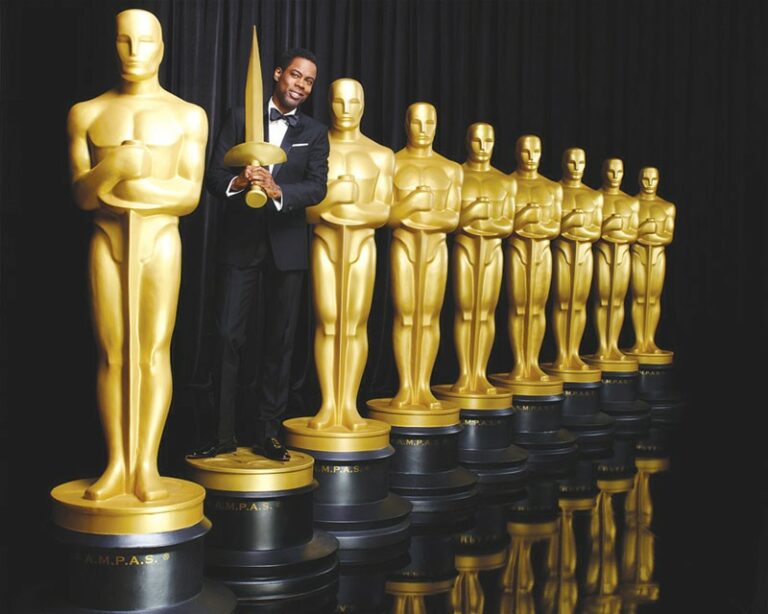
Hollywood’s biggest night this year is Feb. 28, Oscar night. From the red-carpet fashions and lavish productions to the celebrity sightings, it’s a must-see for film fans everywhere. In the North Bay, there are plenty of parties showing the awards on the big screen, from potlucks to black-tie affairs.

If you’re looking to dress to the nines, consider the Alexander Valley Film Society’s Red Carpet Gala at the Clover Theater in Cloverdale. A fundraising event for the community-focused film society, the gala will transform the Clover into a decadent gold lounge with wine, beer and bites. There’s also the Totally Tinseltown After-Awards dinner, and silent and live auctions.

In Sebastopol, the Rialto Cinemas rolls out its own red carpet affair, benefiting Food for Thought, complete with VIP Champagne reception and a prix fixe menu. There’s also a costume contest and trivia contest, and prizes on hand if you can guess who’s going home with the gold statues.

McNear’s Mystic Theatre in Petaluma asks for “The Envelope, Please.” Appetizers, signature drinks and the Phoenix Theater’s main man Tom Gaffey are all part of the fun, with proceeds going to KPCA FM radio.

In St. Helena, Cameo Cinemas is making Hollywood’s big night a community gathering. Everyone is asked to bring appetizers to share, while bubbly and popcorn flow and games test your Oscar IQ.

Barrels of Fun

0

Coopers do their coopering in a cooperage, that we know. But cooperage can also mean the use of wooden barrels, generally. Let’s use cooperage in a sentence: “Hey,” said the craft beer enthusiast, “that new craft brewery Cooperage has major cooperage.”

“Major stokage!” replied the second craft beer enthusiast. “I love funky, barrel-aged sour beers.”

Not so fast. Barrel-aged beers take time to get their funk on—one year in the case of Cooperage, which opened seven months ago in a warehouse in a Santa Rosa business park around the corner from Siduri Winery. The beer is still aging in some 60 second-hand barrels that formerly held wine, port and whiskey.

But even without a namesake beer (as of yet) and no food service besides bags of popcorn, and residing in a hard-to-find spot, Cooperage is already an off-the-hook popular destination brewery. On a recent Monday afternoon, even before 4pm, every spot at the redwood slab bar is taken save one, and most of the high tables in the no-frills space are filled. The music’s good, the buzz is convivial, nobody’s anxiously crowding the bar and I heard neither hoot nor holler during the hour I spent there. Like a cross between a student union and a coffeehouse—but where the menu is all beer—Cooperage is a neat illustration of the difference between the current “craft beer” boom and the “microbrew” heyday of the 1990s: no brewpub is required. And it’s OK to order pizza in, the bartender tells me, and some days, a food truck finds its way there.

The beer sampler is “choose your own adventure”–style, $3 per five ounce pour; 10 ounces are $4, pints and tulips a buck extra. It might be the Mandarina Bavaria hops adding a citrus note to the current blonde ale on tap, A Fish Called Blonda, and because this is a slice of beer-geek heaven, the yeast selection is listed on the chalkboard, too. A stout in the American style, Thriller packs 8 percent alcohol by volume. It’s hoppy, with a thick, roasted barley and soy sauce ice cream palate.

In the tutti-frutti camp of aromatic IPAs, Mission from Hop is sweet and malty on the finish. My favorite, the Quad-Di-Da-Di Belgian dark strong beer, is clean, ripe and juicy with black licorice, tamarind and banana, and bodes well for the funky beers now napping in cooperage. At 9.3 percent abv, it’ll make you want to curl up in a barrel and wait it out, too.

Cooperage Brewing Co., 981 Airway Court, Ste. G, Santa Rosa. Open 2pm–midnight, Monday–Friday; noon–midnight, Saturday–Sunday. 707.293.9787.

Bear Market

0

As “Round Robin” McAllister, critic of the Saskatoon Muskeg put it, “It’s time once again for that gilded, gelded, gelid statue to make his annual sashay.” The old Saskatchewanian is right, as usual.

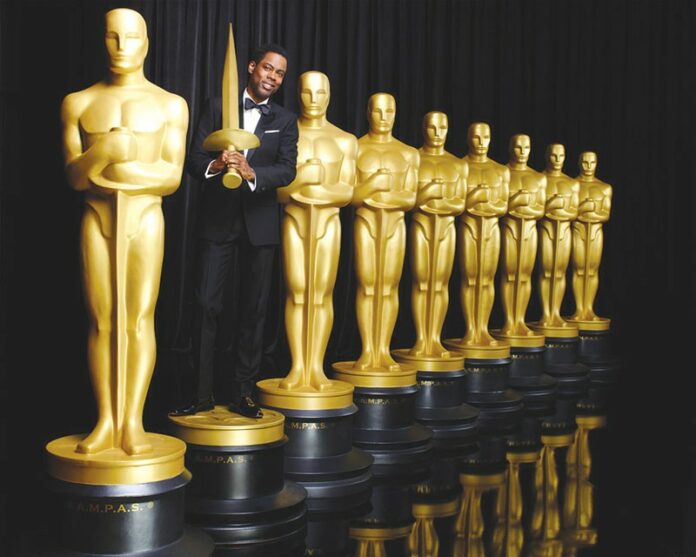
The 88th Oscars are to be presented Feb. 28. It’s Superbowl Sunday for moviegoers, a time to scream at the fumbles. Protesters are countering the gleaming whiteness of the nominations, a subject we can trust that co-producer Reginald Hudlin and host Chris Rock will address.

Generally, the safest way to handicap the awards is to guess the tastes of the longest-lived voters. Rita Moreno won what is always the most interesting category, Best Supporting Actress (West Side Story), back in 1961. Her favorite film of 2015? “I was absolutely nuts about Mad Max: Fury Road,” she told me. “It’s one of the most imaginative movies I’ve ever seen, so creative and spectacular.”

Fury Road was directed by George Miller, in his 70s and still making movies 20-year-olds rave about. I’d bet the Oscar pool on Miller over the favorite Alejandro Iñárritu, just as I’d put it on Leonardo DiCaprio to win Best Actor for battling that furious bear and eating trout sushi.

Adam McKay’s The Big Short was a triumph of tone, and a perfect reflection of populist outrage; it would have been my choice, even over Spotlight.

But I’m baffled by The Revenant juggernaut. Best movie of the year? It was a satisfying Western, if as supersized as a $20 hamburger—a consolation prize when The Hateful Eight turned out to be so claustrophobic.

Sylvester Stallone’s presence in the Best Supporting Actor list makes this year’s choices less interesting. Mark Rylance ought to win for Bridge of Spies, but Stallone for Creed is the sentimental favorite. Seeing him makes the Academy feel young and relevant.

The Best Supporting Actress category always has the most fascinating range of talents. Jennifer Jason Leigh had the most screentime and endured the most punishment in The Hateful Eight. She’s the natural. Kate Winslet won the British Oscar, the BAFTA, for putting up with Michael Fassbender’s Steve Jobs, a potential dark horse win here. Less likely: Rooney Mara in Carol as Therese Belivet (as for Carol, I didn’t belivet either). Rachel McAdams did her career best in Spotlight, and deserved the nod. Since Alicia Vikander should win an Oscar for Ex Machina, her nomination in the stale Danish Girl is some sort of thrown bone.

My night will be made if
Don Hertzfeldt’s “World of Tomorrow” wins best animated short, if Saoirse Ronan wins
best actress for Brooklyn, or
if Ennio Morricone gets a
lifetime achievement award for The Hateful Eight.

Even if all that fails, we can expect the usual diversions. Cruel glamazons herding noble thespians as if they were goats. The gaffes. The bizarre frocks. And a refreshing snivel during the “Parade of the Dead” sequence.

Kimock & Son

0

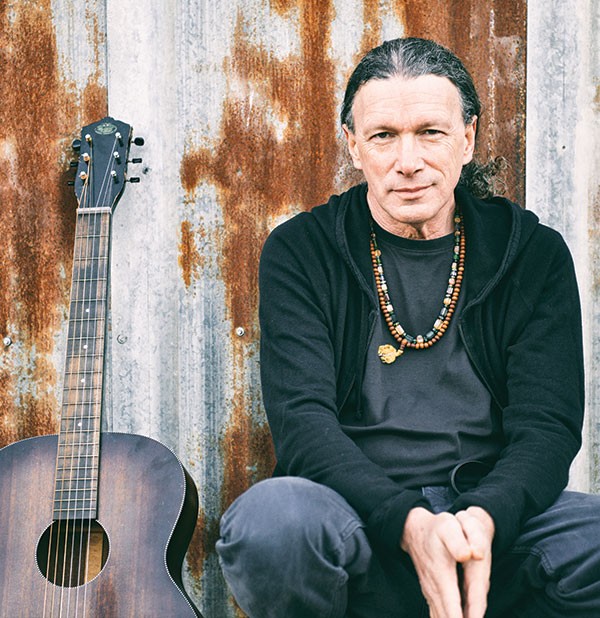
In the four decades guitarist and songwriter Steve Kimock has called the North Bay home, he has played in an array of musical projects and crafted a diverse body of work.

He’s best known for his jazz-rock band Zero, formed in the 1980s in Marin. Touted by Jerry Garcia as his “favorite unknown guitar player,” Kimock’s ever-evolving sound has been on display since 2000 in the Steve Kimock Band and projects like Steve Kimock Crazy Engine.

In addition to a performance with David Lindley at
142 Throckmorton Theatre in
Mill Valley on Feb. 27, Kimock debuts his latest ensemble on March 2 at HopMonk in Sebastopol, and this one is a family affair.

Joining Kimock onstage will be his eldest son, John, himself an accomplished multi-instrumentalist and composer, for a new wide-ranging and inventive instrumental outfit simply called KIMOCK.

“I guess I just got tired of people misspelling my last name, so I spelled it out in capital letters,” laughs Kimock, speaking from his home studio in Sebastopol.

“John and I had taken prototypical swipes at the idea of collaborative songwriting, but there was always too much stuff going on, for him and me both, to settle into a space to make that work,” Kimock says. “But now we are both at a point in our lives where we can apply a little torque to that idea.”

The idea behind KIMOCK was inspired by the guitarist’s forthcoming solo album, Last Danger of Frost, which Kimock recorded solo last winter. It’s set for release on March 18.

“I wanted to go into some areas of music that didn’t have anything to do with my normal routine,” Kimock says. “I play in lots of rock bands, and that’s fun and everything, and after 60 years, I’m starting to get good at it. But it’s not where my musical influences are if left to my own devices.”

Lately, Kimock has been experimenting more with the balance between acoustic and electronic elements, making “Last Danger of Frost” an instrumental wonder unrestricted by the rock and roll format.

Throughout the album, Eastern and Western folk melodies filter through looping effects, creating a hypnotic feel, and the instrumentation flows freely in an eclectic sonic exploration.

“It’s like that feeling you had when you were a kid and you laid down on the floor with the speakers on either side of your head and you put on a record,” says Kimock. “Or when you were huddled in the closet with the headphones on—that feeling. I like that feeling.”

Letters to the Editor: February 24, 2016

Bummin’

Tom Gogola’s beach bum article (“Shacked Up,” Feb. 17) is very well-written and provides the best description of the ’60s–’70s I’ve heard in an article not ostensibly written about that era.

His beach retreat is a microcosm of those days. For those who weren’t there back then, there were so many living spaces—houses, shacks, forests, meadows, beaches—that were hideaways such as he describes.

Camp Meeker

Grape Rush

In the Feb. 10 interview in the Bohemian (“Dodd & Country”), Assemblyman Bill Dodd was mistaken in his assumption that Sonoma County has the same stringent agricultural rules as Napa County. Napa agricultural lands are held in a unique agricultural preserve, and there are restrictions on production, sourcing of grapes and events on ag land. None of these restrictions or conditions exists in Sonoma County. Our Sonoma County general plan environmental impact report assessed impacts of 239 facilities by 2020. It’s 2016, and we already have 439 wineries built, with more in the pipeline.

Kenwood

If the Name Fits

Coming up with the most insulting anagram of a dead person’s name (“Scalia via Anagram,” Feb. 17) sounds like a “moot goal, g.”

Via Bohemian.com

Doing the Right Thing

I hope the Bohemian will be running an article soon on the dismal response by the medical cannabis industry to register with the water board and submit to inspections to mitigate environmental damage. We are one of only two or three grows in the entire county who have stepped to the plate and done the right thing.

I have been increasingly disgusted by the Bohemian‘s coverage of the industry, blindly supporting the bad actors who have been flouting regulations for massive financial gain.

The state, finally, has started doing its job. It’s time the growers, the press and the end users start doing theirs.

Sebastopol

Write to us at le*****@******an.com.

Made Up

0

‘There is never an easy time to do something that has never been done before.” True enough.

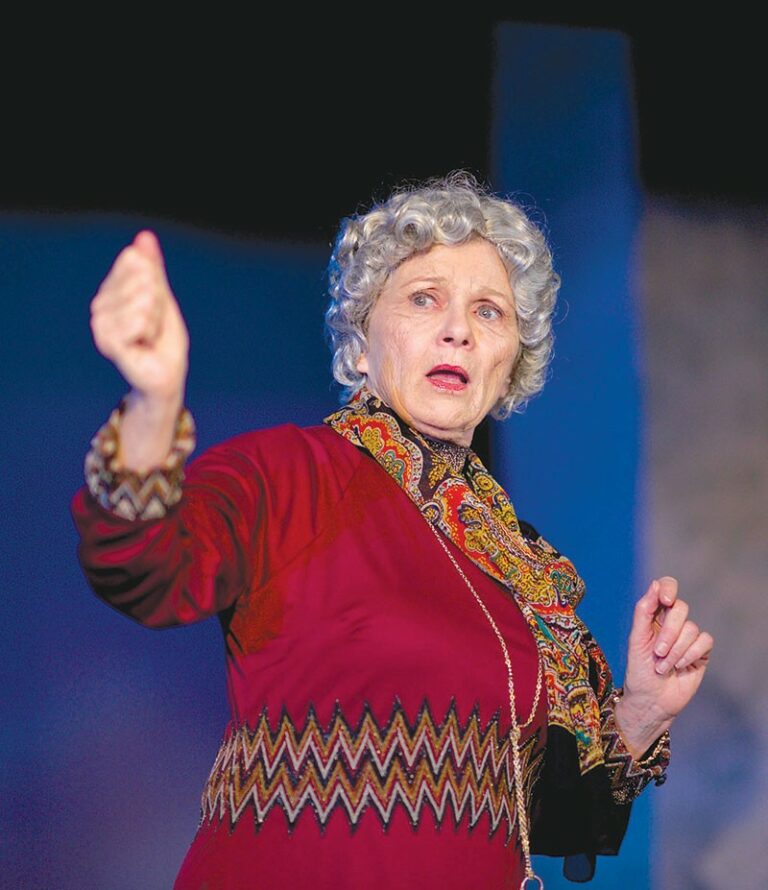
In author-playwright Mary Spletter’s world premiere, Arches, Balance and Light, those words are more than just encouraging advice offered to a determined young pioneer; they form a kind of philosophical spine to a play that, in its own right, is attempting something impossible: telling the life story of the legendary Julia Morgan, California’s first licensed female architect.

Little is actually known of Morgan’s personal life, and that’s where the impossible comes in. She stands among history’s most secretive and private people. A playwright might stick to what few facts we do know, and end up writing a very short play, or she could allow herself to simply make up a lot of stuff instead. In her somewhat convoluted play-within-a-play-within-a-play, now running at Ross Valley Players, Spletter has done a bit of both, blending solid, historical reality with some juicy, fanciful “fan fiction,” resulting in an entertaining if shaggy-doggish fantasy romance.

After having designed 712 distinct buildings (including Hearst Castle), Julia Morgan’s somewhat prickly spirit (played by Ellen Brooks, excellent) appears alongside a chorus of ghosts to give a summary of her life, followed by the “memory” of a visit from an elegant young Parisian named Marguerite (Anatasia Bonaccorso, all watchful intensity), who is intent on determining whether or not Julia is her mother. In response, Julia, aided by the spirits, describes her days as a young student in Paris in the late 1800s (her younger self played with plucky charm, and considerable guts, by Zoe Swenson Graham, who stepped into the role just three days before opening).

Initially denied entrance to France’s prestigious architecture school, the École des Beaux-Arts, the determined Julia finds an enemy in the old-fashioned university director (John Simpson), but a friend and mentor in Victor (a charming Robin Schild), the amiable, middle-aged architecture teacher who sees Julia’s potential as a designer, and possibly a bit more. Revealing anything else would spoil the surprises.

The direction by Jay Manley is fine, making maximum sense of what could have been confusing, and the minimalist set works well. It is unlikely that any of what unfolds actually happened, of course. But around the edges of Spletter’s pleasantly quirky, occasionally sitcom-ish drama—basically a love story wrapped in a mystery disguised as a memory—the writer’s obvious admiration for Julia Morgan’s remarkable legacy is brought to vivid life.

Rating (out of 5): ★★★½

Equal Time

0

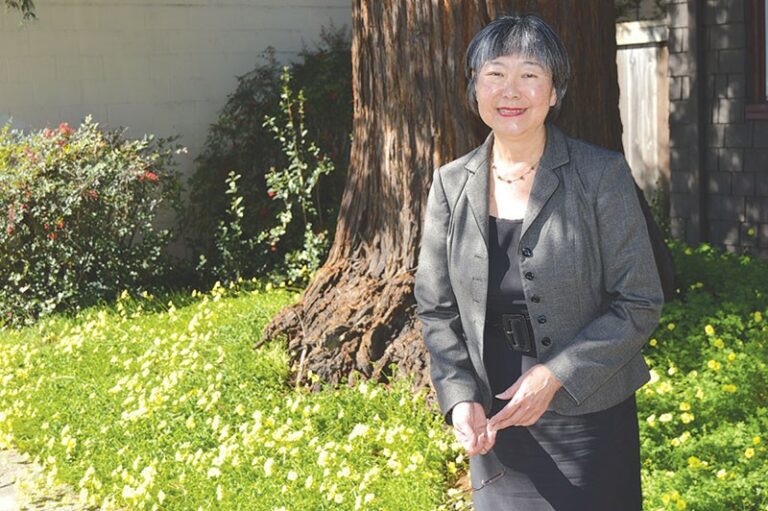
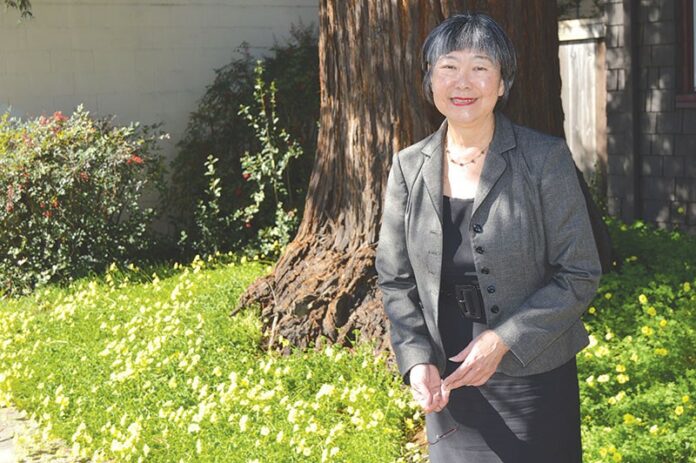
Mariko Yamada was termed-out of her Napa Assembly seat in 2014 and returns to politics this year running for State Senate in the Third District, which comprises all of Napa County and parts of Sonoma County.

The longtime social worker will face off against Bill Dodd in the California state Democratic primary on June 7; Dodd was interviewed in this space two weeks ago. As with Dodd, the full interview is up on the Fishing Report blog at Bohemian.com. Yamada, who speaks proudly of her 42 years of public service, lives in Yolo County and is the child of Japanese-American parents who were interned during WWII. I met with Yamada last week at the Bohemian‘s office and asked her many of the same questions I put to Dodd, the first of which was whether or not Napa and the North Bay in general had reached a point of “peak wine,” where there’s just no more space for another vineyard.

Mariko Yamada: Yolo County, which is where I live and have lived for 22 years, was one of my first experiences immersing myself in rural and agricultural issues. I was pretty much a city kid all my life, and I consider the last 22 years of my 42 years in public service really important, a change of direction, because that’s part of the issue: what’s the understanding of the rural and urban issues as they relate to wine and the wine industry, which of course is a key part of our agricultural district and heritage?

There are significant debates going on right now about land use as it relates to water and the sustainability issues—not just related to wine issues, but all agriculture. The questions are being asked: are we the victims of our own success? You posed the question of just how much more can be done, and I think the issues of climate change and water resources and land resources are going to be self-defining—is there a tipping point over which we can’t go?

Bohemian: What’s your view of the Fight for $15 minimum-wage push?

Yamada: There are two tenets that I think of. Nothing is getting any cheaper, and none of us is getting any younger. . . . I support an increase in the minimum wage. It has to be in a partnership at the federal level, which doesn’t look too hopeful anytime soon, but there should be a federal commitment to it. But we can’t wait for other levels of government to lead the way. I do support an increase to $15 over a period of time, but I also support a need for small business—there’s got to be something in it for them, and I’d point to the costs of healthcare and the costs of workers’ compensation which are crushing middle class families . . .

Bohemian: Who would you describe as the main base of support for your Senate run?

Yamada: I want to make sure that people don’t try to typecast anybody in the race, because while I have a track record of 42 years of public service, I think our support comes from a pretty diverse group of people. Certainly, I’m a lifelong Democrat, unlike my principal opponent who recently became a Democrat, just around the time, I think, that he was deciding to possibly run for the Assembly. . . .

My support has traditionally come from what I would call “everyday people.” You need only look at our finance reports to tell. I think Mr. Dodd has, maybe, a little over 400 donors or donations, but he’s managed to raise about a million dollars. And we have more than twice that number of donations, but we’ve raised a quarter of a million dollars. We have over 800 donations. . . .
I have both Democratic and Republican support, I have Green support, and I have support from independents. I think we appeal most to what I would call a pragmatic approach to solving some of our state’s most difficult problems.

Bohemian: Given the limits of the Affordable Care Act related to providing healthcare to the undocumented, and the heated rhetoric around immigration, what more can the state do to help the undocumented?

Yamada: If you look at this in a historical context, our country was really built on taking advantage of labor. . . . This is not a new phenomenon in our country. We’ve had varying levels of success partly due to the rise of the labor movement and other activists that pointed out the problems in how our capitalist system, frankly, operates. . . . We’ve taken incremental steps to bring people out of the shadows, given that we don’t have a partnership with the federal government, which is exactly where comprehensive reform resides.

We are going to have to continue to make these incremental steps towards ensuring that people who have come here, live here, work here, really pay taxes in their own way but don’t get certain benefits out of it. . . . As it relates to a general contractor and his or her ability to meet a bottom line, I would hope that the business community would join us and make a business case for immigration reform. It shouldn’t be either/or, because both sides are benefiting from each other’s existence.

[page]

Bohemian: You’ve said you didn’t run for office to be a bill-writing machine. So let’s say you’re elected to the Senate as a non–bill writing machine, what do you see as the biggest traps that are out there for the state in general?

Yamada: I have three primary areas; I call them three legs on my policy stool. I will continue to make aging and longer-term care a top policy priority. . . . Secondly, not only because of the district itself but the future of the state, my focus on natural resources and land use and water resources will also be a very clear sort of policy area, with particularly attention to the Delta.

Bohemian: What’s your take on Gov. Brown’s twin Delta Tunnel proposal?

Yamada: I oppose them. I have opposed them since the beginning and will continue to oppose them.

Bohemian: Since there are two of them, you and Dodd can each oppose one!

Yamada: [Laughs] Right. I think the fact that the Senate District 3 is four or five of the Delta counties, we clearly have to be defenders of the Delta.

And the third leg on my policy stool and born out of my personal view of the world, growing up in a household where my parents had been interned and in a fairly hardscrabble part of town in Denver called the Five Points—about a 95 percent African-American community in the 1950s and ’60s. That was the lens through which my view of the world developed [and] my belief in the fundamental values of our society that we must continue to work for social, economic, educational and environmental justice.

Bohemian: How will your experiences in elected office translate to the Senate?

Yamada: Having served in Yolo County—that was my first elected position as a supervisor—there were certain models that were developed. My principal area was in aging and long-term care, so there were a lot of what I would consider to be models of collaboration or integrated services that we attempted to implement in Yolo County that could potentially go statewide. This is a way to reduce inefficiencies in our aging and long-term care system that pits the social model versus the medical model, which leads to a lot of confusion for everyday people—somebody who wants some help with their immediate crisis but doesn’t know where to go to get their needs met.

Bohemian: So, Hillary or Bernie?

Yamada: My heart’s with Bernie, my head is with Hillary. And I have not, I have honestly not decided. . . . My first election as a voter was George McGovern . . . and we saw what happened there. And honestly, that’s really where I am right now.

I know that Mr. Dodd has already participated in headlining fundraisers for Hillary, but I have honestly not made up my mind. Having said that, your primary vote should go to the person who you most believe reflects your values, and that’s where my heart is. But I’m just going to watch it a little bit more and see.

Bohemian: It’s interesting that the vernacular of “socialism” around Sanders is lost on a lot of younger voters, who don’t really care about the label as much as older voters do.

Yamada: He certainly is contributing to one of the liveliest debates that I have remembered, and very substantive. He is saying exactly what this country needs to hear, and I think he’s worrying a lot of people, he is worrying Wall Street, certainly the Clinton campaign has to pay attention. I understand that [Hillary] is well-prepared. She has an experience level that cannot be matched, and, honestly, Bernie comes from a state that has 600,000 or 700,000 people. My Senate district has more people than Vermont has as a state. That’s a consideration. . . .

Double Feature

A buddy and I meet for a movie about once a month at Sebastopol's Rialto Cinemas. We generally go to one of the last shows on a weeknight, around 9:30pm or so, after the kids are tucked away in bed and all is clear. The plan is grab a beer, maybe a bite to eat and then watch some...

An Author’s Journey

In May 1957, a 31-year-old woman entered the New York City offices of publisher J. B. Lippincott, and said to the receptionist, "Good mornin'. I'm Nelle Harper Lee. I'm here for my appointment." "Good morning, Miss Lee. The editors are waiting for you." Thus started Nelle's journey as an author. When she entered the conference room, she faced several male editors...

Dinner to Go

Every year, Baum+Whiteman, a nationally renowned restaurant consulting firm in Brooklyn, issues its list of food trends. The No. 1 trend this year is "Amazoning and Uberizing" in the form of tech-driven, food-delivery services. Unlike pizza delivery, the food is meant to be high-quality and prepared with flair. The goal is to offer a gourmet experience, minus the restaurant wait...

Glitz & Glamour

Hollywood's biggest night this year is Feb. 28, Oscar night. From the red-carpet fashions and lavish productions to the celebrity sightings, it's a must-see for film fans everywhere. In the North Bay, there are plenty of parties showing the awards on the big screen, from potlucks to black-tie affairs. If you're looking to dress to the nines, consider the Alexander...

Barrels of Fun

Coopers do their coopering in a cooperage, that we know. But cooperage can also mean the use of wooden barrels, generally. Let's use cooperage in a sentence: "Hey," said the craft beer enthusiast, "that new craft brewery Cooperage has major cooperage." "Major stokage!" replied the second craft beer enthusiast. "I love funky, barrel-aged sour beers." Not so fast. Barrel-aged beers take...

Bear Market

As "Round Robin" McAllister, critic of the Saskatoon Muskeg put it, "It's time once again for that gilded, gelded, gelid statue to make his annual sashay." The old Saskatchewanian is right, as usual. The 88th Oscars are to be presented Feb. 28. It's Superbowl Sunday for moviegoers, a time to scream at the fumbles. Protesters are countering the gleaming whiteness...

Kimock & Son

In the four decades guitarist and songwriter Steve Kimock has called the North Bay home, he has played in an array of musical projects and crafted a diverse body of work. He's best known for his jazz-rock band Zero, formed in the 1980s in Marin. Touted by Jerry Garcia as his "favorite unknown guitar player," Kimock's ever-evolving sound has been...

Letters to the Editor: February 24, 2016

Bummin' Tom Gogola's beach bum article ("Shacked Up," Feb. 17) is very well-written and provides the best description of the '60s–'70s I've heard in an article not ostensibly written about that era. His beach retreat is a microcosm of those days. For those who weren't there back then, there were so many living spaces—houses, shacks, forests, meadows, beaches—that were hideaways such...

Made Up

'There is never an easy time to do something that has never been done before." True enough. In author-playwright Mary Spletter's world premiere, Arches, Balance and Light, those words are more than just encouraging advice offered to a determined young pioneer; they form a kind of philosophical spine to a play that, in its own right, is attempting something impossible:...

Equal Time

Mariko Yamada was termed-out of her Napa Assembly seat in 2014 and returns to politics this year running for State Senate in the Third District, which comprises all of Napa County and parts of Sonoma County. The longtime social worker will face off against Bill Dodd in the California state Democratic primary on June 7; Dodd was interviewed in this...
11,084FansLike
4,606FollowersFollow
6,928FollowersFollow