Poe Down

0

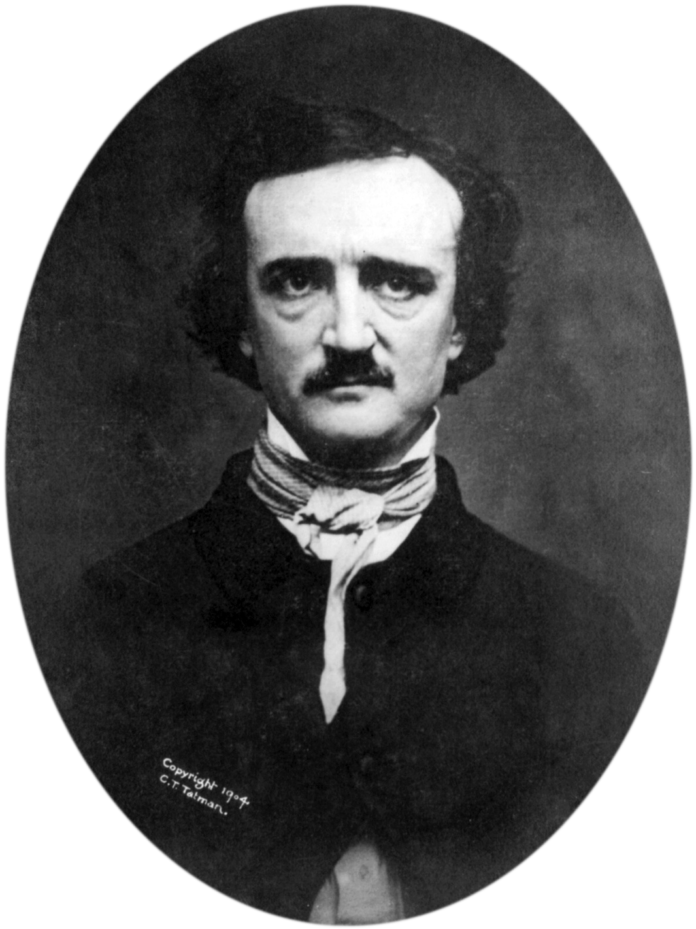
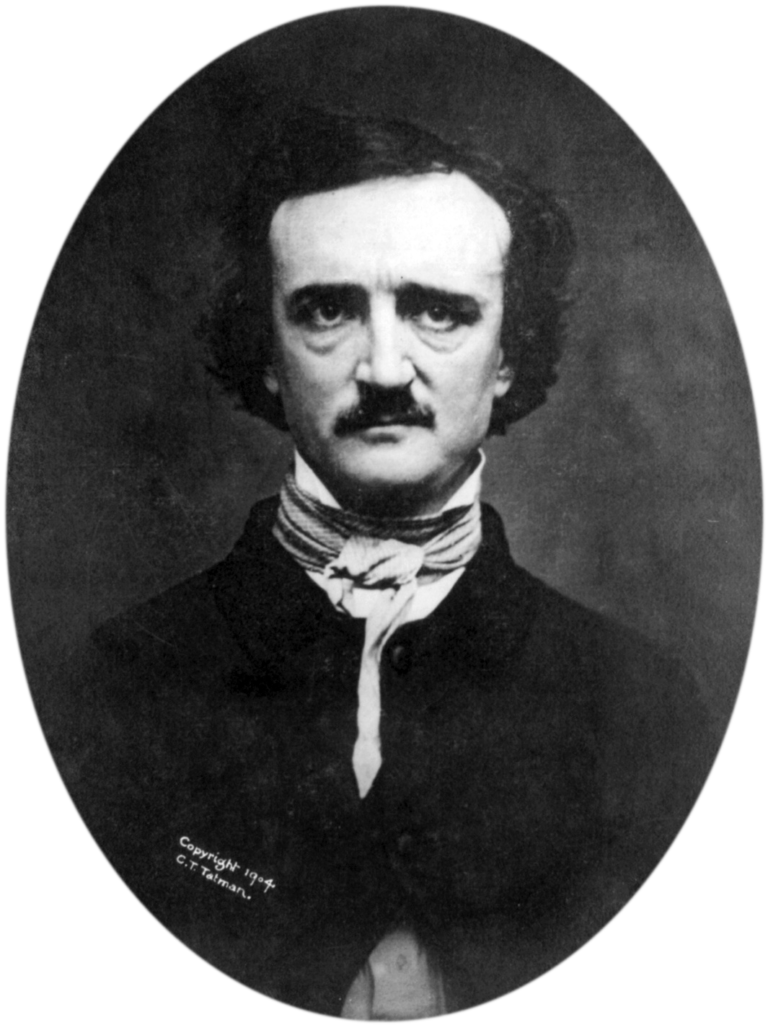
He invented the detective story 40 years before Sherlock Holmes was ever conceived. He wrote the world’s most famous horror poem, The Raven, quoted to death forevermore by literary students and fans of the supernatural. He even contributed to the earliest inventions of gothic science fiction, wrote humorous satire and influenced generations of authors and scholars in all realms of literature.

Beyond anything else, Edgar Allan Poe’s name is synonymous with a good scare, and more than 150 years after his death, his works have endured in print and have been adapted to everything from film and radio to Broadway and graphic novels. This weekend, St. Helena’s White Barn is getting into the Halloween season Poe-style with a two-night run of multimedia shows titled Poe-Pourri.

Theatrical readings will bring Poe’s classic ghost stories to life and short films will raise hairs on backs of necks. There will even be a shadow play, a popular form of spooky entertainment from Poe’s day, before electricity lit cities through the dark, dark night.

Poe-Pourri presents a potable portion of perturbing productions on Friday and Saturday, Oct. 14 and 15, at the White Barn, 2727 Sulphur Springs Ave., St Helena. 8pm. $30. Not recommended for children under 12. 707.987.8225. —Charlie Swanson

Just Say ‘Slow’

0

As an older teenager and a young adult who was a user of recreational marijuana, I remember that I always supported the legalization of marijuana. However, as a mature adult who has, hopefully, gained some wisdom over the years, I find my attitude toward legalization changing due to a few social and scientific realities.

First of all, what is pot? Pot is agriculture, and agriculture constitutes the number-one cause of water pollution due to three factors: sedimentation, nutrients and chemicals. And in the case of animal agriculture, add to that list pathogens. The difference between pot and most of the other vegetables used in agriculture is that most vegetables are used for nutrition to sustain human life. Marijuana agriculture is not necessary to sustain human life, in most cases.

We all are aware how money from the wine industry influences local politicians. We are also aware how the wine industry has hurt local biodiversity levels as well as the drain on the water supply and its effect on fish populations. If pot becomes legalized, the amount of money generated in the industry will help to spawn a whole new generation of lobbyists and the political prostitutes they so dearly love. Will all of the problems created by the wine industry be made worse by a bunch of money grubbing, nitrogen dumping, sediment creating, agricultural monstrosities likes Cargill, Archer Daniels Midland, Gallo, etc?

The term “unintended consequences” comes to mind when I ponder this subject. A recent study by the University of Mississippi concluded that legalization of marijuana in Colorado caused a substantial increase in housing prices. Is there any reason to think that wouldn’t happen here? Considering our already skyrocketing rents, how much will legalization exacerbate the problem?

As the (over)population of California approaches 40 million, voters need to be extra careful about what type of industry we permit to establish itself in a state already burdened by social and environmental problems. If there were only 4 million people in California, I might jump on the legalization train, but the infrastructure is already too strained. Let’s think of the big picture. Will we have to build a new desalination plant at Bodega Bay to support this industry? If we desire to be truly sustainable, at some point we have to stop making money the number one consideration. Perhaps this would be a good place to start.

Doug Haymaker is an environmental science student at Santa Rosa
Junior College and founder of the Clean Oceans Campaign.

Open mic is a weekly feature in the ‘The Bohemian.’ We welcome your
contribution. To have your topical essay of 350 words considered for
publication, write op*****@******an.com.

Mystic Circus Flies Into Santa Rosa

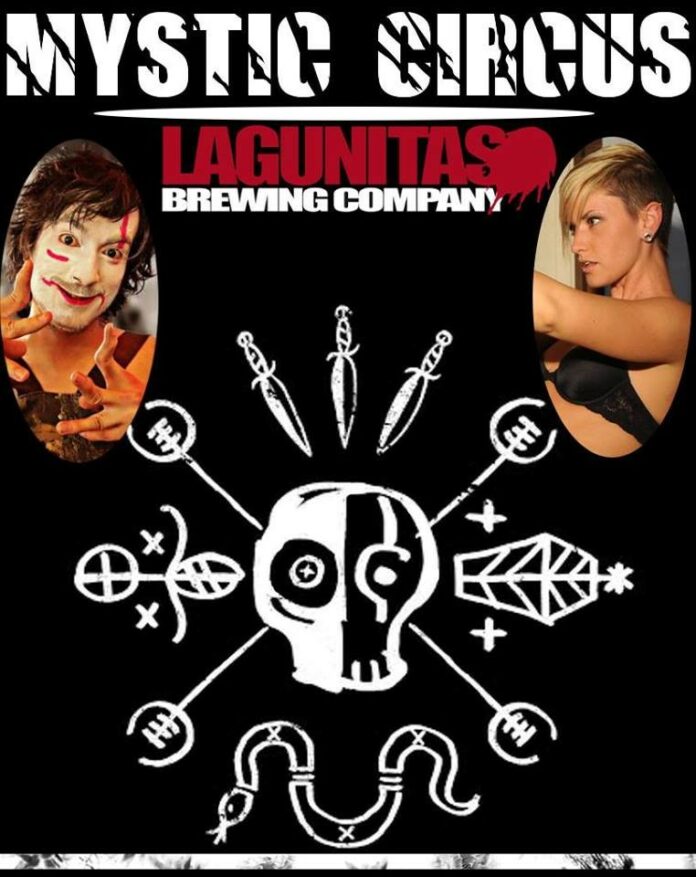
Inspired by the Coney Island sideshows, Mystic Circus is a show not to be missed. This adult variety show features a fire-breathing ringmaster in Rush Hicks, with sword swallowing, acrobatics and burlesque among other spectacles.

This week, the nationally touring troupe make their way to the North Bay with a show at Whiskey Tip in Santa Rosa on Thursday, Oct 13, as part of their latest “Fly or Die” tour. Sponsored by Lagunitas Brewing Company, this show will push multiple envelopes as it dazzles. As the circus says on their Facebook event page:

Come one come all….. wait…. Stay at home if you are conservative, close minded, easily offended or overly religious. We wouldn’t like to shake your delicate sensibilities. Do attend if you are fun, outgoing and don’t mind getting pull on stage to be a part of the fun.

With the North Bay already familiar with companies like North Bay Cabaret and Cabaret de Caliente, this show is sure to entertain. The mystery and magic come to town for one night only. For more details, click the event link, here.

Oct. 7: Heartfelt Art in Santa Rosa

0

Sonoma County artist Potenza has a big heart. Inspired by an act of charity 24 years ago, she endeavored to create ‘The Hearts of the World,’ a massive art project that has finally come to completion and includes over 200 paintings, one for every nation on Earth. Each piece commemorates its adopted nation through that country’s colors, flag design or other recognizable symbol, designed to bring people together through a message of love. Potenza exhibits many of these works of art and shares the inspiring stories behind them with a reception on Friday, Oct. 7, at the Journey Center, 1601 Fourth St., Santa Rosa. 5pm. Free admission. 707.578.2121.

Oct. 8: Musical Apex in Guerneville

0

Formed in the Bay Area in 1996, female vocal ensemble Solstice have spent two decades performing a dynamic repertoire of passionate music. The six-women-strong group of singers regularly commissions and arranges classic works by everyone from Björk to Paul Simon, and composes original tunes, all of which can be found on their four original albums. This week, Solstice celebrate 20 years of transformative harmonies and award-winning music with a concert that features new works by musical compatriots Cortlandt Bender and Jim Hale, and a post-concert reception on Saturday, Oct. 8, at the Guerneville Community Church, 14520 Armstrong Woods Road, Guerneville. 8pm. $15–$25. solsticesings.com.

Oct 8 & 9: Rags to Revival in Sonoma & Napa

0

Before jazz, before Dixieland, there was ragtime. This weekend, the Wine Country Ragtime Festival highlights many of today’s premier ragtime musicians with several events. The lineup includes nationally known ragtime master and musical director John Partridge, pianist and harpist Deborah Knapp, Russian-born and classically trained musician Larisa Migachyov and festival favorite the Flying Eagles Jazz Band. The all-star show happens on Saturday, Oct. 8, at 6pm at the First Congregational Church (252 W. Spain St., Sonoma; $20) and Sunday, Oct. 9, at 2pm at the First Presbyterian Church (1333 Third St., Napa; $10). winecountryragtimefestival.com.

Oct. 10: Hungry Eyes in St. Helena

0

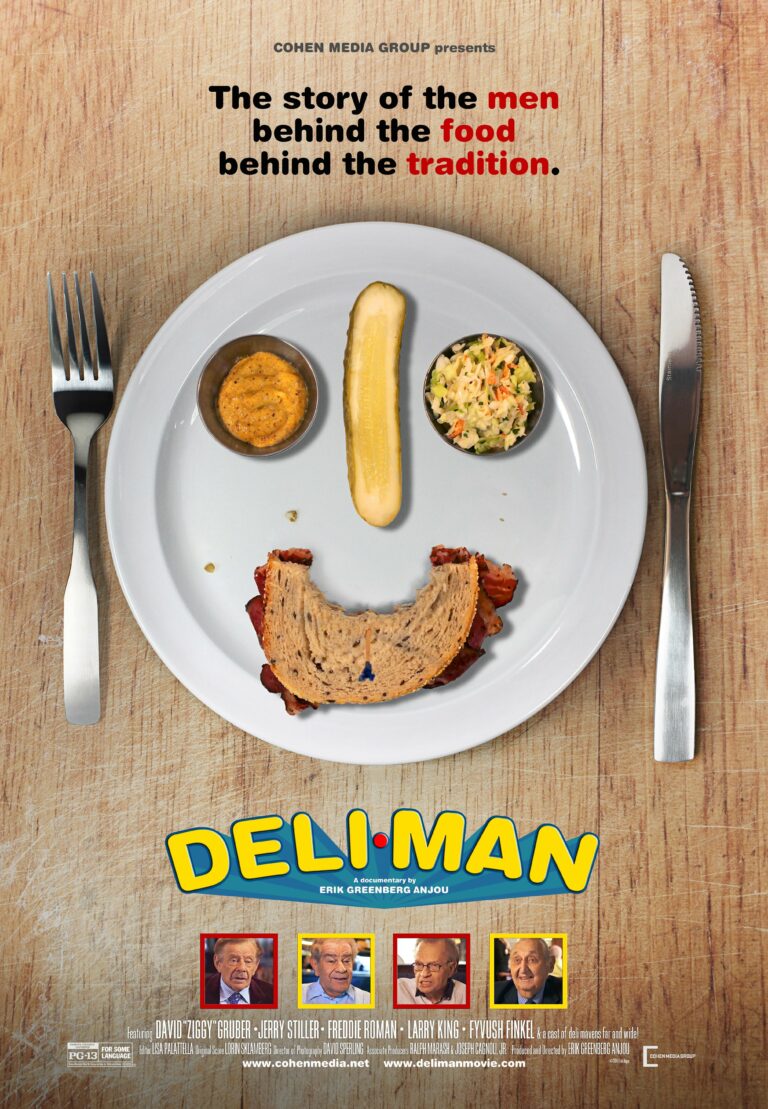
The delicatessen was born from Jewish immigrants in New York City, and today is known coast to coast as the lunchtime go-to spot we all depend on to get us through the work day. The delicious documentary ‘Deli Man’ profiles deli workers and examines the communal culture that comes from the eateries. This week, Cameo Cinema screens the film as part of its CinemaBites series, paring the visuals to food by the Restaurant at Meadowood’s chef Christopher Kostow and wine and beer. Special guest Evan Bloom, from Wise Sons Delicatessen in San Francisco, is also on hand Monday, Oct. 10, at Cameo Cinema, 1340 Main St.,
St Helena. 5pm. $45. cameocinema.com.

Vision Quest

No one could predict that the internet and social media would turn the spotlight on niche magazines and indie presses. And yet, according to market reports and sources like TheMediaBriefing.com, there’s never been a better time to be a quality publisher. Some say it’s the golden age of small, independent presses and publishing houses that push boundaries while their established colleagues compete for the next big series or bestseller.

Alternative magazines, following in the footsteps of Kinfolk and Lucky Peach, are also blossoming. Sometimes funded by crowdsourcing sites like Kickstarter, and often artfully designed, they provide an alternative to the media cycle, in which “recycling” is a key word. Unlike nationally circulating lifestyle brands, each independent magazine carries a sense of the place, atmosphere and area in which it was created. No wonder niche magazines are increasingly being called “time capsules.”

This is very much the case with the Inverness Almanac, a biannual print publication from West Marin, a region abundant with past niche publications, such as the well-loved Floating Island and Estero journals. With only four volumes since its inception around two years ago, Inverness Almanac managed to set a certain tone. Each cover features an image from nature. Inside, local poetry, art, naturalist essays and inspirational ideas fill the pages.

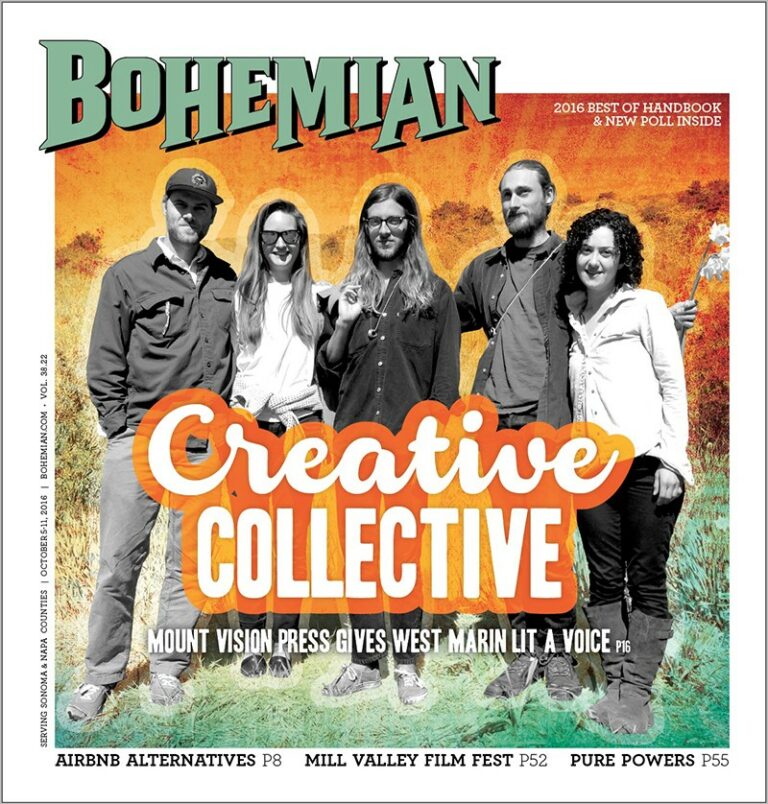
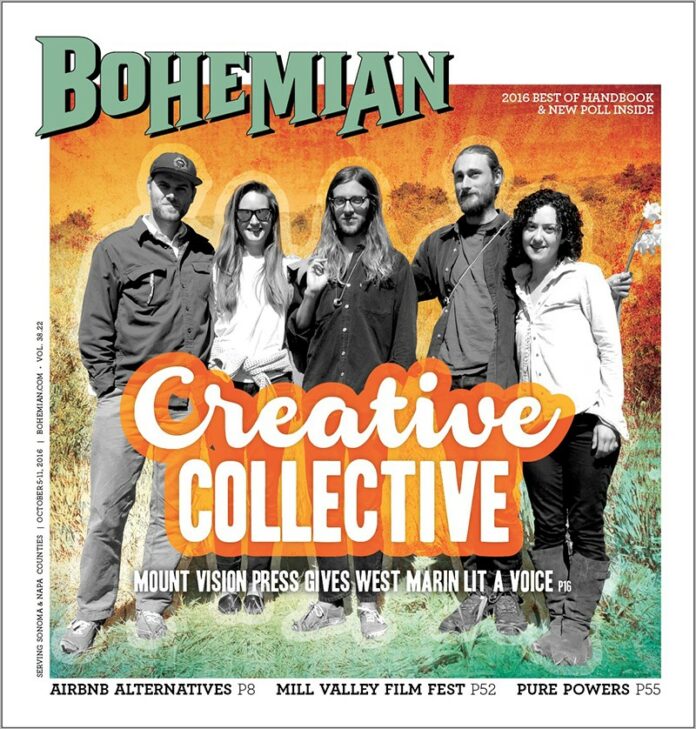
This past month, the team behind the publication put it to rest to focus on their next venture, Mount Vision Press, without really leaving the niche category. The group consists of Jordan Atanat, 34, a woodworker from Point Reyes Station; Katie Eberle, 30, a radio host, DJ and designer from Marshall; Ben Livingston, 28, a farmer and musician from Inverness; Jeremy Harris, 30, a musician from Inverness; and Nina Pick, 33, a poet and editor who travels all over.

The five came together united by their love of West Marin and creativity, and married their individual skills. “We were inspired both by the beauty of West Marin, as well as the rich community of artists, writers and naturalists who live here,” Harris says. “West Marin also has a tradition of local publications such as Floating Island, Tomales Bay Times, Pacific Plate, West Marin Review. Basically, the Inverness Almanac is the publication that we wished to exist. It didn’t, so we decided to create it.”

Ben Livingston remembers the exact conversation that encouraged him to join. “The idea was brought forth around a campfire in Bolinas. Jordan Atanat told me about his vision for a local publication, and I was immediately on board. It was a perfect venue for sharing my experience of the landscape I had grown up in, as well as embarking on a larger creative project than I ever had before.”

While “the dreaming phase flowed pretty easy,” according to Livingston, the practical part was educational, to say the least. The Almanac was printed in Minnesota and Wisconsin, to avoid the high costs of the Bay Area, Harris says.

There were other obstacles, too. “There is the actual making of the book, and then there is interfacing with printers, figuring out business structures, promoting the book, selling the book, planning release parties, on and on,” Livingston says. “Dealing with the business side of things is probably the most difficult for me.”

The first issue came together with help from the local community of artists, writers and artisans. “We put the word out that we’d be collecting submissions to form a publication about our landscape—the place, the people who live here and what gets made here,” Harris says, and submissions poured in. By the fourth volume, which will be released this month, the team “received many more attractive submissions than we had space to include.”

Embodying the West Marin spirit, the Inverness Almanac has been sold in some of the best boutiques and decor stores in the Bay Area and beyond.

[page]

“The spirit of the Almanac communicates universally to anyone who appreciates the natural world and the many ways humans artistically respond to it,” Harris says. “Whether you enjoy the richness of what it tells you or the way it looks on your coffee table, it can satisfy the consumer desire on levels of both function and form.”

Since emerging on the scene, the Almanac has served as part magazine, part calendar, with seasonally based literature and recipes, illustrations, art, a calendar with information regarding tide charts specific to Tomales Bay, solar and lunar cycles and notifications of natural events: plants blooming, birds migrating, ocean currents changing. Now the team is hoping to bring the same natural and cultural sensibilities to publishing.

“Mount Vision Press started as a way to continue and broaden the work of the Almanac,” Livingston says. “We have gotten to know so many talented writers and artists while working on this project, and being able to give their work more space—say, a book—is very exciting.”

According to Livingston, the press, like the Almanac, will gently balance on the local-global scale. “It won’t necessarily focus on West Marin work, but it is a fertile starting ground,” he says. “We intend to publish work that is honest, grounded and contributes to the larger conversation of making sense of life in these times.”

The main reason for discontinuing work on the Almanac, Harris explains, came from a desire to move on to publishing other books, like the first forthcoming Mount Vision Press title Journeywork, a collection of poetry by David Bailey.

“In the Almanac‘s format, we can only showcase so much of someone’s work,” he says. “Being able to give some of the work a book’s worth of space is really valuable.”

Both Livingston and Harris are naturally huge fans of print and limited editions, despite “using computers and the internet every day.” They must be. Why else would a group of young people, with startups and endless app entrepreneurs in close proximity, decide to print something as intricate as the Inverness Almanac or a poetry book? In the fourth and last volume, for example, the readers can find a partial lexicon of Miwok, “an ancient language that was spoken here way before us,” Livingston says. Not your average bit of information, but that seems to be the point.

“The internet has [spawned] the rise of attention-span-deprived, ephemeral media consumption,” Harris says. “What’s popular or interesting one day is forgotten the next. We think smaller publications are trying to resist the tide of everything moving to the internet, to create something meaningful and lasting, something you can hold in your hands and have a relationship with.”

Physical location, in the case of this literary project, has something to do with it. “Marin is in a special position of being in the liminal zone of urban and rural,” Livingston says. “The wilderness of Point Reyes and the influence of a global city nearby can coalesce into something both rooted in the local forest but looking outward into the world at large.”

“There might be a bit of an anticorporate sentiment expressed by some more overtly than others,” Harris adds. “We’re interested in real things made by real people. Also, the Inverness Almanac doesn’t require a battery, doesn’t hit you with blue light before bed and doesn’t advertise to you, which are all very nice things.”

And unlike many technological grand schemes of Silicon Valley, sustaining a publication like the Almanac, aside from the hardships of figuring out Tomales Bay tides and layout, sounds pretty easy. “All it takes is a tiny room and a lot of Pu-erh tea,” Harris says.

“With [Mount Vision Press], as with the Almanac, we’re not as interested in capitalizing on the moment as we are in making things we’ll want to enjoy for, hopefully, decades,” Harris says.

Big Mack

0

Bertolt Brecht’s 1928 “play with music,” The Threepenny Opera, is like an expensive dessert that’s so filled with flavor most people can’t quite figure out how to enjoy it. Brecht was never interested in entertaining his audiences. He wanted them to stay a bit uncomfortable, to remain just distant enough from their emotions to be always thinking about what the play actually means.

I’d say that, for most people, the only significant obstacle in 6th Street’s thoroughly effective and often delightful production of Threepenny Opera is that in the end, it’s still The Threepenny Opera, a fascinating choice for 6th Street, where its musicals have tended, of late, toward the safe and predictable.

Directed by Michael R. J. Campbell, Threepenny features thrilling singing voices, excellent musical direction by Janis Wilson, frequently brilliant staging, cooler-than-cool visual stylings and whimsically Brechtian touches. I loved those chalk-drawn signs, and that proscenium chalked over with the scrawled titles of all the songs.

The story is set in London in 1937, and plays like a Victorian version of The Rocky Horror Show. It’s gleefully sexy and aberrant, and joyously contemptuous of those too sensitive and proper to sit and watch a dark, twisted, tune-filled show about the seedy underbelly of society.

The show, based on John Gay’s 1728 play The Beggar’s Opera, is actually (if you pay attention) all about Europe’s wealthy class of bankers and businessman, who too often behave like crooks and murderers. In Threepenny Opera, we get crooks and murderers behaving like bankers and businessmen.

The show’s best-known song (“The Ballad of Mack the Knife”) is presented in a gothy prelude by an accordion-playing street singer (a first-rate Shawna Eiermann), after which the plot-heavy story introduces Mr. and Mrs. Peachum (Robert Rogers and Eileen Morris, both excellent). The Peachums oversee a network of robbers and thugs, rivaled only by the vicious, knife-wielding Macheath (a wonderful Jerry Lee, singing beautifully while looking like a cross between Charlie Chaplin and Gomez Addams).

When Mack secretly marries the Peachums’ daughter, Polly (Molly Larsen, adding yet another excellent voice to the cast), things get complicated. For adventurous audiences willing to take their tea with a bit of arsenic, this energetic anti-capitalist fable is served with enough style to keep you smiling, even as it sends you out of the theater thinking hard—and perhaps just a little unsettled.

Rating (out of 5): ★★★★

Debriefer: October 5, 2016

U.S. Rep. Jared Huffman was one of 72 Democrats in the House of Representatives who voted last week to override President Barack Obama’s veto of a controversial bill that would allow families of 9-11 victims to sue Saudi Arabia in American courts for damages.

Huffman joined with the majority of Republican Congressmen to override the Obama veto; in the Senate, Nevada’s Harry Reid (pictured) was the lone Democrat to support the veto, as the vote there was 97–1. Back in the house, St. Helena blue-dog Democrat Mike Thompson voted to uphold the veto.

The Republican-controlled Congress pushed through the 9-11 bill despite the Obama administration’s efforts to derail it on the grounds that the measure creates an unintended consequence of whopping import by upending a long-held cornerstone of international law known as “sovereign immunity,” which holds that governments can’t be sued by individuals from foreign countries—unless the government is a state sponsor of terrorism, which Saudi Arabia isn’t.

Obama spokesman Josh Earnest wasted no time in declaring the Congressional shenanigans over the 9-11 bill to be the single most embarrassing episode in an obstructionist circus that’s been ongoing since 2010, when Tea Party Republicans took over the House.

After gloating about how they’d overridden an Obama veto for this first time in his administration—and did so in service of 9-11 families—a group of 25 senators who had all supported the override said the bill they had just passed was terrible and would lead to unintended negative consequences to American national security.

They then blamed Obama for the bill that they had written and voted on and said he wasn’t clear enough about what was wrong with it—even as they cited the reasons he has given since April as to why it’s a bad idea to let private citizens sue foreign governments. For one thing, it could open the door to lawsuits against the American government, which, for example has drone-blown its share of Pakistani weddings over the years. The confused lawmakers could have asked fellow GOP Congressman Darrell Issa what was wrong with the bill—the California Cro-Mag is a notorious Obama hater but knew enough to not override the veto, no matter the juicy short-term savor of vengeance it might provide.

Huffman? Well, it’s true that he has offered bills of his own that smack of a kind of meta-media patriotic posturing, however well-intentioned they may be. He introduced a bill to ban Confederate flags in national cemeteries, despite that not being much of a local issue, and he waded into hot-button partisan affairs with a recent bill he offered that would have let the IRS, instead of the New York Times, release Donald Trump’s taxes. But as Obama himself noted, voting against 9-11 families in an election year (or any year) is not good politics, even if it’s the hard and right thing to do.

For his part, Huffman defends his decision because families of the 9-11 victims “deserve their day in court.”

“I came down on the side of access to justice,” he says, adding that immunity from prosecution is not a progressive value he supports.

Huffman is comfortable with the bill because he says it carves out a narrow exemption for the families, which he says won’t open the floodgates to suits against the United States.

Poe Down

He invented the detective story 40 years before Sherlock Holmes was ever conceived. He wrote the world's most famous horror poem, The Raven, quoted to death forevermore by literary students and fans of the supernatural. He even contributed to the earliest inventions of gothic science fiction, wrote humorous satire and influenced generations of authors and scholars in all realms...

Just Say ‘Slow’

As an older teenager and a young adult who was a user of recreational marijuana, I remember that I always supported the legalization of marijuana. However, as a mature adult who has, hopefully, gained some wisdom over the years, I find my attitude toward legalization changing due to a few social and scientific realities. First of all, what is pot?...

Mystic Circus Flies Into Santa Rosa

Touring sideshow troupe takes the stage on Oct 13 at Whiskey Tip.

Oct. 7: Heartfelt Art in Santa Rosa

Sonoma County artist Potenza has a big heart. Inspired by an act of charity 24 years ago, she endeavored to create ‘The Hearts of the World,’ a massive art project that has finally come to completion and includes over 200 paintings, one for every nation on Earth. Each piece commemorates its adopted nation through that country’s colors, flag design...

Oct. 8: Musical Apex in Guerneville

Formed in the Bay Area in 1996, female vocal ensemble Solstice have spent two decades performing a dynamic repertoire of passionate music. The six-women-strong group of singers regularly commissions and arranges classic works by everyone from Björk to Paul Simon, and composes original tunes, all of which can be found on their four original albums. This week, Solstice celebrate...

Oct 8 & 9: Rags to Revival in Sonoma & Napa

Before jazz, before Dixieland, there was ragtime. This weekend, the Wine Country Ragtime Festival highlights many of today’s premier ragtime musicians with several events. The lineup includes nationally known ragtime master and musical director John Partridge, pianist and harpist Deborah Knapp, Russian-born and classically trained musician Larisa Migachyov and festival favorite the Flying Eagles Jazz Band. The all-star show...

Oct. 10: Hungry Eyes in St. Helena

The delicatessen was born from Jewish immigrants in New York City, and today is known coast to coast as the lunchtime go-to spot we all depend on to get us through the work day. The delicious documentary ‘Deli Man’ profiles deli workers and examines the communal culture that comes from the eateries. This week, Cameo Cinema screens the film...

Vision Quest

No one could predict that the internet and social media would turn the spotlight on niche magazines and indie presses. And yet, according to market reports and sources like TheMediaBriefing.com, there's never been a better time to be a quality publisher. Some say it's the golden age of small, independent presses and publishing houses that push boundaries while their...

Big Mack

Bertolt Brecht's 1928 "play with music," The Threepenny Opera, is like an expensive dessert that's so filled with flavor most people can't quite figure out how to enjoy it. Brecht was never interested in entertaining his audiences. He wanted them to stay a bit uncomfortable, to remain just distant enough from their emotions to be always thinking about what...

Debriefer: October 5, 2016

U.S. Rep. Jared Huffman was one of 72 Democrats in the House of Representatives who voted last week to override President Barack Obama's veto of a controversial bill that would allow families of 9-11 victims to sue Saudi Arabia in American courts for damages. Huffman joined with the majority of Republican Congressmen to override the Obama veto; in the Senate,...
12,119FansLike
5,007FollowersFollow
6,928FollowersFollow