Dry Wave

0

For Riesling lovers, there is something disingenuous about the recent hue and cry for low alcohol wines, for wines of “balance,” for food-friendly wines made from obscure, heritage white grapes of California. Hello—there’s Riesling? They almost always fail to even mention the varietal.

“It tends to inhabit a world of its own,” author John Winthrop Haeger told a group at a book event in St. Helena this past May. “Riesling is the ‘something else’ variety.” Although it is the world’s seventh most-planted grape variety, Riesling is one of the most misunderstood—at least in the American wine market, where the old stereotype that it’s always sweet is as sticky as a Trockenbeerenauslese. Oh, and there’s that little polysyllabic language problem it has, too.

To help untangle the myths of Riesling, Haeger wrote what is almost certainly the definitive book on the varietal currently in print in the English language. Riesling Rediscovered: Bold,
Bright, and Dry
($39.95) was released this spring by University
of California Press. Haeger, who lives in the Bay Area, is scheduled to appear at Cartograph Wines in Healdsburg on Wednesday,
Aug. 10. A benefit for the Friends of the Sonoma County Wine Library, Haeger’s talk is titled “Riesling Myths and Mysteries.”

Unlike author Stuart Pigott’s also informative, if more boosterish Best White Wine on Earth, Haeger’s book focuses on the dry and nearly dry styles of Riesling, which he says now account for three-quarters of the varietal’s German production after a movement that began in the 1970s, dubbed the “Trockenwelle,” or “dry wave,” shifted the industry to the dry style.

The book itself may sound dry, as it is a work of actual scholarship some 360-plus pages long, but fans of both reading and wine will enjoy Haeger’s precise and fluid prose. The book explores the history of Riesling, from the dusty Medieval archives of German towns to the Sonoma Coast, and then profiles individual producers in Europe and North America.

The Aug. 10 event includes a tasting of locally produced dry Riesling. Although they may not be available at this particular tasting, several dry Rieslings that I recently enjoyed include Imagery Estate 2014 Upper Ridge Riesling ($26) and Horse & Plow’s the Gardener 2013 Carneros Riesling ($30). The most assertive example I’ve tasted yet from this Pine Mountain-Cloverdale Peak vineyard, the Imagery boasts mineral oil and honeycomb over lime and lychee, South Australia–style. With an extra year to develop that enticingly floral bouquet I like to call “petrol blossom honey,” the Horse & Plow comes from an organically farmed Robert Sinskey vineyard.

“Riesling Myths and Mysteries,” Aug. 10, 5:30–7pm. $30. Cartograph Wines, 340 Center St., Healdsburg. 707.433.8270.

Rocky Road

0

It’s a hot and dusty day in Skyline Wilderness Park in the southern stretches of the city of Napa. You can hear the not-too-distant sounds of heavy equipment at the adjacent Syar Industries quarry operation below as little lizards silently scamper along a winding trail. There are signs along a stone wall at the edge of the park that warn of dangerous and man-made cliffs, and in various places along the trail, there’s evidence of the quarry operation—an old pit is clearly visible with a big pool of bluish-tinged water at the bottom of it.

As one strolls along the park trails through the tall dry grasses and shade trees, numerous areas where Syar has mined stone deposits for use in road-building and other construction projects in Napa and around the Bay Area become visible. There’s a rise that eventually comes into view called the Pasini Knoll, which provides a visual buffer between much of the ongoing quarrying activities and the park.

That knoll is at the heart of the local battle over a controversial expansion of the Napa quarry. As things stand now, Pasini Knoll will be mined—eventually—as part of a long-in-the-making agreement struck by Syar and Napa County in July to expand the quarry operation, to the dismay of local anti-expansion activists who have argued that, at the very least, the Pasini Knoll must remain as a visual buffer between the park and the quarry.

Opponents have argued against the necessity of the expansion and its environmental impacts for years, and continue to say that Napa County does not need what they insist is an inferior product for road-building. “We need a local source of aggregate,” acknowledges Kathy Felch, a leading opponent of the expansion, referring to the road-building material that’s drawn from quarries. “But we don’t want or need Syar Napa aggregate for road building. It is crummy product.”

That’s not an opinion shared by Syar, which has emphasized the abundance of the higher-quality basalt at the Pasini Knoll in its public comments. At a late April hearing before the Napa County supervisors, Syar staff counsel Michael Corrigan acknowledged that the Pasini Knoll expansion “has become the most controversial part of our project . . . and we did not make this decision lightly. As you can see from this process, if we had stayed within our existing footprint, we would have been much better off. We would not have been here today, but we are running out of basalt. And we need to find a new source, and Pasini is the new source.”

Syar Industries and its well-organized opponents have squared off for years over the quarry expansion, with anti-expansion advocates hammering away at diminished air quality, childhood cancer rates, water-quality impacts and keeping Skyline Wilderness Park out of the sightlines—and dust clouds—of the long-standing quarry operation. For every piece of anti-expansion science opponents cited, Syar had a response—as a 755-page environmental review demonstrates in exquisite, if numbing, detail.

In the end, the Napa supervisors voted 4–1 to grant a 35-year permit extension to Syar and green-lit a 106-acre expansion of the operation that will allow the company to extract over 1 million tons of the aggregate from the quarry over the duration of its lease. The entire expansion project, which was whittled down from 291 acres, came down to accessing the Pasini Knoll, which had previously been purchased from a private owner by the Syar family.

The company has been extracting rock with what’s known as an “indeterminate use” permit since 2008, and told locals that a new permit is critical if Syar is to stay in business in Napa, where the quarry has been in operation since 1926.

Getting a new a new permit with a time frame attached to it is ultimately a victory for oversight efforts at the quarry, says supervisor Brad Wagenknecht. His was the lone “no” vote on the proposed expansion, but he only wanted to see a smaller footprint for Syar, about 70 acres, with a dedicated buffer zone between the knoll and the park within Syar’s property. He delivered his vote with some reluctance. “I’ve been an appreciator of Syar as a corporate citizen,” he says, “so that always makes it more difficult.”

Syar has claimed that the Napa quarry would have run out of road-building material within a year unless the new permit was secured. Opponents decried that public posturing as a scare tactic designed to leverage a quick and favorable outcome for Syar. It wasn’t quick, but it was ultimately favorable.

The Napa site is one of nine quarries Syar operates throughout the state, and with an imminent new lease comes new promises for locals from the community-friendly, family-owned business: more recycling of old road bed materials into new road-building product at the plant; 10 to 20 new middle-class jobs for locals at the quarry; an asphalt-production plant on the grounds to help pave gnarly Napa roads; and assurances from the company that the overall footprint of the expansion will be limited, and the resultant air pollution from mining contained.

Another representative of Syar, Tom Adams, addressed anti-expansionists’ concerns at the April hearing, the second-to-last meeting before the supervisors agreed to a revised plan that’s focused on the Pasini Knoll. Adams checked off numerous boxes that he says showed Syar’s commitment to a clean and productive operation,

“We are reducing [greenhouse gas] impacts,” he said at the hearing. “We are reducing truck trips by 300 per day. We reduced the footprint. We retained the Skyline Wilderness Park trails. We increased the setbacks from the park. We included tree planting. We improved the mitigation measures . . .”

Syar’s optimism about its operation and the urgency to expand is not shared by all in the community. Felch is a lawyer in Napa whose organization, Stop Syar Expansion, joined with the Skyline Park Citizens Association in a one-two punch against the expansion.

Stop Syar has put the emphasis on its opposition squarely with the locals who live around the quarry and their exposure to the silicate particulate matter that is part of any quarry operation. The environmental impact report goes into all the dusty details of the debate over diseases wrought by airborne particulates—but when the dust finally did settle, Syar got what it wanted: access to the Pasini Knoll.

Wagenknecht notes that the concerns over silicate exposure is not so much an issue for the surrounding community as it is for the Syar quarry workers who operate under guidelines set by the federal Occupational Safety and Health Administration. The bigger concern for residents, he says, citing the Bay Area Air Quality Management District, “is not so much the silicate. The air district said the issue for neighbors in the community, as they see it, is the diesel” from Syar trucks coming in and out of the facility.

[page]

Felch doesn’t want the additional diesel fumes, and she doesn’t want the silicate exposure, either, or the sound of beeping trucks backing up in the quarry. She and her husband live across from Skyline Wilderness Park on Imola Avenue, in a homestead replete with goats and dogs and fruit trees and a big honking pet goose. Her property is located just outside Napa’s urban-rural boundary, on the rural side.

Felch points up Imola Avenue to the boundary beyond a fence that’s penning in some other goats where there’s a mostly Latino neighborhood. There’s a nearby children’s center as well, and one of the issues raised by anti-Syar activists is the high rate of childhood cancer in the county—the highest in the state. Yet the California Cancer Registry studied the spiking cancer rates and determined its cause was unknown—good news for Syar.

Despite the favorable vote for Syar, Felch says that the supervisors’ recent approval is by no means the last chapter in the expansion fight. Similar fights over expansionist-minded quarry operations in the North Bay have ended up in state court, and every indication is that this one’s headed there too. “We have the resources to sue them and see the lawsuit through,” she says. “It’s unfortunate that we have to do that.”

Along the way to this final resolution—all that remains after the supervisors’ vote last month, says Felch, is a legal OK from the Napa County counsel’s office—the battle over Syar’s expansion has also highlighted a generalized concern over the fate of Skyline Wilderness Park. The park, which covers over 850 acres and features some 25 miles of winding trails, along with rattlesnakes and wild pigs, is owned by the state of California and leased by Napa County.

The lease extends through 2030, and in 2009 county leaders voted to put a zoning overlay over the park that outlawed any local use other than recreational. But in a little-reported-on 2013 geological survey, the state highlighted 540 acres in and adjacent to the park as a prime location for high-quality aggregate for road-building and construction.

State officials have insisted that they have no particular design on Skyline Wilderness Park. Syar Industry lawyers and spokespersons have said the same thing: they support the county lease and zoning overlay, as it gives them a built-in buffer between the mining area and residential areas.

Yet the storyline over the fate of the park took a turn for the weirdly coincidental late last October. On Oct. 21, the Napa County Planning Commission gave its OK to the Syar expansion proposal, which kicked the battle over to the supervisors for a series of public hearings and the eventual vote in July. The very next day the state Department of General Services sent a letter to Napa County demanding that it remove the zoning overlay that banned commercial uses in the park. This raised big alarms with the Syar opponents who saw it as a possible deal in the making that could eventually green-light mining in the park, but Wagenknecht sees it differently.

In short, the state Legislature has voted three times in favor of selling the park to the county; it was vetoed twice, and the third time got hung up on a fight between the state and the county over the proper appraised value of the land, which has yet to be determined in an ongoing state-county squabble over its value.

“The real threat to Skyline Park is not Syar but the state not being willing to deal with the county,” he says.

The state told the Napa Valley Register that the timing of the demand was purely coincidental, and Syar officials, for their part, reiterated their support for the county plan to buy the park, given the built-in buffer zone. But under the new permit and expansion plan, the buffer is going to be eroded over time if Syar prevails and starts taking down the Pasini Knoll to feed local aggregate into road-building and other construction projects—which will include building materials for a new, just-approved $20 million jail in Napa County, just off the Syar land, that the state is paying for.

And there are other local projects on the horizon or in the works that are dependent on a supply of local aggregate, and by a continuing boomtown economy. “The city of Napa will be doing more roads, more streets, and all the other places around the county will be doing more—and you have a couple of hotels, a jail being built, the city of Napa looking at a new city hall,” says Wagenknecht. “Those are things that are going to be built, and if the economy stays hot for the next couple of years, that can happen over a few years.”

The Napa quarry is located in what state geologists refer to as the North San Francisco Bay P-C Region—a zone that was expanded by the state. In 2013, the California Geological Survey, which operates under the aegis of the California Department of Conservation, issued a little-noticed update to its previous study of aggregate resources in the North Bay, known as SR205. The survey was undertaken to ensure that the North Bay region has an identifiable 50-year supply of aggregate materials on hand—enough to build roads and infrastructure, and to have contingencies for natural disasters such as earthquakes, where the cleanup and rebuild is always dependent on lots of concrete and asphalt.

The North San Francisco Bay P-C Region has historically encompassed a smaller footprint within the North Bay as a whole, in deference to prized open space. But in updating the report, state geologists cracked the entire North Bay open and added 2,660 square miles of potentially minable land, which included parts of the state that were previously off-limits to quarry mining, such as West Marin county. The report also identified new areas along the Russian River that could be mined for aggregate materials in the future; Syar already operates a gravel-mining operation on the Russian River.

All told, the updated geologists’ report represented a six-fold increase in the classification of lands identified in the previous report, and also identified land within Syar’s Napa quarry and the adjoining parkland as containing a mother lode of minable materials.

The geological survey has routinely been cited by Syar Industries in public hearings as they’ve fought activists’ attempts to scuttle their expansion plans on environmental, aesthetic and pragmatic grounds.

[page]

The state geologists’ study wasn’t simply some geeky geologists identifying where the good lodes of aggregate material are located. In updating the report, the state reclassified several areas for potential mining under a process that’s known as “designation.” Among other findings, the report notes that the amount of aggregate materials used in road-building and construction in the North Bay was 9 percent higher than the previous 50-year survey estimated it would be. It also noted that some areas that had been previously identified as aggregate mining sites have been paved over and rendered un-minable in recent years, as the North Bay has seen its population centers spill out into surrounding regions.

There’s a basic agreed-upon principle at play here, which is that that it’s generally a good idea to have a locally based quarry. The idea is pretty simple: stone and gravel and sand are heavy, low-value materials whose per-ton price is driven up exponentially for every mile a truck has to drive with a load of the material (the stuff costs around $12 and $15 a ton, according to a scan of industry documents and reports).

But quarry operators are still subject to scrutiny and lawsuits. Syar has faced criticism over the quality of the air in and around its operations, and was threatened with a lawsuit over groundwater contamination in 2013 by the San Francisco Baykeepers for violations of the Clean Water Act at its Lake Herman quarry in Vallejo. Syar agreed to self-monitor its runoff as a condition of not being sued in federal court.

In 2007, several of its facilities were raided by the FBI over charges that remain unclear but appear to be related to requirements that it provide the highest quality aggregate material for road-building projects done by the state and subsidized by the U.S. Department of Transportation. Court records pertaining to those raids have been sealed, and a regional FBI spokesman would not shed any light on those raids and the rationale for them.

The FBI raid coincided with the emergent Great Recession, and Syar was seeing demand for its product dry up. There’s a reason the roads in the North Bay have been a mess for years. The stone, rock and gravel industry took a huge hit in the 2008 recession and is only now making a comeback as the economy recovers.

The question raised by anti-expansionists is whether this particular quarry operation is necessary to Napa County. Syar says that indeed it is. In documents and in testimony before the Napa supervisors, Syar Industries notes that 78 percent of the product mined from the Napa quarry stays in the county. The rest is shipped out to Marin and Sonoma counties. According to state geologists, about 10 percent of the aggregate used in the North Bay is imported from British Columbia. One undercurrent of the fight over the Napa quarry expansion has been the activists’ focus on the quality of the aggregate produced there.

The state geologist’s 2013 report says the grade of material found in Napa is a high-quality material acceptable to state road-building standards. But Steven Booth, a key local Napa figure in the anti-expansion efforts, says that while the Napa product is high-quality, the quality is higher from the nearby Lake Herman quarry because, as he puts it, the material in Napa is more of an “agglomerate” of material whereas Lake Herman provides a cleaner and less mixed product when it is extracted.

Booth pushed for information on Syar’s business around the county, he says, and filed public records requests and talked with numerous officials around the county. He says they all tell him the same thing: Lake Herman is the better source for material used in road projects in Napa cities like Calistoga and St. Helena.

“Very definitely at Napa quarry the basalt is in veins,” he says, “and it is interspersed with other material.”

Wagenknecht says the activists’ emphasis on the quality of the Napa product is news to him, even as he credits the “very active group looking at this very closely” for helping inform the overall expansion plan that was ultimately hammered out. “I hadn’t heard that,” he says of Booth’s findings and claims. “We did have one public works director from the city of Napa that said they needed the product, and that’s the sum total of public input that we had on that.”

Critics also point out that, even as Syar has said it’s going to run out of basalt within a year and must have access to the Pasini Knoll in order to keep the aggregate flowing, the company has also said it wouldn’t even be mining the knoll for several years, at a minimum. In the final hearing before the Napa supervisors, on July 11, Corrigan told the supervisors that the timetable for mining the knoll was contingent upon market demand—which appears to be gaining steam.

“I’m not anticipating getting close to the park for 10 or 15 years,” he said, “or even significantly into the Pasini Knoll for 10 or 15 years. Over the 35 years, we would be getting close to the edge of the mining area if the demand remains heavy. If not, we would be farther away.”

Syar Industries regularly wins good citizenship awards and other honorifics through the efforts of family scion Jim Syar and the Syar Foundation, which won the statewide 2015 award for good citizenship from the Center for Volunteer and Nonprofit Leadership. True to the North Bay way of doing business, the family also grows grapes along the Russian River, and has made numerous campaign donations to local politicians over the years. The family also owned a golf course in Vacaville that they abruptly shut down this February, citing a diminished interest in the sport while lamenting the layoff of dozens of workers.

Syar also has the friendly editorial ear of the local paper of record, the Napa Valley Register. Last year, the paper produced an op-ed in support of the Syar expansion, and the text of the op-ed—which, anti-expansion activists like to point out, ran the same day Syar took out a full-page advertisement in the paper—highlighted that it was unusual for them to weigh in on a local issue as they wholeheartedly endorsed the expansion while noting the activists’ “howls” of protest.

Anti-expansion activists can claim a limited victory over Syar’s original proposal. As the battle ground on for eight years, Syar’s proposal was whittled down several times, starting at a 291-acre proposal before they finally agreed to the 106 acre deal—which is another way of saying that Syar kept its eye on the prize all along: Pasini Knoll. As Tom Adams noted in April before the supervisors, “Pasini—that’s the whole, the only reason Syar applied for the permit was to get access to Pasini. So without that, the project doesn’t work so well.”

Nor does Measure T, a local sales-tax referendum that voters agreed on in 2014 that will see a huge push in road-building projects in Napa County beginning in 2017—just in time for the new Syar permit. As anti-expansionists prepare to bring their fight to court, they face a massive, taxpayer-supported plan dedicated to improving the local infrastructure.

“We know that Measure T is $30 million for road maintenance and resurfacing only throughout Napa County,” noted Corrigan at the April meeting before the supervisors, and Wagenknecht speaks of the “pent-up demand” for aggregate as Measure T money starts flowing.

With that kind of built-in demand on the immediate horizon, it seems that no matter how you crush the stones and crunch the numbers, Syar Industries will hit pay dirt on the Pasini Knoll.

Festival Season

0

This weekend, Sonoma County basks in late summer glory with two outdoor festivals that celebrate music and community, and feature the best in folk, rock, blues and soul.

On Saturday, Aug. 6, the Petaluma Music Festival marks its ninth year with its biggest lineup to date. Headliners include multitalented roots-rock songwriter Jackie Greene, celebrated Sebastopol guitarist Steve Kimock and San Francisco soul-rockers the Mother Hips (pictured), led by Tim Bluhm and Greg Loiacono since 1990.

Formed by Petaluma High School music director Cliff Eveland, the Petaluma Music Festival last year raised over $30,000 for music programs in the town’s public schools. In addition to ticket sales, the festival boasts a silent auction and autographed guitar raffles to raise money for the kids.

The next day, Aug. 7, the 35th annual Sonoma County Blues Festival finds a new home at SOMO Events Center in Rohnert Park for an afternoon of masterful blues performers curated by longtime radio host Bill Bowker, who returns after a five-year hiatus.

Headlining the festival, Sonny Landreth learned blues slide guitar and incorporated improv jazz and classic rock riffs into it while growing up in Lafayette, La. Detroit veteran blues vocalist Janiva Magness, Mississippi multi-instrumentalist Lightnin Malcolm and North Bay favorites HowellDevine and Volker Strifler also grace the stage. For more info, see Concerts, this page.&

Vokab Kompany Bounce into Sebastopol

0

WEB-VokabPromo1_JORGPHOTO
San Diego electro-funk big band Vokab Kompany is hot off the release of their 5th studio album, The Good Kompany Record [Instrumentals], and is performing this weekend at HopMonk Tavern in Sebastopol as part of their summer tour.
Led by vocalists Rob Hurt and Burke Baby, the eclectic ensemble has successfully gotten the party started for the last 10 years by blending elements of hip-hop, soul, electronica and pop and
Their latest album, an instrumental version of their fourth studio effort (simply titled The Good Kompany Record), is an eclectic testament to the myriad influences and styles the group is capable of mastering in an effortless collection of beats.
Listen to the instrumental album below and catch the Kompany when they perform on Friday, July 29, at HopMonk in Sebastopol with Los Angeles funk stars Soluzion.

July 28: Dance for Your Health in Yountville

0

In the fight against Alzheimer’s and dementia, researchers have found an ally in ballroom dancing. This week, Northern California group Ballroom Dance for Senior Fitness hosts its Awareness Gala in Yountville that will offer information on utilizing dance to boost brain activity and prevent dementia. Yountville mayor John Dunbar will be on hand to offer a declaration of the city’s support, and Napa musician Johnny Smith will lead big-band Opus to play the hits of the 1950s and ’60s as you dance the night away on Thursday, July 28, at the Napa Valley Performing Arts Center at Lincoln Theater, 100 California Drive, Yountville. 6:30pm. $25. 707.944.9900.

July 29: Art Bound in Sebastopol

0

With three distinct gallery spaces, the Sebastopol Center for the Arts opens a trio of fascinating and diverse exhibits this week. In the large Galletta Gallery, the juried group show ‘Boundaries’ offers a wide selection of works in various media interpreting the titular theme by exploring geographical, political, social and emotional takes on the word. Gallery II showcases a solo installation of mixed-media book art by local artist C. K. Itamura, “w[o]rdrobe,” that blends fashion and text. Gallery III displays a photography project of Gary Kaplan, “The Continual Effect of Abuse: Using Photography for Healing.” These exhibits open with a reception on Friday, July 29, at the Sebastopol Center for the Arts, 282 S. High St., Sebastopol. 6pm. By Donation. 707.829.4797.

July 30: Potter: the Next Generation in Sebastopol, Napa & Corte Madera

0

Gather your magic wands and messenger owls, because fiction’s most famous bespectacled wizard, Harry Potter, is back in a new play, ‘Harry Potter and the Cursed Child,’ based on a story by J. K. Rowling and opening in London this week. For the rest of us Potter-heads, the play’s script, about an overworked adult Harry Potter and his youngest son struggling with the family legacy, is being released as a book this weekend, and several bookstores in the North Bay are celebrating with midnight release parties. Get your copy of the new adventure Saturday, Jul 30, at Copperfield’s Books in Sebastopol and Napa, Book Passage in Corte Madera and Napa Bookmine. All events begin at 11pm.

Aug. 3: Midwest Star in Sonoma

0

Singer-songwriter Margo Price is a fixture of the Nashville scene and is about to become a household name. Since her debut album, Midwest Farmer’s Daughter, was released back in March, Price has been hailed as country music’s next top star and even snagged an appearance as the musical guest on Saturday Night Live last season. Her voice has been favorably compared to country legends like Loretta Lynn, and her songs emanate the same enduring emotion and humanity of masters like Dolly Parton and Emmylou Harris. Price plays a mix of honky-tonk jams and Americana ballads on Wednesday, Aug. 3, at Gundlach Bundschu Winery, 2000 Denmark St., Sonoma. 8pm. $35. 707.938.5277.

Local Yolks

0

Estero Cafe is everything you want in a roadside diner, and a lot you wouldn’t expect.

Walk in and there’s a long lunch counter topped with baked goods and jars of homemade blackberry preserves and hot sauce. There are half a dozen or so tables, and some classic rock playing in the background.

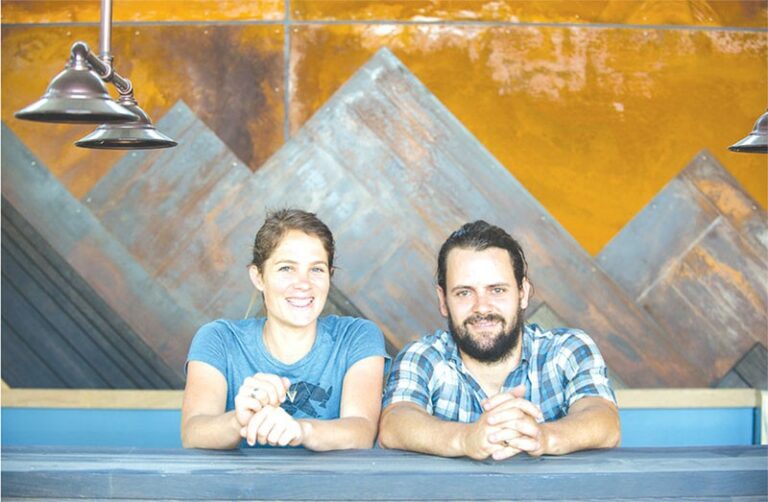
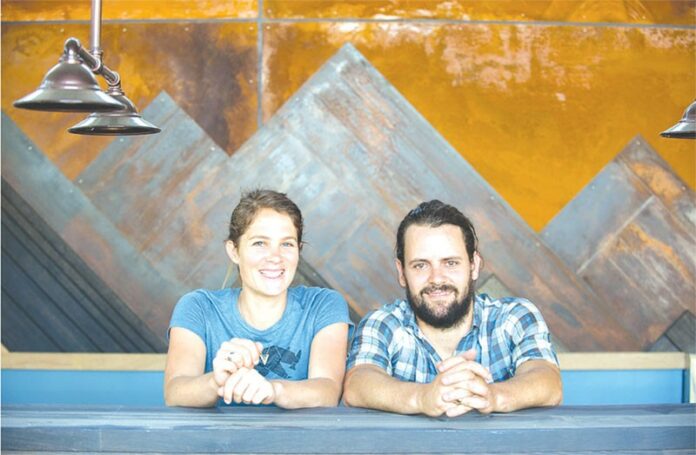
Valley Ford locals Ryan and Samantha Ramey bought the restaurant in December 2014. The menu reads like classic diner fare—chicken fried steak, buttermilk waffles, tuna melts and cheeseburgers. But the restaurant stands out for it superior, locally sourced ingredients.

The cafe could probably serve the typical Yuban coffee, Foster Farm eggs and Sysco truck canned goods you find at most diners. There are not many choices around Valley Ford, and hungry travelers and locals alike would probably take what they could get. But then again, the cafe is smack dab in the middle of the land of milk and honey, and many of those same tourists and locals visit and live here in part because they appreciate good food from good sources. So why not give the people what they want? Estero Cafe does.

The menu includes ingredients from more than a dozen local farms and bakeries. The eggs come from Coastal Hill Farm in Valley Ford. Coffee comes from Taylor Made. The grass-fed beef is raised by Valley Ford’s Twisted Horn Ranch three miles away. (The restaurant buys a whole cow at a time.) Sonoma County Meat Co. makes the bacon and sausage. The ice cream comes from Straus Family Creamery. You get the idea. Local and fresh.

“We don’t even have a can opener in the whole restaurant,” says Samantha Ramey.

There’s also a small wine and beer list that includes Third Street Aleworks, Applegarden Farm hard cider and SCV Sauvignon Blanc.

True, there are no $1.99 Grand Slam breakfasts. But good food costs more than crappy food. The one-third-pound barbecue bacon cheeseburger ($16) is good food. It comes on a Village Bakery bun with a choice of fries or onion rings. The fries are cooked in locally sourced lard, as are the feathery, house-made onion rings. Both are great. And you have to love the choice of cheese upgrades: Pug’s Leap chèvre, Valley Ford blue and Estero Gold Asiago. Take that, Kraft.

I loved the tuna melt ($12). Since Estero doesn’t have a can opener, the kitchen poaches fresh albacore tuna and mixes it with celery, onions, thyme, green onions and parsley. Melted Swiss cheese on top and toasted sourdough bread finish the job.

For a lazy-day breakfast, go for the hearty huevos rancheros ($13) served on a pepper jack cheese quesadilla and saucy heirloom beans. I also liked the biscuits and gravy ($12), a house-made fluffy biscuit topped with ham-flecked gravy and eggs on the side.

Estero Cafe is open for breakfast and lunch daily from 7am to 3pm, and Wednesday the cafe does a fried buttermilk chicken dinner from 5pm to 8pm. (Why Wednesdays? Nearby Dinucci’s and Rocker Oysterfeller’s are closed Wednesday nights, and Valley Ford is a small town so it makes sense to coordinate.) The whole menu is available, but the star is the fried chicken.

Estero Cafe, 14450 Hwy. 1, Valley Ford. 707.876.3333.

Out of the Garage

0

Reportedly the first of its kind west of the Mississippi, Napa’s free, daylong PorchFest marks its sixth year this weekend, with over a hundred local bands showcased on stoops, steps, in yards and, yes, on porches throughout Napa’s historic downtown neighborhood on July 31.

With each venue in comfortable walking distance of several others, a sturdy pair of shoes is all that’s required as you stroll through the neighborhood’s Victorian houses. Or pack a picnic, blanket and lawn chairs, and set up at any one of the nearly 60 stages to watch regional songwriters and bands perform everything from bluegrass to classical and Celtic folk to gospel.

This year’s lineup includes Calistoga/Santa Rosa–based roots rockers the Restless Sons, fresh off a tour in Japan, playing at noon at 1456 Pine St. with indie songwriter Zak Fennie. Visitors to the Churchill Manor B&B will get to hear Napa rhythm and soul storyteller Brian Coutch and his band split the afternoon with Bay Area blues veterans the Jimmy Smith Band. And Napa’s main library at 580 Coombs St. hosts sets by jam rockers the Benders, Nuclear Blonde and the Diamond T Band.

This year’s theme, “Out of the Garage and onto the Porch,” signifies the volunteer-run event’s ongoing evolution and expansion, boosted by the community’s continued support. Also boasting a bevy of food trucks and a family-friendly atmosphere, PorchFest goes down throughout downtown Napa. Noon to 6pm. Free. napaporchfest.org.

Dry Wave

For Riesling lovers, there is something disingenuous about the recent hue and cry for low alcohol wines, for wines of "balance," for food-friendly wines made from obscure, heritage white grapes of California. Hello—there's Riesling? They almost always fail to even mention the varietal. "It tends to inhabit a world of its own," author John Winthrop Haeger told a group at...

Rocky Road

It's a hot and dusty day in Skyline Wilderness Park in the southern stretches of the city of Napa. You can hear the not-too-distant sounds of heavy equipment at the adjacent Syar Industries quarry operation below as little lizards silently scamper along a winding trail. There are signs along a stone wall at the edge of the park that...

Festival Season

This weekend, Sonoma County basks in late summer glory with two outdoor festivals that celebrate music and community, and feature the best in folk, rock, blues and soul. On Saturday, Aug. 6, the Petaluma Music Festival marks its ninth year with its biggest lineup to date. Headliners include multitalented roots-rock songwriter Jackie Greene, celebrated Sebastopol guitarist Steve Kimock and San...

Vokab Kompany Bounce into Sebastopol

San Diego electro-funk big band Vokab Kompany is hot off the release of their 5th studio album, The Good Kompany Record , and is performing this weekend at HopMonk Tavern in Sebastopol as part of their summer tour. Led by vocalists Rob Hurt and Burke Baby, the eclectic ensemble has successfully gotten the party started for the last 10 years by...

July 28: Dance for Your Health in Yountville

In the fight against Alzheimer’s and dementia, researchers have found an ally in ballroom dancing. This week, Northern California group Ballroom Dance for Senior Fitness hosts its Awareness Gala in Yountville that will offer information on utilizing dance to boost brain activity and prevent dementia. Yountville mayor John Dunbar will be on hand to offer a declaration of the...

July 29: Art Bound in Sebastopol

With three distinct gallery spaces, the Sebastopol Center for the Arts opens a trio of fascinating and diverse exhibits this week. In the large Galletta Gallery, the juried group show ‘Boundaries’ offers a wide selection of works in various media interpreting the titular theme by exploring geographical, political, social and emotional takes on the word. Gallery II showcases a...

July 30: Potter: the Next Generation in Sebastopol, Napa & Corte Madera

Gather your magic wands and messenger owls, because fiction’s most famous bespectacled wizard, Harry Potter, is back in a new play, ‘Harry Potter and the Cursed Child,’ based on a story by J. K. Rowling and opening in London this week. For the rest of us Potter-heads, the play’s script, about an overworked adult Harry Potter and his youngest...

Aug. 3: Midwest Star in Sonoma

Singer-songwriter Margo Price is a fixture of the Nashville scene and is about to become a household name. Since her debut album, Midwest Farmer’s Daughter, was released back in March, Price has been hailed as country music’s next top star and even snagged an appearance as the musical guest on Saturday Night Live last season. Her voice has been...

Local Yolks

Estero Cafe is everything you want in a roadside diner, and a lot you wouldn't expect. Walk in and there's a long lunch counter topped with baked goods and jars of homemade blackberry preserves and hot sauce. There are half a dozen or so tables, and some classic rock playing in the background. Valley Ford locals Ryan and Samantha Ramey bought...

Out of the Garage

Reportedly the first of its kind west of the Mississippi, Napa's free, daylong PorchFest marks its sixth year this weekend, with over a hundred local bands showcased on stoops, steps, in yards and, yes, on porches throughout Napa's historic downtown neighborhood on July 31. With each venue in comfortable walking distance of several others, a sturdy pair of shoes is...
11,084FansLike
4,446FollowersFollow
6,928FollowersFollow