Sept. 3: Hop to It in Santa Rosa

0

While most craft brewers use dried and trucked-in hops for their beers, Sonoma County’s Fogbelt Brewing Company is turning their access to local hop yards into wet hop beers, adding those local hops to their beers hours after picking. Several of these autumnal favorites are being tapped at Fogbelt’s second annual Wet Hop Festival. Five new beers make their debut alongside barbecue and street tacos at the event, with live music from local rockers like the Restless Sons and Down Dirty Shake, hop-picking demos and more on Sunday, Sept. 3, at Fogbelt Brewing Company, 1305 Cleveland Ave., Santa Rosa. Noon to 8pm. Free admission. 707.978.3400.

Jersey Girl

The lovable Sundance hit comedy Patti Cake$ is a movie about unlikely stardom, sought by the obese 23-year-old Patti Dumbowski (Danielle Macdonald). She gets her multigenerational extended family together into the oddest group since the Bremen Town Musicians.

Patti lives with Grandma (the ever-ready Cathy Moriarity), a gravel-voiced wheelchair-rider, ready to join her late husband in the grave. The terrific Bridget Everett (Lady Dynamite) plays Patti’s partly estranged mother, Barb, and is tremendous in her role as a bitter dream-crusher.

The fairy tale has a rough background: suburban Jersey at its skeeviest. Maybe the authenticity cited in reviews is the texture director Geremy Jasper got from the belching steam-stacks, old taverns and the cemetery where a vandal beheaded a stone cherub.

Patti’s dreams are admirable, and we’re charmed by the fact that this would-be star, sweating it out as a waitress and a bartender, has given herself more AKAs (Patti Cake$, Killa P . . .) than a Filipino vampire movie. Finally, we get to see her chops when she does a rap battle outside a gas station.

At a talent show, Patti sees the guy who’ll catalyze her dreams, a young, melancholy transient who calls himself Basterd and whose real name is Bob (Mamoudou Athie). But Patti doesn’t listen when Bob warns her of the rap god she worships, a famous MC called “Oz” whose posters cover her walls. Since Patti is a Dorothy waiting for her tornado, it’s natural that Oz turns out to be a little jerk behind a curtain.

This is a sweet movie, but it’ll gall viewers who believe that fighting the viciousness of the world with troubling art is a duty—it’s not just a stage you get over, as if you were a rebellious kid who finally learned to clean up and be nice.

Retro Rapture

0

Every comic book and toy collector has a story about the one that got away.

Whether it’s a beloved book that was traded in haste, a prized action figure that disappeared on vacation or a video game that no kid’s allowance could afford, North Bay collectors looking to recapture their childhood riches can now rejoice. The Batcave is here to save the day.

Santa Rosa’s latest vintage store, located appropriately in a basement of one of Railroad Square’s oldest buildings, the Batcave is a treasure trove of old-school comics and toys that instantly transports any child of the ’60s through the ’90s back to bygone days.

The Batcave is owned and operated by Michael Holbrook, founder of the Santa Rosa Toy Con, and his business partners Gabriel Vaughn and Andy Mayhew.

A lifelong collector, Holbrook is an ’80s kid, obsessed with Transformers, GI Joe and Star Wars.

“Ten years ago, when my grandma passed on, we found two boxes of all my original toys we thought had disappeared,” says Holbrook. “It just rekindled the fire and I started collecting more.”

Holbrook’s concept for the store preceded his Toy Con, which marks five years when it returns to the Sonoma County Fairgrounds on Sept. 23. He met Vaughn, a fellow collector, and Mayhew through the Toy Con, and they joined forces to form the business.

“As a comic collector, there was really nowhere to go for old stuff, for anything classic,” says Vaughn.

To that point, the Batcave’s impressive inventory includes a wall of high-quality comic books from as far back as the 1950s. First or early appearances of characters like Iron Man and the Silver Surfer are on display, and boxes of back issues from dozens of popular titles help collectors fill in the gaps in their personal stashes.

Beyond the books, the store is packed with vintage figures and video games that unlock childhood nostalgia. “It’s a place where almost anybody could walk in and say, ‘I had that,'” says Vaughn. “Like many, I came from a divorced family, and that stuff you had as a kid was very important.”

Holbrook adds that the store is also a place to share these remembered treasures with the next generation. “One of my favorite things is seeing a father come in with his kid and pass on a piece of their childhood,” he says.

To keep the store’s inventory fresh, Holbrook buys comics and toys, and sells items on consignment, updating the shelves on a daily basis. “We try to have a little of everything for all ages here,” Holbrook says.

Like the Santa Rosa Toy Con, which this year boasts special guests like Star Trek actors Walter Koenig and Nichelle Nichols as well as an expanded selection of vendors and hands-on activities, the Batcave is both affectionate and accessible in its operation.

“I want people leaving with a smile on their face,” Holbrook says. “It is a passion, I wouldn’t do it any other way.”

Batcave Comics & Toys, 100 Fourth St. (basement), Santa Rosa. Wednesday–Sunday, 11am–8pm. 707.755.3432. batcavecomicsandtoys.com; santarosatoycon.com.

Laying It Down

0

Self-taught blues guitar prodigy and platinum-selling artist Kenny Wayne Shepherd began playing music in earnest after seeing Stevie Ray Vaughan in 1984, when he was seven.

“It was a life-changing experience,” Shepherd says. “That was the day the fire was lit inside of me.”

Already steeped in his father’s massive music collection, Shepherd loved the blues right off and made it his mission at that young age to play and positively affect people through music, the way that Vaughan affected him.

Over the last 25 years, he’s done exactly that with signature songs like “Blue on Black” and acclaimed albums under his own name and with the Kenny Wayne Shepherd Band, often collaborating with vocalist Noah Hunt, drummer Chris Layton and others.

Shepherd kicks his music into high gear with the band’s latest album,

Lay It On Down, which debuted at the top spot on Nielsen SoundScan’s Top Blues chart earlier this month.

Lay It On Down reachers deeper into a rock and Americana sound than most of Shepherd’s previous work, infusing his effortless licks into a rollicking pastiche of roots music.

“All the different genres you hear throughout the record is all stuff I grew up listening to,” Shepherd says. “I chose to go down the path of the blues when I was learning how to play guitar as a kid. That’s my first love, but all of these genres are closely related. It’s natural for that stuff to find its way into my music.”

While Shepherd has touched on rock and country music sporadically before, this new album, largely recorded live and straight to analog tape, is easily the most “classic rock”–sounding record of Shepherd’s career. It’s also widely regarded by critics and fans as one of his best yet.

Currently on a massive tour in support of the album, the Kenny Wayne Shepherd Band perform in the North Bay next month as part of the Russian River Jazz & Blues Festival.

Shepherd’s exceptional guitar work shines live, where he stretches out onstage with fiery solos and feel-good grooves.

“The mindset is bringing something positive to the people through music,” Shepherd says. “Regardless of the political climate or whatever nonsense is going on in the world today, everybody has their own personal things that they’re dealing with, and music is universally something that helps people heal one way or another through difficult times.”

Road House

0

Tannery Bend appears out of a sleepy south Napa neighborhood like a vision from a dream.

I’m not talking about the kind of dream with fairy-tale castles and sugar-plum Cabernets—you can find that upvalley. This is the kind of dream where a room filled with interesting things suddenly appears in an unlikely place—and those interesting things are beers! Or like the wistful dream I once had in which I found a secret doorway in Sonoma County that led directly to Portland, Ore. If there’s nothing outlandishly dreamlike about this little suds shop in the repurposed Sawyer tannery by the Napa River, there is something of “Portlandia” about it, if only because it does not scream “Napalandia.”

Inside, the space is light and bright, but not antiseptically so, and dominated by a concrete bar, a big chalkboard announcing current brews and board games available, and . . . big game. Vintage taxidermy animal heads collected by co-owner Tyler Rodde’s grandfather stare down from the rafters. Rodde and his wife, Lauren, also run Oenotri restaurant up the street, giving Tannery Bend an edge on the usual pretzels and popcorn tap room fare—their “bottomless popcorn” ($4) comes with a choice of bacon salt, house-made when the restaurant roasts a pig. Also on the menu: Italian pork sausage ($10), grilled cheese ($9) and Reuben ($12) sandwiches, green salad ($6), kimchi jerky ($6) and curry spiced nuts ($5).

It took a three-year odyssey just to open a small brewhouse on a quiet street in Napa, says brewer and co-owner Matt Cromwell. “If you see any gray here,” he says, rubbing his beard, “it wasn’t here in March.” Cromwell formerly brewed at the now-defunct and repurposed-for-winetasting Silverado Brewing Company, and later at Napa Smith. Since he’s only made some 30-plus batches here since opening in April, he says he’s still experimenting with house favorites.

I like what he’s brewed up so far, all of the beers named for Napa roads and landmarks: Brewed with redwood tips, Franklin pale ale has a woodsy aroma; Imola session IPA satisfies the bitter-lover at just 4.8 percent alcohol, while Salvador saphir IPA pulls fresh-peeled Valencia orange aromas out of an esoteric German hop; made with local cherries, Jack’s Bend Belgian dubbel is a cola-colored, leathery, tangy experiment gone right.

But as low-key and unaffected as this friendly brewhouse is, if the wine-industry talk overheard around the bar is any indication, alas, there can be no escape from wine-sodden Napa. Dream on!

Tannery Bend Beerworks, 101 S. Coombs St., Ste. X, Napa. Open Wednesday–Sunday, noon–8pm. Growlers available. 707.681.5774.

Zuke It Out

0

Let’s cut straight to the point, because there isn’t much time. Nobody is even trying to sell them anymore at market. We are surrounded. They are swelling as we speak, and creeping steadily closer like zombies on steroids.

If you don’t typically lock your door, now would be a good time to start. Behind the usual pleasantries, your neighbors are probing you for weakness, trying to decide who among you or your spouse would be most likely to break and accept a bag-load. Gangs of farmhands will soon be roaming the streets, leaving zucchinis on porches and in unlocked vehicles. There is zucchini growing in your compost pile, maybe. One way or another, you will have zucchini on your hands. And that’s why I’m here—if not for the ideas, then for the encouragement.

Any amount of zucchini can be handled, and probably with less effort than you fear. If you can adopt a can’t-stop, won’t-stop approach, like the legs of a running back, you will eat a lot of zucchini, and you will like it. And it will be cheaper than what you would have made if you didn’t have zucchini.

You can make anything with zucchini: bread, soup, salad, pasta (as in, shredded into noodles) or steak (fried, grilled, broiled or breaded). And you can make it in different styles: Parmesan, ratatouille and other Italian ways; Thai-style (in curry), Vietnamese-style (with cold noodles), Chinese-style (with oyster sauce and whatnot), Russian-style (fried) or Ari-style (chocolate zucchini mayo cake).

In summer, my quick and tasty go-to recipe is one that works with the honker monsters of summer, with no need to peel them. It works equally well in a pan, under the broiler or on the grill.

Slice a large zucchini thickly, up to an inch, and lay the slices on a tray. If there is room, add thick onion slices as well. Sprinkle zucchini lightly with salt on both sides, and then pour on some olive oil (about 1/4 cup for a decent sized one), white balsamic vinegar (1 tablespoon), red balsamic (1 teaspoon), and soy sauce (1 tablespoon) and several hard shakes of garlic powder.

Turn over to mix the marinade and coat the slices. Let them sit a moment while you heat up your grill/pan/broiler. Don’t mess with the onions. Just leave them alone on the tray while you flip around the zucchini, and transfer them gingerly to the heat when it’s ready.

Lay the zucchini and onions on or under the heat, and cook until soft. These lusty, juicy steaks are light and fun to consume. The slices go well atop a burger or in place of a burger on a bun.

At the other end of the size spectrum, if you are lucky to acquire some, are the finger-sized, baby zucchini, small enough that they still have beautiful, edible flowers attached. They would do fine in the above marinade, as would any size of summer squash, but because they are so delicate, they’re better enjoyed by a slow, gentle frying in butter, with the flowers on. Turn when brown, and add minced garlic before the final minutes of cooking.

And if you want to batter-coat and deep-fry them, I definitely won’t stop you.

Give and Take

0

The Sonoma
County Board of Supervisors signed off on a new sheriff’s office helicopter purchase last week to replace Henry-1, the search-and-rescue chopper in service for 20 years, 10 of them in Sonoma County.

The new $5 million Bell helicopter will be purchased, in part, with $3 million amassed by former sheriff Steve Freitas through asset-forfeiture cases. Under the federal Equitable Sharing Program, those assets go directly back to the law-enforcement agency that seized them, and don’t wind up in the county coffers—which is how the sheriff was able to squirrel away the funds for the new helicopter. The county is borrowing $2.5 million from Chase to make up the difference.

The Equitable Sharing Program, whose legacy dates back to the heyday of the War on Drugs in the 1980s, allows local law-enforcement agencies to seize assets—including cash and vehicles—from citizens, even in the absence of a criminal charge or conviction. The locality then transfers those assets to federal control, and then the feds send a percentage of the seized assets back to the local agency.

Critics from California Republican Congressman Darrell Issa to the American Civil Liberties Union have argued the program runs roughshod over due process rights of individuals who might never be convicted or even charged with a crime, but who nevertheless find their property seized by local law enforcement under the federal program.

Yet owing to recent changes to state law governing asset forfeitures, the Sonoma County Sheriff’s Office (SCSO) might not be able to count on those monies in coming years, noted Supervisor David Rabbitt during the board’s Aug. 22 meeting, which also saw the supervisors sign off on the appointment of Rob Giordano as interim sheriff.

Supervisor Shirlee Zane said she hoped the county could continue to rely on asset forfeiture dollars to offset mandatory repairs that come with the new helicopter, or even to pay off the debt to Chase before the note is due. The Bell helicopter is under warranty for its first three years of service but will hit a mandatory repair milestone in 2021–22 with costs that could run into the hundreds of thousands of dollars.

Most of the asset forfeitures in the Sonoma County are undertaken by the sheriff’s narcotics unit, and most of what they seize is cash, according to the SCSO website.

Giordano agrees with Rabbitt that asset forfeiture “is a very unstable fund these days,” given changes in state law, as he gave credit to the recently retired Freitas for putting aside the
$3 million previously seized.

Last year, California passed a tough asset forfeiture law. The California reforms, in place since January, now require a “conviction in almost all cases prior to the permanent loss of property through civil asset forfeiture,” according to a release from the Drug Policy Alliance, which supported the California reforms. Now California law enforcement agencies can no longer grab their share of forfeited property or assets “unless there is a conviction in an underlying case involving seized property that is up to $40,000 in cash or for cars or homes.” That threshold was previously $25,000.

The Drug Policy Alliance released a study in 2015 that found local law enforcement agencies had for decades exploited a federal equitable sharing loophole which allowed for assets to be seized and repurposed even in the absence of a criminal conviction—or even criminal charges. That study found that California agencies’ revenue from state forfeitures was stable over the course of a decade-long study—but that revenues from federal forfeitures almost tripled over that time.

Zane was keen on figuring out if there were ways to pay down the debt to Chase on the helicopter and asked the helicopter purchase panel, which included Giordano and Sonoma County financial manager Christel Querijero, how much would remain in the SCSO asset-forfeiture account once the $3 million had gone to Bell for the new helicopter.

About $1.1 million Querijero said, adding that some is earmarked for other projects.

“Well, if we get a big bust,” Zane said to laughs, “yeah, if we get a big bust, paying down the debt—and that happens sometimes—all of a sudden your asset and forfeiture . . . balloons?”

A short silence ensued before Giordano responded.

“Yes, it does happen, but it takes years,” Giordano said. “So we may work a case today and three years later that million dollars comes. But that’s been the beauty of the program—take your time, work your way through it.

“The world has changed around asset forfeiture, the world has changed around narcotics cases,” he added, “so I don’t know how much of that is available in the future, especially in the current political climate—but as long as it’s available, we’re going to use it to do the best we can with it.”

“Absolutely!” said Zane, who went on to note that when it comes to property and assets seized by the sheriff’s office, “we don’t want the state or federals taking it from us; we want to use it locally.”

Greening the Game

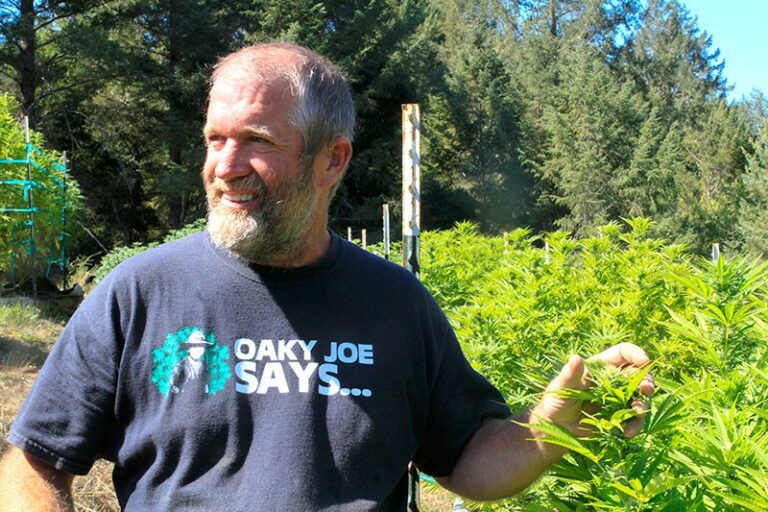
While football is one of the world’s greatest sports, the game has a dark side. For players, the potential for concussions and traumatic brain injury, and, if left untreated, the prospect of developing chronic traumatic encephalopathy (CTE) are becoming more well known.

Chronic traumatic encephalopathy is “a progressive degenerative disease of the brain found in people with a history of repetitive brain trauma”—often athletes. Its symptoms, according to the Boston University’s CTE Center, include “memory loss, confusion, impaired judgment, impulse control problems, aggression, depression, suicidality, parkinsonism, and eventually progressive dementia.”

Being the full contact sport that football is, injury is part of the game. While many injuries are orthopedic—such as broken legs—and are immediately apparent and treatable, head trauma is another story all together.

In an open letter to the National Football League, Lester Grinspoon, a psychiatrist at Harvard Medical School, writes that he “is becoming increasingly uncomfortable with the growing specter that many of these athletes will pay the price of developing [CTE].”

This sentiment is echoed in a recent study conducted at Boston University’s CTE Center. In postmortem brains of former football players, 99 percent of NFL players and 91 percent of college athletes were found to have suffered from CTE.

For many players, current and prospective, it is 4th and 20 with 55 seconds left in the fourth quarter. Cannabis may be the call.

When our brains are subjected to trauma, endocannabinoids (our internally produced cannabinoids) significantly increase and help “lessen the inflammatory process and enhance brain cell survival after injury,” according to Bonni Goldstein, author of Cannabis Revealed.

Cannabidiol (CBD), a phytocannabinoid found in cannabis, could reinforce and enhance this process. Cannabidiol is a proven and potent anti-inflammatory, neuroprotective and neurogenerative, all properties that could be utilized therapeutically in acute instances, as well as a long-term preventative medicine. Additionally, this would reduce reliance on prescription opiates and addiction rates.

Let’s use our heads. Therapeutic CBD products should be made available for players of this magnificent sport.

Patrick Anderson is a lead educator at Project CBD, patient consultant at Emerald Pharms and will be waxing poetic about cannabis therapeutics at the Norte Dame football home opener Saturday. Go Irish!

Kick Off

0

Napa High School’s 2017 football season almost didn’t happen this year.

A civil complaint filed on behalf of a student claiming sexual assault brought the football program unwanted controversy. The lawsuit says the Napa Valley Unified School District, principal and coaches put up with a hazing tradition described as “aggressive, violent and brutal.” The hazing allegedly involved older players on the team using their fingers to violate the rectums of numerous younger players—though thankfully, through their clothing.

But Jesus Martinez, the varsity team’s new coach, is hoping to move forward. He is one of the coaches named in the ongoing civil suit. The district as a whole is also part of that civil suit, as is the current high school principal, Annie Petrie.

“Things are looking great, [the] kids are hungry and motivated and have been working hard in the weight room and on the field,” Martinez says.

There’s reason to be upbeat, as the Napa High Indians racked up a 7–3 record last year, only to get stifled in a postseason playoff game (the team did
lose its pre-seasoner opener
on Aug. 25).

But the only reason Napa High has a new coach is because of the alleged hazing resulted in a civil lawsuit and criminal charges.

Head coach Troy Mott stepped down as the legal system plodded along. Several students were charged with sexual battery by county prosecutors. But the football program didn’t succumb.

Martinez coached under Mott since 2006. He spent nine years as offensive coordinator under junior-varsity coach Nick Tedesco and was last year’s JV head coach. Martinez is a 2004 Napa High graduate and played four years of football, including starting quarterback on the 2003 team that made it to the section semi-finals. He’s also a police officer employed at Napa State Hospital and lives in Napa with his wife and young children. Most importantly for now, he’s eager to put the football program’s controversy in the past.

“The distractions were eliminated from day one,” Martinez says. “What happened, happened—we as a program addressed it, and we made sure that the kids understood that what happened could not and will not happen again. We needed to get the kids back on the football field and get their minds on something positive, and we did.

“It is not a rebuilding year,” he adds. “I feel when people use the phrase ‘rebuilding year,’ you are willing to fail. We, as Napa High coaches and players, are not willing to fail. For us, the expectations are the same as any other year and our goals remain the same—discipline, commitment, effort. It’s a different year with new beginnings [but] the same traditions and expectations. Napa High has always taken pride in being a disciplined program, and that will not change.”

Legacy of Speed

0

It was exactly 80 years ago that Calistoga’s horseracing track became the Calistoga Speedway, a half-mile oval that’s seen thousands of races featuring open-wheel sprint cars zipping along at 100 miles per hour.

And if there’s one man the speedway owes its legacy to, it’s Louie Vermeil. Between the 1940s and 1980s, Vermeil was instrumental in building up the speedway and the sport in California, forming the Northern Auto Racing Club (now the Golden State Challenge Series) and making Calistoga the home base of sprint-car racing for over 25 years.

This weekend, the speedway hosts its 10th annual Louie Vermeil Classic, a celebration of the man and a showcase of some of the best sprint-car drivers of yesterday and today.

On Friday, Sept. 1, the Calistoga Speedway Hall of Fame dinner will induct new members to the association for the sixth year. Inductees this year include sprint-car figures like 1975 NARC Rookie of Year Rendy Boldrini and 1987 NARC car owner champion Jack Gordon.

On Saturday and Sunday, Sept. 2–3, today’s top talent takes to the track for the year’s only showcase of non-wing, traditional sprint cars, with wine and beer tasting, auctions, autograph signings, live music and more.

Napa County Fairgrounds, 1435 N. Oak St., Calistoga. Friday, $55; Saturday–Sunday,
$10–$35; kids five and under, free. calistogaspeedway.org.

Sept. 3: Hop to It in Santa Rosa

While most craft brewers use dried and trucked-in hops for their beers, Sonoma County’s Fogbelt Brewing Company is turning their access to local hop yards into wet hop beers, adding those local hops to their beers hours after picking. Several of these autumnal favorites are being tapped at Fogbelt’s second annual Wet Hop Festival. Five new beers make their...

Jersey Girl

The lovable Sundance hit comedy Patti Cake$ is a movie about unlikely stardom, sought by the obese 23-year-old Patti Dumbowski (Danielle Macdonald). She gets her multigenerational extended family together into the oddest group since the Bremen Town Musicians. Patti lives with Grandma (the ever-ready Cathy Moriarity), a gravel-voiced wheelchair-rider, ready to join her late husband in the grave. The terrific...

Retro Rapture

Every comic book and toy collector has a story about the one that got away. Whether it's a beloved book that was traded in haste, a prized action figure that disappeared on vacation or a video game that no kid's allowance could afford, North Bay collectors looking to recapture their childhood riches can now rejoice. The Batcave is here to...

Laying It Down

Self-taught blues guitar prodigy and platinum-selling artist Kenny Wayne Shepherd began playing music in earnest after seeing Stevie Ray Vaughan in 1984, when he was seven. "It was a life-changing experience," Shepherd says. "That was the day the fire was lit inside of me." Already steeped in his father's massive music collection, Shepherd loved the blues right off and made it...

Road House

Tannery Bend appears out of a sleepy south Napa neighborhood like a vision from a dream. I'm not talking about the kind of dream with fairy-tale castles and sugar-plum Cabernets—you can find that upvalley. This is the kind of dream where a room filled with interesting things suddenly appears in an unlikely place—and those interesting things are beers! Or like...

Zuke It Out

Let's cut straight to the point, because there isn't much time. Nobody is even trying to sell them anymore at market. We are surrounded. They are swelling as we speak, and creeping steadily closer like zombies on steroids. If you don't typically lock your door, now would be a good time to start. Behind the usual pleasantries, your neighbors are...

Give and Take

The Sonoma County Board of Supervisors signed off on a new sheriff's office helicopter purchase last week to replace Henry-1, the search-and-rescue chopper in service for 20 years, 10 of them in Sonoma County. The new $5 million Bell helicopter will be purchased, in part, with $3 million amassed by former sheriff Steve Freitas through asset-forfeiture cases. Under the federal...

Greening the Game

While football is one of the world's greatest sports, the game has a dark side. For players, the potential for concussions and traumatic brain injury, and, if left untreated, the prospect of developing chronic traumatic encephalopathy (CTE) are becoming more well known. Chronic traumatic encephalopathy is "a progressive degenerative disease of the brain found in people with a history of...

Kick Off

Napa High School's 2017 football season almost didn't happen this year. A civil complaint filed on behalf of a student claiming sexual assault brought the football program unwanted controversy. The lawsuit says the Napa Valley Unified School District, principal and coaches put up with a hazing tradition described as "aggressive, violent and brutal." The hazing allegedly involved older players on...

Legacy of Speed

It was exactly 80 years ago that Calistoga's horseracing track became the Calistoga Speedway, a half-mile oval that's seen thousands of races featuring open-wheel sprint cars zipping along at 100 miles per hour. And if there's one man the speedway owes its legacy to, it's Louie Vermeil. Between the 1940s and 1980s, Vermeil was instrumental in building up the speedway...
11,084FansLike
4,446FollowersFollow
6,928FollowersFollow