
Members of Congress Call for Year-Round Federal Firefighters

“California wildfire seasons, unfortunately, are turning into wildfire years,” said Carmel Valley Rep. Jimmy Panetta in a recent press release.

Panetta, along with two senators and 20 other members of Congress from California, called for the creation of a year-round wildland fire workforce in a recent letter to U.S. Secretary of Agriculture Tom Vilsack and U.S. Secretary of the Interior Deb Haaland.

The legislators who signed on, including North Coast Rep. Jared Huffman, want to reclassify seasonal federal firefighting positions as permanent, and expand training to include off-season prevention techniques.

“Because the federal government owns 57% of the forest land in California, and climate change all but ensures an ever-expanding fire season in the years to come, we must begin to adapt our federal resources to better align with needs on the ground,” the lawmakers wrote.

Creating a larger, year-round fire force could benefit both firefighters and ecosystems, says Stacey Sargent Frederick, coordinator for the California Fire Science Consortium. 

“If you’re only seasonal, you have this really intense season, and then you might not have health benefits,” she says. Year-round positions would spread out some of that intensity and provide the benefits of full-time jobs.

This shift might help alleviate some of the burnout and mental health hazards of the profession. It could also create opportunities to advance through a career rather than work season to season.

Focusing on prevention and mitigation could also help restore healthy fire regimes.

“There’s a misconception, I think, that we can have a state without any fire,” Sargent Frederick says. California is full of ecosystems that need healthy burns.

“We think historically there was actually more acres burned in California than we’ve been seeing these last recent years,” she says. But those fires behaved differently from today’s massive blazes.

“It was a fire that would creep along and burn some small trees and burn up a lot of the dead and decaying matter on the forest floor but leave the big trees,” Sargent Frederick says.

Several of the West Coast’s indigenous peoples used this type of fire until colonizers began suppressing fire in the 1800s.

“Now, we’re dealt with this combination of climate change—which is making a lot of our conditions worse for fires—and also this fuel-management issue because we’ve taken fire out of the ecosystems,” Sargent Frederick says.

Management techniques such as controlled burns could help fix that. In comparison to the high-stress, emergency response of fire suppression, prescribed burns sometimes feel quite literally like a walk in the park.

“It’s actually kind of boring,” Sargent Frederick says. “You go, and you get all geared up and you do all this prep work. And then you just sit there and let it do its thing.”

Prevention also includes grazing, thinning, limiting ignitions and a number of other strategies, depending on location.

“It’s a combination of the right tools for the right systems,” Sargent Frederick says. 

Last week, Sonoma County announced it will distribute between $2 and $4 million to local nonprofits and other organizations focused on vegetation management in high fire-risk areas. The funding is the fire-stricken county’s latest effort to reduce the threat of wildfires before they start.

With more of those tools available year-round, officials hope to make wildfire seasons safer for everyone.


Charles Krug Winery Preps for Summer of Live Events in Napa Valley

Founded in 1861, Charles Krug Winery is California’s first tasting room and Napa Valley’s oldest winery. It’s also normally one of the region’s busiest venues, hosting live events on its “Great Lawn” and throughout its picturesque property in St. Helena.

After more than a year of social distancing due to Covid-19, Charles Krug Winery is now poised to once again become the centerpiece of Napa Valley’s summer events schedule with several concerts, Drive-In movies and more set to take place over the next six months.

“There is always something new happening at Charles Krug,” says winery co-proprietor Peter Mondavi Jr. in a statement. “Wine tasting in the Napa Valley has continued to evolve and become much more of an experiential activity and we recognize that our great wines can be paired with so many wonderful experiences that add to the cultural richness of our community.”

First up, St. Helena’s Cameo Theater–renowned by locals for fostering an appreciation for the cultural heritage of cinema–is creating a new Drive-In movie experience at the winery happening every Wednesday beginning May 5 and running through September 2021.

“The Cameo Cinema and Charles Krug Winery are elated by the opportunity to bring the community together. We will maintain social-distancing practices as well as masking protocols for our guests,” says Cameo Cinema owner Cathy Buck in a statement.

The series begins with screenings of recent and classic blockbusters such as Casino Royale on May 5, Stardust on May 12, and Dirty Dancing on May 19. Before each screening, the winery will host a special “Happy Hour” experience with its signature wines and charcuterie available for purchase in the picnic area. Additionally, delicious meal options will be made available for pre-order from Tre Posti. Meals will be themed for each film and will only be available for purchase prior to each event. Get more details and tickets a cameocinema.com.

Beginning on May 20, Charles Krug Winery will temporarily host Blue Note Napa for a series of outdoor concerts through October featuring headlining acts like Brian McKnight, Tycho, Los Lobos, Pink Martini, and KT Tunstall.

The outdoor concerts series opens with a performance by North Bay favorites the Billie Holiday Project, led by vocalist Stella Heath. Each concert can welcome 260 guests to enjoy live music, food and wine at socially distanced, bistro-style tables. Tickets are available at bluenotenapa.com.

Live music, gala auctions and more come to the winery this summer as part of the Festival Napa Valley, running July 15–26. The event is presented by the nonprofit Napa Valley Festival Association, which hosts world-class performances and inspiring arts education programs.

For the festival’s return this summer, a massive stage will be erected on the winery’s “Great Lawn” to accommodate major musical acts such as Jean-Yves Thibaudet, Lisette Oropesa, Michael Fabiano, Roberto Bolle and more. In celebration of the Festival’s 15th anniversary and the return to live events, all tickets for evening concerts this year will be $15 and daytime concerts will be admission-free (reservations required).

“While the decision to present all performances outdoors was made primarily for the health and safety of our artists, audience members, and community, it is in harmony with what people have come to love about Festival Napa Valley: one-of-a-kind performances and events surrounded by the incomparable beauty and enchantment of Napa Valley,” says the Festival’s President & CEO Richard Walker in a statement. For more information and full schedule of events, visit festivalnapavalley.org. 

Charles Krug is also renewing it’s collaboration with the Napa Valley Film Festival to produce the summer film series, “Sunset Cinema” at Charles Krug’s Great Lawn. Guests will enjoy a variety of screened films at sunset against the backdrop of the adjacent Redwood grove. The Sunset Cinema showings are scheduled to take place on July 9, August 6, and September 3.

Also in September, Nimbash–Napa Valley’s annual celebration of local food, drinks and artists–returns for a gala event at Charles Krug Winery. Presented by St. Helena nonprofit arts organization Nimbus Arts, Nimbash boasts of a wide variety of art activities, local cuisine and wine, musical performances, a fashion show and a silent auction to support the local art community. Save the date at nimbusarts.org.

 “Charles Krug has a storied history in the Napa Valley, which includes a history of engaging activities at our iconic estate,” says Judd Wallenbrock, President & CEO of Charles Krug Winery parent company C. Mondavi & Family, in a statement. “We’re happy to continue this legacy with renowned partners like Blue Note Napa, Festival Napa Valley, and everyone else we’re working with for our event series this summer.”

For more information on events taking place at Charles Krug Winery this summer, visit charleskrug.com.

Local Families Can Win Passes to Jack London State Park

The Jack London Lodge Saloon–located at the base of the road leading to Jack London State Historic Park in Glen Ellen–is the official clubhouse for the nonprofit Jack London Yacht Club, a group of volunteers that supports other local nonprofits and public entities through fundraising efforts and engagement in Sonoma County.

Inspired by the seafaring adventures of author Jack London and his wife Charmian, the Jack London Yacht Club has all the trappings of a traditional yacht club, except for the fact that the “yachts” measure 22-inches long, and sail miles from any ocean or bay.

These miniature boats­– which are replicas of Jack London’s own boat, the “SNARK”–normally sail each spring in the nonprofit’s signature Jack to Jack Yacht Race that covers a .7 mile course along the Sonoma Creek in Glen Ellen.

When the local government allows, the Jack London Yacht Club intends to start up the Jack to Jack Yacht Race again. For now, the club is teaming with La Luz Center to support Latino families in the area and donating four annual passes to Jack London State Historic Park in celebration of Cinco de Mayo. 

Each pass provides admission for one vehicle of guests (up to nine people) for each visit in the 12-month period.

“This has been an exceptionally tough year for everyone, especially children,” said Commodore Jim Burch of the Jack London Yacht Club in a statement. “We want to provide an opportunity for families to get out and have some fun together in the fresh air and natural beauty of the park.”

Jack London State Historic Park will match the donation. The park is operated and funded by Jack London Park Partners, the first private organization to be entrusted with management of a state park on behalf of the people of California.

“We are inspired by the Yacht Club’s generous donation and want to support their efforts and the programs of La Luz Center,” said Matt Leffert, executive director of Jack London State Historic Park, in a statement. “The park offers all who visit a chance to experience and explore nature and history in the place the Londons called Beauty Ranch.”

La Luz Center strengthens the Latino community through family services, economic advancement and community engagement.

“We appreciate the kind gifts of the yacht club and the park,” said Sharon Somogyi, donor stewardship manager at La Luz Center, in a statement. “The wonderful opportunity for families to enjoy the beauty and recreation that is right here in our own backyard is priceless.”

Additionally, Jack London State Historic Park recently began holding weekly drawings to award an Annual Pass to a lucky visitor. Volunteers stationed in the parking lots collect entries on weekends.

The park’s museum reopened on March 17 after surviving both the pandemic and the Glass fire within the past year.

Jack London State Historic Park hours are 9am to 5pm daily; museum is open 10am to 5pm; the cottage is open noon to 4 pm.  The annual pass is valued at $49; regular admission is $10 per vehicle. For more information, visit jacklondonpark.com. 

Sonoma Grant Program Targets Areas of High Fire Risk

As fire season draws near, Sonoma County this week announced a vegetation management grant program for high-risk areas and key ecosystems.

The county is preparing to distribute between $2-$4 million to nonprofits, community organizations, local fire districts and other groups.

“There are so many grassroots efforts led by motivated local individuals and groups, and this support will help them deliver important projects with tangible safety benefits,” said Lynda Hopkins, chair of the Sonoma County Board of Supervisors.

The funds come from a PG&E settlement awarded to the county as a result of the 2017 Sonoma Complex Fires lawsuit. In 2020, the Board of Supervisors voted to allocate $25 million of the $149 million settlement toward vegetation management activities.

Some high-risk areas targeted by the grant program include areas to the northeast of developed communities, and defensible space within 100 feet of homes in densely populated neighborhoods that are oriented in a west and/or south direction and are within canyons that border the east and west of the populated area.

Other priorities are areas that burned in recent fires; areas that border large public and private lands and dense developments; and areas surrounding primary evacuation routes and key infrastructure.

Grant applications must be received by 5:00pm May 16. 

A virtual workshop for eligible applicants will be held on April 29 from 5:00 – 6:30pm Attendees may join the webinar here with passcode 544139. More information on the grant program is available at the Sonoma County Ag and Open Space website.

Santa Rosa School District Selects Finalist for Superintendent

A nationwide search for a new superintendent to lead the Santa Rosa City Schools District led to the selection of Anna Trunnell, the district’s current assistant superintendent of human resources, as the finalist for the post. 

Trunnel was selected from more than 20 applicants and the district board is expected to confirm its offer to her when it meets next Wednesday. She would assume the post when current superintendent Dr. Diann Kitamura retires June 30. 

“Ms. Trunnell’s wealth of experience in so many educational areas really stood out,” Board President Laurie Fong said in a statement, adding that Trunnell’s leadership goals “are centered around social justice and equity for all students in the district. She is driven to constantly improve relationships and bring people together to improve the lives of students.” 

Trunell’s education career includes serving as executive director of technology and curriculum in the Stockton Unified School District; director of curriculum and professional learning in the Elk Grove Unified School District; director of curriculum, instruction and assessment in the Washington Unified School District; a director and principal in the Twin Rivers Unified School District; and a teacher in the Grant Joint Union High School District.

Several North Bay Art Galleries Open Up with Live Receptions

The North Bay is opening back up after more than a year in isolation, as Covid restrictions slowly, but surely, continue to ease and vaccination numbers increase.

In Sonoma, Napa and Marin counties, art galleries are leading the way in this reopening, and several shows open to distanced crowds this weekend and next.

In Healdsburg, the massive Paul Mahder Gallery is opening a solo exhibition by artist Lisa R. Fredenthal-Lee that features art made from envelopes. “Cut, Snipped, Torn & Pasted” includes many intricate and evocative collage works of art that can easily be viewed in-person while maintaining distance in the gallery, which is the largest of its kind north of Los Angeles.

“Scissors were my first tool. Paper and paste my first materials,” writes Fredenthal-Lee in her artist statement. “In development for 5 years, my current work is a return to a beginning. With a lifelong love, and respect for castoff materials, I am inspired by this common throwaway. The envelope.”

“Cut, Snipped, Torn & Pasted” opens on Saturday, April 24, at 4pm. 222 Healdsburg Avenue, Healdsburg. Free; RSVP available at paulmahdergallery.com.

In St. Helena, the art community pays tribute to a dearly departed friend and artist in the “Gregory Kondos Tribute Exhibition” at Caldwell Snyder Gallery. Kondos, who was born in 1923 and passed away in March of this year shortly before his 98th birthday, was recognized as a virtuosic landscape painter not only in his hometown of Sacramento, but around the world.

Along with his painting career, Kondos taught for many years at California State University, Sacramento, where he was a beloved figure. His work resides in numerous collections, including the SFMoMA, the Hirshhorn Museum, the Shanghai Art Museum, the Phoenix Art Museum, and more. Mrs. Moni Van Kamp Kondos will be in attendance when this retrospective collection of her husband’s paintings opens with a reception on Saturday, April 24, at 2pm. 1328 Main St., St. Helena. caldwellsnyder.com.

Marin County artists Richard Blair and Kathleen Goodwin are known for their coffee table art books like Point Reyes Visions. They rarely exhibit on walls, though Goodwin’s large original paintings and Blair’s sharp photographs are showing in the exhibit “The Astonishing Beauty of Point Reyes” at Toby’s Gallery in Point Reyes Station.

Goodwin and Blair both photograph Point Reyes landscapes during peak light. Goodwin then projects the images on canvas to make her art, and Blair turns his images into black-and-white photographs in the vein of Ansel Adams. Both artists will be on hand for the show’s opening reception on Saturday, May 1, at Toby’s Gallery, 11250 Highway One, Point Reyes Station. 2pm to 4pm. blairgoodwin.com.

Sonoma County artists Lisa Beerntsen and Tony Speirs are acclaimed for their paintings and teachings. Now, the artists work together for the exhibit “Los Dos: Lisa Beerntsen & Tony Speirs Collaborative Works” at Sofie Contemporary Arts in Calistoga.

The art is inspired by the artists’ travels, and reflects those adventures. The pieces on display seem like vintage postcards from other places and times, both real and imagined, and the works feature folk and pop-culture imagery interwoven with political and cultural commentary. “Los Dos” includes these collaborative works and the artists’ individual pieces when it opens on Saturday, May 1, at Sofie Contemporary Arts, 1407 Lincoln Ave., Calistoga. 4pm to 7pm. Sofiegallery.com.

CovaX: The final jib-jab

0

There’s a story behind everything we do. Case-in-point: My second Covid vaccine. I received it yesterday, and sit here now in a state of minor delirium with a tale to tell.

Today I no longer fear the jib-jab, but life wasn’t always this way.

A year-and-a-half ago I decided to get a Shingles vaccine after witnessing the horror it inflicted on my friend’s right eye. I showed up for an appointment and then spent 10 sweat-filled minutes unsuccessfully attempting to let the injectress jab me. I could not take my eyes off the gleaming, spiky jib she wielded, and the fear it instilled in me was so overwhelming that I left, sans jib-jab, and never did get the ShinglesvaX. It’s the story of my life—an inability to acquiesce to jib-jabs.

So, when Covid-19 engulfed the world, I worried and wondered how I would go through with the eventual mandatory CovaX jib-jab, going so far as to engage puzzled strangers in extended monologues about it on numerous occasions. When the opportunity came to make my first CovaX appointment a month ago, I did so without hesitation, knowing my life depended on it. But still I worried.

There has to be a way, I told myself every day.

And then, a few days before appointment time, I had an epiphany: I won’t see the needle if I close my eyes. Simple words, but unlike any I’d ever told myself before. I listened.

At my first CovaX appointment, I informed the injectress of my jib-jab phobia, sat in the hot seat and closed my eyes. Intuitively understanding my plight, she immediately jabbed me. I felt almost nothing whatsoever—not in the psychopathic sense I experienced in my teens, but in the warmer, “Where’s the fear? Cuz it ain’t here, Dear” sense, if such a sense actually exists.

I felt no symptoms from the first CovaX jib-jab, either. True, I’m a universal donor, and the DL on the electronic avenues is that type “O”s have higher immunity to Covid than other blood types, but, I mean, whatever. Right?

The second jib-jab was a cakewalk. I encountered the same injectress, who called me by name when I entered the clinic—I’m that memorable—and again immediately jabbed me when I sat down and closed my eyes. Again: no fear.

But after 18 hours I did get a minor headache, feel somewhat achey-wakey and experience a mild state of agitated confusion.

So here I sit, stoned on CovaX: The final jib-jab. And all things considered, it ain’t so bad.

Mark Fernquest attends deep-desert post-apocalyptic festivals in his spare time.

Napa Pop Band Slippery People Releases Debut Record with Online Dance Party

Napa-based musician Pete Davies is best known in the North Bay for his indie-rock and pop projects The Buttercream Gang and Kowa. Now, Davies is taking his conceptual music in a new direction under the name Slippery People.

On Friday, April 23, Slippery People releases its debut record, Fandango, which boasts both danceable electronic textures and laid-back, contemplative acoustic moments. 

“I wanted to write about something good and make it not absolute saccharine cheese,” Davies says in a statement. “This album was inspired by one transformative day spent enjoying nature in Northern California about three years ago.”

Fandango is full of themes of rebirth, redemption, and communing with nature and the people you love, but it’s far from the sunshine and smiles that define bubblegum pop. Amid the dance beats, there’s plenty of introspection and depth in Davies’ songwriting.

Even on the album’s exuberant lead single, “Sweat,” Davies sings about existential crisis with lyrics like, “I’m not giving up / I’m not going to give it up / To the voices in my head / That tell me that I’m better off dead.” 

Davies chose the name Slippery People as more than just a nod to one of his favorite Talking Heads songs.

“I feel like that word in particular, ‘slippery,’ gave me license to be more fluid as a musical artist, to not be pigeonholed into one genre or style,” he says. 

The result is a genre-bending blend of music that calls to mind influences ranging from LCD Sound System to Fela Kuti.

Though he has been writing the album for the better part of the past three years, Davies­–who works as a middle school teacher in San Francisco–really kicked production of Fandango into high gear this past year while isolating due to the pandemic.

Davies also tapped into his multi-instrumental musicianship to record vocals, bass, keys, drums and guitar himself in addition to horn sections and marimba parts that were recorded remotely. 

“It’s not about people seeing how great of a musician I am,” Davies says. “It’s about serving the song.” 

The album is being released through Davies’ own label, Pitted Records, and Fandango goes live on Friday, April 23, with a virtual album release show via Zoom at 7:30pm.

Viewers will experience the album in its entirety with performances and special guest appearances, as well as visual art made specifically for the event and projected live onto the stage.

The event will also include interactive activities for those in attendance. For those who aren’t able to attend the show, the recording will be uploaded for viewing the following week. Register for the free album release event via Zoom here. 

Get more info on Slippery People at linktr.ee/slipperypeople.

Sonoma County Launches Financial Aid Program for Unpaid Rent, Utilities

This week, Sonoma County launched a program to help landlords and tenants cover bills that went unpaid due to the Covid-19 pandemic. Although the process is more complicated than one might expect, the cash infusion will no doubt be welcomed by many families in need who are able to qualify.

In January, state lawmakers passed legislation to funnel federal stimulus funds to the counties. From there, counties were allowed to decide whether they would like to distribute their millions of dollars in allotments by using the state’s portal or by creating a system to distribute the money directly.

Sonoma County decided to pursue the second option. On April 6, the Sonoma County Board of Supervisors approved agreements with 10 local nonprofits to distribute $32.2 million. The chosen nonprofits will accept applications from landlords and tenants to backfill unpaid rent and utility payments due to unemployment or costs incurred due to the pandemic.

“The vaccine rollout has allowed us to finally see a light at the end of the tunnel, but we cannot ignore the financial strain it has placed on residents,” Lynda Hopkins, chair of the Board of Supervisors, said in a statement about the program. “This relief is a needed resource that will help alleviate stacks of unpaid rental or utility bills, for our most vulnerable populations.”

Under state legislation, landlords who agree to participate in the program can receive up to 80% reimbursement for rent which went unpaid for a reason tied to Covid-19 between April 1, 2020 and March 31, 2021. In return for participating in the program, the landlord agrees to forgive the remaining 20% of unpaid rent.

If a landlord does not agree to participate in the program, a tenant can apply to receive up to 25% of their unpaid rent accrued during the same time period. In this case, the tenant would receive the money directly and have to pay off the rest of the bill.

In order to be eligible for the county’s assistance program, a renter household must earn less than 80% of the area median income (AMI), currently $81,850 for a three-person household. Preference will be given to renter households making less than 50% AMI, or $51,150 for a three-person household.

Finally, in order to receive funds, renters must demonstrate that they faced financial hardship, which could include losing income for some reason tied to Covid-19.

With the information available, it’s hard to tell whether the amount of aid money will be enough to make struggling families solvent.

In January, the state’s Legislative Analyst’s Office (LAO) estimated that renters in California owed a total of $400 million in unpaid rent. Other estimates of total rent debt, generally reached by comparing unemployment data with Census figures, have been much higher than the LAO’s figure. That might be in part because some renters have chosen to forgo their water and electricity bills in order to pay their rent.

In February, the California Public Utilities Commission (CPUC) reported that 3.3 million utility customers in California owed an estimated $1.25 billion to the state’s gas and electric utilities. Northern Californian customers owed $605.6 million to PG&E. Meanwhile, the State Water Resources Control Board estimated in January that unpaid water bills totaled $1 billion in California.

Considering those staggering figures, it’s appropriate that Sonoma County families in need can also apply for help to pay their utility bills through the rental assistance program.

That said, if a renter dug into their savings, sold their car or pursued another means to pay their rent and other bills over the past year, they will not be eligible for the rent relief program.

The North Bay Organizing Project, Petaluma People Services Center, Catholic Charities, Community Action Partnership Sonoma County and the California Parenting Institute are offering assistance countywide. Other organizations are providing assistance to specific parts of the county.

Visit SoCoEmergency.org for a full list of the organizations offering assistance, as well as for more information about the county’s current eviction rules. Here’s a quick link: shorturl.at/jsFO6

Representation

At their April 6 meeting, the Sonoma County Board of Supervisors took a step toward limiting evictions by signing a contract with Sonoma County Legal Aid to kick off a two-year pilot program allowing the organization to provide tenants with additional legal representation.

To understand why this may be important, let’s take a step back.

In January, KQED reported that the Sonoma County Sheriff’s Office had served court-order eviction notices to 64 tenants between March 19 and Dec. 31, 2020.

The rate was significantly lower than in other years. Records obtained by the Bohemian show that the Sonoma County Sheriff’s Office served eviction notices to over 400 renter households over the same time period in 2019. And, in an average year, 1,195 eviction cases are filed in the local court. This, in a county with 74,803 renter households.

Since KQED published the figures about the eviction rates, Sonoma County has passed additional restrictions on evictions during the Covid-19 pandemic. However, an untold number of Sonoma County renters leave their homes each year before they get their day in court. That’s in part because evictions are a civil matter, not a criminal matter, which means that tenants are not guaranteed an attorney if they fight a case in court.

As a response to this imbalance, some cities around the country have begun experimenting with providing tenants a “right to counsel” when they face eviction.

The county’s two-year pilot program with Legal Aid of Sonoma County does not offer that, but it will allow the organization to hire additional attorneys, and to provide some tenants facing eviction in court with free protection.

Legal Aid estimates it would cost between $5.1 and $5.6 million each year to fully fund a program to provide every tenant facing eviction in Sonoma County with legal representation.

The hope for the two-year pilot program is that Legal Aid can help mediate some disagreements between tenants and landlords, avoiding the need to go to court in the first place.

Any investment in eviction prevention policies could potentially lead to big economic savings for the county by avoiding the costs of providing supportive housing and other resources to people who become homeless after being evicted. According to an April 6 county staff report, a study of Philadelphia by Stout, a financial analysis firm, found that a $3.5 million investment in tenant protections led to $45 million in cost savings for the city.

The California Apartment Association has opposed right to counsel proposals in some California cities on the grounds that the policy “would make taxpayers foot the bill for private legal disputes.”

Bring Back the Victory Patch: Grow Your Own Cannabis

Flower to the People

By Jonah Raskin

Here’s an idea that came with the hippies and vanished when the yuppies arrived on the scene and didn’t want to get their hands dirty: “Grow your own.”

Actually, “grow your own” is an agricultural enterprise that’s taking root right now in Norcal’s cannabis community, from Humboldt to Sonoma and beyond.

This time around, grow your own combines the joy of the back-to-the land hippies with the expertise and the scientific savvy born of 21st-century cultivators who know all about THC, CBD and terpenes.

This brand-new enterprise goes by the name, “Victory Patch.” If that sounds familiar, it’s because it honors the “Victory Gardens” from World War I and World War II, when patriotic citizens heeded the call of the government, turned over the soil in their backyard, then cultivated and harvested crops that boosted morale in the darkest days of the fight against fascism.

The wartime gardens also put food on the table when rationing was the order of the day. You can’t get more American than that.

The 2021 “Victory Patch” program, which is just now getting off the ground, will help gardeners grow their own primo weed. Patch by patch and crop by crop, the program will drive stakes into the heart of the dying war on drugs, and in the process honor a plant that brings both good medicine and joy into lives that might otherwise be blue, if not fully depressed.

The slogan for the project is “Flower to the People,” a play on the ’60s slogan, “Power to the People.” Strains include “Queso Haze,” which produces flowers early in the growing season, “Spring Training,” which is CBD-rich and “Citrus Crush,” which the folks at Patch say has the potential to turn a garden into “an effervescent citrus grove.”

Hey, that’s way better than skunk weed.

Each packet of seeds offers vital info about flavors and aromas.

Victory Patch is a tribal effort that draws on the ingenuity of Eli Melrod, the founder and CEO of Solful—Sebastopol’s righteous dispensary—and on the talents of two master farmers, Ned Fussell and Patrick Anderson. Add the creative energies of Nick Papadopoulos—the social entrepreneur known for “Cropmobster”—and the eye-catching, colorful art and design by Jess Flood, wife to Nick, and you have a winning team.

“We were inspired by the iconic imagery of the Victory Gardens,” Jess says. “We want to destigmatize an ancient and essential plant. If it’s possible in California, shouldn’t it be possible across the U.S.?” Victory Patch has partners in L.A., San Diego, Mendocino and Arcata.

Meanwhile, Solful is Victory Patch’s only Sonoma County retail partner. Eli Melrod suggests you go to the dispensary and place an order for up to six clones, already sexed so you’ll have 100% females. Seeds are also available.

Victory Patch is aimed at brave newbies who’ve never grown a single pot plant, but who want to experiment. The Victory Patch tribe will provide the necessary ABCs of cultivation, irrigation, harvesting and curing.

Will Victory Patch put Solful out of business?

“No,” Eli tells me. “The more people grow, the more interest in the plant and the more demand for marijuana. The idea is to empower people. We have the right to grow our own medicine.”    

Nick is inspired by civil rights activist, and congressman John Lewis, who urged citizens: “Get in good trouble and redeem the soul of America.” Nick would like to plant a few clones at the White House—as a symbolic gesture. Jess smiles and adds, “Victory Patch is meant to provide an experience that feels welcoming and inclusive.”

Power to the flowers, and grass to the grassroots.

Jonah Raskin is the author of “Marijuanaland: Dispatches from an American War.”

Members of Congress Call for Year-Round Federal Firefighters

U.S. Department of Defense/Flickr
California lawmakers are calling for the creation of a federal year-round wildland fire workforce to combat a lengthening fire season.

Charles Krug Winery Preps for Summer of Live Events in Napa Valley

Founded in 1861, Charles Krug Winery is California's first tasting room and Napa Valley's oldest winery. It's also normally one of the region's busiest venues, hosting live events on its "Great Lawn" and throughout its picturesque property in St. Helena. After more than a year of social distancing due to Covid-19, Charles Krug Winery is now poised to once...

Local Families Can Win Passes to Jack London State Park

The Jack London Lodge Saloon–located at the base of the road leading to Jack London State Historic Park in Glen Ellen–is the official clubhouse for the nonprofit Jack London Yacht Club, a group of volunteers that supports other local nonprofits and public entities through fundraising efforts and engagement in Sonoma County. Inspired by the seafaring adventures of author Jack London...

Sonoma Grant Program Targets Areas of High Fire Risk

As fire season draws near, Sonoma County this week announced a vegetation management grant program for high-risk areas and key ecosystems.

Santa Rosa School District Selects Finalist for Superintendent

Anna Trunnell, Santa Rosa School District
Anna Trunnell, the Santa Rosa City Schools District assistant superintendent of human resources, has been selected as the finalist for district superintendent.

Several North Bay Art Galleries Open Up with Live Receptions

The North Bay is opening back up after more than a year in isolation, as Covid restrictions slowly, but surely, continue to ease and vaccination numbers increase. In Sonoma, Napa and Marin counties, art galleries are leading the way in this reopening, and several shows open to distanced crowds this weekend and next. In Healdsburg, the massive Paul Mahder Gallery is...

CovaX: The final jib-jab

There’s a story behind everything we do. Case-in-point: My second Covid vaccine. I received it yesterday, and sit here now in a state of minor delirium with a tale to tell. Today I no longer fear the jib-jab, but life wasn’t always this way. A year-and-a-half ago I decided to get a Shingles vaccine after witnessing the horror it inflicted on...

Napa Pop Band Slippery People Releases Debut Record with Online Dance Party

Napa-based musician Pete Davies is best known in the North Bay for his indie-rock and pop projects The Buttercream Gang and Kowa. Now, Davies is taking his conceptual music in a new direction under the name Slippery People. On Friday, April 23, Slippery People releases its debut record, Fandango, which boasts both danceable electronic textures and laid-back, contemplative acoustic moments.  “I...

Sonoma County Launches Financial Aid Program for Unpaid Rent, Utilities

Housing - Santa Rosa, California
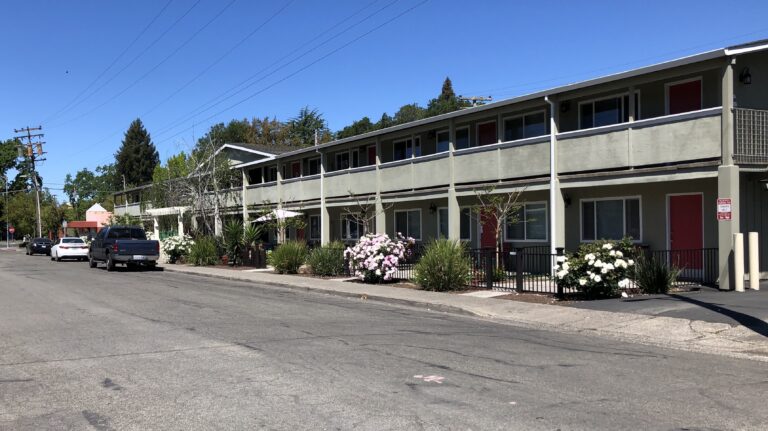
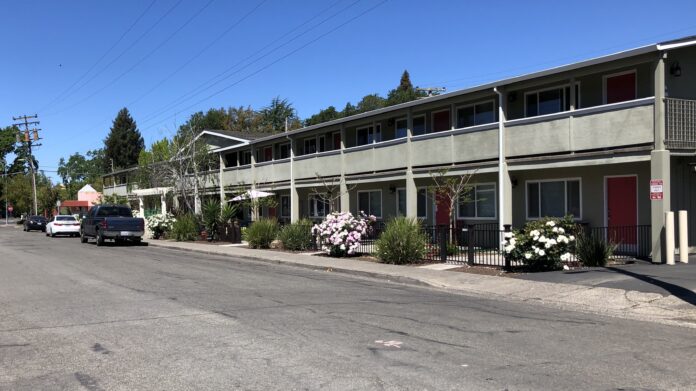
On April 6, the Sonoma County Board of Supervisors approved agreements with 10 local nonprofits to distribute $32.2 million to cover unpaid rent and utility bills.

Bring Back the Victory Patch: Grow Your Own Cannabis

grow your own cannabis
Flower to the People By Jonah Raskin Here’s an idea that came with the hippies and vanished when the yuppies arrived on the scene and didn’t want to get their hands dirty: “Grow your own.” Actually, “grow your own” is an agricultural enterprise that’s taking root right now in Norcal’s cannabis community, from Humboldt to Sonoma and beyond. This time around, grow your...
12,119FansLike
5,007FollowersFollow
6,928FollowersFollow