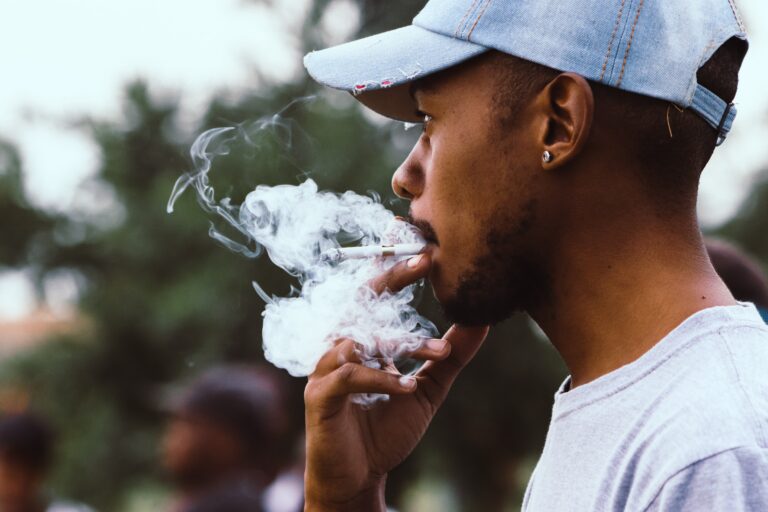
The Backlash: Cannabis Under Fire

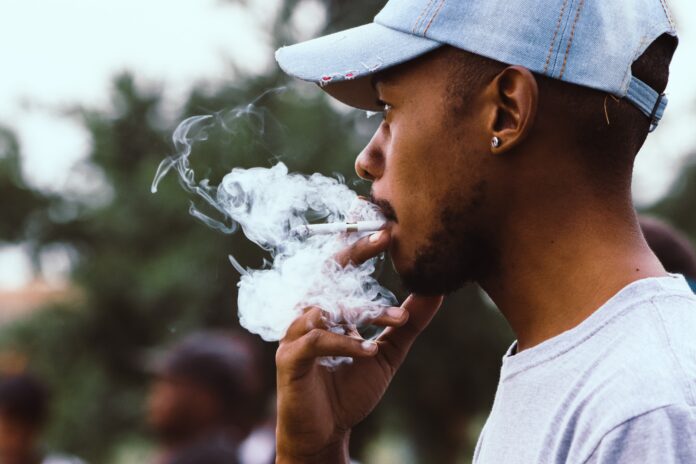
Just when you thought it was safe to come out of the cannabis closet the Biden administration announced that five White House employees were fired after revealing past marijuana use during background checks. Other White House employees have been suspended or told to work remotely after they fessed up. “Don’t ask, don’t tell” sounds like good advice. Jared Huffman who represents the North Coast, plus 29 other representatives in Congress have protested the Biden action. 

In New Mexico, the state legislature recently declined to pass House Bill 12, that would have made cannabis legal for people over  21. The bill would have expunged the criminal records of people arrested for possession of two ounces or less of marijuana. It also would have allowed those serving time for violation of the marijuana laws to be eligible for a dismissal or reversal of their sentence. 

Closer to home, there was more disturbing news for pot lovers. Marin County residents, Jennifer Durham and Justin Pool, withdrew their application for a delivery service, “Highway 420,” at 205 San Marin Drive in Novato. The couple received conditional approval from the city council, but members of the community raised their voices in opposition and gathered more than 1,000 signatures on a petition that cried out, “Our way and no Highway 420, either.”

The site would have been a mile from San Marin High School. Opponents of the delivery service felt that was too close to kids, and too much of a temptation. Still, as marijuana advocacy groups have shown, there’s no conclusive evidence that cannabis dispensaries and delivery services attract crime and criminals, or that high school students obtain their drug of choice when a dispensary opens its doors, no matter how near to classrooms and playgrounds.

Prejudices die hard. Old bugaboos don’t easily vanish and the war on cannabis isn’t over yet, not by a long shot. Marin teens have long had easy access to weed. Teens with parents who smoke, smoke with their parents. Teens with parents who are opposed to pot, persuade other adults to buy weed for them. Some teens in Marin grow their own in backyards and on remote hillsides.

Keeping teens away from weed is as challenging as keeping teens away from cell phones. Also, as many if not most savvy parents know, telling a teen not to do something, is tantamount to an open invitation to do so, whatever it is. Teens say that adults ought to focus on their own addictions, whether they’re to fast foods, alcohol, and their own vices and devices. Yesterday’s pot foes become tomorrow’s aficionados. Pot partisan and former Bohemian editor, Gretchen Giles, tells me, “Keep the faith. We’re making progress.”

At 79, Jonah Raskin is still a teen at heart.

Santa Rosa City Manager Sean McGlynn Resigns

The city of Santa Rosa announced the resignation Tuesday of City Manager Sean McGlynn, effective May 29.

McGlynn, who has served in the role since August 2014, accepted a city manager position with the city of Escondido in Southern California.

Photo: City of Santa Rosa

Santa Rosa Mayor Chris Rogers praised McGlynn for his efforts boosting economic development activity as well as guiding efforts to address the city’s affordable housing shortages and rising homeless population.

“Sean has been a steady hand during some of Santa Rosa’s most challenging times,” said Rogers. “This community owes him a debt of gratitude—we have been well-served by his leadership and will be sad to see him go.”

McGlynn said it was an honor to serve the city.

“I want to thank this community and all of the Council members I have worked with during this time for allowing me the opportunity to serve them,” he said.

A Return to the Valley of the Moon

Prelude

Like a bird chirping on a branch deep in the forest of my mind, the voice kept repeating the word like a mantra while I walked the crowded streets of New York. 

“Back,” it said. “Back to what?” I demanded. “To where, to whom?” But the voice flew away on the winds of my thoughtstream. Over a period of nine months the phantom nightingale added more words to its lament, until finally, as I lay in Central Park on a summer’s day, it came forth loud and clear:

Go back. Come. To me. Home.

Or, translated from the language of the unconscious, “Come back home to me.”

And so here I was en route for California, roused in the middle of the night by the sudden stillness of the train. As I stepped outside, my feet landed on snowy turf. My sleepercar’s attendant said a truck had flipped on the tracks up ahead. We were somewhere in the cavern of the heartland, where there are neither lights nor mountains, only an endless flatness that suffocates with its emptiness. For, in the United States, there is more space where nobody is than where anybody is, noted Gertrude Stein. “That’s what makes America what it is.” 

The delay meant more interminable hours in the tiny Amtrak compartment, which was something like an airplane restroom connected to a closet, a masterpiece of Soviet-style design at its most brutally efficient. I was halfway through my four-day journey from Manhattan’s Penn Station to the end of the line in Emeryville, after 12 years away from home. But now I knew I’d been split apart inside for much longer than that, traumatized by the loss of someone dear. The inability to properly grieve had made me a hollow man cut off from his feelings, from all sense of continuity with the past and from the internal rhythm of my heart and its murmurs of affirmation.

It had been two decades since my mother died, and I was finally ready to face her, to apologize for the mute goodbye that final day on the bench in Rincon Valley that now bears her name, where she stoically endured the effects of chemotherapy before cancer finally sucked her into a coma so it could finish ravaging her insides and shut down her remaining systems. She had faced death more bravely than I’d faced life, and now I was coming home a humbled and enlightened man, cramped on a train with an aching back, microdosing cognac, Advil and Dramamine, the salmon I’d brought starting to smell like cat food. With the obstruction cleared, the train recommenced its clickety-clack towards California, to that never-mourned astrologer-mother whose maternal spirit haunts the night sky in the guise of that lunar luminary that shines over my childhood home deep in the Valley Of The Moon.

1: Written in the Stars

According to Shakespeare, our faults lie not in our stars, but in ourselves. But when you’re raised by an astrologer, you learn that faults in ourselves are faults in our stars. And sometime around the age of 40 you’re forced to realize that playing to your strengths only gets you so far, and that conflicting tendencies, if not reconciled, will eventually unravel you.

The recession of 2008 exposed all my inner fault lines as, one by one, my clients slashed their budgets. I should have gathered my wits and taken action at the first sign. Instead, I decided to ignore what I didn’t like, and followed my sun even deeper into distracting hobbies. Soon the fragile moon, angry at being neglected, took her revenge in the form of anxiety, insomnia and a paralyzing sense of existential dread.

“I feel like the gods are judging me,” I remember saying. My mother would have understood. Before working as Elsie Allen High School’s career counselor, Carolyn Chensvold combined her master’s degree in Jungian psychology from San Francisco State with the ancient wisdom of astrology, mankind’s oldest science. She’d learned it from her mother and her aunt, and then taught classes and analyzed natal charts from our quiet home in Rincon Valley. I had a natural affinity for the family tradition, and found my mother’s wisdom both eerie and strangely logical. I knew my Moon in Virgo made me both imaginative and orderly, but it was only after her death that I discovered that its placement in the First House brings with it a deep connection to the mother. I’d always thought losing her would be the worst thing imaginable, and when her ovarian cancer was deemed terminal, suddenly the unimaginable became real.

When she died, it was as if my nervous system short-circuited and stopped carrying signals from my heart to my brain. Astrologically speaking, it was like my microcosm of a self could no longer properly reflect the microcosm that had stamped it with a unique energy pattern. I swept the grief under the rug of avoidance and forged onward into the world of the marketplace, bartering my skills for money and prestige, both of which were eventually revealed to be as fleeting as moonlight among clouds. In tandem with the rise of the internet, mobile phones and social media, my inner world went from a rich kingdom of the imagination to a ghost town sunken into desuetude, as my once-grounded sense of self was sucked into the digital vortex. 

Until the end, my mother embodied both unconditional maternal love as well as the mythological figure of Sophia, the Greek personification of feminine wisdom in a man’s world. She was her father’s daughter, and raised me to handle bullies, court a lady, seek victory in sport and take my place among my peers. That is, she instilled in me the kind of knowledge that helps a storybook hero discover vital powers that lay hidden within him, and which are shunned by the world of the fathers and their rigid laws. As with Alexander the Great, it is the mother who helps the hero understand his true lineage; that he has not just an earthly father, but a “second father” beyond the stars, whose divine spark glows in his breast.

REMEMBERED  A plaque on a bench in Santa Rosa’s Brush Creek Park commemorates the author’s mother. Photo by Daedalus Howell

2: The Dark Side of the Moon

I don’t like to fly as it is, and online chatter painted an ugly picture of air travel in the age of Covid-19, with in-flight brawls, planes turned around because a two-year-old wouldn’t keep their mask on, flight attendants encouraging passengers to sip beverages with straws beneath their face coverings. I had visions of snapping mid-flight, suffocating and howling about mass psychosis, being forcibly restrained in my seat and arrested upon arrival. Driving would mean10 days of backbreaking tedium, bad food and the constant threat of snow. There was only one way back to California: in my own train compartment, quietly sipping cognac while watching 3,000 miles of the United States roll by across four days of sun and three nights of moon. 

In the wisdom traditions, the moon rules over the body and emotions, the receptive soul as opposed to the active spirit. It regulates the tides of the sea, the human menstrual cycle and the harvesting of crops. In our little corner of the vast universe, the earth’s moon is a femine energy representing the maternal side of creation, the bride of the sun and, like all energies, it contains a positive charge as well as a negative one. The bright side is the light of maternal love, while the dark flipside is the destructive side of Mother Nature, which values the species over the individual. In its mythological guise as the devouring dragon of the Great Mother archetype, what we call “lunar consciousness” reduces all of mother’s children to the same level, washing over them with a tidal wave of egalitarianism that erases all qualitative difference, since all children are equally deserving of mother’s love. All members of society must don the tribal mask to ensure the cohesion of the social unit. There is no place for the individual in a system ruled by lunar consciousness, and universal myths speak of heroes who face “castration,” or what in our digital civilization we’d call “canceling,” for disobeying the Great Mother.

Jungian analyst Liz Greene was my mother’s favorite astrological writer, and in her book The Luminaries, she writes:

“Because the Moon governs the realm of nature, a purely matriarchal consciousness dispenses with the value of the individual, giving absolute importance to family and to tribe, justifying the suppression or destruction of individual self-expression if the security of the group is threatened. There are no ethics or principles in this domain, nor any disciplined use of the will. All is justified by instinctual need and preservation of the species.”

Unchecked by yin-yang balance, lunar consciousness conjures up images of bald men with manicured goatees presiding over rituals of human sacrifice, of orgiastic frenzy with people’s eyes rolling back into their sockets, of descent into dreamlike states and regression into earlier, sub-rational stages of human development—what we’d call mass recollectivization, or in the age of coronavirus, “mask recollectivization.” The solar instinct is to sacrifice the weak in order to maximize future conditions for the young and healthy, while the lunar instinct places compassion above all else and will immediately halt civilization in order to protect the most vulnerable, for it exists in a state of aevernity, the eternal now, in which the future does not exist.

Our response to the pandemic is guided by cosmic forces that stand in complete opposition to one another, squaring off in a way we haven’t seen for 30,000 years. The ancient Greek mystery schools—in which those gifted with metaphysical sensibilities were initiated into knowledge of divine law—taught that the greatest mystery of all is that the solar element must dominate and yet the lunar must be free. This is the great paradox that comes with a universe based on polarity, where the immovable object is met by an implacable force. It is the opposition of night and day, positive and negative, masculine and feminine, and the battleground of the sexes that will cycle through time for all eternity.

3: Moon Talk

Chemotherapy rendered my mother bald and frail, but failed to stop the corruption, which continued to gnaw at her ovaries and uterus before finally marching an assault of the vaginal wall—all the organs that brought me into this world. By the end, she was emaciated and comatose, and her breath rattled like a rusty pipe, until on the last morning it became a desperate chortle as the last living part of her fought for its final breath. She was gone, but the survivors lived on. Mythology teaches us that the cause of a paralyzing wound contains within it the key to healing. In other words, whatever causes one’s fall from grace is ultimately the source of one’s redemption. But one must undertake the excruciating journey into the cavern of the heart, face the pain and redeem it through compassion for one’s human weaknesses, guided by the magical ability of the soul to heal itself with the light of truth, as if it were some sort of ultraviolet medical instrument steadied by the hand of God.

Coming back to California was like coming back to myself. Each passing fragrance wafting in the air—newly mown grass, blossoms from the trees, a fireplace on a breezy night—seemed to recapture a youthful memory I thought was lost forever. The moon governs the world of feelings, and as I worked through my mother’s loss and repaired the inner short-circuits, everything inside began to flow and the background noise of agitation was gradually replaced by one of joy. I began to feel that I’d fallen into a kind of time-travel paradox in which I had to fall apart in order to embark on a journey to understand why I’d fallen apart. To the awakened being, life ceases to be linear and becomes a single pulsing energy field, with the past just as necessary for the future as the future is for the past. Time moves both ways, or, as Kierkegaard put it, life is lived forwards, but understood backwards. This coming-home story, whose focus I did not know when the Bohemian asked me to write it, has now been made clear; an exercise in how we are able to create reality and meaning even in the face of tragedy, or, precisely the kind of lesson my mother would have wanted me to learn.

Now I was ready to finally talk to her. I knew I was ready, because that’s precisely what I was doing. To the sound of dogs barking and children playing, I sat cross-legged with both hands on my mother’s weathered bench. I don’t believe it is possible to contact the spirits of the dead, and my mother certainly never discussed such things. But we can tune our heart’s inner receiver to the channel where all our memories of someone who’s departed are stored. This channel will then vibrate in consciousness, which is not confined to the body, but a field that surrounds us through what the ancients called akasha, ether or numen, and what modern science calls dark energy. It’s that invisible medium through which light and cellular signals travel, and maybe even thoughts and deeds. This is what I believe we can talk to, and so I did. I also shared with my mother a line I’d written years before in the notebook she gave me: “I would not be surprised if the answers you seek are right here in this book, which is to say right inside you.”

There is one little coda to the story of my return to Sonoma County, and that is the matter of housing. While I’d been away the cost of living had grown rather high, and there seemed to be few vacancies. All my old tendencies began bubbling in a sickly stew of despair until I quieted my mind and let the heart lead. A kind of electro-magnetic energy brought a fanciful notion into my head, and I followed it to the apartment complex where I’d stayed briefly in 2009 at the dawn of my crisis, trying to summon the pluck to move to New York. Sure enough, as if waiting for me in this sprawling complex of 60 apartments, was the exact same unit where I’d lived at the start of my inner journey, when I’d felt the intolerable burden of the gods judging me. 

Now it’s clear I was right: the gods have indeed been judging me all along. But I had proven my worthiness through the courage to confront my failings, and so the planets showed me that they are not just malefic, but benevolent as well, and that they giveth as much as they taketh away. Now each day when the sun rises over the hills of Rincon Valley, I see what I want and who I am a little bit more clearly. What I want is to fulfill the potential—from the Latin word for power—of all my stars, for a horoscope is a kind of cosmic fingerprint of everything one could be if they could get all their internal energies working together in harmony, instead of opposition. As for who I am, I’m just like you: a mixture of Sun and Moon, Mars and Venus, light and shadow, heaven and earth. 

And I, too, am my mother’s son. 

Christian Chensvold blogs about the world’s wisdom traditions at trad-man.com/counseling.

Open Mic: Learning from a Katsura Tree

By Scott Reilly

I left my home and the sounds of the ocean,

so close were the waves as I sat on my porch.

I would fall asleep at night. In my dreams,

I would awake before I passed, and then

I would close my eyes before being called away forever to the sounds of the sea.

My heartbeat would stop, and I would fall asleep forever in the sea.

I have looked in a mirror often, and once every twenty years,

I stop, and I examine the face of me, a portrait.

I am just a human being.

I would think of how graceful it would be for my skin

to become the bark of a hardwood tree.

It would conceal its age inside,

one ring for every year.

I see the rings that have scarred my face.

The pendulous features of a man are less graceful

than the branches of a Katsura tree.

The Katsura’s beauty lies in its branches that have

umbrellaed and touch the ground.

The other young trees that surround the old Katsura don’t mock,

but instead, they wait, they wait, they wait.

They wait for their own rings of years that will expand their trunks,

not as fat, but as the strength of an old tree.

I often feel my strength inside.

We are reminded every year of the time we were born. Perhaps one day, and many years away,

a gentle wind will blow with a scent of cotton candy.

And like the Katsura tree, I will lean and fall to the ground.

Before I am swept away, a young child will walk upon me,

and she will look closely at my skin and the bark of an old tree.

Scott Reilly runs Glaze and Confused pottery studio in San Rafael. To have your topical essay considered for publication, write to op*****@******an.com.

Anti-Asian Sentiment Nothing New in North Bay

Sonoma County and multiple local cities publicly denounced anti-Asian racism in a flood of public statements over the past two weeks. 

The statements came after eight people, six of them Asian women, were killed in a March 16 mass shooting in Atlanta, following reports of a substantial increase in reports of anti-Asian crimes in 2020.

On Monday, March 22, a range of elected officials from throughout the county participated in a joint press conference meant to “take a unified stand against racism in light of recent racist acts, including attacks on Asian Americans, that have occurred locally and across the nation.” Several Sonoma County cities released statements condemning racism, and activist groups held events on the same subject.

Earlier in the month, a study found that the number of hate crimes against Asian Americans in 16 major cities increased by 150% from 2019 to 2020, while the overall rate of hate crimes decreased by 7% in the same time period.

Census estimates from 2019 show that Sonoma County has a much smaller Asian population than other areas of California, which is 15.5% Asian (6.1 million people). Sonoma County’s Asian population sits at 4.6% (nearly 23,000 people), compared to 8.9% (just over 12,000) in neighboring Napa County, a county with a much smaller population.

Despite the fact that it has a relatively small Asian population these days, Sonoma County and the rest of the North Bay have a long history of anti-Asian violence and prejudice. And, as anti-Asian violence grabbed headlines in recent weeks, some of that history was recirculated. What follows is an incomplete overview of that history.

Labor History

In the 19th century, Chinese laborers did the crucial, back-breaking work to establish the North Bay’s early wine industry, NPR reported in 2017. However, the Chinese laborers were soon targeted by an anti-immigrant labor movement, and pushed out of many rural areas, including the North Bay.

Between 1890 and 1930, the Chinese population in Sonoma County dropped from 1,145 people to fewer than 200, according to Census data cited by NPR.

In Marin County, some Chinese immigrants sought shelter from the anti-Chinese rhetoric and policies of the day by creating a self-sustaining community that was removed from the nearby cities, in what is now known as China Camp State Park.

“China Camp Village grew considerably in the 1870s and 1880s, at a time when vicious anti-Chinese sentiment was sweeping California. The economic recession of 1877 made scapegoats out of Chinese laborers, who were viewed as foreigners taking jobs away from Americans,” states a history of the State Park written by Friends of China Camp.

The population later dwindled when a new law banned the export of shrimp, the main business sustaining China Camp’s economy.

During the same time period, there were “Chinatowns” in Santa Rosa, Sebastopol, Petaluma and other North Bay cities.

High-Profile Shooting

On Feb. 28, a feature article in the New Yorker magazine about recent anti-Asian hate crimes opened with a troubling scene from Sonoma County in 1997.

Kuan Chung Kao, a 33-year-old engineer, got into an argument at a bar near Rohnert Park, when a patron mistook the Taiwan-born Kao for a Japanese man. Kao, who was celebrating a new job, was angered by the interaction. “I’m sick and tired of being put down because I’m Chinese,” he reportedly told the man.

Although the fight at the bar was split up safely, police officers were called to Kao’s house later that night after a neighbor called to complain about Kao, who was standing in his driveway, yelling. After a short interaction, the officers shot and killed Kao in his driveway. A department spokesman later said that the officers felt threatened because Kao was brandishing a stick “in a threatening martial-arts fashion,” the New Yorker reported. 

The case drew considerable attention at the time—even leading to state and FBI inquiries into the case—but, ultimately, the officers did not face criminal charges. The Sonoma County District Attorney declined to press charges against the officers, as did the FBI and California Attorney General. After filing a civil lawsuit against the city, Kao’s family reached a settlement with the city for $1 million.

Hateful Letter

The news of the shooting in Atlanta was followed by an anonymous racist letter sent to a Healdsburg nail salon last week. The anonymous, hate-filled letter encourages Asian businesses to “GET THE F— OUT OF US!!!!” 

A version of the same letter, which appears to have passed through a post office in San Bernardino, was sent to several other Asian-owned businesses across the state as well, according to media reports.

A photo of the letter circulated on social media in Sonoma County, renewing and localizing the outrage about the recent uptick in anti-Asian violence. 

On Sunday, March 28, approximately 100 people gathered in Healdsburg’s downtown square to condemn anti-Asian violence and racism. The event, organized by Sonoma County group Love and Light, was titled “F— your bad day,” a reference to the well-publicized statement by a Georgia Sheriff’s captain who said that Robert Aaron Long, the 21-year-old who is the prime suspect in the massage parlors shootings in Atlanta, was simply having “a really bad day.”

Speakers at the event, ranging in age from their early 20s to their 50s, reflected on the range of racism they and their families have dealt with—ranging from family members who were sent to internment camps during World War II, to day-to-day hostilities in present-day Sonoma County.

Theories on the recent increase in anti-Asian violence differ.

Many blame former President Donald Trump for repeatedly associating the Covid-19 virus with China. And, under Joe Biden, diplomatic tensions between the U.S. and China continue to rise, prompting some to draw a connection between the U.S.’s global policies—and past wars—in the rise in hate crimes against Asian Americans.
“Belittling and dehumanizing Asians has helped justify endless wars and the expansion of US militarism. And this has deadly consequences for Asians and Asian Americans, especially women,” three contributors wrote in a recent piece in the Nation magazine.

J.Lately’s ‘Winnebago’ Is the Hip-Hop Road Trip You Need Right Now

Pairing a laid-back flow and a relentless drive, Sebastopol native J.Lately has crafted relatable and engaging hip-hop since his days at Analy High School.

Now 10 years into his music career, Lately just dropped his latest album, Winnebago, and he’s inviting North Bay audiences to join him on his journey.

“For me, it’s always felt like writing a song is not the entire process; sharing it is also an important part of the process as well,” Lately says.

From his days burning CDs for friends at school to his years on the road touring across the country, Lately steadily increased his musical output as he matured as an artist, and Winnebago follows on the heels of his Campfire EP, released in August of 2020, and his last full-length, Tuesday, released in 2019.

“It’s taken me a lot of time to develop that confidence in myself as an artist; find my voice and find my path,” Lately says. “That’s something I’ve been able to tap into more in recent years. I am feeling more comfortable in my shoes now.”

That confidence and comfort shows through on Winnebago’s 10 tracks, which lyrically find J.Lately on the move and navigating life’s detours amidst the album’s memorable hooks and smooth beats.

The title track was the first song Lately wrote for the new album, and he says it became the cornerstone for the whole record.

“It happens to me a lot with albums, the first song that I write is my thesis statement about just where I am in life at the time,” Lately says. “That’s what happened with Winnebago.”

Shortly after writing Winnebago, the Covid-19 pandemic sequestered everyone in their homes, amplifying Lately’s physical need for movement, growth and freedom.

“The idea of a Winnebago is such a perfect representation of that idea; you’re in your home, but you’re moving in your home,” Lately says. “That’s what I’m trying to find; being comfortable with myself in my home, but that home doesn’t need to be a stagnant place.”

During the past year, Lately collaborated remotely with his two producers, Space Cadet and Trey C—who Lately knows from Analy High School—as well as the three guest artists, Las Vegas’s Dizzy Wright, L.A.’s Gavlyn and Vancouver, British Columbia’s Junk, who all appear on the album.

“It’s been a blessing to have these producers that I can work so closely with,” Lately says. “I think that’s helped with the sound on Winnebago and finding something that’s uniquely myself.”

With the pandemic’s end almost in sight, Lately looks forward to returning to the touring life so he can keep sharing his music with the world. For now, Winnebago is a great way for listeners to musically hit the road and expand their horizons.

“Winnebago” is available now online everywhere. Find out more about J.Lately at justlatelymusic.com and Instagram.com/jlately.

Sonoma County Synth Artist Casts a Dance Party Spell on Debut Album

Like the Big Bang, the music of North Bay solo artist Krane Alis began with a spark of an idea before expanding into a cosmic tapestry … of electronic pop music, in Alis’ case. This month, Krane Alis, a.k.a. Chelsea Walsh, debuts her darkly danceable sound on the album Shake What Sticks.

The longtime Sonoma County resident always loved music and played piano when she was younger, but she was in her 20s when she became interested in performing music.

“I just had a bit of an epiphany,” she says.

That spark of inspiration came from a book her friend lent her—The Artist’s Way, by Julia Cameron.

“It’s a book about challenging artists,” she says. “One of the questions was, ‘What’s something you’ve always wanted to do but have not allowed yourself to do out of fear of failure?’ Out of nowhere, ‘being a musician’ came into my head. It surprised me a little, but I decided to go with it.”

Walsh started learning drums, and then began attending production school at Pyramind in San Francisco in order to match her technical and musical skill sets with her natural songwriting skills.

“Initially, when I started all this, my goal was to play one show on the drums,” she says.  “But, you can never set too many boundaries on anything, because it usually evolves into something different than what you thought it would; and that’s what happened here.”

For her solo project, Walsh adopted the moniker Krane Alis­—with nods to literary characters Ichabod Crane and Alice from “Alice in Wonderland”—to pursue dance music that’s heavy on synths and drums and filled with dark and dreamy lyrical themes.

“I love dancing and dance music, for myself that is one inspiration I draw on,” she says. “I think, too, that I was at this point where I wanted to let go of genres in my own music and see what I could do as far as bringing different elements in.”

Falling in love with the recording process as much as the writing process, Walsh spent countless hours in her bedroom studio perfecting the beats and embellishments on the nine-track album as both songwriter and engineer.

Possessing a dark edge in its synthesizers and programmed rhythms, Shake What Sticks is a rich collection of bedroom-pop and indie-electronica that also tells personal stories and explores significant emotional lyrics among the beats and breakdowns.

For the past year, the creative endeavor of making Shake What Sticks helped Walsh navigate the social isolation of the pandemic. Now, with the album available online, she says she feels a mixed bag of emotions ranging from nervousness to catharsis.

“Ultimately though, I think it’s always a good thing to put your creative self forward and put out what you’ve made, regardless of what anyone else thinks,” she says. “At the end of the day, I do this for myself and that’s what matters most.”

“Shake What Sticks” is available online now. Get links to Krane Alis at linktr.ee/KraneAlis.

Homeless Advocates Launch Fundraiser for Slain Santa Rosa Woman

Sonoma County Acts of Kindness, a nonprofit which provides assistance to some of the estimated 1,700 people living on the streets of Sonoma County, is raising funds to support the family of Kellie Jones.

Jones, a 43-year-old mother of two, was killed last week by a man who drove his car into an encampment on Roberts Avenue in Santa Rosa. Police have named Clifford Adams as the suspected driver, but have yet to announce his arrest. 

Proceeds from the GoFundMe fundraiser, which was launched on Saturday, March 27, will be used to pay for funeral expenses and provide financial support for Jones’ family. 

“Kellie’s two beautiful children are in the care of Kellie’s mom and all need financial support during this time,” the description of the fundraiser states in part.

Sonoma County Offers Covid-19 Vaccine for Homebound Residents

Sonoma County has launched a mobile coronavirus vaccine clinic to vaccinate people who are homebound. 

Anyone 16 and older who is homebound for a medical reason can receive a shot where they live. 

Medicare considers a person homebound if they need the help of another person or medical equipment such as crutches, a walker, or a wheelchair to leave their home, or their doctor believes that their health or illness could get worse if they leaves their home.

Medicare also considers a person homebound if it is difficult for the person to leave their home and they typically cannot do so.

Even if a person is considered homebound, they can still leave their home for medical treatment, religious services, and/or to attend a licensed or accredited adult day care center without putting their homebound status at risk.

The Sonoma County Department of Health Services is working to prioritize homebound individuals in collaboration with service providers, including In-Home Supportive Services, North Bay Regional Center, Council on Aging, and the county’s Adult & Aging Division. 

Homebound individuals who fit the criteria should call (707) 565-4667 or email st********@**************es.org for more information.

Sonoma County to Hold Climate Action Town Hall on April 6

Sonoma County will hold a virtual “town hall” meeting on Tuesday, April 6, to allow residents to weigh in on the county’s efforts to reach its climate goals, including becoming carbon neutral by 2030

“Bold countywide actions are needed to combat our new climate reality,” said Supervisor Lynda Hopkins, chair of the Sonoma County Board of Supervisors, said in a county press release. “We invite the community to join us in advancing the County’s plan to tackle climate change head-on.”

Sonoma County has been ahead of the curve in setting ambitious goals to reduce emissions, but will no doubt face great challenges in meeting those goals in the coming years.

Last month, Petaluma grabbed national headlines when its city council voted not to permit any new gas stations

On March 8, the county’s Regional Climate Protection Authority (RCPA) adopted the Sonoma County Climate Mobilization Strategy, which sets a goal for the county to become carbon neutral by 2030. 

Also this month, Rohnert Park’s City Council unanimously signed a “climate emergency resolution,” making the city the last in the county to sign such a pledge. Sonoma County is the first county in the country where all of the cities have signed such a pledge which, although non-binding, does acknowledge the unfolding and projected impacts of climate change. 

The April 6 meeting will serve as a Special Meeting of the full Board of Supervisors, and was organized by the Board’s Climate Ad Hoc Committee, which consists of Hopkins and First District Supervisor Susan Gorin.

“After presentations about current climate initiatives in the County, particularly related to transportation, vegetation management, energy & built environment, zero waste and adaptation and social resilience, participants will be invited to give feedback, voice concerns, identify priorities and brainstorm future initiatives,” according to a county press release.

The public comments at the April 6 meeting will be presented at a meeting of the full Board of Supervisors on Tuesday, April 20. 

The April 6 meeting will start at 5pm and end at 6:30pm. Participants who would like to speak during the meeting are encouraged to register here. The meeting will also be streamed live on Facebook. Spanish interpretation will be provided in Zoom, and a Spanish live stream will be posted on the county’s YouTube channel.

The Backlash: Cannabis Under Fire

Just when you thought it was safe to come out of the cannabis closet the Biden administration announced that five White House employees were fired after revealing past marijuana use during background checks. Other White House employees have been suspended or told to work remotely after they fessed up. “Don't ask, don’t tell” sounds like good advice. Jared Huffman who...

Santa Rosa City Manager Sean McGlynn Resigns

Santa Rosa Sonoma County library
Sean McGlynn, who has served in the role since 2014, accepted a city manager position with the city of Escondido in Southern California.

A Return to the Valley of the Moon

Prelude Like a bird chirping on a branch deep in the forest of my mind, the voice kept repeating the word like a mantra while I walked the crowded streets of New York.  “Back,” it said. “Back to what?” I demanded. “To where, to whom?” But the voice flew away on the winds of my thoughtstream. Over a period of nine...

Open Mic: Learning from a Katsura Tree

By Scott Reilly I left my home and the sounds of the ocean, so close were the waves as I sat on my porch. I would fall asleep at night. In my dreams, I would awake before I passed, and then I would close my eyes before being called away forever to the sounds of the sea. My heartbeat would stop, and I would fall...

Anti-Asian Sentiment Nothing New in North Bay

Healdsburg California protest sign
Sonoma County officials and activists have denounced anti-Asian racism in a flood of public statements over the past two weeks.

J.Lately’s ‘Winnebago’ Is the Hip-Hop Road Trip You Need Right Now

Pairing a laid-back flow and a relentless drive, Sebastopol native J.Lately has crafted relatable and engaging hip-hop since his days at Analy High School. Now 10 years into his music career, Lately just dropped his latest album, Winnebago, and he’s inviting North Bay audiences to join him on his journey. “For me, it’s always felt like writing a song is not...

Sonoma County Synth Artist Casts a Dance Party Spell on Debut Album

Like the Big Bang, the music of North Bay solo artist Krane Alis began with a spark of an idea before expanding into a cosmic tapestry ... of electronic pop music, in Alis’ case. This month, Krane Alis, a.k.a. Chelsea Walsh, debuts her darkly danceable sound on the album Shake What Sticks. The longtime Sonoma County resident always loved music...

Homeless Advocates Launch Fundraiser for Slain Santa Rosa Woman

Kellie Jones memorial
Proceeds from the GoFundMe fundraiser, which was launched on Saturday, will be used to pay for funeral expenses and provide financial support for Jones’ family.

Sonoma County Offers Covid-19 Vaccine for Homebound Residents

CDC Covid-19 Illustration
Anyone 16 and older who is homebound for a medical reason can now receive a shot where they live.

Sonoma County to Hold Climate Action Town Hall on April 6

Solar panels Indiana
Residents are invited to weigh in on Sonoma County's climate action plans at an upcoming town hall meeting.
11,084FansLike
4,446FollowersFollow
6,928FollowersFollow