Sonoma County Board Game Club at Goblin Bros., Petaluma
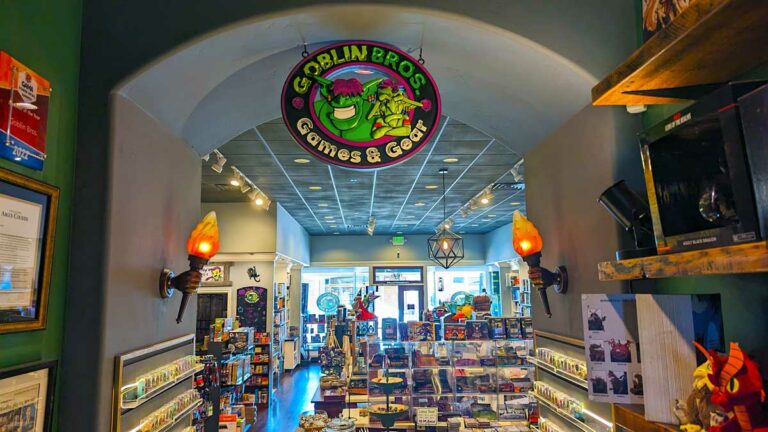
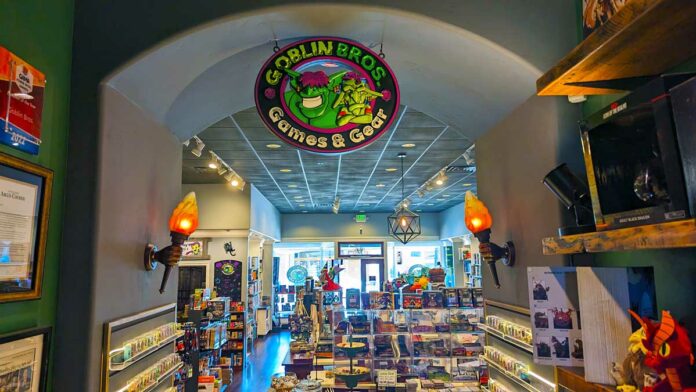
At Goblin Bros. in Petaluma, board games bloom like a field of wildflowers, every variety of board-, card- and tabletop game for sale. Figurines and expansion packs abound.
Every Sunday, the covered back patio of this games store is made available for families to discover and play new games. These games are not cheap to buy, so the chance to try out games before purchasing them is appreciated, especially when games for kids are involved.
Hosted by Sonoma County Board Game Club using space donated by Goblin Bros., club members act as guides to help families navigate the setup and procedures of games.
On a recent visit, my son and five friends sat at a big picnic table and played through game after game. The guide ran them through Tsuro, Fluxx and Exploding Kittens.
Having the guide on hand is a great way to try out more difficult games, to help all the players up some steep learning curves.
Staff told me that they provide a bunch of board games so that Sonoma County Board Game Club can have multiple tables of games going.
Goblin Bros. provides the space for some community joy. My son and his friends howled in unison at the instruction of some card game. They were totally engaged the full two plus hours they played.
Fueled on hot chocolate from a coffeehouse around the corner, the kids dug into complex games like the conversational betrayal deduction game, Avalon. I am not sure I could have explained this successfully to six 11 year olds, but the Board Game Club guide had them all looking at each other side-long to see who was the assassin among them.
While in the store, it is always well worth your time to engage the staff on the kinds of games you are interested in. Everyone who works at Goblin Bros. is helpful and eager to share their deep knowledge of horrifying dungeon crawlers (not to mention provide biscuits for your dog).
Sonoma County Board Game Club is every Sunday from 12 to 5pm at Goblin Bros., 133 Kentucky St., Petaluma. — M.G.
In late 2021, billionaire oil heiress Ivy Getty’s wedding made San Francisco’s City Hall a briefly infamous wedding venue. The timing (mid-pandemic), location (a few blocks from the poverty-ridden Tenderloin), expense (somewhere in the six-figures) and guest list (Speaker of the House Nancy Pelosi officiated and other political elites are rumored to have attended) of Getty’s wedding all understandably rankled the public—or at least a lot of Twitter pundits.
But, what may have been lost in the discourse is that the venue is more frequently used as the location for weddings on the cheap. If you’re down and out, just pay a reasonable fee, file some paperwork with the right city office, ask a friend to officiate and, hey presto, you’re legally bound together!
I’ve attended three friends’ ceremonies on City Hall’s marble steps. At 21, for instance, I photographed my roommates’ wedding before they made an unsuccessful attempt to elope to Canada. None of these modest ceremonies prompted Twitter debates about wealth taxes, but they were sweet and memorable.
Now living in Santa Rosa, visits to the Sonoma County Clerk-Recorder’s Office frequently bring back these fond memories for me. If you’re not familiar, the employees of the Clerk-Recorder’s Office are charged with documenting births, deaths, property transfers and, yes, weddings.
For just $82 and a little bit of paperwork, you and your partner can have your very own marriage license, party not included. (For an additional $16, you can have a Confidential Marriage License to match a James Bond-themed ceremony.)
If you’re not ready to get hitched, but you are looking for a pick-me-up, swing by the Clerk-Recorder’s Office (585 Fiscal Dr. #103F) next time you’re in Santa Rosa. You may just catch a couple celebrating their nuptials with family and friends in the charming wedding venue near the office’s double doors. — W.C.
When animal-loving sisters Alicia Collins and Natalie Grail set their sights on creating a one-stop shop for pooches and their parents, they came up with the idea of K9 Activity Club.
They opened their Santa Rosa pup paradise in 2014 for day care and boarding services and then expanded in 2019 to include training. Today, Alicia, a Sebastopol mother to five kids and lots of animals, keeps the family business running steady. She can boast this year that K9 Activity Club won Best Doggie Day Care honors in the Best of the North Bay 2023 contest for Sonoma County. K9 Activity Club is a perennial winner, and it’s easy to see why because K9 Activity Club does a lot to set itself apart from other doggie day care, boarding and training facilities.
“Alicia is a pretty incredible woman,” said Kassi Walls, sales and marketing director of K9 Activity Club, about her boss.
K9 Activity Club has a lot going for it, and Kassi enumerated a few key points. First, there’s its convenient location on Occidental Road just east of Highway 12 and Fulton Road. Kassi said this ensures drop-offs and pick-ups are a cinch for busy pet parents on their way to work or play.
And then there’s the mission: to provide world-class, loving, 24-hour, professional, on-site care for K9 Activity Club guests via a well-trained staff, which translates into safe, secure fun for your furry family members.
“Our number one priority is the dog’s safety,” Kassi said. “We want this to be a comfortable, happy, safe place. Managers are walking around five times per day, checking in, making sure energy levels match. Our day care groups are monitored by our trained supervisors at all times and offer a ‘social particular’ group for dogs who like to play in smaller groups with a calmer setting and who maybe like extra breaks during the day.”
Kassi pointed out that K9 Activity Club accommodates all dog breeds, accepts intact and altered males and females (with some caveats) and welcomes social butterflies as well as wallflowers.
“I had the good fortune of meeting the owner of K9 Activity Club before adopting my young pit bull and learned they are pit bull fans!” wrote Sherri Cardo in a Google review of K9 Activity Club. “Imagine my relief as so many other places either have a bias or aren’t savvy about the breed. So my beloved and magnificent Meeka has been enjoying day care here for three years and I don’t know what I’d do without the K9 Activity Club. She comes home tired and happy every time and that makes me happy.”
While K9 Activity Club can handle 200 dogs at once and has about 50 employees–15 to 30 on the clock usually. K9 Activity Club keeps the number of dogs in a group relatively small, at 15 or 17 dogs, Kassi said, and the dogs are supervised 24/7 through regular staff monitoring.
Grouped by size mainly but also by temperament, needs and energy levels, the dogs have access to three indoor/outdoor play spaces, an activity yard and private dog park. They rotate through outdoor yards during the day–one that’s filled with enrichment activities like exercise and training cues.
Each day at K9 Activity Club is tailored to your dog. They can go out to day care, work on obedience with trainers, have some extra cuddle time or even play fetch.
What you probably really want to know is what’s K9 Activity Club like? Expansive, clean and tidy from the inside and out, with no hints of pee, poop or cleansers at the welcome area, the lodge, the daycare & spa, the gym (complete with doggie treadmills and agility and training equipment) or the grounds.
The overall setting is pastoral, with gentle hills, shade trees, flowering bushes and views of grapevines from the 1.5-acre grounds. There are fields for running and bark-filled yards aplenty for social activities, and thanks to the cross-country course and an agility field, dogs can walk planks, hop up on benches, climb A-frames, lounge on elevated tables or giant tree stumps and snooze under a shade umbrella.
“Sometimes, they do get muddy,” Kassi cautioned, adding, “but we also have a grooming team. Some clients say if their dogs come back muddy and dirty, they know they really had a good time.”
Day care fees are $50 per day or $12 per hour, with the club operating from 7 a.m.-6:30 p.m. weekdays and 9 a.m.-5 p.m. on weekends.
What else makes K9 Activity Club special? For Daycare Club Members K9 Activity Club makes discounts available on grooming services, fetch, treadmill sessions and cuddle time. There is also a free puppy social hour at 9 a.m. on Saturdays for puppies 6 months and younger with proper vaccinations.
“We want to start socializing pups in a really safe environment,” Kassi said. “It’s a lot of fun.” Alicia and the K9 Activity Club crew members are determined to set up people and their pets for success, Kassi said, and that’s why K9 Activity Club offers a free assessment of pups and customizes training programs for the humans and dogs based on the results.
For people whose dogs would benefit from training,the K9 Activity Club offers comprehensive training programs that require a time commitment between two and four weeks. The price ranges from $1,350 to $4,495 depending on the extent of training required, Kassi said, and K9 Activity Club offers in-house payment plans as well as Scratchpay for monthly payments.
Kassi and her own two pups found the program beneficial, which covers everything from puppy kindergarten and basic obedience to major behavior modification.
“It made a night and day difference,” Kassi said about her dogs’ manners. “Now they are perfect little angels–most of the time.”
“Amazing trainers,” wrote Michelle Weiner in a Google review of K9 Activity Club. “The time I spent in the training program with my pup gave me so much knowledge about dog body language and behavior. Training is so much more than commands and rewards. As a dog owner, you need to be able to attune to the language your dog speaks, not just having your dog understand yours. I am so grateful for the high quality education I received myself, in addition to the positive reinforcement my dog got throughout the process. I’ll definitely be bringing him back for other boarding services and training.”
Boarding services are another plus for K9 Activity Club users. Overnight guests can stay on a cozy mat in the lodge, sleep on a raised cot in a separate suite or enjoy a personal crate in the cottage with an overnight attending sitter. Dogs from the same family, needless to say, can stay together in each setting.
Kassi said K9 Activity Club does what it can to support animal welfare, citing ongoing partnerships with Dogma Animal Rescue and Sonoma County Animal Services to provide day care services, fostering and training for some of their dogs in need of homes.
Want to know more? You can drop by for a tour 11 a.m.-2 p.m. Monday through Saturday.
K9 Activity Club, 4340 Occidental Road, Santa Rosa, 707-569-1394, open 7 a.m.-6:30 p.m. Monday-Friday and 9 a.m.-5 p.m. Saturday and Sunday, K9ActivityClub.com.
When Kelly Silverstein was growing up in Santa Rosa, she often acted as her father’s building assistant.
Her parents owned properties, including rental properties, and her father, a true DIYer, was often doing repairs and upgrades to them himself. Kelly picked up an extra paintbrush, held the board steady for him while he hammered and fished out the exact tool he needed when he was up to his elbows in a project. When she was 15, while her contemporaries were reading Seventeen Magazine, she purchased her first subscription to Architectural Digest.
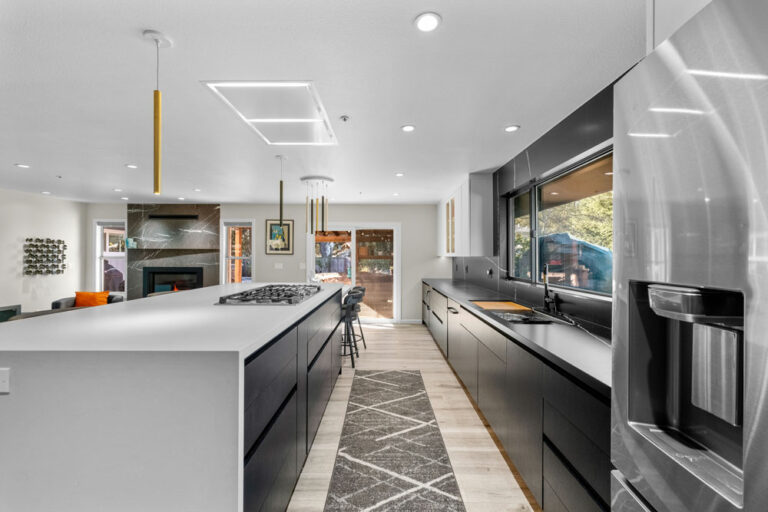
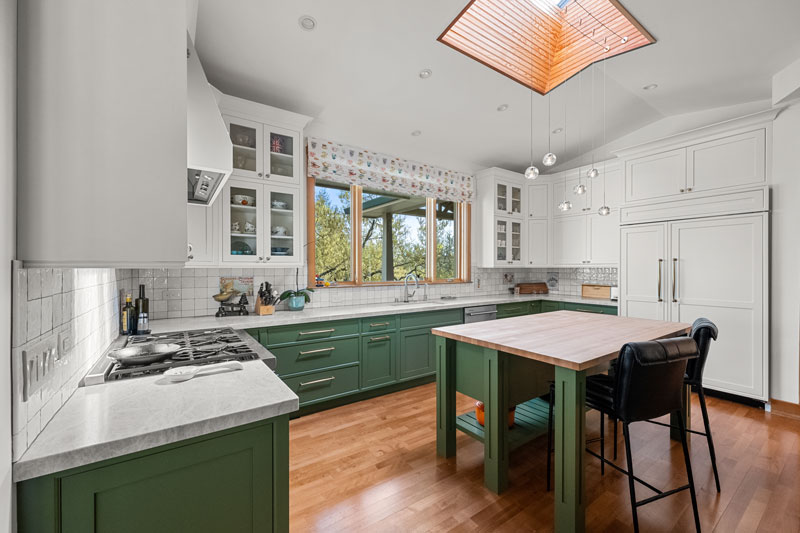
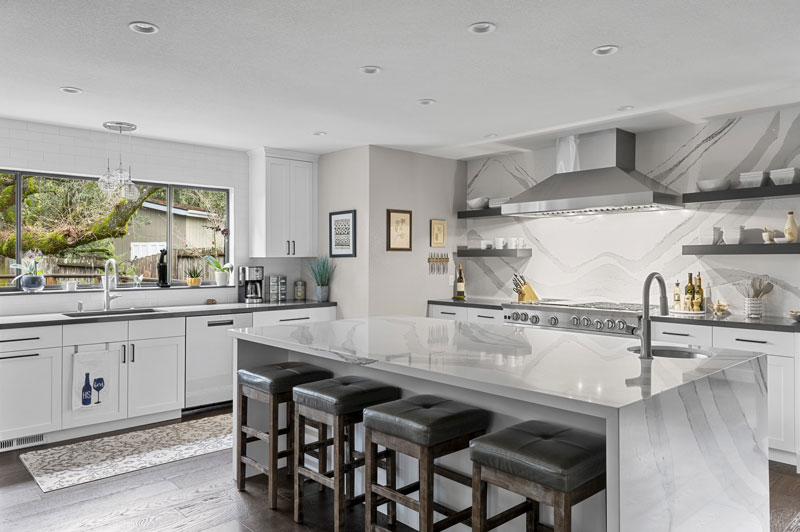
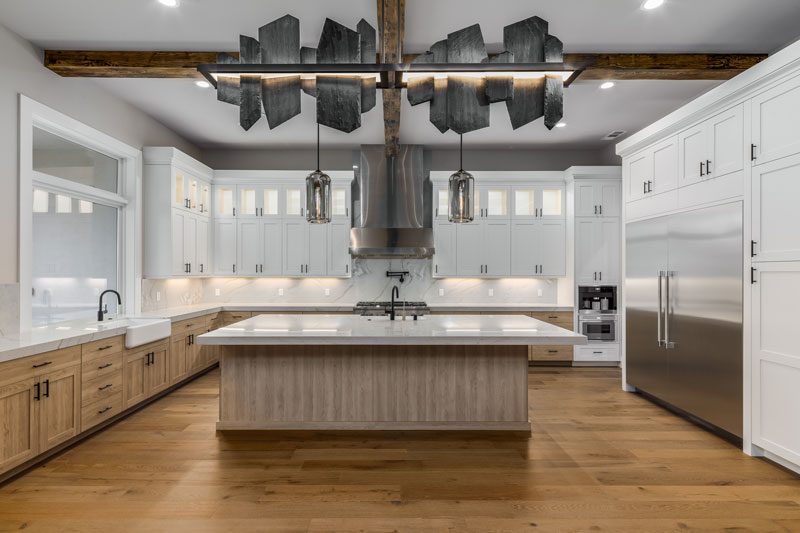
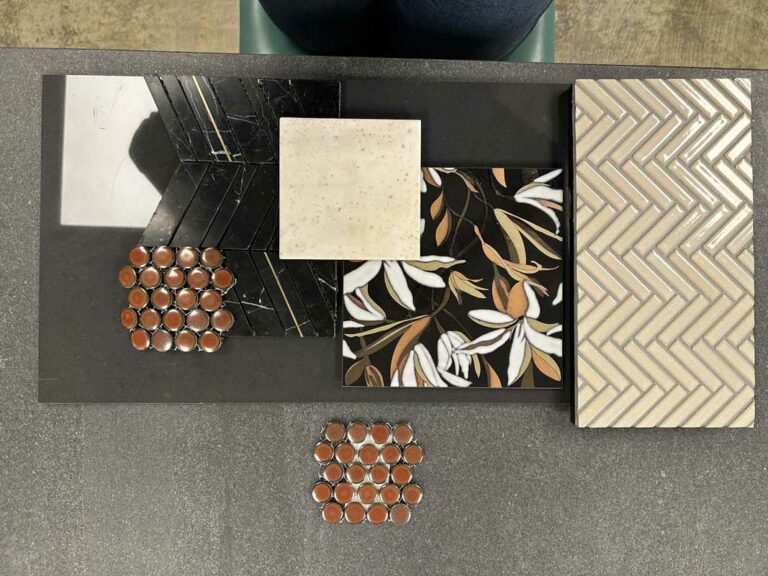
Today, she is the president of Humanity Home & Cabinetry, winner of the Best Interior Designer and Best Kitchen/Bath Remodeler in the Best of the North Bay 2023 contest for Sonoma County. She has a jaw-dropping full-service interior design showroom and now employs herself, four additional interior designers, a drafter, a showroom manager and a bookkeeper. “It has taken time and a true commitment to excellence to create a team of talented professionals who are truly the best at what they do. I couldn’t be more proud of my team.
“I came at this career backwards. I didn’t think it was something I could make a career of,” Kelly said.
Instead of taking design classes, Kelly went to law school and practiced law in Sonoma County for 10 years. During this time, she bought her first house and discovered she, too, had the fix-it gene, just like her father.
“Life happens,” she said.
Kelly had kids and a busy law career, but she continued to love renovating and interior design and satisfied those passions by designing for friends and family. And then more friends … their friends and their neighbors, etc.
Those gigs led to a part-time side business. But when the juggling of careers, two kids and her family got to be too much, she took a hard look at interior design and asked herself, “Why isn’t this what I do all the time?”
In 2008, she decided to make a full-time go of it, dedicating all of her “spare time” to studying design and becoming an expert in the industry. “Being a lawyer taught me how to research and how to competently seek solutions to a myriad of ‘problems.’ And a space in need of design is just a set of ‘problems’ to be solved,” Kelly said.
In 2012, she opened her first showroom in downtown Santa Rosa. By 2018 the growing business quadrupled and expanded into its current showroom location.
Kelly purposefully curated Humanity Home’s culture to place a high value on information and transparency. “Our job as designers isn’t only to create beautiful and functional spaces. If we lay the groundwork correctly and put it all down and make sure everyone is working from the same set of plans and assumptions, then we can avoid most, if not all, those construction nightmares people love to talk about,” she said.
Information is the key: “We’re educating our clients on the reality of what their project is going to entail, the reality of what it is going to cost, and we are letting them make decisions on how they want to invest in their project.
“We love to guide our clients, not just on the practical side of things, but also how to get the most out of their investment–what trends are on the horizon and what trends are at the end of their lifespan. That way our clients’ decisions can have more longevity.”
This methodical, technical and proactive approach to interior design is what sets Humanity Home & Cabinetry apart in the industry.
“We are constantly working to understand how things are built and how they’re made,” Kelly said, expressing deep admiration for the tradespeople who carry out the vision of the designer and must make all the elements of the project work. “We’re there to support our clients but also to work in collaboration with the trades. In order to do this competently, we need to understand the technical side of what we are designing.
“Partnership and collaboration are words we use a lot,” Kelly said about the personal approach she uses with clients and contractors.
“Some of our clients know what they want, and in that case, we take their ideas and create a finished product that is often better than expected,” she said. “Some clients don’t know what they want. In that case, we work closely with them to discover their true esthetic style and practical needs, which really starts with the question, ‘What makes you happy?’”
And the answer to that can drastically change from client to client. At HHC, Kelly and her team spend time really listening to their clients, their dreams, desires and even fears.
“Our end goal is to give our clients a unique space that meets their practical needs but also feeds their souls,” Kelly said.
When Kelly started HHC, she was mainly providing residential design work, but as she and her team gained experience, she widened the size and scale of the company, which now includes commercial projects, such as wineries, tasting rooms, hotels and restaurants. While HHC continues to work on smaller projects, the company also takes on larger projects such as whole house remodels, rebuilds, accessory dwelling units and new home builds. HHC recently added drafting services to make the permitting process go smoother as more entities are requiring detailed technical plans and drawings.
“We love turning our clients’ dreams into a reality,” Kelly said. “We often hear from clients that their project turned out better than they even expected and/or ‘I would have never thought of that!’”
Eleanor Butchart of Santa Rosa, the owner of On Fire!, a fireplace and outdoor kitchen and outdoor living space store, is one of HHC’s satisfied customers. The first task for Eleanor was redesigning a 1961 kitchen and opening it up to the family room. She was thoroughly impressed by the massive project binder Kelly presented; Kelly creates one for every project.
“Kelly and her team were extremely thorough with the project binder,” Eleanor said. “Everyone there was so professional and helpful. They did such a beautiful job.”
Eleanor was so pleased that she has a second project–a major master bedroom and bathroom redo–scheduled with HHC. “The planning got a little out of hand with my champagne tastes, and so now we are in the process of refining it to fit my boxed-wine budget.
“The designers are so clever that the ‘revised’ design looks and feels just as amazing as the original, more expensive version so that I don’t feel like I’m compromising anything!”
Donna Riley and Dave Hoppes, married for 36 years, hired HHC to revamp their cramped kitchen and expand it into a dining room and great room. They loved the results and credited HHC’s organization and thoroughness with stopping problems before they could start.
“Kelly worked closely with our architect and provided some valuable input to ensure that we were pleased with the end result,” Dave said.
“Everything worked out beautifully. She has been so wonderful and attentive,” Donna said. “I had never used someone like her to do something like this. It made all the difference in the world to have Kelly and her team working with us. We would completely recommend Humanity Home. They were truly a gift for us. It was an amazing experience.”
Kelly, for the record, is always up for a challenge and enjoys creating designs based on an aesthetic that differs from her own.
“My style is constantly changing and is very much dictated by the architecture of whatever home or building I am currently in. And because I do this for a living, I rely a lot on what my partner likes. If he likes something, I will take that idea and make it the best it can be. Of course, I don’t always go along with his ‘crazy’ ideas, but a lot of them I do. Right now, we live in a ranch-style house that we converted into a very modern home. Next time, who knows?”
Kelly said she finds great satisfaction in helping her clients get the most out of their homes. “I want our clients to feel as happy about where they live as I do.”
For an idea about what your home or commercial project might entail, visit the website at Humanity-Home.com, where Kelly has painstakingly outlined what to expect, from the process, a “needs and wants” list to a detailed design checklist. Or reach out to HHC for an in-person site consultation.
“Our goal is to ensure our clients are happy with their end result. I’m really proud of the team I’ve created. I know our clients are being taken care of by the best in their field,” Kelly said.
Humanity Home & Cabinetry, 799 Piner Road, Suite A, Santa Rosa, CA 95403, 707-595-5046, showroom hours 9-5 p.m. Monday-Friday, 10 a.m.-4 p.m. Saturday, closed Sunday, Humanity-Home.com.
When Brenda Christopherson started helping out with her husband’s home building business 40-plus years ago in Santa Rosa, deciding what went into a house was a lot less complicated.
“It was a long time ago,” Brenda said, reminiscing about how her husband, Keith Christopherson, then a carpenter, and a partner started building houses as Christopherson Homes, a general contracting and spec-home company. They soon got too busy to personally squire clients around to all the places they needed to go to pick out paint, tile, countertops, wallpaper, flooring, hardware, fixtures, appliances, lighting, carpeting, windows, doors and anything else conceivably necessary to complete their new houses. That became Brenda’s job, which she said she chose over being a travel agent, because as the Sonoma County business began to take off, her perfectionist style and personality wouldn’t allow her to do both without compromising the other.
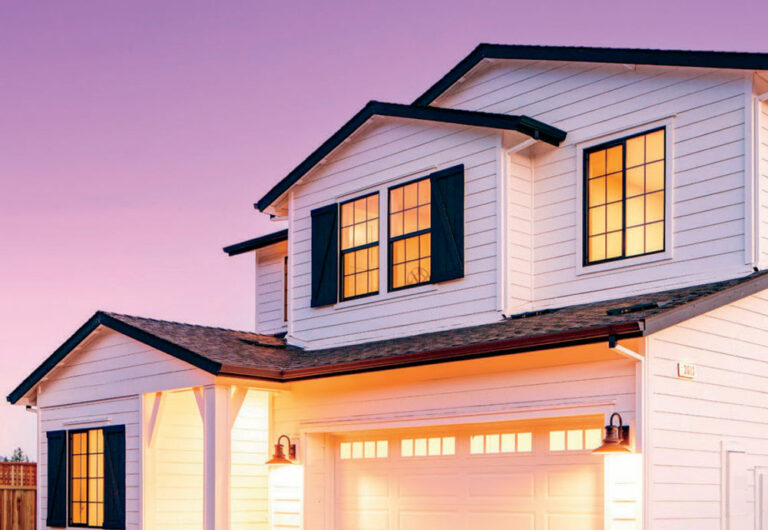
Today Brenda, Keith and their daughter, Amy Christopherson Bolten, are the managing partners of Christopherson Builders, a highly successful Northern California award-winning real estate developer and residential builder with more than 7,000 new homes and 63 communities in its repertoire throughout Sonoma, Napa, Glen, Yolo, Sacramento, El Dorado, Placer and Solano counties. Christopherson Builders won Best Home Builder and Best Home Developer in the Best of the North Bay 2023 contest for Sonoma County.
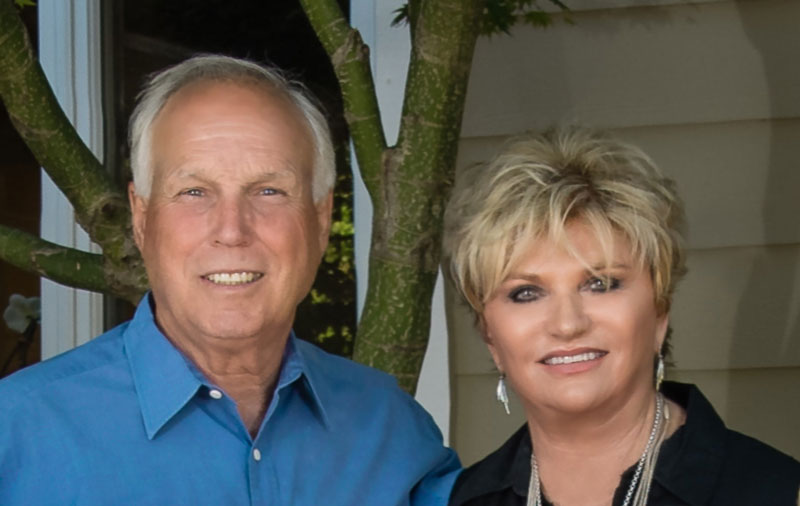
Keith and Brenda Christopherson
It’s no surprise that Keith turned to real estate and construction, as he was “always surrounded by it,” Brenda said, pointing out his grandmother’s side of the family developed Stonestown and the Sunset District in San Francisco. “Keith’s dad and his brothers were always involved in real estate and construction.”. Brenda has become an expert in the real estate and architectural dimensions of the business as well as marketing roles she still oversees today. The company has garnered J.D Power Awards for its building prowess, and Keith and Brenda were inducted into the California Builders Hall of Fame in 2006. Daughter Amy, a longtime advocate of energy efficiency and green building, came to the family business with a strong management background, having worked in the private and public sectors.
Brenda points to Christopherson Builders’ longevity as a strong factor in the company’s continued success, noting that other builders that started after the fire of October 2017 simply didn’t have the wherewithal to last as long. “We’ve been around here for a long time,” Brenda said. “It’s also about our commitment to fulfill our commitment. We can get halfway through a project and realize it’s not going to be financially productive, but we know we’ve just got to stick with it.”. Christopherson Builders, she said, prides itself on listening to its customers, unfailingly upholds the warranty end of its projects and brings an unwavering stick-to-itiveness commitment to finishing projects–sometimes troubled projects or even ones abandoned by other builders.
Emphasizing a commitment to customer service, Brenda said Christopherson Builders truly values its people. “We have always subscribed to that. We value our customers, our employees and our trade partners, in that order. You’re nothing without your trade partners and your employees,” Brenda said.
What makes Christopherson Builders different from other builders, she said, is that it’s a one-stop shop, a full-service concierge building experience from start to finish. It puts a premium on engineering to reduce cost without compromising on high-quality design and livability.
Thanks to its real estate services, the company can help clients find and purchase a lot, develop property they have or buy a new home. The staff members assist homeowners in obtaining construction loans, site assessment, architectural services, soils reports, plotting and civil engineering, and Christopherson Builders partners with clients in the interior design and construction components. After breaking ground, clients can expect to move in within nine to 10 months. “It’s a big advantage,” Brenda said. “We can do absolutely everything in all different areas from real estate, contracts and development. We are one place, one source, so there’s not a big hodgepodge of services and providers.”
Christopherson Builders offers a plan library with over 80-plus new home designs, for everything from tiny 600 square foot ADUs and cottages to sprawling 10,000-square-foot estates. Clients can choose from pre-engineered plans for homes to be built, or they can work with Christopherson Builders for a one-of-a-kind custom design. The company creates memorable single and two story-homes on hillsides as well as flat terrain. Brenda said the current customer base is a mix of newbies moving into the area, homeowners who are rebuilding after losing homes to wildfires and returning customers who are so satisfied with their prior Christopher Builders properties that they’re ready to move on to second or third houses.
Christopher Builders makes the home building process as seamless as possible, Brenda said, by being able to handle all aspects of buying, selling, building, rebuilding and developing real estate and remodeling. “What most people want, whether they realize it or not, is to buy a completed home. It’s such a long and complicated process,” she said about home building. “Finding the right lot, the lot preparation and the foundation work–that’s what really throws people for a loop. “One thing people need to know is we’ve been here for decades,” she said. “They may be thinking they are saving a couple of bucks with somebody else on the price, but then they find out that is just a fraction of their real cost.”
What’s on the horizon for Christopherson Builders? Four new communities across Sonoma and Mendocino County. The projects are a mixture of single family homes and multi family residences and are currently in planning and development, with construction anticipated to commence in Q1 2024.
I recently admitted to myself that I’m a boomer trapped in a millennial’s body.
The evidence has been accumulating for nearly two decades. I played in a classic rock cover band in middle school, I spent my early 20s reading Ramparts and other magazines which peaked in the 1960s, and I work for a print alternative weekly, an invention of the same decade. Yet, the fact which broke the camel’s back was my recent realization that I simply can’t handle modern, commercial cannabis.
To put it, er, bluntly: Legalization has created too many options, most of which are too strong for a lightweight like me. When I visit one of the North Bay’s many fine dispensaries, the eager-to-please employees quickly overwhelm me with a whirlwind tour of the dizzying number of options on display. The combination of strains, brands and dosage make my eyes glaze over before I’ve purchased anything, let alone ingested it. When it comes time to inhale, I’m left without the ability to do much of anything.
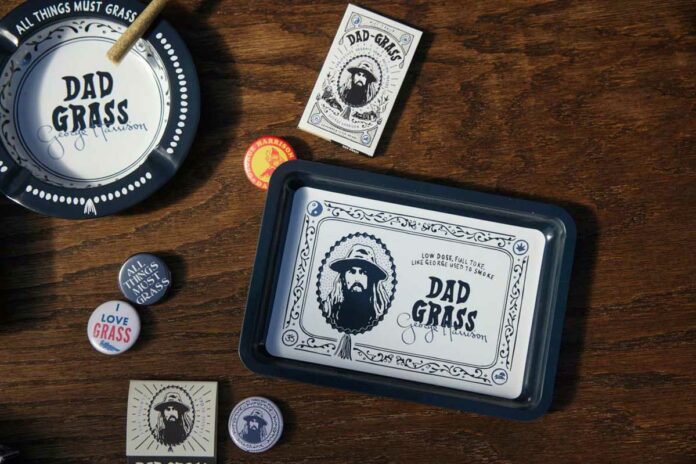
All this makes me pine for the weed of my youth… 15 or so years ago. Luckily for me, capitalism has identified my need and delivered it in Wes Anderson-esque packaging.
Founded in San Francisco, Dad Grass sells a wide array of CBD and CBG products, presented in a variety of attractive “decoy” boxes and tins, which can be used to playfully hide one’s habit from children.
There’s just one problem: Millennial me can’t afford to bring a child into the world. For now, buying Dad Grass will be the closest I get to channeling my middle school bandmate’s dad. It took me more years than I’d like to admit to realize that he wasn’t just soaking when he retreated to the hot tub for hours at a time, emerging a much more relaxed and giggly version of himself. — W.C.
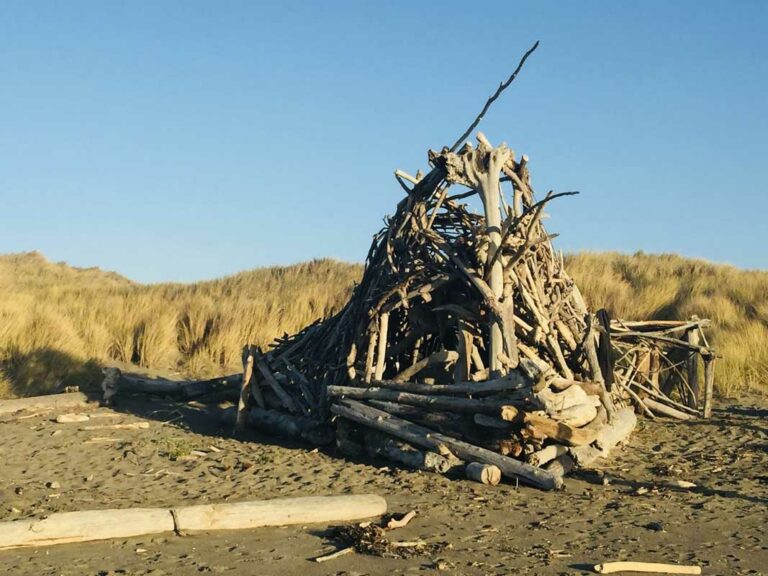
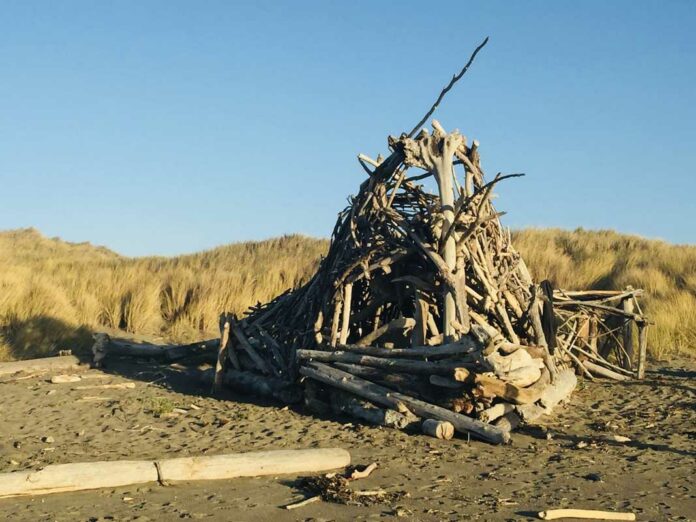
It’s no secret that sleeping in the sand dunes at Bodega Dunes Campground is an experience second to none. But it’s the long strip of beach just over the dunes where the real night magic lies. On a mile of starlit sand, why, anything can happen. And I do mean anything.
Now maybe that’s a secret.
Driftwood that accumulates on that stretch has a habit of magically turning into huts and stick houses. Just imagine what racy North Coasters could and would get up to in those shelters out there after midnight if it were possibly possible and conditions were ripe … and they are, six months out of the year. I’m talking scantily clad artistic nomads dancing and writhing and sweating on colorful carpets to the soft light of candles and the background drone of drum beats and ocean surf.
Now, I’m not saying anything improper does happen out there in the unmonitored freedom zone after lights out, but I’m not saying it doesn’t, either. Because if it did, only those in the know would know, you know? Let’s just say that the next time I book a campsite at Bodega Dunes, I’ll be headed out to the beach around the time everyone around me turns in for the evening. <wink> <wink>
Bigfeet live too far north for my pocketbook, and California doesn’t even have swamp monsters. So imagine my ever-cryptid-loving surprise when I found out that a legendary freaky beast lives practically under my very nose. That’s right. Napa Valley is home to a cryptid called a rebob, and rebobs are paranormal creatures of no small renown.
Rumored to be flying robotic monkeys, facts concerning ’bobs are scant while stories abound. Word is they were created by a mad scientist at a secret government lab and escaped into the surrounding forest, where they still terrorize horny teens far up Partrick Road in Napa Valley on dark nights. Other stories suggest they are a flight of fancy concocted by local parents in the ’50s during the era of B monster movies to keep their daughters from getting pregnant.
Regardless of rumors, it is a fact that Partrick Road exists, that it has a mysterious graveyard near it and that stretches of undergrowth along the roadside are blocked off by long sections of cyclone fence festooned with NO TRESPASSING signs. I have yet to explore the site myself, though the adventure is high on my bucket list. How high? Higher than a flying robotic monkey, truth be known. — M.F.
I’ll begin by saying that this story is about home improvement, but the hero’s journey that led me to the North Bay’s best of home improvement (spoiler, it’s Humanity Home & Cabinetry) requires a more sordid tale.
It all started when the day was departing, and in the darkening neighborhood of Guerneville, I discovered the hallowed halls of El Barrio, home of artisanal mezcal, tequila and bourbon cocktails. This seemed, I thought, to be the perfect place to release some sorrow and toil and perhaps forget and/or create some memories.
Oh, reader, I was right—in only two hours and “a few” drinks, I came to, wrapped in a near-intimate embrace with a toilet so beautiful, so ornate and so majestic that it roused me from my drunken stupor…just long enough to feel bad when I, again, threw up in, on and around what may be the finest work of art I have seen or will ever see.
I spent a long time in the bathroom of El Barrio with only this most tastefully gaudy of toilets for company—knocks at the doorway, of other patrons demanding entrance, came and went and were easily ignored. After all, a true connection, such as that between me and this masterpiece of plumbing, is impossible to break. Until, of course, the employee with the keys came in, kicked me out and told me never to come back.
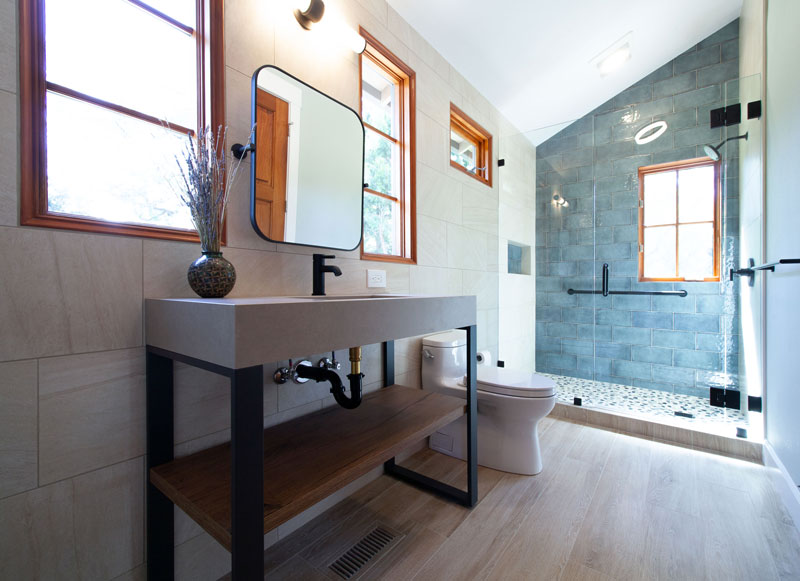
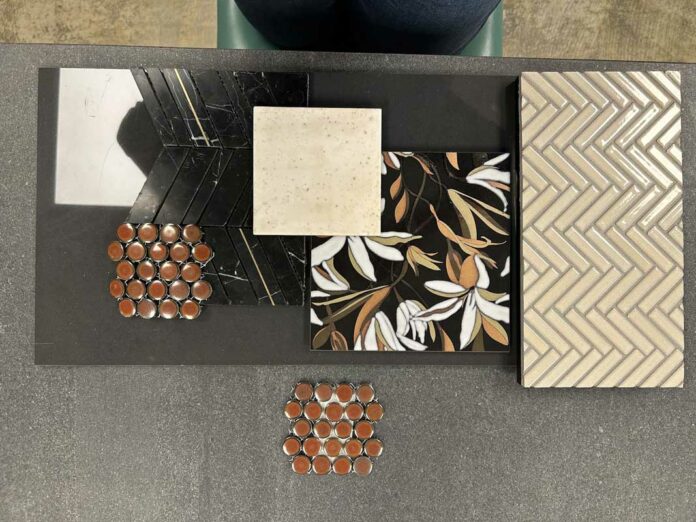
But I had experienced something in that bathroom, something that I wanted access to at all times: Whether it be food poisoning, drunkenness or the flu, I knew I needed to find a way to recreate that experience at home! So, I scoured the North Bay for a place that could give me what I needed—a way to deck out my bathroom, dress it to the nines and make sure that, no matter the reason why I’m lying incapacitated on the bathroom floor, I have something to admire. And, thanks to Humanity Home & Cabinetry, now I have a bathroom I love to throw up in. — I.C.
Humanity Home & Cabinetry is located at 799 Piner Rd., Suite A in Santa Rosa. For more information, visit humanity-home.com.
In the middle of a journey through wine country, I came to myself in a dark sort of mood—you know the feeling: sad and hungry, craving a pile of food so massive it just may start to fill that black hole-sized pit of woe in your stomach.
Then I saw it, a shining beacon in the distance promising a smorgasbord of satisfying snacks. I cannot say exactly how I entered Mitote Food Park but, as I passed through the gates of this Santa Rosa Shangri-La of street food, I knew I had found the perfect place to eat my feelings.
The smell of churros wafts through the air. To my left, birria tacos. To my right, a bar (open seven days a week…am I in heaven?). Surrounded by a one-man feast, I sit alone in the darkest corner of this bright and festive outdoor food park and sip my drink—a single tear falls from my eye. Bliss, I think, to eat your feelings at Mitote Food Park.
Mitote Food Park is located at 635 Sebastopol Rd. in Santa Rosa. For more information, visit their website at mitotefoodpark.com. — I.C.
Sonoma County Board Game Club at Goblin Bros., Petaluma
At Goblin Bros. in Petaluma, board games bloom like a field of wildflowers, every variety of board-, card- and tabletop game for sale. Figurines and expansion packs abound.
Every Sunday, the covered back patio of this games store is made available for families to discover and play new games. These games are...
Sonoma County Clerk-Recorder’s Office
Photo by Will Carruthers
In late 2021, billionaire oil heiress Ivy Getty’s wedding made San Francisco’s City Hall a briefly infamous wedding venue. The timing (mid-pandemic), location (a few blocks from the poverty-ridden Tenderloin), expense (somewhere in the six-figures) and guest list (Speaker of the House Nancy Pelosi officiated and other political elites are rumored...
Sponsored content by K9 Activity Club
When animal-loving sisters Alicia Collins and Natalie Grail set their sights on creating a one-stop shop for pooches and their parents, they came up with the idea of K9 Activity Club.
They opened their Santa Rosa pup paradise in 2014 for day care and boarding services and then expanded in 2019 to include training. Today,...
Sponsored content by Humanity Home & Cabinetry
When Kelly Silverstein was growing up in Santa Rosa, she often acted as her father’s building assistant.
Her parents owned properties, including rental properties, and her father, a true DIYer, was often doing repairs and upgrades to them himself. Kelly picked up an extra paintbrush, held the board steady for...
Sponsored content by Christopherson Builders
When Brenda Christopherson started helping out with her husband’s home building business 40-plus years ago in Santa Rosa, deciding what went into a house was a lot less complicated.
“It was a long time ago,” Brenda said, reminiscing about how her husband, Keith Christopherson, then a carpenter, and a partner started building...
Dad Grass
I recently admitted to myself that I’m a boomer trapped in a millennial’s body.
The evidence has been accumulating for nearly two decades. I played in a classic rock cover band in middle school, I spent my early 20s reading Ramparts and other magazines which peaked in the 1960s, and I work for a print alternative weekly, an invention...
Bodega Dunes Campground, Bodega Bay
It's no secret that sleeping in the sand dunes at Bodega Dunes Campground is an experience second to none. But it's the long strip of beach just over the dunes where the real night magic lies. On a mile of starlit sand, why, anything can happen. And I do mean anything.
Now maybe that's a secret.
Driftwood...
Partrick Road, Napa Valley
Bigfeet live too far north for my pocketbook, and California doesn't even have swamp monsters. So imagine my ever-cryptid-loving surprise when I found out that a legendary freaky beast lives practically under my very nose. That's right. Napa Valley is home to a cryptid called a rebob, and rebobs are paranormal creatures of no small renown.
Rumored...
Humanity Home & Cabinetry, Santa Rosa
I’ll begin by saying that this story is about home improvement, but the hero’s journey that led me to the North Bay’s best of home improvement (spoiler, it’s Humanity Home & Cabinetry) requires a more sordid tale.
It all started when the day was departing, and in the darkening neighborhood of Guerneville, I discovered the...
Mitote Food Park, Santa Rosa
In the middle of a journey through wine country, I came to myself in a dark sort of mood—you know the feeling: sad and hungry, craving a pile of food so massive it just may start to fill that black hole-sized pit of woe in your stomach.
Then I saw it, a shining beacon in the...