Not To Reason Why at the 600 House; J-Boogie at the Hopmonk

It was the fucking awesomest one-song set.
It was 11pm. Three bands had already played. I was planning on taking off to Sebastopol, had already said my goodbyes, and was literally halfway out the front door of the 600 House when Not To Reason Why started playing. Awww, shit. After the first couple notes, I was lured, like a magnet, back into the living room. How could I leave? When it comes to Not To Reason Why, you can’t even pretend like there’s an option. Just give in.
The Carlo Rossi was flowing. Fools were juiced. And if you’ve never heard them, Not To Reason Why are on some heavy-ass, pulsing, move-your-body epic-type tip. The song: “Zeitgeist.” The living room heaved, hands shot into the air, and the band played intensely, furiously, like it was the end of the world. Howls of joy. Heads shook in disbelief. Jessie Mae jumped up on top of an amplifier. For six sweet minutes, miracles came true.
Then the cops came.
——————————————————————————-
People are always talking about how there’s nothing to do around here, but tonight was a pretty good example of why that’s untrue. Here it was, Thursday night of all nights, there’s a killer house party that gets busted by the cops and yet there’s still more to do. Juke Joint with J-Boogie. I headed west.
——————————————————————————–
I pulled up to the Hopmonk Tavern a little before midnight and saw, I kid you not, a guy and a girl, standing and squatting next to each other in the parking lot, both talking to each other and pissing on the asphalt, simultaneously. Love works in incredible ways.
Inside, J-Boogie had just started his set with a megamix of Stevie Wonder songs—it being Stevie’s birthday—and the place was hopping like mad. Bodies on the floor, busting some serious moves. Breakdancers in the corner. Girls dancing on the stage. Again, the magnetic pull erased any choice other than to get down. Even the wallflowers were dancing in their shoes.
Out in the beer garden, I ran into a buddy of mine and asked him how, in his opinion, a small town like Sebastopol was able to so overwhelmingly support a night like Juke Joint. “It’s new,” he said, citing that everything fresh and hip has its initial glory period. Having worked at now-defunct Barcode in Santa Rosa, he could be said to speak from experience. “It’ll die down,” he predicted.
He could be right. But judging from last night’s huge crowd, and judging from the hypnotic spell J-Boogie had over everyone, it was hard to imagine an impending lull on the near horizon.
I’ve dug J-Boogie for almost ten years now, and the bulk of his set—after the Stevie Wonder tracks, and before the Motown / Atlantic megamix at the end—was a slick reminder of why he’s so great. Crazy, rhythmic grooves from all around the world; none of them recognizable, all of them dope. Also, J-Boogie’s one of the few DJs who can drop a long three-minute drum break with intros on the upbeat and full-on long paces of total silence and still keep the crowd not only moving but hollering with excitement. Hell yeah!
More photos after the jump.

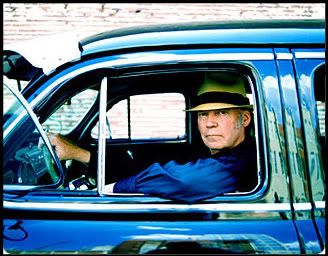
What the Hell’s Wrong with Neil Young?

1

For what has literally been decades of anticipation, Neil Young fans have been waiting for the ultimate Neil Young box set. Years have rolled by. All of his comrades and co-workers released box sets. Even Buffalo Springfield released a box set. Nothing from Neil.
This week, Neil Young announced that he’s finally satiating the thirst for his massive treasure trove of old recordings by releasing a huge 10-disc set this fall—hell yes, finally!
Here’s what sucks: the Neil Young Archive, as it’s called, is only coming out on Blu-ray.
Do you own a Blu-ray player? Yeah, me neither. They’re $400.
The set, announced as the first of five volumes, will contain 128 tracks, 500 photos, letters, old papers, and additional material designed to be viewed on the screen while listening to the music. In his press conference, Young encouraged his mostly middle-aged fans to buy a Sony Playstation 3 in order to be able to “experience” the box set. “We want people to spend the same hours on it like a video game,” he said.
You know what? Neil Young has been beating this misguided audiophile horse for far too long. He’s latched onto DVD audio like it was the second coming of Christ and saturated the market with awkwardly-shaped and utterly confusing versions of his albums—many of which get returned by customers who can’t listen to them, and which go back to collect dust on warehouse shelves or clog up landfills. His belligerence with the technology is a waste, and the world is not going to get in step with him on the idea. It’s expensive, it’s ego-driven, it’s elitist, and I think it’s pretty much the last straw.

Twists and Tunes

0

the arts | stage |

Duet: Ashley Jarrett and Byron DeMent portray lovers in ‘They’re Playing Our Song.’

By David Templeton

An acrophobic, insecure songwriter with a string of hit tunes to his name and a shelf full of awards (Marvin Hamlisch, known here as Vernon Gersch) meets a bright, bubbly, eccentric, chronically late up-and-coming songwriter (Carol Bayer Sager, aka Sonia Walsk) with a penchant for wearing hand-me-downs she cajoles from small theater companies. While writing five songs together and delivering snappy one liners by Neil Simon, this musical odd couple fall in and out and in and out of love, until the end, when they both finally deal with her ex-boyfriend, Burt Bacharach—that is, Leon. An autobiographical musical love story, They’re Playing Our Song first appeared in 1979 and is as light and fluffy and nonthreateningly sexual as an episode of Love, American Style.

In a fresh, pleasing, emotionally grounded new production by the Pacific Alliance Stage Company, this potentially dated show is made relevant by the winning performances of its two strong-voiced central stars (Byron DeMent and Ashley Jarrett) and kept immediate, meaningful and moving by the smart, sensitive direction of Hector Correa. Correa takes what might have been slight, pleasant fluff and makes it real, sharply focused and at times powerfully moving. It clips along at a perfect pace, sounds great in terms of voice and orchestra, and everyone who needs to looks cute in pajamas. This is PASCO’s best, most enjoyable musical in years.

“You can’t sit in a dentist’s chair without hearing one your songs!” That’s how the overwhelmingly weird Sonia praises the accomplishments of her songwriting idol when she meets Vernon at his Manhattan apartment, the same building, we are told, in which Jerome Kerns, Isaac Stern and Leonard Bernstein reside. Simultaneously attracted and appalled, Vernon proposes that they write five songs together, but the working process is almost immediately compromised by Sonia’s tendency to be days late to meetings. Their fits-and-starts romance is slowed by Sonia’s odd relationship with the never-seen Leon, with whom she has broken up but refuses to stop taking care of.

In reality, Hamlisch (“The Way We Were,” etc.) and Carol Bayer Sager (“Arthur’s Theme,” “That’s What Friends Are For,” etc.) were involved for several years in the late ’70s and early ’80s, romantically and professionally. They met when she was still a struggling lyricist, mainly known for having penned the 1965 Mindbenders hit “A Groovy Kind of Love” and for having been married to Bacharach.

In the fictionalized version of their love story, for which the team wrote the enjoyably poppy songs, with Simon contributing the book, Sonia and Vernon each have their own Greek chorus of singing and dancing “inner voices” (pared down to two apiece from the trio called for in the Broadway version). In PASCO’s production, Vernon’s voices are hilariously well-played by a pair of well-known local actor-directors, Gene Abravaya (he sings falsetto!) and John Shillington, while Sonia’s voices are embodied by Laura Pedersen-Schulz (last seen at Spreckels in 2007’s You’re a Good Man Charlie Brown) and Sonoma vocalist Linda Jacobson.

On a nicely spare set by Rose Anne Raphael, with entertainingly choreographed set changes, the cast perform with a live band of capable young players, well-directed by Diego Emir Garcia. The lighting and sound design by Eddy Hansen and Doug Faxon, respectively, complete the polished package (though I’d have like to have heard the “voices” a tiny bit better).

The core of any love story is the lovers, and DeMent and Jarrett succeed in making this couple adorably meant-for-each-other. It is a sign of their skill, and of Correa’s knack for getting to the emotional heart of a play, that I found myself wanting them to get together and stay together, and felt genuine heartbreak when it looked as if they’d never make it.

The story is a rare celebration of human kindness, having at its dramatic heart Sonia’s refusal to abandon her grieving former lover simply because her new lover would feel less threatened that way. More cynical theatergoers might write this show off as an elaborate form of couple’s therapy, but others will recognize it as a charming, loopy homage to the twists and turns of love, and the power of a good pop song to say what we couldn’t otherwise find the words to communicate.

‘They’re Playing Our Song’ runs Thursday–Sunday through May 18. Thursday at 7:30pm; Friday–Saturday at 8pm; Sunday at 2:30pm. Spreckels Performing Arts Center, 5409 Snyder Lane, Rohnert Park. $23–$26; all seats $20 on Thursdays. 707.588.3400.


View All


Museums and gallery notes.


Reviews of new book releases.


Reviews and previews of new plays, operas and symphony performances.


Reviews and previews of new dance performances and events.

Fight Club

05.07.08

There are some thwarted expectations in Redbelt, David Mamet’s middling, slightly baffling drama. A thoroughly honorable West L.A. jujitsu teacher named Mike Terry is played by one of the very best actors around, Chiwetel Ejiofor. As in seeing Philip Marlowe, we can tell at a glance that Terry is honest: he lives in L.A., and yet he has no money.

Through a chain of events, Terry encounters a powerful Hollywood star (Tim Allen). The star hires him as a consultant on an Iraq War movie he’s shooting in the nearby desert. On the strength of this new job, Mike’s wife, Sondra (Alice Braga), gets into debt.

All of this pushes Mike in the one direction where he doesn’t want to go. This black-belt, whose motto is “There is always an escape,” is forced into a free-style prize-fighting match he wants nothing to do with. The sinister gimmick: the fighters have to draw lots, a black or a white marble, to see whether or not a limb will be immobilized before the fight.

Richie (David Paymer), the loan shark, learns that he’s out $30,000. Instead of raging about it, he clutches his stomach in panic. It must be a variation of the proverb about how if you owe a large enough amount of money, you own the bank, the bank doesn’t own you. With a defaulting customer, Richie is now in trouble with his higher-ups. This clutching of the belly may be the most sensible reaction by a, er, microfinancier onscreen since Travolta’s Chili in Get Shorty noted that if break your debtor’s legs, how is he going to pay you off?

Similar common sense prevails in a moment where a traumatized rape victim (Emily Mortimer) is given her first lesson in self-defense. We also note some craft in the hard-bitten lines for Ricky Jay, here playing a fight promoter. The key incident in Redbelt, the story of a valuable watch, sounds like a true anecdote. (It may be something Mamet spun off from Maupassant, but it sounds plausible, like a piece of Hollywood gossip you just ache to believe.)

Mamet appears to be reaching out to an action-movie crowd. The foreign-language-training-tape quality of his dialogue doesn’t seem to echo off of the plywood of the sets, as it does in some of his other films. The gears mesh—it’s just that the machine as a whole doesn’t work.

It seems that Mamet trained in martial arts for five years, and he has all due reverence for his teachers. He insists on the selflessness and the good hearts of such teachers. Fair enough.

Even so, Redbelt has a Chuck Norris plot, no matter how much an intelligent writer-director refines it. Mamet would have thrived in the days when movies were 60 minutes long. Shorter running times would have let him glide by the weak spots, like the baffling behavior of a dumb but decent policeman who has fewer cops looking out for him when he’s in trouble than any cop you’ve ever seen in a movie. A shorter running time might also make up for the almost translucent thinness of the female characters.

And as always in Mamet, the women here are men, second-class. They might be promoted to men someday, if they keep up the good work.

‘Redbelt’ opens on Friday, May 9, at the Century CineArts at Marin, 101 Caledonia St., Sausalito. 415.331.0255.


New and upcoming film releases.

Browse all movie reviews.

You Are What You . . .

05.07.08

For eight years, I was a dedicated vegetarian, but times change. I have since reverted to being the type of person who doesn’t feel particularly guilty about hiding the boxes of free-range chicken broth before the vegetarians come into the kitchen to test the soup. My rationale for this is simple: a little chicken broth is good for you, and the integrity of my recipes is more important than someone else’s dietary restrictions.

But when I call Brendan Brazier—professional triathlete, author of The Thrive Diet, a 12-week vegan meal plan and nutrition book, and the formulator of Vega, a plant-based nutritional product—I do not tell him that I regularly lie to vegetarians. Nor do I tell him that I crave caffeine, cheese and sugar more than I crave good health. Sure, I’d love to feel great all of the time, have no allergies, perfect skin and an immune system worthy of the gods, but not if it means I can’t eat cheese.

I’m half expecting Brazier to be a bit judgmental, dogmatic even. After all, doesn’t he have the right? He’s a professional Ironman triathlete and two-time Canadian 50 km Ultra Marathon champion who survives on plant proteins alone. I soon come to the conclusion, however, that he is the not the type who would ever lie about the broth. Not only that, but he does not make me feel bad about myself, even though I am a person who would. Brazier is friendly and unassuming. As he tells his story, I feel that even if we were sitting together in a small room and he was eating a hemp burger and I was eating a beef burger, he wouldn’t judge me (though he might do jumping jacks afterwards, while I sank down into my chair feeling mildly ill).

Brazier has been making Vega, his whole-food health supplement and meal replacement—which provides vitamins, minerals, protein, omega-3 and omega-6 EFAs, enzymes, probiotics and phytonutrients—since he was 15 years old. Only recently has it become commercially available through his partnership with Sequel Naturals, a Canadian nutritional-supplement manufacturer. Brazier tells me that at 15 he knew nothing about nutrition. What he did know was that he wanted to be a professional triathlete.

Throughout high school, he trained an hour before school, an hour after school and then again for another hour after dinner all while working to create a diet that would help him achieve peak performance. Once he graduated, he started training full-time. Brazier came to the conclusion that it is recovery time that defines the top athletes. The faster you recover, the more you can train. Eighty percent of this recovery time, Brazier believes, is due to nutrition, and, as one of the few people in racing who eats a 100 percent plant-based diet, there’s a good chance he might know.

In 2003, Brazier was hit by a car while cycling, an accident that temporarily pulled him off the marathon track. While healing, he wrote The Thrive Diet, which features a 12-week, day-by-day meal plan replete with recipes, nutrition and health advice and details of Brazier’s passionate belief that eating a plant-based diet benefits not just the individual, but the environment as well.

There is little point in contesting that mass meat production hurts the planet. Cattle are fed corn in huge amounts, an unnatural diet that adds to their release of detrimental levels of methane, which contributes to global warming. Land is cleared to accommodate both the mega&–corn crops and the mega&–cattle herds, and run-off from factory farms pollute our waterways. With food production being a number one draw on energy and fossil fuels, a diet based primarily on meats and refined foods leaves a carbon footprint the size of Goliath.

After speaking with Brazier, I can no longer avoid the next step in this journey. The time has come for me to prepare a meal from The Thrive Diet. I decide to make the dinosaur kale quinoa wrap with tahini dressing, and the almond flaxseed burger with black bean lime salsa. The recipes are accurate and easy to follow, and before long I have produced a vegan meal that would have been raw except I steamed the kale and fried the burgers out of habit more than necessity. The resulting dinner is delicious and surprisingly filling.

Though there are a few too many gourmet cheeses in my refrigerator for me to be willing to convert entirely, I plan to follow the advice that Brazier gives during our interview, which is that people should do as much they feel comfortable with. I think the first step for me will be to stop lying to my vegetarian friends. Baby steps, but nonetheless meaningful.

For more information on the Thrive Diet, go to [ http://www.brendanbrazier.com%3C/i ]www.brendanbrazier.com.


The Raw & the Clothed

05.07.08

Popular fashion designers want us to believe that by purchasing their products we gain membership into trendy clubs to which others are denied. In his 1964 manifesto Understanding Media: The Extensions of Man, communications oracle Marshall McLuhan insists that every human technology mimics and extends our inherent physical or intellectual attributes. Consequently, all items humankind makes and draws from are media reflecting who we are. A T-shirt, for example is the extension of our skin. It’s a medium, while the brand name making it a billboard helps broadcast its message. This branding is precisely what popular fashion boils down to. But both the medium itself and what’s embossed on it communicate its message.

Historians chronicle how royals and lesser privileged classes have long shaped the emergence of fashion. Modern high fashion carries on elements of this tradition. It’s designed to race beyond both the economic and appreciative grasp of the unwashed masses. The high-fashion message seems to be, “We are prettier, richer, smarter and have more of what it takes than you. Besides, you haven’t a clue as to what any of this means—though you’d chew your right arm off to be one of us!”

Haute couture tends so to exaggeration that it has largely transcended everyday applied fashion. Like kinetic sculpture, high fashion’s more akin to fine art placed in pose and motion. Ask any random person about fashion and chances are he’ll respond with something about clothing apparel or accompanying accessories.

But let’s go beyond fabric skin coverings, shape changers and distraction enhancers. Let’s carry the notion of fashion along with the galaxy of reasons for its existence into the realm of . . . well, to rearrange a famous McLuhan probe, let’s go into what media lie behind every fashion message. As we humans continue to reach out, to extend our capabilities and materialize our dreams, fashion and the media defining and disseminating it, spin each new vogue into a mad dance of death inside technology’s hyperevolving ballroom. Flash, crash and digest. That’s today’s fashion.

OK, then—mass media. Different forms of communication, right? You’ve got your TV, your newspapers, radios, Internet chat rooms, podcasts, etc. ad infinitum. But to give the entire communication media landscape its due, we’ll toss in every other form of communicative expression, whether modern mass or not. Picture media as existing as a grandly effete and yet bubbling-over cannibal-style pot of every communication form. Into this roiling stew is diced, sliced, skinned and skewered all manner of human development that came before us.

Fashion, then, is all those teensy bits of spicy audacity blown into our stew from winds changing their direction, hard rains falling or even hurricanes of war. Its flavors stand out just long enough to blend in, overtaken by the next gentle breeze or calamity carrying yet another fashionable offering. Meaning, of course, that what was momentarily fashionable is not fashionable for long. The clock’s ticking, time is compressed. The sun sets on the British Empire, and Nehru jackets become the rage. Nuke a Micronesian atoll, and we get the bikini. Beatles beget mop-top haircuts, NASA brings us Tang. Campbell Soup: Warhol and the Velvet Underground. Iraq, round one: the Hummer.

The essence of fashion is an inherently human something that’s been here from the moment our ancestors first savvied that they were different one from the other and could do something about it—ergo ego. Other species exhibit unique personal attributes, but here on terra firma, only humankind has, via progressive technological multipliers, succeeded in producing such an array of aping technologies that these extensions themselves seem to define us. Some day, they may do more than that. Some day, these fashionable extensions may themselves morph into or evolve, transcend, replace or even devour us. As for now, fashion’s still expressed by flesh-and-blood humans personally walking the plank in order to be noticed.

As McLuhan points out in The Gutenberg Galaxy, the movable press revolutionized independent thinking, giving rise to the notion of individuality. Likewise, each media technology has had profound effects on who we are, what we do and how we see ourselves and our universe. In the same way the car extends our ability to walk, so too do extensions of our bodies and our intellect produce breakthroughs whose popularity is often mimicked in popular fashion.

Lifestyle fashions, architectural trends, economic fads, dance crazes, popular political views and philosophies are a few of fashion’s offspring, all of which continually break, ebb and fade away. Perhaps fashion, short-lived and transitory, is simply a communicative tool to gauge how far we humans can extend from our physical and emotional beings, and still retain our identities as individuals—and as a species.


Between Sizes

05.07.08

[Clothing sizes are] one of the ways the fashion industry uses to keep us in our place.—Susan, 44, Sonoma

Flip through the racks of clothes, pull out a few promising items, try them on in front of the merciless mirror of the fitting room.

And most likely, not much fits.

Shoulders too broad. Shoulders too narrow. Waist too broad. Waist too narrow. Hips and thighs—too broad, too narrow. Long legs. Short legs. Fat calves. Skinny calves. No calves to speak of. Most of us have a mental list of what’s wrong with our bodies, the reasons why off-the-rack clothing doesn’t match our individual physical realities.

We personalize the differences between our shapes and the available clothing choices, thinking there’s something wrong with us because nothing fits. Eventually, most of us find ways of coping, but still we struggle with diet and exercise, trying to use self-control to make our bodies match what we think of as the standard sizes.

In fact, clothing sizes are a relatively new phenomenon, says Joan Jacobs Brumberg, author of The Body Project: An Intimate History of American Girls and a professor of history and women’s studies at Cornell University. Traditionally, clothing was made at home or by professional tailors and dressmakers, based on measurements of the individual who wanted the garment. Mass production of Civil War uniforms led to the first commercial sizing scales for men’s ready-to-wear, but women’s ready-to-wear took longer to develop. As late as the early 20th century, women still relied on home sewing and patterns that were adjusted to fit the wearer. That changed in the 1920s with improved mass-production techniques and national marketing efforts, as well as the rise of an urban middle class prepared to plunk down hard-earned money for the latest premade fashions.

“When clothes start to be sized by the clothing industry, you begin to think of yourself as a number. When domestic bathroom scales were introduced [after World War II], you have a weight—another number—to think about or worry about,” Brumberg explains.

For women who struggle with self image and body shape, clothing sizes almost always enter into it, says Chynna Haas, support services coordinator for the University of Wisconsin Campus Women’s Center.

“When we start talking about body image, we’re always talking about how going shopping is always stressful.”

She adds, “Modern women’s fashion doesn’t allow you to wear clothes that are actually flattering to your body type. It’s for a body type that most women don’t have. Women just kind of accept it for what it is. They try to find clothing that’s flattering.”

I don’t really enjoy shopping because it is always a pain when nothing fits right. I have larger thighs—I always have—and so I must get pants to slip over my legs. When I zip up the pants and bend a little bit, the pants are hanging off my backside because the pant size is not right for my stomach. I usually end up having to get this larger, [and then] I risk my underwear always showing in the back. What’s a girl to do? —Amy, 22, Novato

Gretchen, 38, of San Rafael, is trim, healthy, physically active, broad-shouldered—and she hates clothes shopping. “I was athletic from the day I was born, so I immediately had bigger thighs and at least one size difference top from bottom,” she says. “I never wore dresses for the longest time, because I couldn’t find any that fit up top and in my hips.”

Gretchen says that it’s not as bad now as it was when she was younger, because she’s found specific clothing labels that tend to be made more for her body shape. It helps that many designers are making more separates, instead of pairing tops and bottoms in a single size. And Gretchen’s income as a practicing attorney means she can shop for higher quality clothes than when she was a student, and they fit her better. But it’s still frustrating to not be able to find the styles she wants in sizes that fit.

“I still want to look cute. I still want to be able to wear those cute clothes,” she says. “I should be able to wear those cute clothes.”

Being between sizes, she says, pretty much sums up her life. “No matter what, I’m always going to be between sizes because of the way my body is built. I’ll always be a different size.”

She adds, “I never wanted to be petite. I just wanted to be normal.”

I don’t think there are ‘sizes.’ I always try on at least two of anything, but the main thing is, no matter what the quality of the garment, if you try three of the same thing, same size, they will fit differently. Then across brands, there seems to be a different view on sizes, so even with a mail-order company that says they get manufacturing to their sizes, there’s variety across items. It seems like irregular manufacturing is a bigger deal than being between a size that isn’t really there except on the label.—Kathey, 62, Los Gatos

Most clothing manufacturers start with a “fit” model who has desirable measurements—usually in the middle of the size range—and then use a set of rules to grade up and down to create other sizes, says Jim Lovejoy, director of industry programs for the Textile Clothing Technology Corporation. This nonprofit has created a reference database of measurements from 10,800 people who were scanned with a three-dimensional body scanner. Unfortunately, the reality of all those measurements doesn’t match with how clothing is often sized.

“The fit models are typically hourglass-shaped, and the majority of the population is not that hourglass. They’re more of what we call a straight shape,” Lovejoy explains. “You can’t just add an inch to everything or two inches and make the next size, because as people get bigger, they’re different shapes.”

It’s a challenge to fit everyone—perhaps an impossibility.

“Most apparel brands have a target audience and they’ll look to service about 80 percent of that target audience,” Lovejoy says. “The biggest and the heaviest and the smallest and lightest get left out.”

Adding to the confusion is the fact that there is no official standard for clothing sizes. The government adopted one in 1958, but it was rescinded in 1983 because the typical American shape had changed significantly over the years. Having no official sizing standards lets companies set their own.

There needs to be an understanding that everybody’s different. There’s short people, tall people, medium-size people.—Gretchen, 38, San Rafael

Most female shoppers know that the more expensive the store, the smaller the size will fit them. It’s called “vanity sizing,” and it’s evolved to the point that a garment that would have been labeled a size 12 in the 1950s or 1960s might be an 8 today. Some brands have switched to a size range that starts with 0 or even 00, allowing some women to proudly wear a size nothing—or a size double-nothing.

Even though many consumers might yearn for a mandatory sizing system employed by all manufacturers, few would be happy if that resulted in them wearing a larger-numbered size. Most apparel companies aren’t willing to risk offending their customers, so they resist the idea of industry-wide sizing standards.

Plus, many clothing manufacturers have invested in research and development to create their sizes and don’t want mandated standards, because they believe that what they’ve developed over the years is best for their target market and they’re reluctant to share that proprietary information.

“In some cases, they spent a lot of money developing their product, so they don’t want a cheap import to fit as well as something they might be selling at Nordstrom’s,” Lovejoy says.

The good news is that several companies are funding research of their customers’ actual sizes and are adjusting their products to better accommodate reality. There is now a wider range available, including different sizes of children’s clothing and brands targeted at larger women or the changing shape of those over age 55. High-tech companies are eager to develop the market, and assist apparel makers in fitting a greater variety of consumers.

“There’s a lot going on in technology,” Lovejoy adds. “It’s not perfect yet, but there’s a lot going on.”

Every now and then, my figure comes into fashion, and then I shop enough to get me through the lean times—like now. All the pants—slim-cut, low-waisted, what we used to call ‘hip-huggers’—make me look like a bowling pin with my shirt tucked in, which is how I like to wear it. An untucked shirt is OK for some things, but not really my style, and I’m way past the bare midriff stage of life! —Lara, 54, Sacramento

Susan, 44, of Sonoma, remembers always having to hike up her pants when she was in middle school and high school. Money was tight, and at least a portion of Susan’s wardrobe consisted of hand-me-downs from older, differently shaped girls in her neighborhood. But even when the family budget let her buy new things, it was hard to find something she liked.

“I hated shopping, because I couldn’t find things to fit me,” she says, making a familiar refrain. “My waist was too little and my hips were too big.”

At times, going to school was a trial.

“The days when I could wear something that fit, I did feel better.”

Now a single mom and a registered nurse, Susan says that one of the ways she’s coped with feeling “between sizes” is to develop her own personal style: a sense of the ridiculous. Her hobby is clowning, so she’s adapted that aspect in her everyday wardrobe. Whenever possible, she wears brightly colored and clearly mismatched socks. Her nursing tunics are covered with comical prints, the more colorfully outrageous the better. Accessories tend to be whimsical, with a dash of the happily extreme.

“It’s easier for me to wear ridiculous things, because then the pressure’s off. I don’t have to worry if things fit,” Susan says with a laugh. “I’ve been able to nail the ridiculous look, and to do it consistently.”

It’s her way of coping.

“I can succeed at it and it’s fun and I get a little attention. It fits me on many levels.”

To share your experiences of being ‘between sizes,’ email [ mailto:pl******@*om.com” data-original-string=”1xynQaIgZ3efy5WhWwnO1g==06azpx1/7ftj1oIcwoj9jqG90zfsLyc1wmE7TyT2Upt5ybQuMOg51JJFpkNugXztTh+0Kk8ySvC6UDZswxCYqTa0h2cV2GrUXzkLGB1Rqgi4XA=” title=”This contact has been encoded by Anti-Spam by CleanTalk. Click to decode. To finish the decoding make sure that JavaScript is enabled in your browser. ]pl******@*om.com.


Wear It for Life

0

05.07.08


Recycled clothing is nothing new for Emily Chavez, but turning it into wearable artwork is. Chavez, a 26-year-old Graton native and owner of Por Vida Art and Clothing for Life, describes herself as “a fashion merchandiser who works with local artists and uses their work to support social justice.” Por Vida was conceived as a grass-roots movement that would help bridge communities through the arts, using fair and sustainable business practices.

Chavez prints colorful designs by local artists on cards and second-hand and new clothing for men, women and children. She sells them at local stores, music festivals and community functions throughout California, and then uses the proceeds to fund the artist’s cause of choice. “The company logo, the ankh, is the Egyptian sign for eternal life,” Chavez says. “Symbolically, I feel really good about attaching art and activism to the statement ‘for life.’ It’s a universal statement. It’s ironic that my first artist happens to be a prisoner on death row.”

The artist in question is Dennis Brewer, a death-row inmate at San Quentin whose African-flavored designs depict sleek, spidery dancers, drummers and nudes in a vibrant palette of colors. He has contributed his art to support the cause Ubuntu, a youth group in Soweto, South Africa, dedicated to teaching sustainability and spreading the green movement to local youth. Chavez had never met him personally, but when he asked through a mutual friend how he could use his talent to help people, she agreed to create a product to merchandise his art. “I wanted to design,” she says enthusiastically. “I have the business mind and model. He had the art. We met in the middle.”

The result is a line of clothing that includes one-of-a-kind recycled pieces, from sweatshirts to slip dresses, that range in price from $25 to $50. “I choose whatever strikes my fancy,” Chavez laughs. “That’s the fun part of the business.” New T-shirts ($20) are also available for those who prefer not to wear preworn clothing.

Chavez is descended from a family of Sonoma County social reformers who taught her the values of green living before the term was invented. “I grew up in used clothing,” Chavez says with pride. “My grandma, Mary Moore, is a prominent activist in Sonoma County. She started the first used clothing stores in the area in the ’80s. I grew up going to flea markets, and respect the business of used and recycled goods. The used clothing business is conscious in its origin. We don’t need to import any more stuff from other countries.”

In 1997, three years after the fall of apartheid, Chavez and her grandmother attended the International Black Women’s Studies Cross-Cultural Institute conference in Soweto. There they met Dimpho Siphoro, a young activist who wanted to help her community by creating a center which would teach business and sustainability skills to empower Soweto youth. Ubuntu was born from Siphoro’s vision, coupled with Chavez’s passions for design and business. Siphoro subsequently was able to come to the United States and attended workshops at Real Goods in Hopland. She learned gardening techniques and the use of solar power, skills she has passed on to the youth in Ubuntu.

Chavez, a Sonoma State University graduate with a liberal arts degree, wears many hats. In addition to substitute teaching, she works at Pine Grove Consignment Store, which provides much of the clothing for Por Vida. She also cares for her 12-year-old sister since their mother passed away in 2005. Her newest venture is the signing of Por Vida’s next artist, socially conscious musician Blane Lyon. “I find artists who want to donate their art to a cause through word of mouth and I like it that way,” Chavez says. “It keeps it on a community or grass-roots level. You can help people on an everyday level without having to use the corporate system. You can keep it all in the family and, in turn, the communal family.

“People need a voice,” she says, “and that’s what Por Vida provides.”

To learn more about Por Vida, go to [ http://www.myspace.com/porvidaforlife ]www.myspace.com/porvidaforlife.


Lather Up

0

05.07.08

Though most of the songs on her new album were written in a fraction of a day, it’s taken Karry Walker years to pull them together. Breakup, relocation, death, reunion and marriage passed since the songs’ inceptions, beginning in 2003. “It’s only been in the last year that I finally picked this stuff up again,” says Walker from the Petaluma home where she and her husband live.

Walker was once the great trip-hop hope of Sonoma County, and her 1999 debut, Lipsbury Pinfold, met with critical success. But in the years since, Walker went underground and began recording songs that were less about telling a story and more about painting a sound-picture. Her new album, Foamy Lather, has a kitchen-sink eclecticism that’s equally creepy and playful.

“A lot happened in the last years,” Walker says of the period shortly after she separated with her then boyfriend (and now husband). “I went through a whole furious phase of writing.” She moved from Sonoma County to Oakland; meanwhile, her mother became very ill from cancer, and the music stopped. “There was about a year where I was living in Oakland, working in San Francisco and driving to my hometown, Turlock, twice a month to take care of my mother. During that time, music just dropped out of my life. I couldn’t even listen to the radio.”

But Walker wanted the recordings to see the light of day. “I wanted to get this record done for my mom, even though she would never understand it, ever. She was the original Ultralash.” Walker uses the word “ultralash” to describe a time in a girl’s life right before her uninhibited Supergirl powers become fettered with self-awareness; it’s a moniker she sometimes claims as a stage name as well. “[My mother] was able to maintain that spirit,” she says, “without getting caught up in what people thought about her.”

Walker began recording as Ultralash in 2002, when she released her second album. It signaled a new direction, with Walker stepping fully into the role of writer-producer, paring her songs down and then building them back up with out-there elements like obscure vintage instruments and found sounds. 

Concurrently, Walker became involved in the Immersion Composition Society (ICS), which Michael Mellender and Nicholas Dobson formed in 2001. In the ICS, members select one day and agree to independently write, record and mix as many songs as possible—the goal being 20—and then gather together in the evening for a listening party, where they celebrate and discuss each other’s output.

“I go to the listening party that night, and a lot of times I don’t even remember the stuff I’d recorded,” Walker admits. “Which is a great sensation. You wake up really early that day, and you start recording whatever comes out. And then you put it away, and you start writing something new.”

On Foamy Lather, all but one of the 14 tracks are from her ICS sessions, which gives the songs a palpable immediacy. Some are much more fleshed-out than others, but the fleeting fragments, such as the titular title track, color the album with a coy playfulness that let the texture of her music speak for itself.

“I’ve been much more interested in the production, putting sounds together and getting wrapped up in that, because I just think it’s a blast,” Walker says. “I just had this guy in Portland build me an Omnichord, which is a really cheesy autoharp put out by Suzuki. I bought one of these things and sent it to him, and he did a circuit bend on it and now it sounds freakazoid. I call it my Ouija board. You plug it in and there’s feedback you get out of it, but underneath you hear these little harp tones.”

Walker says that in order to focus on promoting Foamy Lather, she hasn’t been recording much, but she did recently participate in an ICS exercise where members drew made-up character names out of a hat, with the assignment to compose a theme for that character for a mythical musical opera. “So we did that, and my scrap was just called, in capital letters, ‘THE BAD THING.’ It wasn’t the villain—it was a bad thing that might happen. And the name that was drawn was ‘Meat Foam.’ And I was so tickled because I got that.”

Karry Walker’s North Bay CD release party will be announced soon. For music and more info, visit [ http://www.ultralash.com/ ]www.ultralash.com.


Fish for the Sea

0

05.07.08

There are more than just fish in the sea. But it would be hard to know that from observing the progress of the Marine Life Protection Act (MLPA) in Northern California. The MLPA is a multi-year process to redesign California’s nearly 100 state Marine Protected Areas (MPAs) into networks of protected marine habitats.

But those working to implement the MLPA along the North Central coast are so narrowly focused on fish that they are missing the proverbial forest for the trees.

The MLPA is a forward-thinking law passed by the California Legislature in 1999 mandating that our state system of MPAs be redesigned using principles of ecosystem management for our marine environment. The first two goals of the MLPA mandate are that we “protect the natural diversity and abundance of marine life, and the structure, function and integrity of marine ecosystems” and “help sustain, conserve and protect marine life populations, including those of economic value and rebuild those that are depleted.”

The MLPA process along the North Central Coast is making great progress toward protecting fish. The level of conflict and tension between conservationists and the fishing community appears to have been replaced by cooperation.

That’s great for the fish. But maintaining healthy marine ecosystems means protecting more than just fish. It also means protecting those species that feed on fish, like seabirds, whales, porpoises, sea lions and all marine habitats from the range of threats to their marine ecosystem—including shipping.

The three proposals for new MPAs have failed to do both.

After a record number of endangered whales were struck and killed by large vessels in California waters last fall—including a humpback in Pt. Reyes—and the cargo ship Cosco Busan crashed into the Bay Bridge last November coating Bay Area beaches and the ocean with about 58,000 gallons of bunker fuel, scientific advisers to the MLPA came up with a good idea. They proposed Vessel No Traffic Areas be created to address these very threats to vulnerable bird and mammal populations in the region.

But these protections have been marginalized. The Blue Ribbon Task Force directed stakeholders to severely limit the use of these areas, also called Special Closures, regardless of the scientific data or the mandate by the MLPA to protect these species and areas.

While Vessel No Traffic Areas are a good first step, they are far too small to adequately protect the Farallon Islands, Fitzgerald and Pt. Reyes from the approximately 3,600 large cargo vessels and oil supertankers entering San Francisco Bay every year virtually unregulated by the U.S. Coast Guard. These jewels of our coastline lie in or near shipping lanes leading into the rapidly growing Port of Oakland, already the fourth largest port in the United States.

The Cosco Busan tragedy has yet to teach many of those planning the new MPA network a lesson. How well will these crown jewels of our new MPA network be protected from the 732 potential Exxon Valdez oil tankers entering the Bay every year with an estimated 400 million gallons of fuel in their holds?

The scientists working to advise the MLPA process need to be heeded. Otherwise harbor porpoises and threatened and endangered seabird and coastal bird species such as marbled murrelets, gray whales and humpback whales will remain completely unprotected.

Additional protections from vessel traffic would not just protect birds, porpoises and whales but also the very fish that is the narrow focus of the current planning process, as well as the many people who use our coastal waters.

In fact, we still have no information about the value of nonextractive uses of the ocean to the California economy. A planned study of the lucrative economic contributions of surfing, diving, snorkeling, coastal trail hiking, bird and whale watching, swimming and even beach visits has yet to be done.


Without protecting all the vulnerable threatened and endangered species of marine birds and mammals and addressing the threat of large vessels using our Yosemites on the Sea as on-ramps to the global economy the MLPA will fail to truly protect the entire marine ecosystem as the California Legislature intended.

Robert Ovetz, Ph.D., is executive director of Seaflow, a marine conservation organization based in Sausalito. See www.seaflow.org and www.vesselwatchproject.org for more information.

Open Mic is now a weekly feature in the Bohemian. We welcome your contribution. To have your topical essay of 700 words considered for publication, write [ mailto:op*****@******an.com” data-original-string=”d10UbrudjH7XFFT9aGT/mg==06apFX8vDDo0O7vLmNRxE8j9lOO+Qaj3s3MEyAGvEtBu6kZ723732uG1zqlcYwywjF+gve+hcZfHyq2kii3xkTNa+BtzyXtiwZ3xrksKgcbNDU=” title=”This contact has been encoded by Anti-Spam by CleanTalk. Click to decode. To finish the decoding make sure that JavaScript is enabled in your browser. ]op*****@******an.com.


Not To Reason Why at the 600 House; J-Boogie at the Hopmonk

It was the fucking awesomest one-song set. It was 11pm. Three bands had already played. I was planning on taking off to Sebastopol, had already said my goodbyes, and was literally halfway out the front door of the 600 House when Not To Reason Why started playing. Awww, shit. After the first couple notes, I was lured, like a magnet,...

What the Hell’s Wrong with Neil Young?

For what has literally been decades of anticipation, Neil Young fans have been waiting for the ultimate Neil Young box set. Years have rolled by. All of his comrades and co-workers released box sets. Even Buffalo Springfield released a box set. Nothing from Neil. This week, Neil Young announced that he's finally satiating the thirst for his massive treasure trove...


Twists and Tunes

the arts | stage | Duet: Ashley Jarrett and...

Fight Club

05.07.08There are some thwarted expectations in Redbelt, David Mamet's middling, slightly baffling drama. A thoroughly honorable West L.A. jujitsu teacher named Mike Terry is played by one of the very best actors around, Chiwetel Ejiofor. As in seeing Philip Marlowe, we can tell at a glance that Terry is honest: he lives in L.A., and yet he has no...

You Are What You . . .

05.07.08For eight years, I was a dedicated vegetarian, but times change. I have since reverted to being the type of person who doesn't feel particularly guilty about hiding the boxes of free-range chicken broth before the vegetarians come into the kitchen to test the soup. My rationale for this is simple: a little chicken broth is good for you,...

The Raw & the Clothed

05.07.08Popular fashion designers want us to believe that by purchasing their products we gain membership into trendy clubs to which others are denied. In his 1964 manifesto Understanding Media: The Extensions of Man, communications oracle Marshall McLuhan insists that every human technology mimics and extends our inherent physical or intellectual attributes. Consequently, all items humankind makes and draws from...

Between Sizes

05.07.08 one of the ways the fashion industry uses to keep us in our place.—Susan, 44, SonomaFlip through the racks of clothes, pull out a few promising items, try them on in front of the merciless mirror of the fitting room. And most likely, not much fits. Shoulders too broad. Shoulders too narrow. Waist too broad. Waist too narrow....

Wear It for Life

05.07.08Recycled clothing is nothing new for Emily Chavez, but turning it into wearable artwork is. Chavez, a 26-year-old Graton native and owner of Por Vida Art and Clothing for Life, describes herself as "a fashion merchandiser who works with local artists and uses their work to support social justice." Por Vida was conceived as a grass-roots movement that would...

Lather Up

05.07.08 Though most of the songs on her new album were written in a fraction of a day, it's taken Karry Walker years to pull them together. Breakup, relocation, death, reunion and marriage passed since the songs' inceptions, beginning in 2003. "It's only been in the last year that I finally picked this stuff up again," says Walker from the...

Fish for the Sea

05.07.08There are more than just fish in the sea. But it would be hard to know that from observing the progress of the Marine Life Protection Act (MLPA) in Northern California. The MLPA is a multi-year process to redesign California's nearly 100 state Marine Protected Areas (MPAs) into networks of protected marine habitats.But those working to implement the MLPA...
11,084FansLike
4,446FollowersFollow
6,928FollowersFollow