Sports betting and cryptocurrency are changing our financial landscape

0

Published in cooperation between bet105 and the Bohemian

Legal sports betting has transformed into a powerful driver of innovation, competition and consumer empowerment. Beyond tax revenue and job creation, the industry’s real strength comes from elevating safety standards, improving user experiences and pushing digital infrastructures to evolve rapidly. With the growing integration of cryptocurrency as a payment option, this positive trajectory is expanding even further, creating faster, more secure and globally accessible financial pathways for bettors.

A major advantage of regulated sports betting is the move away from unverified offshore platforms and into monitored, compliant environments. Bettors now receive strong protections, reliable withdrawals, transparent odds and clear dispute-resolution processes. Operators must meet strict licensing requirements, undergo audits and maintain secure technology stacks. These safeguards offer a level of trust that was impossible in the unregulated era.

Competition among licensed sportsbooks continues to raise the bar. Each operator aims to offer cleaner interfaces, better odds, faster payouts and more intuitive features. This environment benefits the consumer by pushing constant improvement. Bitcoin sportsbooks like bet105 play a role in this evolution through reduced juice offerings, efficient digital design and quick processing speeds. As platforms compete, users receive more value, better transparency and greater reliability.

The rapid adoption of cryptocurrency in sports betting further strengthens this ecosystem. Crypto introduces faster transaction times, lower fees and enhanced financial privacy compared to traditional banking. Bettors can deposit or withdraw funds within minutes, bypassing the delays associated with credit cards or bank transfers. For international users or states with restrictive banking rules, crypto creates safer and more accessible pathways to participate. It also reduces friction for high volume bettors, allowing them to move funds efficiently without compromising security.

Crypto payments also promote operational efficiency for sportsbooks. Blockchain transactions offer transparent verification, lower processing costs and reduced risk of chargebacks. These benefits let operators allocate more resources toward improved odds, technology and customer support. As more crypto sportsbooks adopt Bitcoin, Ethereum and USDC, the standard of speed and convenience continues to rise across the industry.

Innovation spreads well beyond the betting platforms themselves. Data companies, fraud detection firms, geolocation services, streaming technology providers and fintech processors all level up their systems to meet the demands of modern sportsbooks. This includes advancements in server capacity, encryption, latency reduction and real-time analytics. Improvements required for betting systems often carry over to other industries, boosting the performance of e-commerce, gaming, mobile banking and cloud technology.

Sports entertainment has evolved alongside these changes. Fans now interact with games through real time dashboards, player prop markets, predictive analytics and interactive data streams. Even viewers who never place bets benefit from deeper insights that enhance their overall experience. Engagement rises, viewership increases and leagues benefit from stronger partnerships with data and betting providers.

Integrity monitoring is another key outcome. Regulated markets allow leagues and integrity firms to track suspicious activity, identify anomalies and protect competition from manipulation. This transparency strengthens trust between fans, athletes and organizations.

Local economies also gain from legalization. Sportsbooks partner with restaurants, stadiums, event venues and hospitality businesses, increasing foot traffic and creating new revenue opportunities. Content creators, analytics startups, marketing agencies and software developers benefit from the industry’s expansion as well.

Ultimately, legal sports betting combined with cryptocurrency has created a modern, efficient and consumer focused financial and entertainment ecosystem. Regulation brings safety. Competition enhances quality. Technology pushes innovation. Crypto accelerates speed and access.

Together, they form one of the most progressive digital markets today, with benefits that extend far beyond wagering itself and into the broader economy.

Peter Pan in Wonderland: a Fictional Meeting of Literary Inspirations at Lucky Penny

What’s the cost of childhood fame? Is it always exploitative? How do children navigate being adults in a world that refuses to see them as anything but the child they were? These are the themes of John Logan’s Peter & Alice. Alex Gomez directs the production now playing in Napa at the Lucky Penny Community Arts Center through Feb. 15.

The stellar script begins at the opening of the 1932 Lewis Carroll exhibition in London. It is a fictionalized version of a real meeting between Alice Liddell Hargreaves (Bright Eastman) and Peter Llewelyn Davies (Max Geide). If those names don’t ring a bell, the books written about them will. 

Alice Hargreaves was Carroll’s (Dennis O’Brien) inspiration for Alice in Wonderland (Pilar Gonzales). Peter Davies was J.M. Barrie’s (Kade Morrill) inspiration for Peter Pan (an excellent Arthur Mautner). Slipping between memory, fantasy and their current reality, this is a heartbreaking but fascinating look at what it means to grow up. 

While the cast as a whole was good (with a special shoutout to utility actor Scott Schwerdtfeger for portraying three diverse and profoundly tragic bit roles), it was Morrill’s Barrie that stole the show. Their deeply reflective portrayal of the enigmatic author brought a layer of grounded reality and maturity that made Barrie a sympathetic character, even as we are asked to question the true nature of his relationship with the Davies boys, and his emotional complicity in Michael Barrie’s death. 

The production values were also great, notably the set by Barry Martin, which, due to some whimsical stage magic, becomes a character itself, and the costumes by Barbara McFadden.  

Although the show has some blocking and pacing issues, of greater impact is the insertion of an intermission into the otherwise 90-minute play, a growing trend in theater.  While there are always reasons for this choice, in this instance it completely undercut the power and emotion of the preceding scene, leaving what immediately followed the nearly impossible task of rebuilding the moment. This isn’t to say the show didn’t recover, but it did dampen the power of what immediately followed. 

Even with the aforementioned issues, this is a show not to be missed. This script is so tight and these actors are so earnest that one might leave with some tears, but one will also leave smiling. 

‘Peter and Alice’ runs through Feb. 15 at the Lucky Penny Community Arts Center, 1758 Industrial Way, Napa. Thurs–Sat, 7:30pm; Sun, 2pm. $30–$40. 707.266.6305. luckypennynapa.com.

‘A Courage of Poets,’ a Gathering at the State Capitol to Remember Those Killed By ICE

0

On Friday, Feb. 6, more than 300 poets and writers from across California will gather on the west side of the state capitol in Sacramento for A Courage of Poets, a peaceable, statewide act of remembrance and resistance. 

This four-hour gathering will honor Renee Good, Alex Pretti, Silverio Villegas González and all individuals who have been killed by ICE on the streets or in custody across the United States.

The event, sponsored by Sonoma County’s Sixteen Rivers Press, with support from the Sacramento Poetry Center, brings together a wide range of voices from poets laureate to spoken-word artists and community members. Participants will link hands and create what organizers describe as a “collective poem,” with each poet offering two to three lines of poetry spoken aloud, one after another, in an unbroken chain of witness. 

“As poets and writers, we feel kindred to Renée [Good] since she, too, was a poet,” says Moira Magneson, the event’s organizer. Good was the winner of the Academy of American Poets 2020 Poetry Prize. 

In addition to the names of Good, Pretti and González, names including Heber Sanchez Dominguez, Victor Manuel Diaz, Parady La, Luis Beltran Yanez-Cruz, Luis Gustavo Nunez Caceres, Keith Porter Jr. and Geraldo Lunas Campos will all be spoken aloud—an insistence that none of those killed remain invisible. 

“Our event will certainly remember them all,” says Terry Ehret of Petaluma, a poet and member of the Sixteen Rivers Press.

At some point during the event, participants will raise their voices together in a 15-second “barbaric yawp,” a collective cry inspired by Walt Whitman’s famous line from Song of Myself: “I sound my barbaric yawp over the roofs of the world.” 

Organizer Moira Magneson describes the yawp as a way to voice “grief, outrage, hope, joy,” and to summon Whitman’s vision of democracy at a moment when many feel it is under threat. The gathering will conclude with a final poem offered by California poet laureate Lee Herrick before participants disperse, “energized and inspired to engage in continued peaceful acts of resistance,” says Magneson.

The idea for A Courage of Poets emerged from private grief and collective urgency. Magneson traces its roots to a poetry reading she attended last fall, where a question posed to the audience—what can poets do to stand up against the rise of fascism in America?—lingered long after the event ended. The use of the word “Courage” as a collective noun was chosen by the Sixteen Rivers Press collective itself.

For Sixteen Rivers Press, the structure of the event reflects the values the collective has practiced for decades. Founded as a non-hierarchical, all-volunteer press, Sixteen Rivers operates through shared responsibility and consensus decision-making. 

Ehret notes that the capitol gathering mirrors this model: “with every person attending having equal status and an equal voice.” In that sense, the collective poem becomes not only a memorial, but a lived expression of democracy at its best.

Choosing the state capitol for the event was deliberate. Rather than holding a traditional memorial in a literary venue, organizers wanted poetry to occupy California’s seat of legislative power. Magneson envisions the event as a linked poem unfolding in public space, where the eloquence of poets won’t be separated from the political realities being addressed.

As Magneson puts it simply, A Courage of Poets seeks to recognize “all individuals killed by ICE,” and to affirm a belief shared by those gathering: that art, arising from the human heart, still has the power to kindle compassion and imagine and model a more just democracy.

‘A Courage of Poets’ will meet from 10am to 2pm Friday, Feb. 6, west side of the state capitol, 10th Street and Capitol Avenue, Sacramento. sixteenrivers.org.

Poetry Is Real: Found Poets Gig Live at Big Easy Features AJ Houston

In a culture increasingly mediated by social feeds and mass narratives, Found Poets offers something stubbornly analog: real voices from real people in a real place. Found Poets makes a persuasive case that poetry is not only alive but urgent—and perhaps best experienced in-person.

For Michael Giotis, the upcoming edition of Found Poets, on Feb. 7 at Petaluma’s The Big Easy, feels like a hinge moment. Fresh off a strong ensemble showing at the Petaluma Poetry Walk, he senses a shift in how people are responding—not just to poetry as text, but poetry as performance. 

“I think people appreciate the unique value of poetry when performed,” he notes. “And that’s our specialty.”

That distinction matters. In an era saturated with content, poetry can easily get flattened into something passive or ornamental. Found Poets pushes in the opposite direction, framing spoken word as a live, communal act—entertainment of the spirit, yes, but also a shared reckoning with the era in which we live.

“At this moment in time when we’re so frustrated with the way things are,” Giotis says, “we may want to put our energy into things that are the way we want them to be.” He’s quick to note that there’s nothing wrong with how we often entertain ourselves via Netflix, doomscrolling, etc. But poetry, he argues, belongs in that same entertainment conversation—especially when it’s delivered by local artists in real-time confrontation with the most vital issues of our times.

This is where showing up becomes the point. “It’s the kind of thing you want to be putting your money into,” Giotis explains. “And your time is rewarded with a powerful show at a great venue and an experience of community.”

That sense of intention carries through the lineup. Headlining the February show is AJ Houston, appearing in Petaluma for the first time. Houston is an author, poet and creative writing educator often described as a “slam godfather,” with a long track record of shaping both performers and audiences. He is the founder of the Psychology of Writing Institute and the author of multiple books, including The Black Book of Black and Makin It: Life Poetry and Everything Else, works that braid lived experience, reflection and craft.

Giotis doesn’t hesitate when describing Houston’s stature. “AJ is like the godfather of the whole thing,” he says.

What sets Houston apart, in Giotis’ telling, is his attentiveness to language.

“So much of what he does happens in the magic of the page,” he notes. Even in performance, Houston’s poems remain aware of the borders of paper, of what form can and cannot contain. 

The unsaid, Giotis adds, is often as present as the spoken word.

That sensitivity extends beyond Houston’s own work. “He’s a great listener,” Giotis says, “and in that way is a great giver to other poets.” Houston’s reputation as someone who actively supports and uplifts fellow writers, including Giotis himself, makes him an especially resonant fit for a series built around mutual investment rather than star turns alone.

The rest of the bill reflects that ethos. Alongside Houston, the afternoon features Bay Area favorites Jamie DeWolf and Audio Angel, as well as Sonoma County’s own N’Game’ Gray, whose work bridges vulnerability and urgency. Hosting duties fall to Josh Windmiller and Giotis himself, grounding the show in the community that has sustained it.

“We really tried to be as Sonoma County poet–focused as we can with our lineup,” Giotis explains, “and then bring in headliners from outside of the area, out of state like AJ.” When Bay Area poets return to perform in Petaluma, it’s not treated as a booking coup so much as a shared celebration. “Everyone should be stoked,” he says. “Come see them.”

Underlying all of this is a larger idea about what constitutes meaningful action right now. For Giotis, gathering people in a joyful space to process challenging and jubilant art is not escapism—it’s resistance of a quieter, sturdier kind. “Radical action takes many forms,” he notes. “I believe that Found Poets is one.”

Doors open at 3:30pm for the Found Poets performance at 4pm, Saturday, Feb. 7 at The Big Easy, 128 American Alley, Petaluma. $15.

The Word We Need: With the World at an Impasse, One Emotion Can Unlock Everything

Here,  journalist and organizer Cincinnatus Hibbard shares the first chapter of his forthcoming book, ‘Love is The Answer,’ as part of a two-part series in our pages. —Editor

“ … Love… Love is the answer—the solution … to everything.” The words were wrenched out of me. That inner critic that sat watch on my words was aghast. Suddenly I was ill at ease…

These were serious people I was sitting down with. Worldly people—Adults. And I was being hopelessly naive.

True, they had progressive leanings—but they were operators … heavy weights—such as the machine makes—keen animals, such as the jungle breeds.  I had almost convinced them that I was a killer myself this hour and more. But then—for some damnable reason, I turned up my soft white underbelly and gave up the game by professing love … damn.

I had brought these two professionals together in a glass and steel corporate office so that they could meet each other. As a journalist and an organizer, this is what I do—I bring people together to help solve the problems of our community. And the problems these two brought both had broad social implications and vague affinities with each other. 

Sitting to the left of me, drinking a matcha latte, was a regional figure. Her work and mission was a project to change the culture of consumption among middle-class consumers. Her method was educational—she taught awareness. She wanted people to shift their business from cheap Walmart and fast Amazon to local businesses promoting a slow culture of quality, ecology, and community. But people were stuck in their ways, frozen.

Sitting to the right of me, drinking black tea, was a national figure. He was an expert and consultant to the wealthy. His work and mission was to change the culture of work (and overwork) among executives. His clients were money mad, productive machines chasing empire and breakdown. Like addicts, they wanted to stop—but couldn’t. His methods were therapeutic. He wanted his clients to slow down, take time for family, reconnect with friends, rediscover hobbies, and build legacies of philanthropic giving.

As he spoke, he gave me pause. “Even the rich and the powerful are unhappy in this system,” I thought. “The winners” of “the game.” 

I sat between right and left with my double-shotted dirty chai, and between them we talked around and around the twin poles of the two issues. We talked long, with speed, fluency, urgency of cause, and intellectual aggression—spiraling up, up, into the blue sky like raptors, until, sighting the horizons, their problems seemed the problems of the world.

We spitballed. But all our solutions seemed to make these matters worse. I think we knew in our hearts that our “solutions” derived from the system itself, and partook of its brutality. It has been said that “you can’t dismantle the master’s house with the master’s tools.” And all our solutions amounted to more commands—more complexity, longer lists, more hurry, fear and shame, and burnout productivity—the fuels and the fire accelerating us into the slow motion train wreck of total crisis.

We were paralyzed. We—and the world itself, were now at an impasse… And with that, our over-caffeinated conversation stalled, and entered free fall.

It was at that moment, in the mounting pressure of nothing to say, that I had said it—the inexcusable thing. It just rose up inside of me—“Love is the answer.”

My words were received with shocked silence. And then, there was a sudden unexpected softening—like a long exhalation. Slowly, and somewhat shyly, they agreed. Love was—somehow, some way—the solution. In the great paradox of love, these two heavies had been disarmed by my vulnerability.

We did not attempt to answer why or how love could be the answer to society’s problems (of frenzied over-work and hollow hyper-consumption). Really, we couldn’t. But somehow we knew it in our hearts, and our agreement was enough that day. The meeting ended shortly thereafter, floating away on a lightness of being…

Two Become One

In hindsight, I think things had been building to that moment. Perhaps deep intuition had guided me to bring those heavyweights together to bring it about—a catalyst. Making my statement there had in some sense committed me before my peers to pursue love as “the answer.” Truth be told, I had been thinking a lot about love—love as an alternative to our world, founded in fear. I had been dreaming about it—at the margins of my hectic life. 

Reading into the wisdom traditions, as best as I could tell there are three alternative ends in life—three goals, three drives, and three outcomes. The first is the most familiar, because it is our choice. We seek it. And its pursuit gives rise to our world-system. One can call it “status,” or one can call it “power.” But it is the control of money and people as safety. To lack power in this system is to be in danger. Thus we are driven toward the accumulation of power in pursuit of safety, whipped by fear. As only total control is total safety, power is a zero-sum game. We immediately come into conflict with each other. It gives rise to competition, violence, and exclusion—and thus to sexism, and racism, and nation set against nation. The world as we know it is born in fear.

WRITER Cincinnatus Hibbard believes that deep in our hearts everyone knows that love is the answer (to fear), but few advocates of love can say why (love is the answer, or how it applies). Love is vague and seemingly impractical. So Hibbard undertakes to define love and how it addresses itself to the problems of modernity and the present political crisis. Photo by Loren Hansen.

You have only to define the emotional constructs drifting along the spectrum of fear to describe our lives within this system—anxiety, stress, dread, pessimism, cynicism, phobia (such as xenophobia (racism) and neophobia (conservatism)), panic, PTSD, mania, paranoia, decision paralysis, nightmare, and terrorism.

Now for the two alternatives to fear/power. They are rare in this world—but they do exist—uneasily, because they are antithetical to fear/control, opposing it. Hypothetically, alternative worlds could be built around them. But they are not considered practical or serious. Perhaps because they are so hard to define—they’re vague, nebulous, numinous. 

The alternatives to fear are love, and the mystical experience. Love is the end-all-be-all of lovers, the pursuit of poets, and the naive—the child-like. And, the mystical experience is the one true goal of the spiritual, some religionists, and the mystics—those wild, poetical, lovers of god.

Power/fear, love, and the mystical experience are our choice of three. But perhaps it is only a choice of one—the one that is workable and practical. I myself chose the pursuit of status (fear).

I still pursued love and the mystical experience, but academically—in library cross references  sprawling across continents and millennia. There were partial definitions—fragments of pieces, vague and incomplete. Although I pursued these two alternatives separately, along parallel lines, I began to see that there were overlaps in the two definitions—commonalities, and I dare say affinities…

For example, “otherworldliness” was a quality-characteristic shared both by love and the mystical experience—as was “timelessness”—the suspension of all madly ticking clocks and countdowns. “Love is the answer,” said my heart.

“Euphoria” or heavenly “bliss” was another quality common to love and the mystical experience—as was “healing.” Either act as a kind of medicine to our inflamed, cortisol-drenched bodies.

But most provocative of all was a characteristic central to the definition of both love and the beatific experience—“ego death,” and the emergence of “soul”—experienced as a kind of liberation. That too seemed medicinal—the medicine to treat our ego-dominant world. Indeed, each quality held in common seemed to address the issues of the world with a profound and penetrating directness. “Love is the answer,” said my head.

I pursued this research project with a detached intellectual rigor. So it embarrassed me to admit to myself that these incomplete definitions of love and the mystical experience seemed to yearn toward each other … almost as lovers yearn…

And there the project stood for some time, waiting.

Until my fool utterance—that catalytic spark compelling me to explain to all my peers why love was in fact “the answer.” I came home from the meeting all in a passion. I was going to fit the full fragmentary definitions of love and the mystical experience together, as one…

And as I did, so I discovered … that they completed each other…

It is hard for me to relate the raw and ecstatic emotional power that was released in that epiphany, but it contained within it the simple mechanism of a key sliding into a lock. 

Something opened—the barred gate of our collective impasse. The unified definition was still “love”—but love in its aspect transformed. It was love surrounded by a nimbus, a halo—an aura of spiritual power. Like a sacred heart.

In what I had, love was at long last, definitively, “The Answer.” I could prove it. I looked up from my writing blinking tears of joy. Life had become, in that moment, simple. Decision became simple. Action became simple. Ours was a choice … between love and fear.

Part two runs next week. Learn more at loveistheanswerbook.substack.com.

Liquid Motion, Thotty McNaughty’s Give & Take

Bastet Dance Fitness is located in Rohnert Park. It’s situated between a Pentecostal church and a Packard car museum—in what looks to be a battered old Safeway. 

“Interesting neighborhood,” I thought to myself. I knocked and entered. Thotty McNaughty was waiting. 

As we stood at her ad hoc work station inside the stripper pole dance studio, she made a wholly unexpected disclosure—she is a martial artist trained in traditional Filipino melee weapons. It is “her first love.” Conversationally, I asked her which was her favorite weapon. “Knives,” she said. Could she, I began, kill someone with a knife? “Yes” was the response. She finished my sentence for me. Charmante. It was good to know—my work as an interviewer is to quickly establish the basic facts of my subject.

At her work table, Thotty was constructing fans out of tall and airy ostrich feathers of the purest white—instruments that carried their own danger. Like many of the stars of the 

burgeoning North Bay burlesque scene, Thotty Mc Naughty is incredibly handy and makes many of her own costumes and accessories. Soliciting a breakdown of her skill sets, Thotty said her “superpower” was that she could break down and build most anything she saw—something she had inherited from her dad—an auto mechanic and rock bassist.

Thotty started her adult dance career as a curious student at that very studio—Bastet Dance Fitness, a school for sensual dance styles. Sensuality—an embodied awareness and aliveness of the senses—is emphasized at Bastet, although sexy often flows out from it. Discovering a real aptitude, Thotty soon became a teacher herself. Event production flowed naturally as she sought new performance opportunities for her advanced dance students.

Weaving through the stripper poles, we came to a non-mirrored wall hung hip-to-ceiling with photos of past dance productions. Below the hip were low display shelves of half a hundred pairs of eight-inch stripper heels—beautiful art objects even before one considers their associations. I’ll mention in passing that Thotty was herself wearing overstuffed bear slippers for the interview.

What personally interests me about burlesque as an art form is that it has been progressively expanded until it can be quite anything one can do in a corset—stand-up, physical comedy, acrobatics, satire, protest, theater, singing, lip sync, storytelling and dance—as well as striptease. And local shows, such as those Thotty McNaughty produces, reflect that variety.

Thotty went even further, saying, “Diversity is super important; there is no set standard of body type. I love the glitter and the glam, but that’s just me. There’s nerd-lesque; there’s boy-lesque; there’s gore-lesque. There is something for everyone. And no one should be afraid to try it. Dive into your interest, and people will be interested.”

Then Thotty flipped through some recent burlesque photos in which she had been sexy Super Mario, sexy Gandalf, a sexy James Bond, a sexy cocaine reindeer, as well as a vintage Hollywood bombshell—for the record, also sexy.

“Thotty, you’re an expert. Tell us how to be sexier. Tell our readers how to tease. Just a tip,” I said. Briefly, she considered and then replied, “Some people get up there and take it all off. But you want to give it and take it away from them…”

Learn more: Thotty McNaughty will be featured at ‘Whole Lotta Love,’ a burlesque tribute to Led Zeppelin, at The California in Santa Rosa on Feb. 7. She will be dancing to ‘I Can’t Quit You Baby.’ Thotty has other shows on Feb. 13 and 21. Show descriptions and ticket links are available at thottymcnaughty.com. Thotty is also on TikTok at thottymcnaughtyofficial.

The Yin and Yang of It: Nothing is Ever Just Black and White

The world is made of opposites
Combined in different forms,
For things to be otherwise
Would violate all sensible norms.
There’s some light in the deeply dark
There’s at least a little bit
Of wealth when things seem stark,
That’s the Yin and Yang of it.
Smart people do things wrong
Untrained minds get complicated matters right,
Every short contains some long
Blindness is one type of sight.
Everything contains itself
Some candles are never lit,
There are useless things on some low shelves,
That’s the Yin and Yang of it.
The humongous contains some small
The weakest have some strength,
The mile or inch that we assign
To calculate a length
Is as accurate as it is false
There is no perfect fit,
The random graces and the carefully planned,
Are the Yin and Yang of it.

David Reinstein is a poet in San Anselmo.

‘Tight & Nerdy,’ Burlesque Meets Weird Al Onscreen

Burlesque sometimes makes for strange bedfellows—a Star Wars-themed performance is an annual local favorite, for example. But something weirder this way comes thanks to a traveling burlesque show inspired by, and set to, the music of Weird Al Yankovic—a show called Al-Stravaganza, which is now the subject of a new documentary film, screening at San Francisco IndieFest this weekend.

Tight & Nerdy is not about Weird Al Yankovic (who notably flipped Chamillionaire’s 2006 gangsta-inspired lyric “ridin’ dirty” into the song “White and Nerdy,” with comedians Keegan-Michael Key and Jordan Peele playing foils to Donny Osmond, Seth Green and Weird “I ain’t got no grille, but I still wear braces” Al in the music video) or burlesque (which has its roots in perversions or “travesties” of high-culture including opera and Shakespeare), but a remarkable hybrid of both.

Weird Al, who rose to fame in the ’80s through goofy, frequently (and inexplicably) food-obsessed music—and music video—parodies of pop heavyweights including Michael Jackson (“Eat It”) and Madonna (“Like a Surgeon”), became both the king of novelty entertainment and pop culture’s reliable, but never mean-spirited, jester. He began disarming audiences and skewering self-serious, highly commercial musical acts and, in doing so, poked fun at the craft of songwriting, celebrity and the very mechanisms of attention and fame.

Al-Stravaganza, the live burlesque show (well, “nerdlesque” show—a subgenre melding striptease with geek culture, sci-fi and comic book fandoms, and cosplay) and subject of Tight & Nerdy (its name taken from the troupe’s name), has its roots in San Francisco, where performers Pickles Kintaro, Mistress Marla Spankx, Pearl E. Gates and Odessa Lil met more than a decade ago. They soon tantalized audiences with DIY showgirl costumes, bawdy choreography, down-to-their-pasties nudity, a vibe of inclusivity across ages, genders and bodies, and, yes, Weird Al songs. 

Because what says seduction like Weird Al’s “Spam” (bending REM’s “Stand” into lyrics like “If you need a spoon, keep one around/Carry a thermos to help wash it down”) or “Amish Paradise” (morphing Coolio’s “Gangsta’s Paradise” into “As I walk through the valley where I harvest my grain, I take a look at my wife and realize she’s very plain”)?

If Jeff Nucera and Jonathan Ruane, Tight & Nerdy’s filmmakers, capture the backstage thrill and about-to-go-on stress and, as well, the am-I-really-doing-this essence of the troupe’s act onstage—in Jan Brady, Bob Dylan and Oscar the Grouch costumes, and, sometimes, merkins—the heart of the film rapidly reveals itself as something else entirely: the prospect and peril of belonging and not belonging.

Amidst road-trip montages and sequined Spam can strip-teases (yes, featuring a peek-a-boo flap), the filmmakers slip in day-to-day life confessionals from Laura, aka “Pearl,” describing her housewife-induced depression and with an on-a-whim burlesque class serving as savior, and Jann (“Pickles”) chronicling the mundane microaggressions and overt racism of her Korean-American childhood as “the only POC in an all-white world” and an on-again, off-again estrangement with her conservative parents, “not willing to be someone I’m not” to make it work.

And then there’s the confessional of Odessa Lil, her love for a parent notwithstanding, admitting “mixed feelings about how to show compassion for someone who didn’t show me compassion.”

Recalling that she “never really fit in,” Pickles might be speaking for all of these women—outside, that is (however simplified these things can be in compressed, filmic narratives, not to mention compressed film reviews), of the burlesque counter-world they co-create—this expressive, creative, sexually-commanding, body-positive playground where everyone in the audience is in on the kink-meets-camp Weird Al-ness of the whole thing (“They know the words to every song,” Odessa Lil told Weeklys, calling them “our people”).

But if Pickles, Pearl and Mistress Marla Spankx are largely the troupe’s supply of vivaciousness, transporting patrons, with every tit-tassled milkshake, away into this alternate reality, Odessa Lil is its high-concept dominatrix (“I was terrified of her,” says Pickles of her first impression of Lil. Lil’s response? “Good.”), her razor sharp wit as much theatrical dimension as it is existential adaptation.

Lil, whose real name is Audra Wolfmann, a two-time Ms. Noir City—referring to the annual festival that projects rare 35mm prints of classic 1940s-50s noir films at Oakland’s Grand Lake Theatre—punctuates Tight & Nerdy with her trademark, hardboiled dialect. She’s cynical, world-weary, if belied by a hungry, guarded vulnerability, her dialog often in the form of meta-commentary that emphasizes the frequently bizarro nature of existence, socialization and meaning.

Playing tour guide at what she playfully refers to as the “Wolfmann horror house” (notable, as it is, for its horror vacui), Lil points to the dining room-set, gilt framed portraits of “relatives who were killed in the Holocaust” and those from her father’s studio—including (and as faint echo of Lucien Freud’s nudes of his daughter, Annie) kitschy paintings of her as corset and leather crop-accessorized burlesque performer.

She then adds, amongst the sprawl of bric-a-brac assembled by her antique dealer-turned hoarder mother (including a feathered ottoman footstool with high-heeled, mature lady legs) and in her usual self-aware way, “I’m so embarrassed to be alive.” (Wolfmann’s at work on a short story collection loosely based on her life.)

One’s tempted to reach for Jean Baudrillard’s opus on simulacra, probing the way representations of things can precede and even define the things they represent to better understand Wolfmann’s reflexive use of language, the troupe’s appropriation of Weird Al’s music, the burlesque form itself, and Weird Al’s mimicry of and satirical riffs on some of pop culture’s most sacred signals—or at least to wriggle further out on Wolfmann’s “weird loop” wavelength. 

Though not in the film, Wolfmann displays in her living room a close friend’s Comic Con fan photo with Star Trek’s William Shatner—the result of successive posed pics, year after year, each featuring the pair and, in hand, their most recent printed photo (picturing, as it does, them and the previous printed photo, and so forth, as a kind of photographic infinity mirror). This is a recursive joke that Shatner indulged, if with raised eyebrow, and plausible shorthand for Odessa Lil’s taste and wit insomuch as it applies to Al-Stravaganza itself.

Tight & Nerdy filmmakers Ruane, who co-produced the Martha Stewart documentary Martha, and Nucera, who had producer roles on The Osbournes and The Baldwins, and who’s been part of Weird Al’s team for years in tour and fan club-related capacities, live and breathe the rhythms of unscripted cinema and bookend these personal revelations and live production scenes with excerpts of interviews with Al himself. 

The “Weird” in “Weird Al,” he tells us, came to him as a sledge in his early college years—one that he owned, branded and monetized, parlaying his childhood affinity for the way MAD Magazine skewered contemporary culture into a one man empire that managed to elevate the stature of the world’s nerds, outcasts and weirdos, with MAD’s Alfred E. Neuman reimagined as a musically-inclined, perpetually dad-joking Weird Al (aka, Alfred Yankovic). 

Yes, Weird Al was perhaps born to be weird and to carry it off with charm and swag, but he was also destined to be this particular burlesque troupe’s spirit animal.

In the documentary, Mistress Marla Spankx says Weird Al’s oeuvre gives people “permission to be weirdos,” but, importantly, as Al-Stravaganza demonstrates, weirdos together. Weird loops aside, Tight & Nerdy is ultimately about owning one’s weirdness, bonding over it with co-conspirators and—gasp—reveling in it in public, under the lights, probably in homemade Spam can costumes, until off comes the last of one’s disguises, revealing the only self one will ever have in this vast universe.

‘Tight & Nerdy’s’ West Coast premiere is scheduled for Saturday, Feb. 7, 8:30pm, at the 28th San Francisco IndieFest (Roxie Theater, 3117 16th St.), with streaming available during the festival’s run. For more info, visit tightandnerdymovie.com.

Mission Possible: Brice Giannotti Leads with Intention

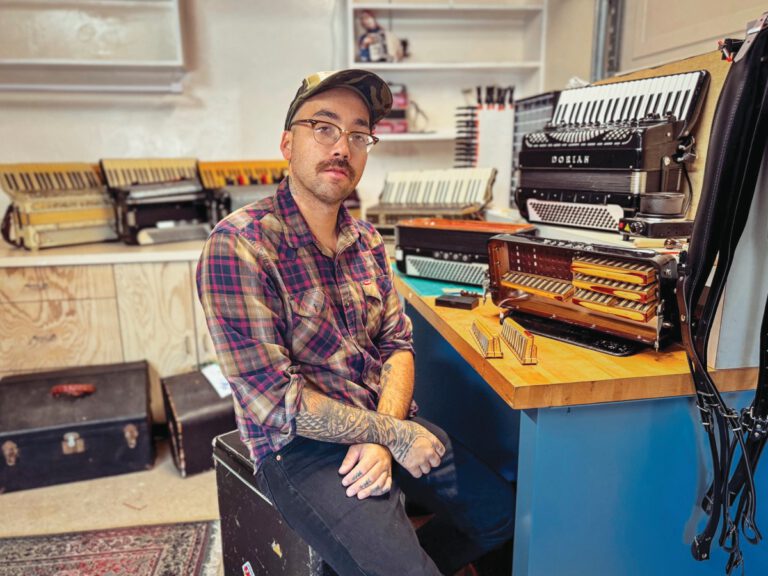
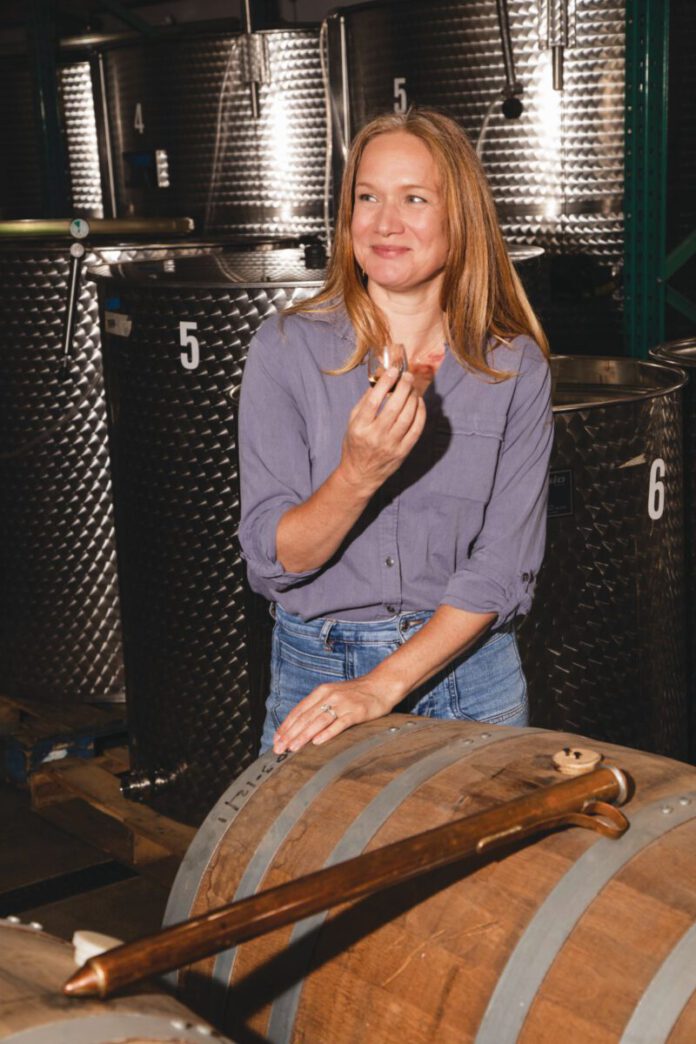
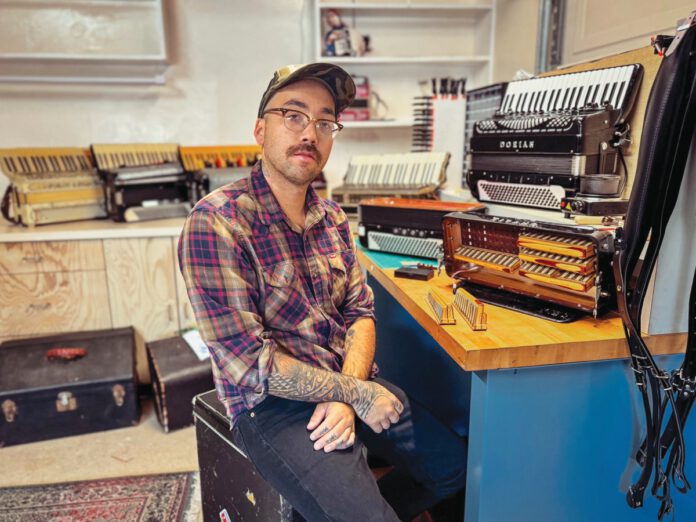
It has been just a couple of months since Brice Giannotti started his job as the new general manager at Santé and 38• North in the Fairmont Sonoma Mission Inn & Spa. 

But the two decades of luxury hospitality, dining and beverage programming under his belt has ensured a smooth transition into this iconic Sonoma destination. And ultimately, “he understands the importance of seasonal ingredients, local purveyors and the stories behind each dish,” the main tenants for the restaurant, says executive chef Chris Kurth. 

In fact, Giannotti was an executive chef himself early in his career at Lucca Bar & Grill, so he understands the ins and outs of a restaurant. Those who have worked with him will say that he is known for his collaborative spirit and mentorship-driven leadership, which will surely guide him in his new role.

Amber Turpin: How did you get into this work?

Brice Giannotti: Honestly, I sort of backed into it. I needed a job when I was younger, and restaurants were the place where hard work actually paid off in real time. I liked the rhythm of service, the personalities and the idea that you could make someone’s day better in a couple of hours. One thing led to another, and before I knew it I was building a career out of something that never stopped teaching me new lessons.

Did you ever have an ‘aha’ moment with a certain beverage? If so, tell us about it.

Yes—and it was pretty simple. It wasn’t a rare bottle or a grand tasting. It was a well-made glass of wine with the right food, in the right moment, where everything just clicked. That was when I realized beverages aren’t about labels or scores—they’re about context, balance and how they make you feel. That idea still guides how I think about drinks today.

What is your favorite thing to drink at home?

At home, I keep it uncomplicated. A good bottle of wine shared with my partner or friends, or a clean, classic cocktail—nothing fussy. After long days, I appreciate things that are honest and well-made more than anything flashy.

Where do you like to go out for a drink?

I’m drawn to places that feel comfortable and intentional—somewhere the lighting is right, the music isn’t fighting the conversation and the person behind the bar actually cares. It doesn’t have to be fancy; it just has to feel genuine.

If you were stuck on a desert island, what would you want to be drinking (besides fresh water)?

Something timeless and calming. Probably a simple wine or a well-balanced cocktail. Nothing too heavy; nothing too precious. If you’re on a desert island, you want something that reminds you of good company and better days.
Fairmont Sonoma Mission Inn & Spa, 100 Boyes Blvd., Sonoma. 707.938.9000. fairmont-sonoma.com.

Your Letters, Feb. 4

Guest List

After the murder of a second U.S. citizen by ICE agents in Minneapolis, United States Attorney General Pam Bondi sent a letter to Minnesota Gov. Tim Walz linking the violence in Minnesota to a demand for complete access to the state’s voter rolls.

Bondi’s reported reason to so politely request the information was so that she could invite all Minnesota’s citizens to her domestic partner’s birthday party. There are those who believe that what’s actually behind her polite request is a desire on the part of her boss, our president, to mildly interfere with the 2026 midterm elections.

Now, come on, people, why would anyone think a man with our president’s criminal record, with only 91 felony counts, and his deep commitment to the principles and processes of democracy, would attempt to rig an election? Really, what kind of person do we think he is?

Craig J. Corsini
San Rafael

No Gold for ICE

Outrage is growing in Italy over the deployment of ICE agents to assist U.S. security operations at the Winter Olympics this month—something U.S. officials say has been common practice at previous Olympics.

The U.S. is losing friends in the EU, and alienating Italy does not seem like a smart play.

American athletes are having to deal with routine premier competition and the hostility the Chump Administration is generating.

Gary Sciford
Santa Rosa

Never Assume 

A Haiku for Renee Good

Man is not Human

His Gun is Reptilian

Death is his Greeting

L. Watson
Petaluma

Sports betting and cryptocurrency are changing our financial landscape

Bitcoin Sportsbook
Published in cooperation between bet105 and the Bohemian Legal sports betting has transformed into a powerful driver of innovation, competition and consumer empowerment. Beyond tax revenue and job creation, the industry’s real strength comes from elevating safety standards, improving user experiences and pushing digital infrastructures to evolve rapidly. With the growing integration of cryptocurrency as a payment option, this positive...

Peter Pan in Wonderland: a Fictional Meeting of Literary Inspirations at Lucky Penny

Alex Gomez directs 'Peter & Alice' now playing in Napa at the Lucky Penny Community Arts Center through Feb. 15.
What’s the cost of childhood fame? Is it always exploitative? How do children navigate being adults in a world that refuses to see them as anything but the child they were? These are the themes of John Logan’s Peter & Alice. Alex Gomez directs the production now playing in Napa at the Lucky Penny Community Arts Center through Feb....

‘A Courage of Poets,’ a Gathering at the State Capitol to Remember Those Killed By ICE

Poets to peacefully gather at the state capitol to remember those killed by ICE.
On Friday, Feb. 6, more than 300 poets and writers from across California will gather on the west side of the state capitol in Sacramento for A Courage of Poets, a peaceable, statewide act of remembrance and resistance.  This four-hour gathering will honor Renee Good, Alex Pretti, Silverio Villegas González and all individuals who have been killed by ICE on...

Poetry Is Real: Found Poets Gig Live at Big Easy Features AJ Houston

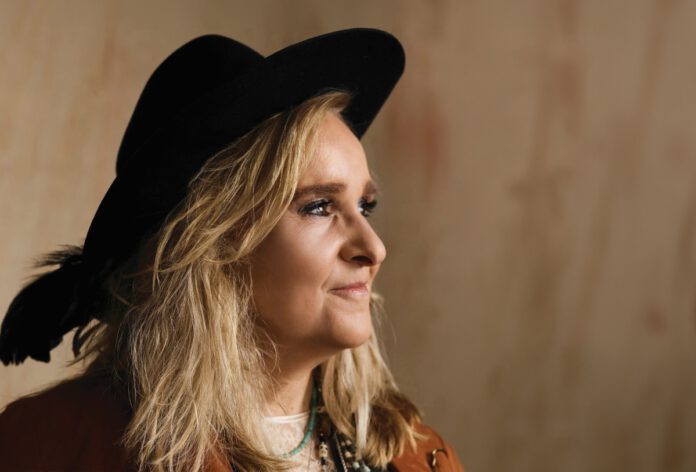
“I think people appreciate the unique value of poetry when performed,” Found Poets' founder Michael Giotis notes. “And that’s our specialty.”
In a culture increasingly mediated by social feeds and mass narratives, Found Poets offers something stubbornly analog: real voices from real people in a real place. Found Poets makes a persuasive case that poetry is not only alive but urgent—and perhaps best experienced in-person. For Michael Giotis, the upcoming edition of Found Poets, on Feb. 7 at Petaluma’s The Big...

The Word We Need: With the World at an Impasse, One Emotion Can Unlock Everything

Cincinnatus Hibbard undertakes to define love and how it addresses itself to the problems of modernity.
Here,  journalist and organizer Cincinnatus Hibbard shares the first chapter of his forthcoming book, ‘Love is The Answer,’ as part of a two-part series in our pages. —Editor “ … Love… Love is the answer—the solution … to everything.” The words were wrenched out of me. That inner critic that sat watch on my words was aghast. Suddenly I was...

Liquid Motion, Thotty McNaughty’s Give & Take

Thotty McNaughty started her adult dance career as a curious student at Bastet Dance Fitness, a school for sensual dance styles.
Bastet Dance Fitness is located in Rohnert Park. It’s situated between a Pentecostal church and a Packard car museum—in what looks to be a battered old Safeway.  “Interesting neighborhood,” I thought to myself. I knocked and entered. Thotty McNaughty was waiting.  As we stood at her ad hoc work station inside the stripper pole dance studio, she made a wholly unexpected...

The Yin and Yang of It: Nothing is Ever Just Black and White

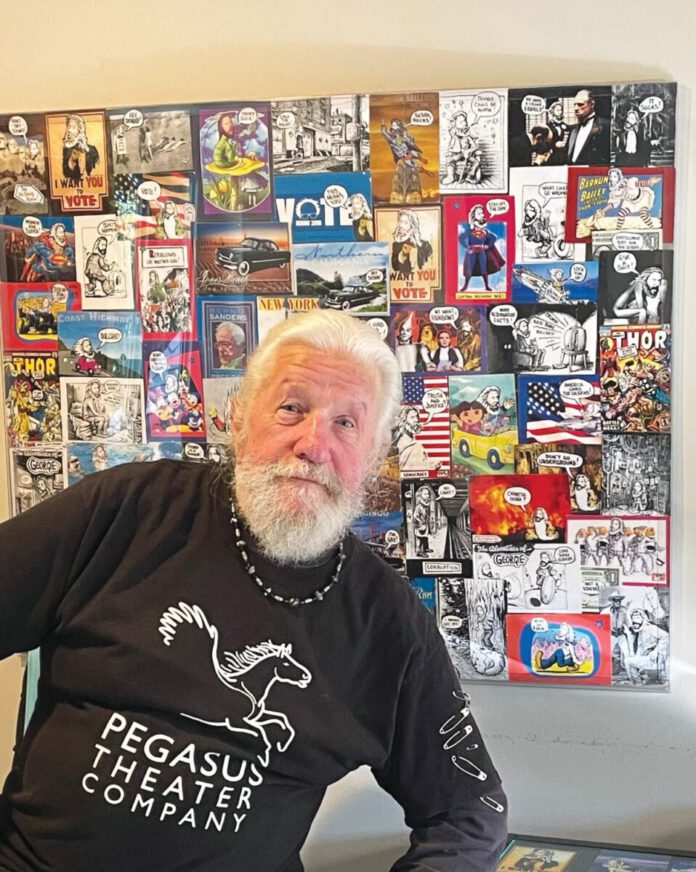
Writer Craig Corsini compares concern about loss of bird habitats to the lack of consideration for human homelessness.
The world is made of opposites Combined in different forms, For things to be otherwise Would violate all sensible norms. There’s some light in the deeply dark There’s at least a little bit Of wealth when things seem stark, That’s the Yin and Yang of it. Smart people do things wrong Untrained minds get complicated matters right, Every short...

‘Tight & Nerdy,’ Burlesque Meets Weird Al Onscreen

Al-Stravaganza, a traveling burlesque show inspired by, and set to, the music of Weird Al Yankovic.
Burlesque sometimes makes for strange bedfellows—a Star Wars-themed performance is an annual local favorite, for example. But something weirder this way comes thanks to a traveling burlesque show inspired by, and set to, the music of Weird Al Yankovic—a show called Al-Stravaganza, which is now the subject of a new documentary film, screening at San Francisco IndieFest this weekend. Tight...

Mission Possible: Brice Giannotti Leads with Intention

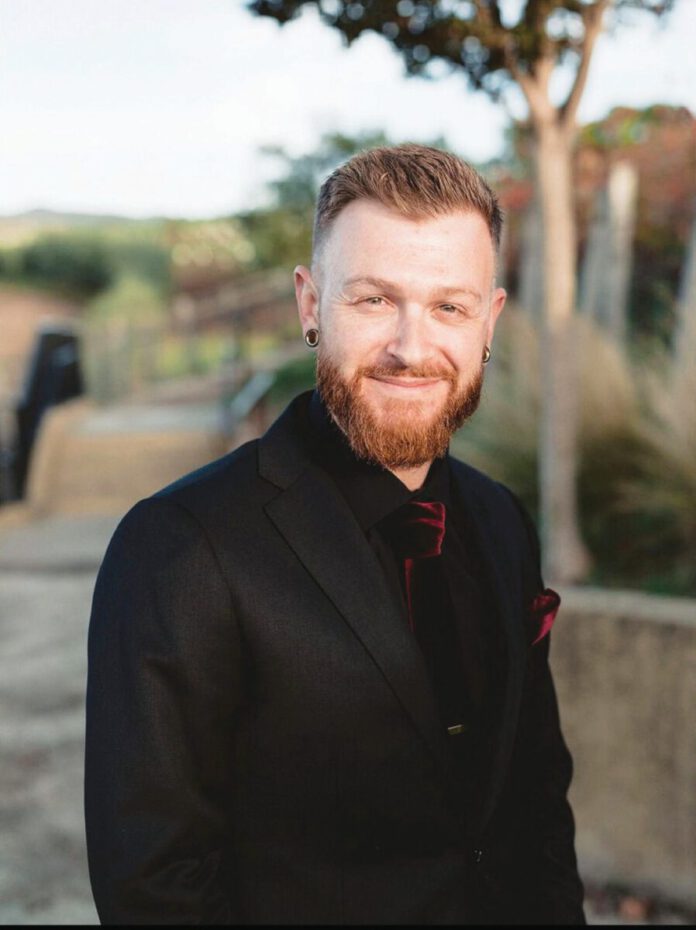
Brice Giannotti recently started his job as the general manager at Santé and 38• North in the Fairmont Sonoma Mission Inn & Spa.
It has been just a couple of months since Brice Giannotti started his job as the new general manager at Santé and 38• North in the Fairmont Sonoma Mission Inn & Spa.  But the two decades of luxury hospitality, dining and beverage programming under his belt has ensured a smooth transition into this iconic Sonoma destination. And ultimately, “he understands...

Your Letters, Feb. 4

Guest List After the murder of a second U.S. citizen by ICE agents in Minneapolis, United States Attorney General Pam Bondi sent a letter to Minnesota Gov. Tim Walz linking the violence in Minnesota to a demand for complete access to the state’s voter rolls. Bondi’s reported reason to so politely request the information was so that she could invite all...
11,084FansLike
4,606FollowersFollow
6,928FollowersFollow