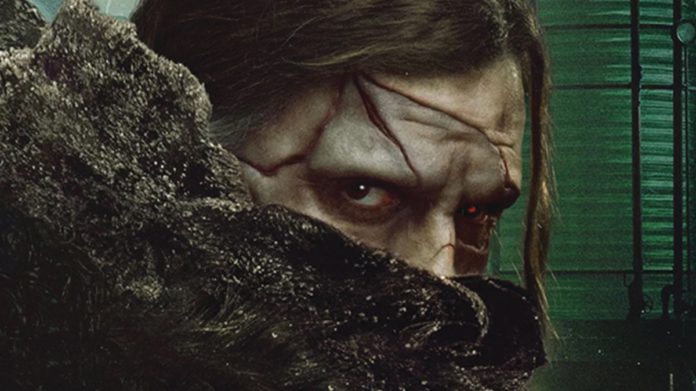
Guillermo del Toro, the director of the latest of many Hollywood adaptations of Mary Shelley’s groundbreaking novel, Frankenstein, has said that his movie is not about artificial intelligence. Wait, the story was about human created intelligence 200 years ago, but not now? At this moment, it has to be.
Frankenstein is a luscious gorefest showcasing the Mexican director’s unmatched ability to humanize a monster on film. The creature is sensitive, emotional and engaged with the world.
The movie succeeds in many ways, but it fails in two. Del Toro ignores the feminist themes of the book—instead focusing on the father/son story—and he neglects to explore the domination of tech in today’s culture, led in no small part by the very masters of technology that Shelley warned us about.
Shelley used her strength as an artist to ask the most pressing questions of her time, as great art must. Despite his protestations, comparisons to the current state of technological development, the dawn of the AI Age, are unavoidable for del Toro’s movie.
“I did want to have the arrogance of Victor be similar in some ways to the tech bros,” del Toro admitted recently on Fresh Air. “He’s … creating something without considering the consequences.”
This comparison must be understood as more than just a model for the character, a crafty way to anchor the actor in a modern arrogance that the audience is familiar with. It cannot be arbitrary because “tech bros” are the exact people in charge of the exact technology that, of all technologies yet to be developed, is the one most likely to run rampant like Shelley’s creature across the face of the Earth.
So when—SPOILER ALERT on a centuries old story—the creature in the movie forgives the man who defied all efforts to regulate his obsessive pursuit of a technology to overcome death and unleashed it into the world with disastrous results, this artist gives tech bros a pass. After an act of forgiveness not in the book, the creature calls the doctor “Father.” This is loaded. The doctor is the father of a new age, of an everliving monster that wrecks humanity—he’s a man whose name will last forever (even if he cannot), only to be forgiven his transgressions, which include the death of his brother and wife, and broken men thrown across the cinematic landscapes.
Shelley’s story was not about her own age, that time when the first experiments with electricity were just taking off, but was about THIS moment, the other end of the technology arc, when the creatures we create surpass us.
Two centuries of innovation lead right here—now. AI is the creature she warned us about. And despite the cultural ubiquity of Shelley’s harrowing masterwork, tech CEOs are behaving just like the doctor did, as self-assured geniuses above society’s guardrails, because men have not learned and they are still in charge. For now.
As if to emphasize the director’s rejection of any critique of patriarchy found in the book, and missing a chance to celebrate this historic artistic triumph of a woman, the film ends with a quote from Shelley—oops, the other Shelley, her husband—and not the author herself, who, as a 18 year old girl in the presence of some of the most famous men of her time, had the audacity to tell a story that would outshine them all.
‘Frankenstein’ by Guillermo del Toro is currently streaming on Netflix.