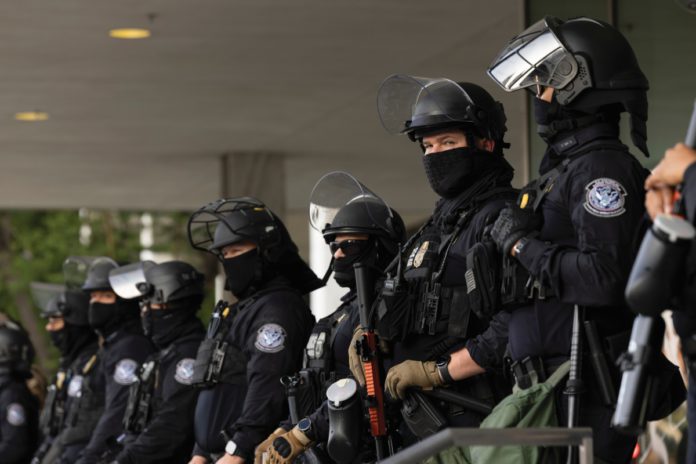
This is the first of a three-part series on the effect of the U.S. Immigration and Customs Enforcement presence in our community. —Editor
Part One: Initiation Into the Fear
My “handler” was a friend of a friend of a friend. That delicate linkage was a conduit of trust.
Trust enough to meet me anyhow; ICE informants had made his work more dangerous. I would need to be tested and mettled before he would introduce me to the undocumented workers who trusted him. They were the story. I wanted to talk to them in the rippling shock of recent ICE deportation raids. The televised raids in the sanctuary city of Los Angeles, in the sanctuary state of California, staged a spectacle, staged for terror, staged to humiliate democratic leaders in their strongholds. As seen on my phone, videos of their protester-beating Gestapo theater had left me in a cold sweat.
I wanted to talk to the undocumented. I wanted to hear their account of things. It had been a near miss in San Francisco, with ICE convoys turned back from The City just days before their expected arrival. The City would have been their base for raids throughout the Bay region—that had been the pattern of Chicago.
My handler, “Esteban,” chose the location for our initial meeting. I thought he had chosen it for his comfort. But stepping into the busy diner, I wondered whether it was intended for my comfort.
It was an independently owned diner off the interstate—the kind one could find anywhere in America. And it served, for the most part, working class whites. The walls of the place were lined with ’40s and ’50s memorabilia and fading family photos. It served nostalgia with its pancakes—nostalgia for an America where, fresh from our great moral victory over the Nazis, we found ourselves the leader of the free world. It was, perhaps, America’s great moment.
The first thing “Esteban” did was turn off my recorder—the reporter’s indispensable tool. Over a short stack, he told me his story. He was an advocate, descended from farmers. He told me with pride that his father had marched alongside Cesar Chavez. And he told me with some bitterness that he had spent his long life fighting for some of the same concessions Chavez and his father had fought for—and failed to win.
In turn, I told “Esteban” of my intentions—to print the words of the undocumented in the public record, to document their hope and fear, to present the appeal of their common humanity. And to rally the undecided to fight—for them.
He paused; he seemed satisfied by my earnestness. As a reply, “Esteban” told me his conditions. There would be no names in the article. Even though he was a publicity-courting public figure, I would not use his real name. I would not even learn the real names of the people I would interview. I would publish no identifying details. I would not even identify the county in which my interviews took place.
He cleaned his plate. “We don’t want Trump to think this is a hotbed,” he said. (Even allowing for some guesswork about the location, it isn’t a hotbed by any reasonable measure. In California, about 7% of the population lacks legal citizenship or a visa—do the math for your own town. Nationally, the figure is closer to 3%, or roughly 11 million people without papers.)
As he relaxed somewhat, “Esteban” alluded to clandestine meetings of immigrant’s rights groups held in The Central Valley, and secret meetings with powerful state officials.
His precautions and activities reminded me of what I had read about the
French underground. I believed that was a funny thought at first … preposterous. I began to feel excited and then overexcited by “Esteban’s” vigilance, his paranoia—and as he spoke, I began to feel the fear. It chilled me.
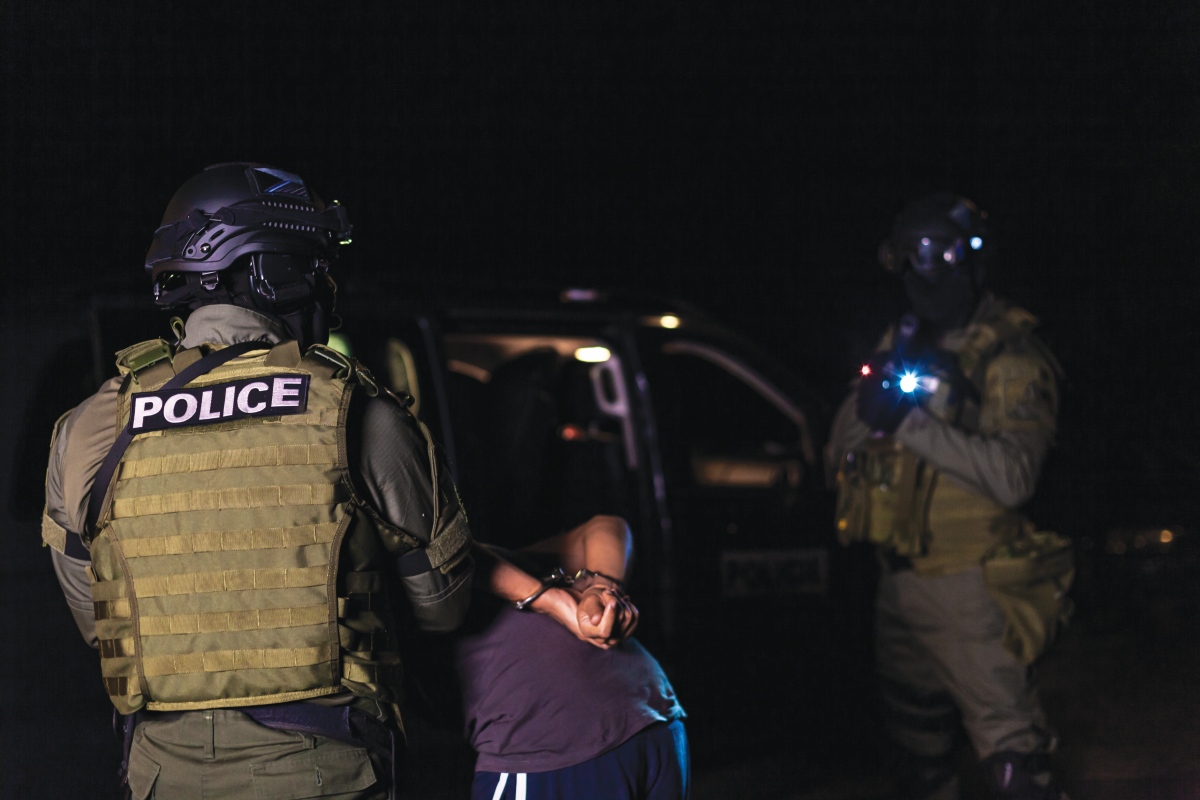
“Esteban” wanted me to feel the danger—to know what was at risk—his co-workers, his friends and neighbors suddenly disappeared into unmarked cars in lightning raids on The Home Depot or after school pick-ups—their children looking helplessly on.
Here I will put in a fact—related to me by Corazon Healdsburg, an immigrant resource operating in Wine Country. Because most immigrant families are of “mixed legal status,” with “legal” children or grandchildren and undocumented parents or grandparents (60% of undocumented people have been in the United States more than 20 years), detainment and deportation commonly results in the breakup of families. What to do with the small children left behind has become a complex problem.
I stopped eating. As much as “Esteban” wanted to test me, he wanted to steel me. This first meeting was my initiation—my initiation to the fear. …Welcome to the underground.
Serving America
We set our date for the interviews at an undisclosed location. Settling his bill “Esteban” stopped, and leaned toward me over the table. In a hard and confidential voice he said, “I don’t come here for the coffee, I come here for the workers,” indicating the back of the house with a look over my shoulder. “I happen to know that they are all working without papers.”
With those words he left me, and I sat in our booth for a quiet while — digesting this. Across the United States, undocumented workers are key to our restaurant industry and the marginal profitability of those businesses that survive that industry’s fierce competition. They are keystone because undocumented workers work harder—for less pay, for longer hours, with fewer days off, and fewer benefits. They do the hardest work, the least desirable work, and the most dangerous work—with fewer safety precautions. Immigrants don’t work hard because they are hard workers. No one likes to work hard. They work hard because they have to—because their precarious legal status lends itself to economic exploitation. They can’t complain because they fear reprisals. Any boss or landlord can report them to ICE. They work hard out of fear.
Across the United States undocumented, immigrant labor is key to the restaurant industry and the hotel industry, the janitorial industry, the tourism industry, the construction industry, the homebuilding industry, the transportation industry, the cattle industry, the egg industry, the dairy industry, the produce industry, the wine industry, and manufactures.
They—we—are dependent on them. They are the lynchpins of our business models, and their forcible removal en mass would bankrupt and fold hundreds of thousands of small and medium businesses across the US overnight (not to mention billion-dollar companies ). At bottom, we need immigrants. America needs them—just as much as immigrants need us. Losing them would be a blow to the economy as bad as Trump’s tariff trade wars with our allies or the bursting of the AI stock bubble.
It was off-putting to think about the working conditions of immigrants. I tried to comfort myself the way generations of Americans have comforted themselves as they gazed at sweat shops and tenements. This was the way of America—nation of immigrants, and secret engine of its prosperity. Each generation, new people would arrive, washed up from some distant war-torn shore. They would be begrudgingly tolerated , and for a generation they would work—hard in our worst jobs—but their children would prosper. Their children would become citizens, and live out the American dream. It was like that for my people, Irish fleeing from a genocidal famine.
It happened each generation—or it had. The grand bargain was breaking down. The American dream was dissipating like thin smoke. We were sliding backwards now. I for one would never own a house.
Sitting in my booth, looking across the predominantly white working class patrons, to the predominantly brown and undocumented waitstaff, line cooks, and dishwashers, I began to wonder whether the immigrant underclass had disguised how much the working class has fallen across thirty years of falling wages and a ripping safety net. We are now in the age of the billionaire—and now, the trillionaire (Trump’s ally Elon Musk).
Whether or not he had intended it, the 50’s dinner that “Esteban” had taken me to, serving Americana — serving America, was a working model of America today.
Terror
“How often do you think about ICE?” I asked “Juan,” the gruff old ranch hand. He paused, reckoning, and replied, “Maybe 50 times a day.” That shocked me—was he that frightened? He had been stoical, like a rock, even when he had told me that he had not seen his wife or his children living in Mexico for 23 years. There were grandchildren now—grandchildren he had never held. His eyes were distant. Perhaps, looking inward, he was trying to see them now.
“Why don’t you go back to see them?” I asked, deeply moved. “I cannot re-cross the border,” he said. There is no work back home. My family, they need me here—working.”
We sat at a picnic table under a tree beside a field, where undocumented farmworkers volunteered after their work shifts, farming organic vegetables for the local food bank. Despite paying local and federal taxes, and despite their poverty, undocumented immigrants are ineligible for Calfresh foodstamps—as well as Medicaid medical insurance, disability insurance (though they work some of the most dangerous jobs) and Social Security retirement checks. They might be keeping those safety net programs solvent for us.
The winter crops were in. The workers were tending two types of onions, garlic, two kinds of cabbage, Brussels sprouts, jicama—and strawberries for the small children to pick. “Why do you work here, after working so hard in the vineyards all day?” I asked “Ernesto.” “Because I know hunger,” he said. “I know what it is like…”
“Esteban,” my handler, brought undocumented immigrants over in pairs for their comfort. “Marisol,” a local Latina politician, translated for me. To ease their evident anxiety, I told them that my recording of their voices would be destroyed after I had written my “historia.” I thanked them for their bravery.
“Sophia,” a vineyard worker, is married to “Rodrigo,” a construction worker who commutes into The Valley. “Sophia” told me of the late night argument when she and her husband decided they would stop going out all together—no more parties, no more weddings, or holidays, or even church. To reduce the danger of being taken by ICE, they were effectively choosing to avoid all concentrations of brown-skinned people. It was a choice to cut themselves off from their community, like some desperate surgical amputation.
That same decision has been undertaken by tens of thousands of families in California, and it has had the general effect of breaking up Latino communities, and driving them out of public.
“Was this the intended design of Trump’s mass deportation campaign?” I wondered to myself.
“Maria” and her family have become desperately isolated in their house. Despite the new door cameras, and new locks, and the front made up to look like no one was home, she still didn’t feel safe. …Is it even home if one doesn’t feel safe?
She tries to appear calm or brave for her four young children, but the fear was eating away at her. She was over-thinking the raids. She was obsessing. It was giving her stress headaches. She could barely sleep—even after days of hard farm labor. And when she slept, she often woke from nightmares of faceless men with guns pointed, her heart racing.
“What about when you absolutely need to leave the house, for groceries, or work, or to go to the hospital?” I asked. “Sophia” told me she hated to leave her house now, and when she left, she hated to leave her van—but she had to feed her babies.
So now she goes to Safeway this way: First she drives right by the market to have a first scan. Then she circles within the lot looking for the generic cars with unusual or unmarked license plates favored by ICE. Then she parks and waits, and waits, and watches—searching hard. “Is it safe? Is it safe?” she asks herself, gripping the wheel.
This is terror.
“Lupe” talked about a pain she had in her pelvis last summer. For months, the pain grew and grew intolerable, and still she told no one—she knew that her friends would try to make her go to the emergency room—but the hospital wasn’t safe from ICE. What was this pain stabbing up like knives from her pelvis to her navel—“Was it a cancer?” she wondered.
Finally, she admitted it—there was no hiding it; she would pause in her farm work as she breathed through the unbearable pain, swooning. Her friends and family were begging her to go, begging her to go, but she wouldn’t go—she would be taken by ICE. What would happen to her children then? Finally, she was taken in a faint for emergency surgery, by friends with H-2A papers.
This is terror.
It is well to remember that, as yet, our region is one of the least affected in the nation. And still the levels of fear are this high. According to Gina Garibo, approximately 90% of call-in ICE sightings she receives to her tip line in “Lupe’s” area are false-alarms driven by a general panic.

Garibo is an immigrant defense organizer at North Bay Organizing Project, one of the 22 “Rapid Response” networks in California that tracks ICE and sends legal observers to monitor raids or public celebrations where the chance of raids are high. They publish only the verified sightings. But still, panic is spread over chats and social media channels—which is especially bad for their social media-obsessed children.
“Sophia” fears for her teenage daughter, “Ana,” who was already already given to panic-attacks. Like many Latino youth with undocumented friends and relatives, her social media algorithm is filled with shaky cam POV shots of raids and arrests at homes and school drop-offs, or ICE contingents parading in full battle regalia down residential streets, guns pointed, or smuggled videos of immigrants deported to war zones (like South Sudan) or hell-on-earth prisons (like El Salvador’s CECOT prison).
As they’re often missing dates and locations, children frequently react to these videos as if they were happening here and now. “Ana” doesn’t want to lose her mother, and so she watches these traumatizing videos in her teenage bedroom obsessively, looking for tips to evade ICE.
Again and again, throughout my interviews, the first concern and greatest fear of these people was not what will happen to themselves, but what will happen to their children if they are suddenly abducted at work or on errands. Every time a family member fails to reply to a text, these fears choke them.
The older children would be better able to take care of themselves, my interviewees agree. But the younger ones, possibly less affected by the panic, are more helpless. “Who will care for my son?” when she is taken, asks “Maria.” “It’s hard for him to understand; he’s only six years old.” Sensing his mother’s distress, the boy came up to where we were sitting in the winter shade and pressed his cheek against her cheek, smiling at us all. As he left, he slipped her phone out of her pocket.
Bad Men
“Please—please tell the president—have compassion for us,” she said—imploring me, crying now. Indicating her son, she added, “He is an immigrant too. We are not here to hurt anyone. We just want to work—to give our children a better life…”
“Maria’s” plea cuts across the Trumpist narrative that most immigrants crossing the border illegally are “rapists,” “murderers” and “terrorists”—not the salt, but “the scum of the earth.”
And the hard data rips that narrative to tatters. Per a 2024 National Institute of Justice report, undocumented immigrants have a lower rate of violent crime convictions than native-born Americans. That study recently disappeared from the Department of Justice website.
It can therefore be argued that the entry of undocumented immigrants makes America safer—as well as richer. Their deportation makes America less safe. And their deportation by rights-violating, terror tactics makes Americans less safe.
Per The New York Times, the push to make more arrests faster has “necessitated” a major mission shift in the Department of Homeland Security, in which upwards of 15,000 agents have been shifted from their regular duties (NYT, Nov. 16, “Homeland’s Core Missions Disrupted by Deportations”; the story was based on interviews with 60 past and present agents).
This shift to deportation work has caused slow-downs, stoppages and/or the unraveling of cases against “high level” child sexual predators, sex traffickers, smugglers, scammers, international criminals, embargo evaders and international terrorists. As the deportation arrests surge, the true bad guys are getting away.
The Department of Homeland Security was established in response to 9/11 terror. But under Trump, the antiterrorism department has itself become the department of terror.
Now, the Trump administration has accused some of the detained immigrants of new, low level crimes in some of these same categories, but the “expedited removal” of its new deportation courts puts these cases into doubt.
Per the National Immigration Law Center and Harvard Civil Liberties Law Review, “expedited removal” seems to require Miranda rights violations, denial of legal counsel and the very right to defend themselves against heinous charges—if there is indeed any actual evidence of wrongdoing. Guilt is assumed.
The injustice of these proceedings has drawn official censure from Volker Turk, the UN high commissioner on [unalienable] human rights. Turk stands on ethical grounds. On religious grounds, the entire deportation campaign has been criticized by Leo XIV, “the American Pope,” moral leader of the world’s 1.4 billion Catholic Christians.
America was once a moral leader too, and that moral standing was of key importance to our power and strategic standing. The deportation surge is making America weaker and less safe in the world. And everywhere, dictators are on the march.
Learn more at linktr.ee/iceterrorANDamericandemocracy.