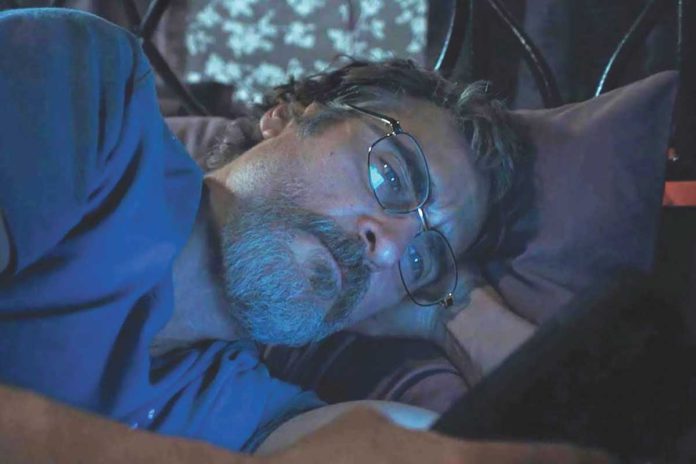
See Eddington? If the answer is no (or even “What’s Eddington?”), don’t worry—few people did.
A sprawling, cynical and brutally bleak comic Western from horror film auteur Ari Aster, Eddington tells the story of a fictional town going through the very real crisis of the Covid pandemic in the summer of 2020.
Most who’ve seen the film, whether they love or hate it, agree that it conjures a frighteningly recognizable atmosphere of paranoia and political polarization. In Eddington, nearly every character is glued to their smartphone, hypnotized by a constant stream of clickbait and conspiracy theories. (Aster has joked that his pet name for the film is Phones: The Movie.) All of this, perhaps all-too relatable, alienated audiences: At most U.S. theaters, Eddington was pulled from screens just two weeks after its July 18 release.
Far more people have already seen Paul Thomas Anderson’s pulsating political action drama, One Battle After Another. Like Eddington, Anderson’s film has been described by critics as indelibly capturing our current political moment. Battle’s star, Leonardo DiCaprio, has described the film as “holding a mirror up to society now, the divisive nature of where we’re at.” He’s also said that Anderson initially wanted to avoid showing smartphones in the film completely.
Aster would surely find these two statements totally contradictory: How can a film hold a mirror up to modern society without being all about smartphones, like Eddington?
Here, we may get some insight into why Eddington alienated while Battle is shaping up to be a modest hit. Eddington, set so firmly within the real recent events of 2020, hinges on the anxiety that in our current moment we are on the brink of some imminent doom—civil war, the AI singularity, etc. This gloomy thesis is situated in the unpleasant details of a very specific, very recent point in our actual history. It’s only honest, and accurate, for every scene to be populated with smartphones—our depressingly ubiquitous technological addiction.
Battle tells a more universal story. Yes, it’s full of reminders of our current moment, but at its core it’s a story of love, betrayal and family that could take place at any point in history. While Eddington is gripped by the fear that this point in time is uniquely perilous, Battle says that the more things change, the more they stay the same. And maybe the latter attitude is more appealing to a cinemagoer looking for some escapism on the big screen after a long day of being terrorized by the small one in their pocket.