Salad Days

0

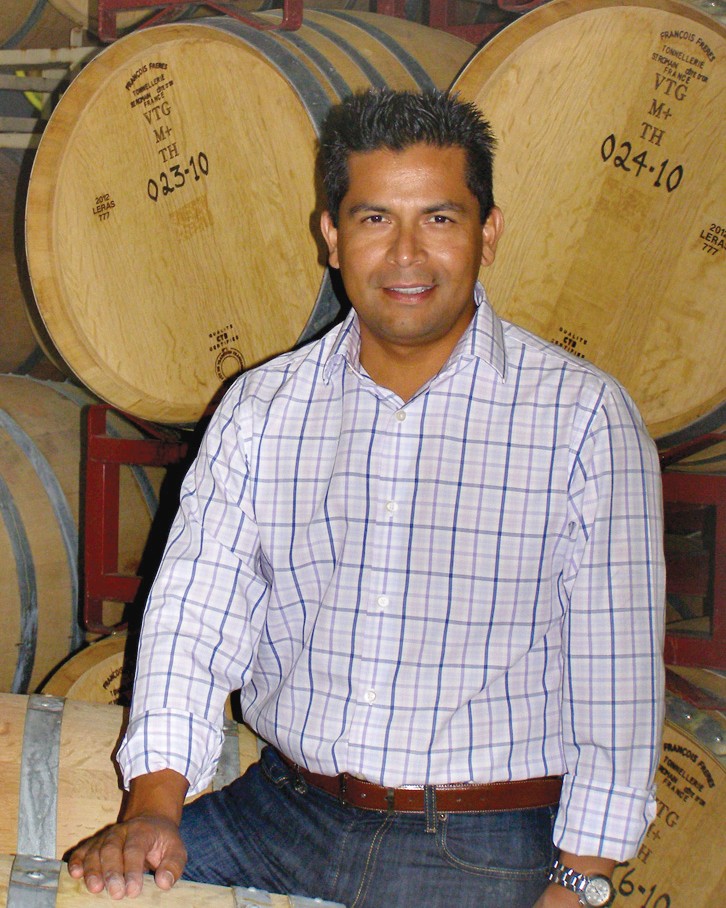
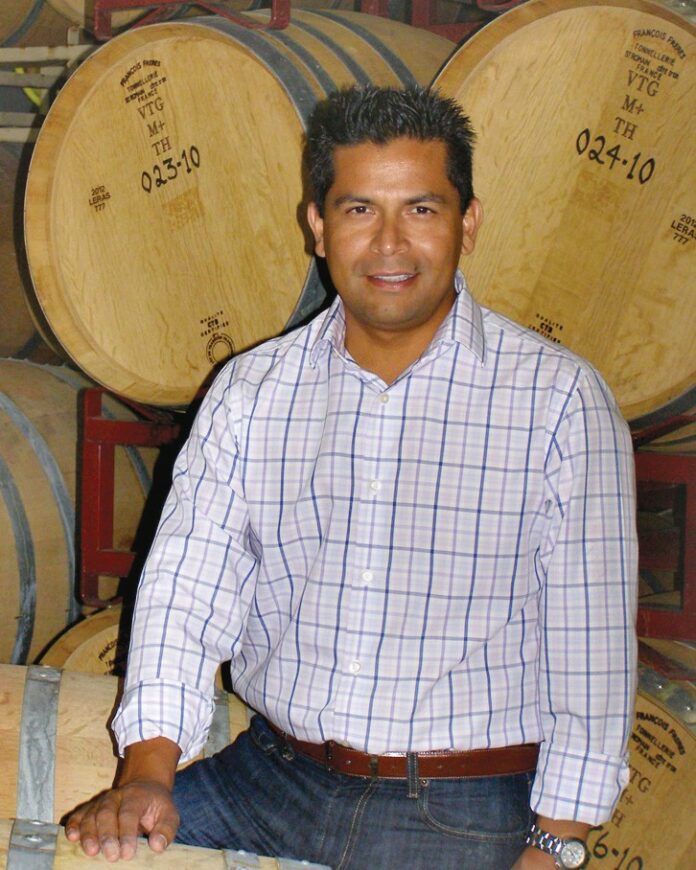
The university president and every undeclared freshman at Sonoma State University have at least one thing in common: they’ve probably all eaten salad grown by environmental studies junior MacKenzie Hart.

Last year, Hart started a program with grants from both the California Rare Fruit Growers and SSU to grow food on unused plots of land in residential communities outside of the school. “I just left about 200 flyers around the neighborhood,” he says, and now has three plots of land tended by seven students, growing several varieties of lettuce.

Now that lettuce supplies much of the salad served on campus.

The program is making a profit and giving students in the cafeteria (and diners in the fancier University Club restaurant) a chance to enjoy student-grown produce. “One of the coolest parts about this project,” says Hart, “is the stuff lasts longer because I’m delivering it usually within the hour of it being picked.”

All the student owners of the gardens have jobs in addition to working the land. “I had this desire to be in a production-based space because I wanted to test how much a person could produce in their spare time, in the time we spend checking Facebook,” says Hart. With a greater variety of veggies planned for the spring, he’s hoping the trend catches on and other students will like—or dig—the idea of gardening.

Letters to the Editor: February 27, 2013

The Post Office

Thank you to the Bohemian for the great article on the Post Office (“A First-Class Institution,” Feb. 27). This false “crisis,” brought on by the federal government’s debilitating demand that the USPS pre-fund its health benefits 75 years into the future, is one of the biggest lies of our time. No other papers seem willing to tell the truth. Instead, they praise the so-called good idea of cutting Saturday delivery without saying the real reason the post office is in trouble: it’s getting robbed.

Petaluma

More on Mate

Booooo! to the uninspired cover story written by Jay Scherf on Mate (“Bottling the Tradition,” Feb. 13). His angle of traditionalism from the Argentine perspective seemed to be just a thinly veiled dislike of the Guayakí company. It was petty and very unsupportive of a great local company.

Santa Rosa

Sorry to the Guayakí supporters, but this was a great and very funny read. It’s worth looking at how the people who first made use of yerba mate regard what we’ve done with it. Reminds me a bit of how tobacco was used traditionally, and what we’ve done with it since.

Via online

Jay Scherf’s article seems to me more an indictment of the American consumer than of Guayakí’s marketing. Think about it. If Guayakí could manage to sell traditional gourds and shared straws to a public that is addicted to single-use bottles, it would be a miracle! The fact is that we in the U.S. are spoiled. One need look no further than the clogged streets of Sebastopol to find hundreds of so-called environmentalists behind the wheels of cars, who are too lazy or entitled to ride their bikes to Whole Foods to buy beeswax soap and hemp beer.

As the article points out, Guayakí is on the more conscious end of drink manufacturing, with rainforest-protection efforts and work with local farmers. Those who think the article was a criticism of Guayakí are probably just trying to obscure the real target of their own consumerist patterns.

Cotati

The SRJC Job Board Is Free

Contrary to a reader’s letter published on Feb. 20, the SRJC job board is in fact a free service to all employers, current students and alumni of SRJC. The SRJC is committed to the success of our students, and committed to support the community at large. In fact, in fulfilling our mission, we are dedicated to exercising our public responsibility for sound resource development and use.

One such resource is the SRJC job board. The Career Development Services Department and Student Employment are able to expand our services by contracting with College Central Network. Unfortunately, Tamara went directly to the College Central Network site rather than visiting the Santa Rosa Junior College student employment website. The College Central Network does charge to list open positions to individual employers—and this is why the SRJC pays an annual fee to access its services. By paying this fee, employers, SRJC students and SRJC alumni can use College Network free of charge. It gives all registered users access to a nationwide job search, or jobs specifically listed for the communities in the SRJC service area. As a matter of fact, we have student employees on hand to support any business that might have trouble navigating the employer registration and job-posting services.

We are thrilled that Tamara’s internship turned into a permanent position—what a great SRJC success story! In order to create more such success stories, we will be holding a career and internship fair for current students and alumni on April 24. The theme is “Put Your Education to Work.” Everyone is welcome to contact us for more information at 707.527.4941.

Santa Rosa Junior College

For a Dancer

I know Erma Murphy personally, and she is just such a delight to work with that it is no wonder she has arisen to such a level of measurable success in the industry (“Not Fade Away,” Feb. 13). I am so proud to know her and call her my friend. She is a true treasure to this community.

Via Online

Write to us at le*****@******an.com.

And the Winner Is . . .

0

Halfway through last year’s Stage One Theater Arts awards, held annually in downtown Santa Rosa, a curious passerby stopped to take in the scene at the Glaser Center, where a merrily multicolored crowd, youthfully dressed to the nines, was milling around the lobby during the show’s intermission. Once informed he had stumbled upon the Stage One Theater Arts awards, the inquisitive gentleman pondered that information for a moment.

“Stage One. Stage One,” he repeated, eventually adding, “That’s good. There’s still time to find a cure.”

Created five years ago by actor-writer-director and SSU graduate Lito Briano, the SOTA awards honor excellence in Sonoma County theater. But they were initially designed as an on-campus celebration of Sonoma State University’s theater arts program.

“I just wanted to create an extra bit of excitement and energy,” Briano says. “From the beginning, I envisioned it as something that might someday reach beyond SSU to the entire theater community of Sonoma County.”

The following year, Briano took the SOTAs off campus, and began the long, slow process of turning them into something the entire community could embrace.

“It’s a work-in-progress,” says Briano, who admits that some of the youth-quake shenanigans of the first few years—co-hosts in boxer shorts; musical numbers in questionable taste—might have been less elegant than they were (undeniably) crowd-pleasing. This year’s choice of host, Sixth Street Playhouse artistic director Craig Miller, should lend some extra class and credibility.

As for the awards themselves, with nominations and voting patterned after the Academy Awards, Briano has made a huge effort this year to increase the voting membership by reaching out to every theater company in the area. From the original 20 theater students who acted as members of the Stage One Theater Arts Awards Academy, the total SOTA membership now numbers 92 people and counting.

Still, there are some major players in the Sonoma County theater community who prefer to sit the SOTAs out, concerned that the awards don’t accurately represent what’s going on in the area. Winners, for example, tend to be those shows presented by the area’s younger and newer theater companies.

“There are awards, and then there are awards,” says Elly Lichenstein, executive artistic director of Cinnabar Theater. Lichenstein declined the invitation to become a voting member, though Cinnabar’s shows—and Lichenstein herself, who gave one of the year’s best performances in So Nice to Come Home To—are still eligible for a number of awards. “My feeling about SOTA-type awards, including Best Of awards and all of those things, is that they tend to be a bit too self-congratulatory. ‘Vote for me! Vote for us! Tell all your friends to vote for my performance!’ That doesn’t have any real value for me.

“I can’t in good conscience call my theater company ‘the award-winning Cinnabar Theater,’ if winning that award really just meant I was the one with the most Facebook friends.”

In fairness to the SOTAs, the Facebook scenario Lichenstein describes better fits the Broadway World Awards, in which anyone at all can log on and submit a vote. Though membership to the SOTA Academy is fairly easy to obtain for those in the theater scene, it isn’t the kind of operation where friends and family can affect the outcome of the vote.

“I do think that theater awards can have value,” remarks Beth Craven, artistic director of Main Stage West theater in Sebastopol, and a former associate professor of Theater at SSU. “Awards ceremonies can rally the troops and get your patrons excited, and I do think it can be a good thing.”

According to Craven, what the SOTAs need to do next is establish stricter criteria for voting members, requiring each voter to see a minimum number of shows at a variety of theater companies. The Bay Area Theater Critics Circle, in comparison, requires members to see a minimum of 40 shows per year, and no one is allowed to vote for a show they did not see. Unfortunately, the Critics Circle awards rarely ever honors shows north of Petaluma.

“There are ninety-something shows happening every year in this area,” Craven says. “I try to get out and see as much theater as I can, but last year I never made it to SSU to see anything they were doing, and I doubt many of them made it to Main Stage West, so I don’t feel it would have been fair for me to be deciding what was the best in Sonoma County.”

Ultimately, though, according to Briano, the SOTAs were designed to be less about winning and losing than about celebrating Sonoma County theater and theater artists, new and experienced, young and old.

“The SOTAs are a great big party,” he says. “It’s how theater artists get together to support all of our efforts. Basically, it’s just a way to have a good time together.”

Brooklyn Angel

0

It would seem only natural that Carrie Rodriguez became a songwriter. After all, songwriting is in her blood. But as the daughter of David Rodriguez, an acclaimed singer-songwriter, Rodriguez says the connection to her father made her hesitate exploring her songwriting talents.

“If you’re the kid of someone who’s known for what they do and they’re really good at it, which my dad is—he’s a very renowned songwriter—you don’t want to go there,” Rodriguez says in a phone interview. “It’s a little intimidating.”

But her plans changed in 2001 when Rodriguez, then performing in a band called Hayseed, was spotted by Chip Taylor. Taylor, who wrote “Wild Thing” and “Angel of the Morning,” offered to take Rodriguez under his wing—and on the road.

This partnership led to three albums as a duo, and Rodriguez’s turn as a vocalist and songwriter with the 2006 album Seven Angels on a Bicycle. The CD gained enough notice that Rodriguez landed a deal with major label EMI Records. But almost as quickly as she stepped up to the big leagues with her sophomore album, She Ain’t Me, Rodriguez was dropped from the roster.

“So much of my early musical career was a whirlwind. It happened so quick,” Rodriguez says. “It left me kind of just wanting to catch my breath and wondering, well, I’ve enjoyed all of this, but what is truly my voice, when it’s not being influenced by these amazing songwriters and record label executives who are hoping for me to have a hit. I needed some time to figure out what it all meant.”

She bought herself some time by doing a covers record, Love and Circumstance, which helped her reconnect with her musical roots and figure out her next step as a songwriter and solo artist. With her latest album, Give Me All You Got, Rodriguez returns, sounding more confident and willing to stretch beyond those roots.

“Devil in Mind,” one of a pair of songs Rodriguez co-wrote with Taylor, is a gritty, spirited tune with a bluesy chorus and bits of rock and folk elsewhere. “I Cry for Love” is an edgy vocal tour de force that combines blues, rock and country. The gently swinging “Tragic” has a bit of torch song jazz in its smoky, late-night sound.

On her first tour in support of Give Me All You Got, Rodriguez is touring only with multi-instrumentalist Luke Jacobs, and says the variety of instruments she and Jacobs are able to play keeps things fresh.

“We can really take liberties that you can’t take when you have drums,” she says. “So we can stretch solos out in different ways, change tempos. Usually it sounds good.”

The Seedlings

0

At Barnard College, the all-woman’s school in New York, Judy Butterfield hunkered down with history. But once she graduated, she came home to California and embarked on a three-month internship at Green String Farm under the tutelage of the legendary Bob Cannard, who has educated more organic farmers than any other farmer in Northern California.

Now 23, Butterfield lives with friends on True Grass Farms in Marin County and works at Grow Kitchen—a new West County hub for food, gardening and media on the outskirts of Sebastopol—where she weeds, mulches and struggles to stop soil erosion. She’s fast becoming a jill-of-all-farm-trades, though she says she “cowers and wonders at the bigness of it all.”

At Green String, she worked with piglets and rabbits, and as a Woofer in France, she acquired agricultural and communication skills. “I’m still a novice in the farming world,” she says. “In college, I learned how to deconstruct everything. I realized that I wanted to make and grow things and live in and with the landscape. That’s what I’m doing now.”

At a recent Mardi Gras dinner, Butterfield joins a lively group of two dozen young farmers and ranchers—nearly all of them novices under the age of 30—at Grow Kitchen, where they eat scrumptious gumbo and white rice made by Matthew Elias, the creative chef at Saltwater Oyster Depot in Inverness. I don’t see an ounce of fat on anyone in the room, nor a fatty entree on the large wooden table where potluck salads and pastas are arrayed. A lean, but not a mean group, these under-30 farmers eat meat proudly and raise healthy animals on farms such as Green Valley Village, Pocket Creek, and Green String—from Valley Ford and Petaluma to Graton and Occidental.

The evening brings Judy Butterfield together with Evan Wiig, Eliza Murphy, Guido Frosini and their friends and co-workers. As many women populate the dinner as men, many in jeans and flannel shirts, a few in overalls and work boots, and everyone wearing Mardi Gras beads. There isn’t a wallflower in sight; one and all converse intensely in twos and threes about food, farming and the art of slaughtering pigs, rabbits, ducks, chickens, cows and the high and mighty hog.

Hard-working realists, they share information about pasture land, pig genetics, the best breeds of chickens, and they talk about scythes, hoes, pitchforks, shovels and tools for picking apples and for peeling them. Equipped with iPhones and laptops, they’re the most plugged-in agriculturalists in human history, and unabashedly candid, too. No one I talk to uses the euphemism “harvest” that I often heard just a few years ago when I visited farms and ranches in Marin and Sonoma to gather information about the men and women who raise organic beef and boast about their beloved cows. Slaughter—not harvest—is the word that echoes tonight across Grow Kitchen.

From 2006 to 2008, when I made an eye-opening farming odyssey across Northern California, most of the young agriculturalists I met were fanatical about growing delicious carrots, delectable peas and the sweetest of melons. That was then. Increasingly, the new batch of back-to-the-land farmers are raising animals organically and sustainably, and, when their beasts are ready for market, they’re cutting heads off, butchering and carving up carcasses. They’re not a squeamish lot afraid of a little blood, mounds of manure or mending fences on bitter cold February mornings. (Not surprisingly, they’re inspired by Zazu’s Duskie Estes and John Stewart, who work culinary wonders with kale, fava beans, sorrel and more, and who bring out the beauty of bacon and pork belly.)

More than any other person in the room, Evan Wiig, 26, gave birth to this Mardi Gras meet-greet-and-eat at Grow Kitchen, which is owned and operated by entrepreneur par excellence, Jeffrey Westman. Wiig also knows how to market. Until recently, he sat at an editor’s desk at Rowman & Littlefield, the New York publishing house. Now, he helps raise black Angus cows and Blackworth hogs on the spectacular 1,000-acre pasturelands at True Grass Farms.

True Grass Farms is managed by Wiig’s longtime pal Guido Frosini, who was born in Florence, Italy, speaks fluent Italian as well as English, and who wants me to know that he was “baptized in Oakland.” Though he wears a faded T-shirt and jeans, Frosini looks as though he might model Armani suits. If Madison Avenue wants a sex symbol for another “God Made a Farmer” commercial, he surely belongs at the top of the list.

At True Grass, which has been in his family since 1867, Frosini and the crew aren’t just raising farm animals and producing USDA-certified meats; they’re also aiming to “rejuvenate” the fields along the Estero Americano that were severely damaged by decades of overgrazing. To borrow a cliché, they’ve chosen a tough row to hoe, and yet it’s spiritually uplifting and deeply satisfying.

Like Butterfield, Westman and Frosini, Wiig feels a keen sense of connection to the community. “I think I can speak for most of us when I say that we want to blend consumers and producers,” he tells me. “When shoppers go to a market, such as Whole Foods, they usually depend on labels for accurate information about what to buy or not buy. We’re not so much about labels as we are about conversations. Talk to us, and we’ll tell you about our chickens, eggs and pork. You’ll learn much more, I think, than you’ll learn when you just read a label. You’ll connect to the farmer, the land and the animal he or she raises.”

Butterfield might well be, in her own words, a “novice.” Hell, once upon a time, master farmer Bob Cannard was a novice. Like most of the under-30 crowd at Grow Kitchen, Butterfield has the bigness and boldness of the novice, and the novice’s sense that anything and everything is possible. The day after we meet, she sends an email in which she writes, “Six months into farm life, I still have that feeling you have when you’re shaken awake from a very vivid dream in which you’re running fast from nothing and the winding streets appear as if from nowhere.”

What would Bob Cannard say to Butterfield and today’s novices in fields and slaughterhouses? Having heard Cannard wax poetic about slow food, slow farming, Alice Waters and Carlo Petrini, I think I know.

“Right on,” he’d say. “And keeping on growing organically!”

Public Preschool: The Oklahoma Story

0

This IJ story chronicles a coalition in Marin advocating for universal preschool.
The article summarizes a survey reportedly showing a high level of support for the concept, stating:
“The initiative’s informal survey last year showed 86 percent of Marin voters would support a county “children’s fund,” 74 percent would support more sales taxes to pay for it and 68 percent would support more property taxes. But before they propose anything specific, members said they must conduct a scientific poll to gauge support.”

Oklahoma was the first state to offer public preschool.

  • Oklahoma was the first state to offer public preschool.

Of course, go to the comments section and you’ll find a slew of peeved taxpayers exercising their First Amendment rights on a very different note than the survey. Nanny state, big government, entitlements, crime, welfare, overpopulation—all the fun stuff that usually comes with any kind of discussion about the notion of public preschool.
So instead of looking at the usual polarized players, why not go to a story that not only shows many of the varying layers of this complex issue, but is also downright awesome. Perhaps you know that Oklahoma, maybe the most conservative state in the country, has publicly funded preschool. And perhaps you know that it offers universal preschool not because it was voted upon, but because it was more or less snuck in. And perhaps you know that the people who snuck it in were not those Godless liberals who want to indoctrinate kids with their socialist agenda, but a group including business-folk and conservatives who did the research and thought it just made good fiscal sense.
You can listen to this fascinating story here, on This American Life.

Flesh Eating Photos

0

If you haven’t seen the crazy before-and-after photoshop GIFs that have been circling Social Media today, you can take a glance here.

Brit is shown in one of the GIFs

  • Brit is shown in one of the GIFs

Katy Perry, Madonna, Kim Kardashian, George Clooney—of course we knew they were being photoshopped, and we’ve seen the before-and-after photos, but seeing them as GIFs, where the images literally jump back and forth between reality and airbrushing, is still pretty shocking. And it’s not just the things you’d expect—slimming the ladies down, removing their pores, pushing up their boobs. It’s also weird stuff, like shrinking ribcages and flattening eyebrow ridges.
In Bossypants, Tina Fey argues that the outcry over photoshopping is kind of silly while makeup and pushup bras and “slimming” outfits are completely normalized. But shrinking someone’s ribcage?
Her answer in the book is simple: Have photoshop but have the feminists be in charge of it. Like this.

Humm-Baby! Justin Timberlake and Jay-Z to Play Candlestick Park

0


…Opening act Crazy Crab?
It looks like Candlestick Park will get one last musical hurrah before being torn down—Justin Timberlake and Jay-Z’s ‘Legends of the Summer‘ stadium tour hits the historic ballpark on July 26. Ticket info. is here—there’s Citi card presales and VIP packages and all that stuff before the general public onsale on Feb. 28.
Candlestick Park has a long history of concerts going all the way back to the Beatles’ last-ever show in 1966, where only 25,000 people showed up, paying between $4.50 and $6.50 each for tickets. The Rolling Stones played two nights there in 1981, and Metallica rumbled the infield in 1988 (see video of “Seek and Destroy” here) and again in 2003. There were a ton of raves at the ballpark in the ’90s and aughts, too.
As for me, I basically grew up at Candlestick, in the Will Clark-Kevin Williams-Jose Uribe era of the Giants. I can’t promise that JT and Jay-Z are going to be as exciting as the 1989 World Series, but still—it’s pretty damn great that the place gets a proper send-off in the form of what’s probably the biggest tour of the summer.

Extended Play: Mr. Reich

0

This week, we wrote about Secretary of Labor during the Clinton administration Robert Reich, who will appear at the Glaser Center on Feb. 25.

Beyond Outrage by Robert Reich

  • Beyond Outrage by Robert Reich

Reading Reich’s writings (say that three times quickly) is addictive. He’s drops facts like Jay-Z drops luxury product names, recounts complex ideas in strikingly simple language and almost every other paragraph has that trade-mark journalist “Holy Crap” moment.

You can read more on his blog, here. He takes on fiscal cliff rhetoric here, writing:

“Here’s the truth: After the housing bubble burst, American consumers had to pull in their belts so tightly that consumption plummeted — which in turn fueled unemployment. Consumer spending accounts for 70 percent of economic activity in the U.S. No business can keep people employed without enough customers, and none will hire people back until consumers return.”

This is an idea that he expounds on in his latest book, “Beyond Outrage,” which you can read bits of here. This book views The Recession and its aftermath not simply as a by-product of government spending, but of what he calls “anemic recovery” because private spending power is so unequally distributed between increasingly polarized wealth stratas.

“Because so much income and wealth have gone to the top, America’s vast middle class no longer has the purchasing power to keep the economy going—not, at least, without going deeper and deeper into debt,” he writes.

Fun stuff.

Extended Play: Local Postal Service Union Reacts to Saturday Cuts

mailbox.jpg

If the proposed plan to cut Saturday service by the United States Postal Service goes through, letter carriers will lose jobs, delivery will be delayed and the budget problem might not even be solved. The problems locally will mirror those being faced on the national level. “We’re going to lose a lot of jobs,” says Jerry Anderson, president of the North Coast Branch of the National Association of Letter Carriers, which covers Sonoma and Lake counties. The union’s official stance is against the proposed cut and instead to look at avenues of growth to fund the 75-year pension and health care requirement. “I think there are other ways to go about growing the business,” he says, suggesting shipping wine as an untapped potential resource.

Santa Rosa letter carrier Jeff Parr says there hasn’t been enough study, in his opinion, on the potential loss of revenue from the Saturday stoppage plan. He says it sounds as if the Post Master General “has given up on the business.” Saturday service is the competitive advantage of the USPS, since others charge a premium or just don’t offer it at all. “I see degrading of service.”

The plan refers only to stopping letter delivery and pick up; the post office will still deliver parcels on Saturdays. This is no surprise, as the parcel business went up 14 percent last year compared to the year before for the USPS. Rural service will suffer adversely, as will those who require medication delivery. The average letter carrier handles about 15 to 20 medications daily, and those don’t count as parcels, says Anderson. In fact, anything under two pounds, or is smaller, roughly, than a shoebox, does not count as a parcel under current guidelines.

Senate Bill 316 and House Resolution 630 have been introduced to stop the 75-year prefunding requirement, which was introduced in 2006 and expires in 2016. But it might be too little, too late. “Congress put us in this mess and they can fix it,” says Anderson. “But [so far] we haven’t been successful with that.”

Salad Days

The university president and every undeclared freshman at Sonoma State University have at least one thing in common: they've probably all eaten salad grown by environmental studies junior MacKenzie Hart. Last year, Hart started a program with grants from both the California Rare Fruit Growers and SSU to grow food on unused plots of land in residential communities outside of...

Letters to the Editor: February 27, 2013

Letters to the Editor: February 27, 2013

And the Winner Is . . .

How do Sonoma County's own Tony-style awards work?

Brooklyn Angel

Carrie Rodriguez gives it all she's got

The Seedlings

Under 30: the brave new world of ranchers, farmers and hog butchers

Public Preschool: The Oklahoma Story

This IJ story chronicles a coalition in Marin advocating for universal preschool.The article summarizes a survey reportedly showing a high level of support for the concept, stating: "The initiative's informal survey last year showed 86 percent of Marin voters would support a county "children's fund," 74 percent would support more sales taxes to pay for it and 68 percent...

Flesh Eating Photos

If you haven't seen the crazy before-and-after photoshop GIFs that have been circling Social Media today, you can take a glance here. Brit is shown in one of the GIFs Katy Perry, Madonna, Kim Kardashian, George Clooney—of course we knew they were being photoshopped, and we've seen the before-and-after photos, but seeing them as GIFs, where the images literally...

Humm-Baby! Justin Timberlake and Jay-Z to Play Candlestick Park

...Opening act Crazy Crab? It looks like Candlestick Park will get one last musical hurrah before being torn down—Justin Timberlake and Jay-Z's 'Legends of the Summer' stadium tour hits the historic ballpark on July 26. Ticket info. is here—there's Citi card presales and VIP packages and all that stuff before the general public onsale on Feb. 28. Candlestick Park has a...

Extended Play: Mr. Reich

This week, we wrote about Secretary of Labor during the Clinton administration Robert Reich, who will appear at the Glaser Center on Feb. 25. Beyond Outrage by Robert Reich Reading Reich's writings (say that three times quickly) is addictive. He's drops facts like Jay-Z drops luxury product names, recounts complex ideas in strikingly simple language and almost every other paragraph...

Extended Play: Local Postal Service Union Reacts to Saturday Cuts

How will this affect the North Bay?
11,084FansLike
4,446FollowersFollow
6,928FollowersFollow