Dirt Farmers

0

Dave Vella’s job sounds simple enough. He’s the vineyard manager at Calistoga’s 133-year-old Chateau Montelena Winery. The winery stunned the winemaking world at the famous “Judgment of Paris” in 1976 when it and a handful of upstart California wineries bested their French counterparts in a blind tasting. Vella’s job is to make sure the vineyards keep producing the great grapes that make such great wines.

Of course maintaining that quality is not so simple.

Farming grapes or any other crop is an act of creation—and destruction. Seeds are sown to create new life, but before any crops bear fruit, the land must be bent to the farmer’s will. Forests, grasslands, wetlands and other wild areas are leveled, drained and denuded. Fully functioning ecosystems above and below the ground are uprooted, displaced and destroyed in the wake of the plow and tiller.

Once crops are in the ground, chemical fertilizers, pesticides and herbicides are pumped into the land in an effort to counter the extraction of soil nutrients and imbalances that come from replacing a wild polyculture with a manmade monoculture. Organic and biodynamic forms of agriculture are more benign than chemical-based farming, but they are still unnatural imitations of a closed-loop, wild ecosystem. Too often, the soil suffers.

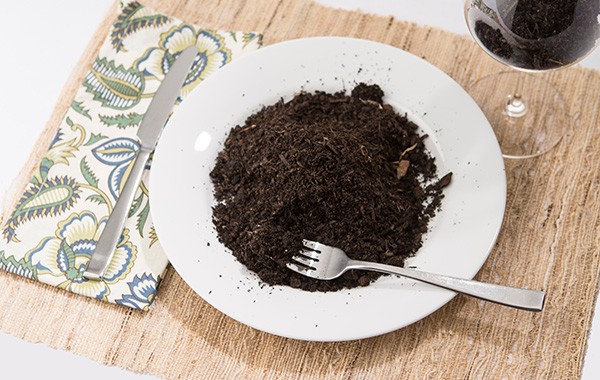
For such a vital resource, soil often gets treated like dirt. But soil is right up there with oxygen. Without it, we die. Soil feeds us, but the soil needs to eat too. What do we feed it? Typically, it’s a diet of chemical fertilizers, which yield ever-diminishing returns. Soil isn’t just dirt. It’s alive with nematodes, bacteria, protozoa and fungi that contribute to soil health, which in turn contributes to plant health and human health.

“You have to look at soil like a big checking account,” says Vella. “You make a deposit and you get a return, but you can’t keep withdrawing from the soil.”

But Vella has found a way to maintain a healthy account balance.

‘Compost has been my deposit for the past 15 years,” he says.

Working with San Francisco’s Recology and soil scientist Bob Shaffer, Vella has maintained healthy vines resulting from regular application of compost and the planting of diverse cover crops. Compost and cover crops are nothing new. But the use of them in tandem is novel, and advocates say the technique points the way forward in a world plagued by declining soil fertility, drought and soil loss.

Today, Chateau Montelena’s estate vineyard, located in a small, keyhole-shaped valley of stunning beauty, is on the cutting edge of a type of soil management which has applications far beyond the exclusive world of premium-wine production.

“This is a global story,” says Shaffer. “This is a partial solution to a lot problems. We just wish everyone on the planet knew about it.”

Earlier this month, Vella, Shaffer and Robert Reed, public relations manager for Recology, held a tour to show off what they had accomplished in hopes of getting other growers to follow their example.

Reed is passionate about compost, but he sees a roadblock: there isn’t enough of it to meet demand. Recology collects food waste in San Francisco and more than a hundred cities on the West Coast and Nevada. Thanks to San Francisco’s mandatory recycling program, the company collects an average of 700 tons of food scraps and garden debris every day. The material is composted at the company’s state-of-the-art Vacaville facility.

According to a 2011 report from the U.N.’s Food and Agriculture Organization, “roughly one-third of the edible parts of food produced for human consumption gets lost or wasted globally, which is about 1.3 billion tons per year.” That’s a lot of waste, but also a lot of potential compost. Reed says the problem is that the landfill industry has a lucrative grip on the waste stream and doesn’t want to give it up. Nationally, there are 3,000 landfills and only 300 compost facilities.

“There are all these food scraps in the world, and there’s a fight over who is going to get them,” he says.

[page]

A 2012 report from the Environmental Protection Agency finds that, on average, Americans create 4.4 pounds of waste per day. That adds up to 251 million tons of garbage a year, of
which about 87 million tons, or 34.5 percent, is recycled and composted. In 2011, Americans recovered more than 65 million tons of municipal waste through recycling and more than 21 million tons through composting,
reports the EPA. Still, more than 40 percent of all food that’s grown and bought in this country goes to waste, according to the folks at Lexicon of Sustainability.

That 4.4 pound national average is also the California average per-capita garbage creation. But Sonoma County residents are already creating a pound less of garbage per day than the national average, according to county statistics. Much of this recent, sharp reduction in the local waste stream is attributed to the adoption of single-source recycling bins, but the county also has an aggressive composting program that’s been in place for decades.

Sonoma Compost Co. has been in business since 1985 and has a contract with the county to divert green waste and other renewable garbage sources.

The company reports that since 1993 it has diverted 1.6 million tons of green waste from the local landfill.

Sonoma County generates 800 tons a week in food scraps—which is about
35 percent of all residential waste created in the county. County documents note that this is “a resource that could be used instead of landfilled.”

At the municipal level, the city of Santa Rosa utilizes the Laguna Composting Facility, where, the city reports, about 12,000 cubic yards of compost are generated a year. Most of that is sold to landscapers and vineyards.

Napa County reports that in 2012 it recycled or composted 113,000 tons of trash at the Napa Recycling and Composting Facility. The county reports that it diverts about
55 percent of the waste that would otherwise wind up at the Keller Canyon Landfill into compost or recyclables.

Napa County recently completed a successful pilot program to divert food scraps from the waste stream and into the compost economy; that service is now available at restaurants and other food service businesses throughout the county.

In Marin County, the biggest composting player is Waste Management, the corporate garbage behemoth that runs a recycling facility and landfill. Through its WM Earthcare program, the corporation produces and sells several grades of compost at the Redwood Landfill facility in Novato. The company reports that food waste accounts for about one-quarter of Marin’s residential waste stream.

According to its website, Waste Management is expanding the composting facility in Novato to accommodate residential and commercial food waste. The company offers its compost for sale through the North Bay and says its product is the “compost of choice for discriminating vineyards.”

Vella might take issue with that assertion.

What he does is straightforward. Between the rows of Cabernet Sauvignon and Zinfandel, he lays down rich compost from Recology the color of ground coffee and then seeds that with various cover crops and insect-attracting plants such as mustard, barley, Queen Anne’s lace, strawberry clover and brome. Many winegrowers make sure nothing grows between their vines, a waste of valuable real estate that might otherwise help feed the grapes.

Compost by itself is good. The humus in the compost holds water and draws grape-feeding carbon into the soil. It also feeds the rich biological life in the soil: earthworms, fly larvae and other beneficial insects that further nourish the soil and plants. But compost plus cover crops is better, says Shaffer, who consults with farmers around the world, most of whom complain of the same thing: hard, infertile soil.

“Compost is great, but it doesn’t have roots,” he says.

The addition of cover crops helps fix nitrogen in the soil, literally pulling it out of the atmosphere (where we don’t want it) and putting it in the ground (where we do want it), reducing or eliminating harmful fertilizers. Blossoms attract helpful insects that eat pests, cutting down on the need for pesticides.

“This is called synergism,” Shaffer says. “The whole idea is to imitate nature.”

Fifteen years and counting, the result is soil that’s teeming with life, vineyards that continue to produce premium grapes and—nearly 40 years after the Paris tasting— vintage after vintage of great wine.

“If you work with mother nature instead of trying to fool mother nature, it always works out,” says Paul Giusti, community and government affairs manager for Recology.

Tom Gogola contributed additional reporting to this story.

FEED Me

0

I’m a fan of food magazines and websites because I’m always looking for new sources of culinary inspiration to help get me out of my latest food rut. Lately, I’ve been enjoying the weekly newsletter from Sebastopol’s FEED Sonoma. FEED stands for “Farmers Exchange of Earthly Delights.” And earthly delights are what the newsletter/produce list is filled with.

FEED Sonoma is a produce wholesaler and distributor that draws from small West County farms, many of which are too small to get picked up by other distributors. The company supplies a who’s who of restaurants from Sonoma County to San Francisco. The newsletter is written for produce buyers in restaurants and markets, and reads like an intelligence report on what’s popping up in local fields and what’s soon to turn up on your plate.

This week’s newsletter carries proof of our early spring in the form of edible flowers from farmer Paul Wirtz—fava bean flowers and calendula blossoms. Also on this week’s list are fresh bay leaves (the clove-scented “Saratoga” cultivar to be exact), garlic chives and thyme.

This being the start of a new growing season, the newsletter announces the birth of a new crop of baby vegetables—baby fennel, baby radish and baby daikon. But winter vegetables are still in the mix. FEED is offering winter squash from Shone Farm with varieties like New England pie, Long Island cheese and sweet kabocha.

Each newsletters begin with a few words of inspiration written by co-owner Tim Page about what’s in season and how we go about building a thriving local food system that can be passed on to future generations.

“We are going to grow our food right next to the source,” he writes. “We are going to bring the water in, and we will let the water join the river once again, as it makes its way to the ocean. . . . The cycle is nurtured and honored. . . . People are fed.”

Here’s to spring and hopefully more rain.

Visit Feedsonoma.com for more information.

Debriefer: February 25, 2015

MARDIS BLAH

And now, a rant. Debriefer came here from New Orleans a little over a year ago, and needs to make an observation about the lameness of not-in-Nola Mardi Gras celebrations. We’ll hold out the possibility that there was a Carnival celebration somewhere up here that was worthy of the spirit of the holiday, but we’re doubtful.

Why? A Fat Tuesday sight of five skrunky Petalumans huddled downtown in purple-gold cliché costumes does not cut it, even at the most rudimentary, culture-humping, white-bread level. Debriefer also heard how an earlier Mardi Gras night at the [REDACTED] had been a total dud, despite some top-notch NOLA talent in the house. You can’t just throw some beads at suckers and call it Mardi Gras. And so a theme has emerged: North Bay Mardi Gras celebrations are lame.

But there’s such potential!

Here’s an idea: The North Bay should either (a) get a huge and wild, three-day parade going with cows and goats and tricked-out ag-wagons and yurts repurposed as floats, bring in the Gypsy marching bands and the high school marching bands, you’ve already got the tractors, everywhere, and lots of colorful people who like to organize and build beauty into their lives, or (b) stop it with these weak little gestures of joy and don’t do anything.

PULLING THE PLUG ON COS

You’ve heard by now, perhaps, that the scheduled June 6 appearance of Bill Cosby at the Wells Fargo Center for the Arts in Santa Rosa has been “postponed indefinitely,” which is a polite way of saying that the show’s been canceled.

As of two weeks ago, the show was on, despite persistent allegations about Cosby’s alleged habit of drugging starlets and then doing who knows what to them. At last count, more than 30 women had come forward with various tales of creepy toe-sucking activities by Cosby.

Yet according to the publicist for the Wells Fargo Center for the Arts, the venue didn’t push promoter John Low to cancel the show.

“That’s really the case,” insists spokesperson Anne Abrams.

The center issued a press release on Feb. 20 to announce the cancellation, and to give the 500-odd ticketholders information on how to get their money back. Cosby has been met with protests wherever the show has gone on.

“Mr. Low is presenting this show, and Mr. Low said he was postponing it,” says Abrams. “We’re not part of the decision.”

Maybe not directly . . .

Abrams says the center fielded positive and negative comments from “the community,” and forwarded the comments to Low. That was as far as any contact with the promoter went, she says. The Wells Fargo Center for the Arts didn’t pressure Low to cancel the show.

Weird. Just a few weeks ago the center said it wouldn’t undermine a contract with Low by canceling the show out from under him. Instead, it sent complaints it had been receiving, along with correspondence supportive of Cosby’s appearance, to Mr. Low, and left it up to him and Cosby to make the call.

“We don’t know what went into the conversation or the discussion,” says Abrams. “I’m sure Mr. Low received everything we sent him, and I’m sure some of those things went into that decision.”

The .001 Percent

0

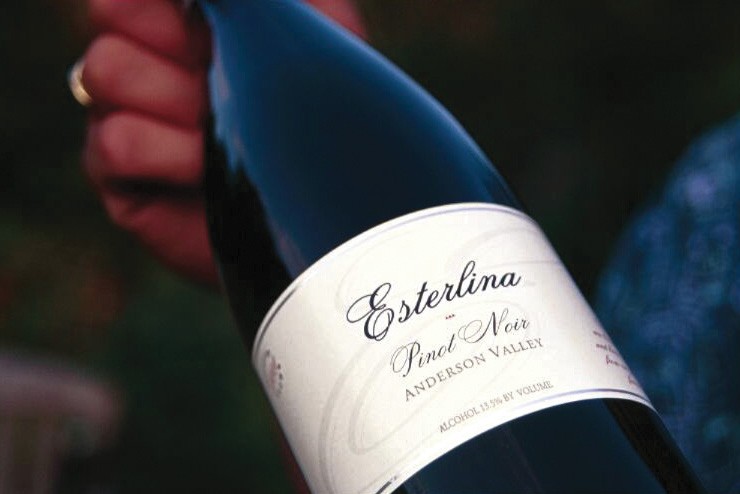
If you know all about the Cole Ranch AVA, count yourself among the elite few. The smallest viticultural area in the United States is also the only one owned by one family.

Stephen Sterling, co-owner of Esterlina Vineyards, says that he meets sommeliers around the world who know about Cole Ranch. But not so many have heard of his winery. It’s only the largest African-American-owned family winery in the nation.

Out of some 8,000 American wineries, says Sterling, less than a couple dozen are owned by African-American families—about .001 percent. Sterling is a former president of the Association of African American Vintners, whose events at Napa’s Copia and elsewhere generated a lot of interest in the first decade of this century.

Sterling says he was inspired to help raise awareness of African-American winemakers when he found that among thousands of people at big winetastings, they were a notably whispered-about anomaly: “See, I told you there were black people in the wine industry!” Sterling wanted to see that change.

“I think what most consumers are surprised to find out is that their backgrounds are really similar to a lot of the old Italian and French families who have been making wine for a few generations.” He and his brothers, for example, first sampled wine made by their grandfather, who was from Baton Rouge, La., a former territory of France—where his grandfather was from.

High gas prices made the Sterling’s Anderson Valley tasting room unsustainable, so they merged Esterlina with their Dry Creek Valley property, Everett Ridge. Here, the Sterlings host their inaugural Black History Month celebration on Saturday, Feb. 28.

The event features displays on loan from the Museum of African Diaspora (MoAD) in San Francisco, and the Charles H. Wright Museum of African American History and College of Creative Studies in Detroit, with live music by a 1980s-style R&B “Norcal Motown” band. A portion of proceeds from the event will benefit the United Negro College Fund, MoAD and Redwood Empire Food Bank.

One Esterlina wine that I always look forward to is the bone-dry Cole Ranch Dry Riesling ($24). They also make an off-dry style, and both have been served at White House events during the Bush administration.

Everett Ridge Winery, 435 West Dry Creek Road, Healdsburg. Black History Month celebration Saturday, Feb. 28, noon–4pm. Tickets, $50. Phone 707.433.1637 or visit www.esterlinavineyards.com. Daily winetasting, 10am–5pm.

Banjos & Brushes

0

Occidental artist Amanda Mae Blackmore rustles up spirited illustrations and paintings that evoke an Old West sensibility and incorporate both the natural world and imaginative surrealism.

This weekend, the young painter debuts a crop of her whimsical work when she and other local artists join a bevy of folk bands for the one-night-only “Busted Banjo” art show, Feb. 27 at the Arlene Francis Center in Santa Rosa.

Using wood as the canvas for her latest series of portraits, Blackmore imagines ghostly-looking characters from the Wild West, as well as eerily realistic illustrations of two-headed animals floating among the wooden rings of wood. Other local artists joining Blackmore on the gallery walls include watercolor painter Merisha Sequoia Lemmer, whose work often recalls her Native American heritage and her intimate relationship with nature, and Jessica Rasmussen, whose day job as an arts specialist in Santa Rosa informs her detailed drawings.

On the music side of the night is a stellar lineup of North Bay folk stars. The Bad Apple String Band headline and reportedly are planning a boot-stomping night of boy-band cover songs done in their old-time style.

The Busted Banjo art show breaks out on Friday, Feb 27, at Arlene Francis Center,
99 Sixth St., Santa Rosa. 6pm. $8. 707.528.3009.

Final Curtains

0

Death is not negotiable. Sooner or later, we all face it. In a pair of just-opened plays, the specter of death hangs over the action like an axe dangling above a doorway.

In Conor McPherson’s evocative drama Shining City (Main Stage West), an anxious insomniac named John (John Craven) seeks help from a troubled Dublin therapist, Ian (Nick Sholley). John keeps seeing the ghost of his recently deceased wife. Unable to sleep, afraid to enter his own home, John believes he’s being haunted for unspoken sins.

Ian, certain his client is simply struggling with feelings of guilt, gently coaxes the old man toward facing his fear, all the while carrying his own soul-crushing battle with guilt and despair. With carefully crafted delicacy, Ian’s increasingly powerful sessions with John alternate with a pair of close encounters he has with Neasa (Ilana Niernberger), the fierce but frail mother of his child, and Laurence (John Browning), a sensitive street hustler.

Elegantly staged by director Elizabeth Craven and beautifully acted by the entire ensemble, this rich tale is more than just a chilling ghost story. A lush and lyrical look at the choices we all make to feel alive in a world haunted by the ghosts of our past decisions, Shining City glows with intelligence, humor and humanity.

Rating (out of five): ★★★★

It’s widely known that the notorious Depression-era outlaws Bonnie Parker and Clyde Barrow died violently in a hail of gunfire. In composer Frank Wildhorn’s musical reworking of the bank robbers’ lives, Bonnie & Clyde, the tale begins at the end, with the famous fugitives’ bloody demise in their car. Ivan Menchell’s clever script then jumps back in time to Bonnie and Clyde’s childhoods, gradually working its way to where the story began.

As the title characters, Taylor Bartolucci and James Bock have killer chemistry, matched in poise and presence by Scottie Woodard and Heather Buck as Clyde’s brother Buck and sister-in-law Blanche. Barry Martin, as a local preacher, brings impressive Southern gospel charm.

The somewhat uneven musical score has a few strong moments, emphasizing the tragic love story at the heart of the play. On Jesse Dreikosen’s first-rate set of jagged wooden slats, director Craig Miller keeps the tension building nicely.

And that’s no small feat, since, hey, everyone knows the ending.

Rating (out of five): ★★★½

Blubber Trouble

It’s a cool, foggy morning in the Marin Headlands as volunteers and staff start their morning routines at the Marine Mammal Center in Sausalito.

This being the Bay Area, the cool and foggy part of this story isn’t newsworthy—but the scores of emaciated sea lion pups that have deluged the center in recent weeks? They’re making the news all over.

The pups have been rescued from beaches all the way up to Bodega Bay, and the center expects the wash-ups to continue for months to come. For the third year running, the pups were driven out of the Channel Island rookery before being weaned.

The culprit? The ocean water is too warm, and the sea lions’ anchor foods—anchovies and sardines—have dispersed.

As a result, adult sea lions can’t keep up with feeding themselves, let alone their pups. Now the center is scrambling to handle an influx of pups during what’s usually a slow time of year at the world-class animal-rescue center.

The animals being rescued are typically around eight months old, says Dr. Shawn Johnson, lead veterinarian at the center, “and half the weight they are supposed to be.” Sea lions, he says, will typically stick with mom until about their 11th month.

The Sausalito center houses a full-scale veterinarian hospital and necropsy lab on the site of an old Nike missile base.

It’s a popular destination for school groups, but the scene is kind of sad out back today. An outdoor pen finds about eight pups huddled on a heating pad. “We had to buy the heating pads,” says Johnson. “The little ones aren’t usually here this time of year.”

Where you’d expect blubbery beasts, you see instead the animals’ ribs. “They should still be in the Channel Islands nursing,” says Johnson.

Once the pups get their strength back, they are transferred to a saltwater pool to get them ready for the journey back to the sea. Between 50 and 60 percent of the pups that come here are released back to sea in Pt. Reyes National Park. The rest wind up at zoos and aquariums, or they die.

“This is normally the slow season,” says Johnson. He says a more typical winter morning would find vets, researchers and other staff catching up on scientific papers and maintenance projects around the facility.

Johnson says there are usually 10 to 15 animals onsite in January and February—sea otters, sea lions, harbor seals. That’s about how many sea lion pups are now coming into the center every week. In late February, there were about 150 in the facility—and more on the way. Almost 1,000 pups have been found stranded this year.

Earlier in the morning, Johnson had been on a conference call with a biologist at the Channel Islands. The news is not good from Southern California. “We are bracing to be at or near capacity in a few weeks, and it’s making us all very nervous,” says Johnson. “It’s bad timing.”

Volunteers have been called in, and the center issued an online “SOS” for new ones. The center was coming up short on medicine and food, so there’s been a push in fundraising at the nonprofit, whose annual budget is around $6.5 million.

Temporary volunteers are put to work in the spacious “fish kitchen,” where they sanitize items used to feed the sea lions. Trained volunteers prepare the food and feed the animals. For healthier sea lions, there are buckets of fat Alaskan herring; sicker animals get a liquid mix of herring, fish oil and water.The center goes through 400 pounds of $1-a-pound herring a day trying to save the stranded pups.

The pup wash-ups are driven by rising ocean temperatures, says Johnson. Those have been running 2 to 5 degrees Celsius above average, from the Aleutian Islands all the way down to Baja California, despite the apparent absence of an El Niño trigger.

The warming trend has dispersed the anchovies and sardines that sea lions rely on, says Johnson. “The sea lion moms are not eating too much themselves, but they are putting lots of effort into finding food. They can’t keep up.”

There’s a ripple effect up and down the chain when a “sentinel species” struggles.

“It’s very concerning to us,” Johnson says. The health of
these apex predators “is a good indicator of the general health of the ocean. If sea lions can’t find enough food for themselves, what does it mean for other [sea creatures],” he says—let alone fishermen trying to make a
living?

Bloody Good

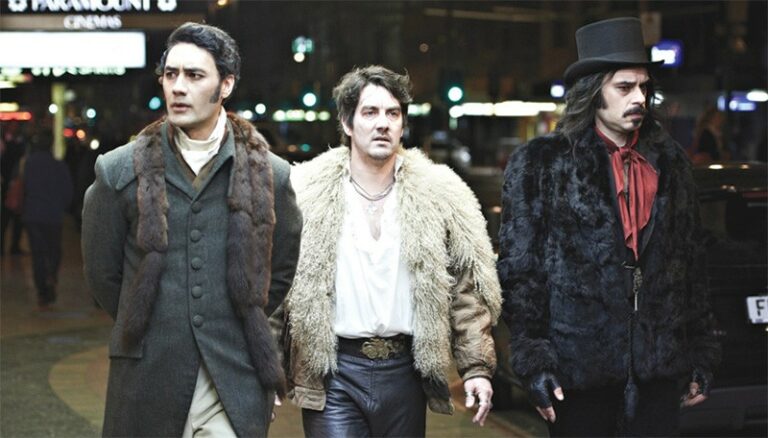
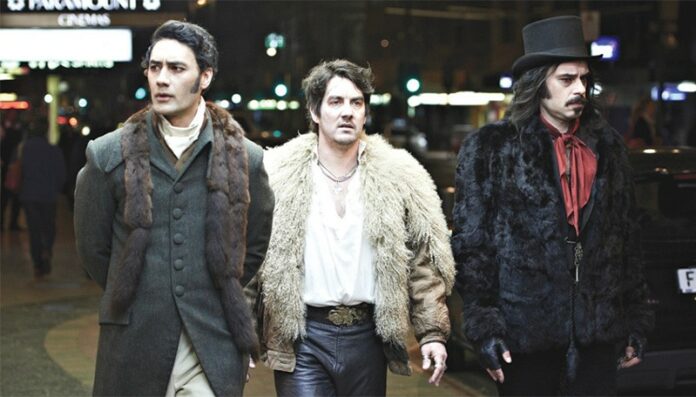
A terrific comedy of the undead lifestyle in an unlively town, the Funny or Die–produced What We Do in the Shadows adapts the premise of TV’s Surreal Life to the vampire myth.

Of the 60 or so vamps in New Zealand, four get to see a lot of each other. Housemates in a decaying flat, these four—a mute Nosferatu (Ben Fransham); Deacon (Jonathan Brugh), an emo hellion; Vladislaw (Flight of the Conchord‘s Jermaine Clement), a long-haired upholder of the old traditions, with Slavic accent and penetrating stare; and Viago (Taika Waititi)—unveil their problems before a documentary team’s camera.

Permitting the documentary must have been the idea of our shy yet genial host Viago. He has a mincing, polite German accent, like the “Leutonian” diction of John Candy’s Shmenge character. Viago says apologetically, “One of the unfortunate things about being a vampire is that you have to drink blood.” This means a lot of cleanup.

After Viago hypnotizes a victim—who looks more disinterested than really out of it—Viago asks her to lift her feet so he can put newspapers on the floor. In voiceover, he shares with the documentary team, “It’s the last moment of their lives. Why not make it a nice experience?”

Unlike most mockumentaries, What We Do in the Shadows doesn’t have to convince with realism. Directors Waititi and Clement match a universally loved topic with an undertone about life in a very remote—and very boring—city.

An evening out begins with a city bus trip downtown. It coalesces at an all-night Chinese restaurant. It ends with one of these immortals puking behind a dumpster. The human creatures of the night sass these vampires as Goths and weirdoes. The blood-drinkers stand around plaintively outside a nightclub, hoping the bouncers will invite them inside.

‘What We Do in the Shadows’ opens Feb. 27 at Summerfield Cinemas,
551 Summerfield Road, Santa Rosa. 707.522.0719.

On the Range

0

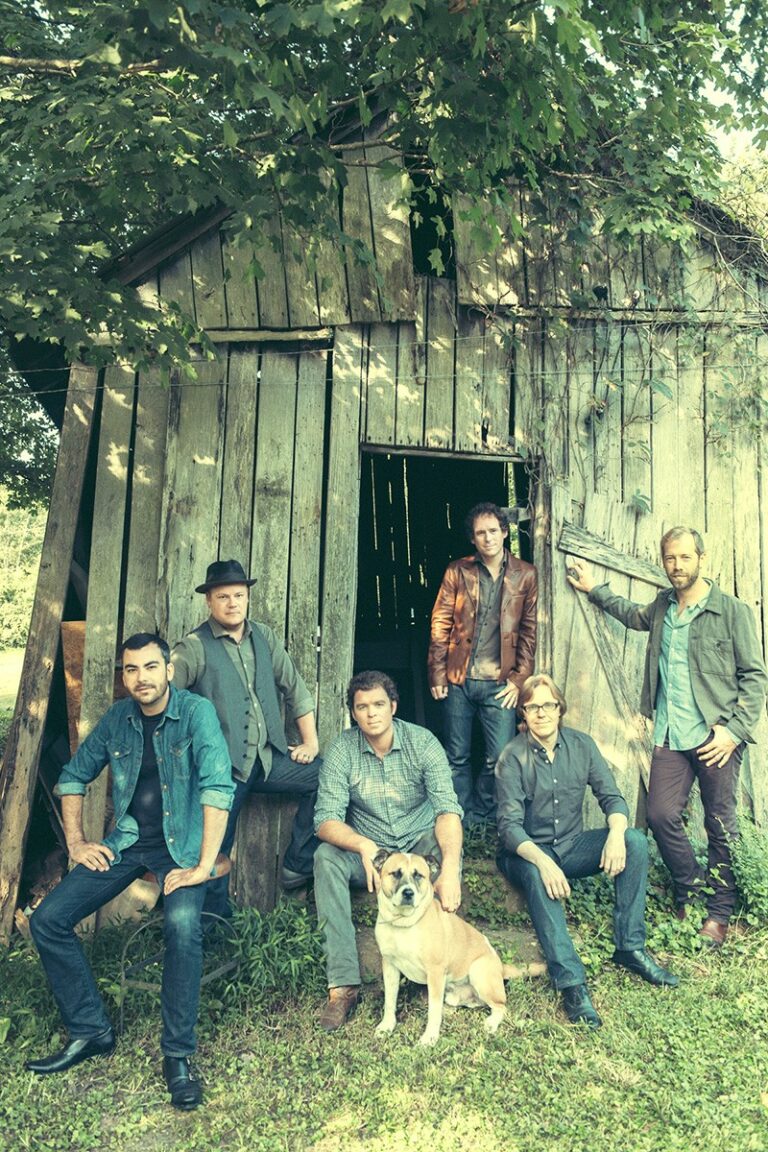
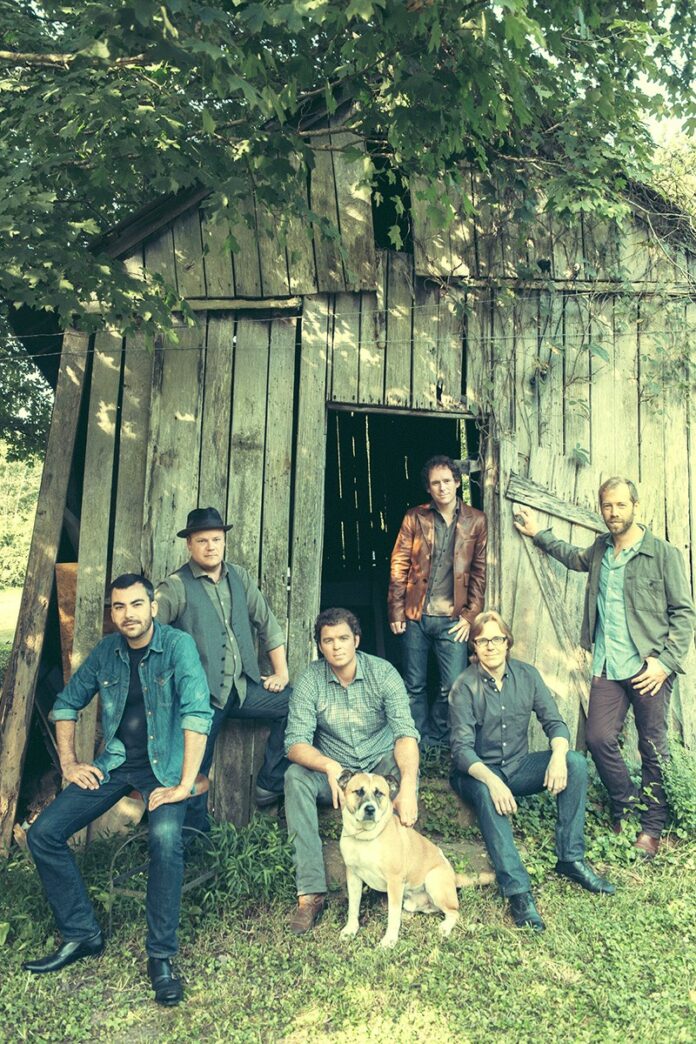
If the harmonious bluegrass that’s coming from the Steep Canyon Rangers sounds like a band lost in time and Appalachia, it is because they practically are. Nestled in the foothills of North Carolina, the Steep Canyon Rangers have perfected a true and traditional country folk that’s propelled them to the national spotlight.

The Steep Canyon Rangers play the City Winery on Feb. 28.

“We’ve been playing lots of different kinds of shows lately, from clubs to performance halls,” says founding member and banjo player Graham Sharp (pictured, far right). “In both cases, it translates so well with the directness of the acoustic instruments and voices, the live shows are where we are at our best.”

The Steep Canyon Rangers also include guitarist Woody Platt, mandolin player Mike Guggino, bassist Charles Humphrey III, fiddler Nicky Sanders and drummer Mike Ashworth, with Sharp and Humphrey sharing the majority of songwriting duties. These days, though, it’s hard to talk about the band’s lineup without mentioning their frequent collaborator, Steve Martin.

Yes, that Steve Martin.

The actor and accomplished banjo player first joined the Rangers onstage in 2009 for a broadcast of A Prairie Home Companion. Since then, the group and Martin have toured extensively together, and they collaborated on the 2011 album, Rare Bird Alert.

“He’s an insanely creative guy,” says Sharp of Steve Martin, “and as hard a worker as I’ve ever seen in the business. Its inspiring.”

Rare Bird Alert was nominated for Best Bluegrass Album at the 2012 Grammys, and though it lost that year, the Steep Canyon Rangers took the award home the next year with their own album, Nobody Knows You.

“It’s a pretty amazing feeling,” admits Sharp. “We’ve always been a band that’s based our music on all the old bluegrass we love, but we try to forge our own path as much as we can,” he continues. “Having that be validated felt pretty good, and it’s given us a lot of confidence to follow that path.”

That path so far includes 2013’s widely respected release Tell the Ones I Love, and a live concert album, featuring Martin and singer-songwriter Edie Brickell.

Just a few months ago, the Steep Canyon Rangers wrapped recording on their newest effort, a still-untitled album due out this summer. Sharp is looking forward to visiting the North Bay.

“It’s just a great place for music, so it’s always a great place to play.”

The Steep Canyon Rangers play Saturday, Feb. 28, at City Winery, 1030 Main St., Napa. 8pm. $20–$30. 707.260.1600.

Enough Is Enough

0

Residents throughout Sonoma County are strategizing on how to challenge proposals for new and expanded wineries as event centers in rural areas. Meanwhile, the Napa County Board of Supervisors has a March 10 meeting to hear critics of winery overdevelopment.

The huge Dairyman Winery and Distillery proposed for high-speed Highway 12 near Llano Road in the greenbelt between Sebastopol and Santa Rosa has been the main target of opponents. Groups such as Sonoma County Conservation Action, Laguna de Santa Rosa Foundation, Sebastopol Water Information Group, Western Sonoma County Rural Alliance, the Sonoma County Bicycle Coalition, and Apple Roots sent critical comments about the project to the Sonoma County Permit and Resource Management Department.

These groups oppose the Dairyman project on many grounds, believing it will draw too much from the water table; lead to congested traffic; block the popular Joe Rodota trail; damage the fragile Laguna de Santa Rosa; and pollute the water, air and land in the area through the use of chemicals.

Grape growers and the wine industry contribute valuable economic benefits to Sonoma County. Even most critics appreciate a good glass of local wine, but they advocate moderation when it comes to such proposals, contending that Dairyman is too big and in the wrong place. Imagine tipsy tasters crossing the trail, full of bikers and walkers, and into 60-mile-an-hour traffic. The application demands that trail users “yield” to winery traffic.

The largest development being challenged is the recent $41 million purchase of La Campagna’s 186 acres near Kenwood by a Chinese firm. It was previously stalled by a lawsuit filed by the Valley of the Moon Alliance. If such winery projects are approved, they could set a dangerous precedent.

A movement against the expansion of rural wineries is growing. It could lead to calls for moratoriums on all new wineries, especially those wanting to be industrial, commercial event centers, located away from urban centers, spoiling pastoral splendor.

Shepherd Bliss 3s*@*****st.net farms, teaches writing at Dominican University, and has contributed to 24 books.

Open Mic is a weekly feature in the ‘Bohemian.’ We welcome your contribution. To have your topical essay of 350 words considered for publication, write op*****@******an.com.

Dirt Farmers

Dave Vella's job sounds simple enough. He's the vineyard manager at Calistoga's 133-year-old Chateau Montelena Winery. The winery stunned the winemaking world at the famous "Judgment of Paris" in 1976 when it and a handful of upstart California wineries bested their French counterparts in a blind tasting. Vella's job is to make sure the vineyards keep producing the great...

FEED Me

I'm a fan of food magazines and websites because I'm always looking for new sources of culinary inspiration to help get me out of my latest food rut. Lately, I've been enjoying the weekly newsletter from Sebastopol's FEED Sonoma. FEED stands for "Farmers Exchange of Earthly Delights." And earthly delights are what the newsletter/produce list is filled with. FEED Sonoma...

Debriefer: February 25, 2015

MARDIS BLAH And now, a rant. Debriefer came here from New Orleans a little over a year ago, and needs to make an observation about the lameness of not-in-Nola Mardi Gras celebrations. We'll hold out the possibility that there was a Carnival celebration somewhere up here that was worthy of the spirit of the holiday, but we're doubtful. Why? A Fat...

The .001 Percent

If you know all about the Cole Ranch AVA, count yourself among the elite few. The smallest viticultural area in the United States is also the only one owned by one family. Stephen Sterling, co-owner of Esterlina Vineyards, says that he meets sommeliers around the world who know about Cole Ranch. But not so many have heard of his winery....

Banjos & Brushes

Occidental artist Amanda Mae Blackmore rustles up spirited illustrations and paintings that evoke an Old West sensibility and incorporate both the natural world and imaginative surrealism. This weekend, the young painter debuts a crop of her whimsical work when she and other local artists join a bevy of folk bands for the one-night-only "Busted Banjo" art show, Feb. 27 at...

Final Curtains

Death is not negotiable. Sooner or later, we all face it. In a pair of just-opened plays, the specter of death hangs over the action like an axe dangling above a doorway. In Conor McPherson's evocative drama Shining City (Main Stage West), an anxious insomniac named John (John Craven) seeks help from a troubled Dublin therapist, Ian (Nick Sholley). John...

Blubber Trouble

It's a cool, foggy morning in the Marin Headlands as volunteers and staff start their morning routines at the Marine Mammal Center in Sausalito. This being the Bay Area, the cool and foggy part of this story isn't newsworthy—but the scores of emaciated sea lion pups that have deluged the center in recent weeks? They're making the news all over. The...

Bloody Good

A terrific comedy of the undead lifestyle in an unlively town, the Funny or Die–produced What We Do in the Shadows adapts the premise of TV's Surreal Life to the vampire myth. Of the 60 or so vamps in New Zealand, four get to see a lot of each other. Housemates in a decaying flat, these four—a mute Nosferatu (Ben...

On the Range

If the harmonious bluegrass that's coming from the Steep Canyon Rangers sounds like a band lost in time and Appalachia, it is because they practically are. Nestled in the foothills of North Carolina, the Steep Canyon Rangers have perfected a true and traditional country folk that's propelled them to the national spotlight. The Steep Canyon Rangers play the City Winery...

Enough Is Enough

Residents throughout Sonoma County are strategizing on how to challenge proposals for new and expanded wineries as event centers in rural areas. Meanwhile, the Napa County Board of Supervisors has a March 10 meeting to hear critics of winery overdevelopment. The huge Dairyman Winery and Distillery proposed for high-speed Highway 12 near Llano Road in the greenbelt between Sebastopol and...
12,118FansLike
4,924FollowersFollow
6,928FollowersFollow