A recent study revealed that a majority of Americans think our best days are behind us.
This confirms the view of metaphysicians a hundred years ago, who warned that our civilization was in the throes of the Kali Yuga, or era of dissolution. In the Hindu tradition, Kali is a female deity of destruction, who goes around chopping off heads while sticking out her tongue.
What is there to do for the individual who finds themself living in such an era? Contemporary nomenclature provides the answer with the catchphrase, “Surf the Kali Yuga,” indicating that you can no more halt the forces in motion than you can stop the onset of winter. So, learn to surf or you’ll drown in the tsunami, which is hell-bent on turning you into more of a soulless cyborg drone peasant than you already are.
It’s been said that in the Kali Yuga, the only paths of transcendence that remain open are sex and breathing. Faced with the dehumanizing technological powers in play, one embarks on Hermetic and Tantric paths by withdrawing into the body, that great microcosm of the universe, “surfing” the cosmic currents, which are materialist-descending mode rather than a spiritual-ascending one.
Commit to the undertaking and you may successfully awaken Kundalini, the primordial life energy that lies latent in the body, but which can be found and harnessed through pranayama, or sacred breathing, and by transmuting the erotic energies into spiritual ones. Here, instead of flowing down and outward into the material realm through the generative act of human reproduction, sexual energy is redirected up the spinal column through the chakras, towards the celestial realm and states of consciousness unconditioned by the merely human part of ourselves.
In the Tantric doctrine, the goal of the so-called Left Hand Path is taking “dangerous” experiences, such as sexual intoxication, and bringing them them under strict dominion to serve a spiritual purpose. Riding the wave of this present age can open up possibilities for self-transformation we’d never have considered during those halcyon days not long ago when we could still fool ourselves into believing everything was okay.
Surfing is easier than it may look. First, assess the conditions, then summon the courage to enter the water and orient yourself to shore. You don’t have to worry about catching the tidal wave of the Kali Yuga, as it will catch you.
Applied to life in these strange times, it’s what we might call a feel thing. Somehow you must escape the vortex of the times by whatever it takes—such as breathing your way to mystic ecstasy and the realization of your true self as a spirit being.
Like Lloyd Bridges quipped in 1980’s Airplane!, “I picked the wrong week to quit sniffing glue,” and I picked the wrong week to quit drinking beer.
I quote the line because I was mulling a rollback in my consumption of ice cold beer as a coping mechanism for the heat now that the “heat dome” has subsided. Then I looked at this week’s editorial calendar. This is how I found myself sipping beer at 11:30am, Friday morning. Call it journalistic integrity. Or high-functioning alcoholism (which some might argue is one and the same). I mean, why drink coffee when your “morning brew” can have an ABV of 7.5%?
So, I’ll indulge another week before taking a semi-permanent vacation from what is rapidly proving to be “Beer Country,” thanks to the Cambrian explosion of quality brews in the tri-county area. When you live in Marin, Sonoma or Napa counties, with its growing bevy of excellent craft brew offers, it begs the question, “Is it ever a good idea to quit drinking beer?” The answer (barring doctor’s orders) is a resounding “No!”
What follows is a highly subjective, unscientific, completely arbitrary, in fact, admittedly random assessment of brews I selected to represent my personal and necessarily narrow experience with each county’s offerings. Let’s just call it my “creative process,” born of limited resources of time, personnel, money and liver.
“How dare you not feature my favorite beer?” you protest. To which I respond, “When’s the last time you took me out for a beer? You assumed that accredited members of the media get free beer. Sometimes, not this time, but enjoy this free article in this free newspaper, freeloader,” I crisply retort. Speaking of crisp…
The Honest Work Fresh Hop IPA will put our local Gravenstein apples to shame with its crisp, bright flavors and aromatic bouquet with just the right hint of forest florals. Made by Crooked Goat Brewing—a Bohemian Best of the North Bay 2021 winner—the beer is a wet hop IPA that’s brewed with 100% fresh Chinook hops from Alexander Valley Hops. Last May, Crooked Goat opened its new Petaluma-based tap room, a fine, modern and airy complement to its sibling in The Barlow in Sebastopol.
I don’t know how the goat is “crooked” (or why, for that matter, it’s wearing an eyepatch), but I do know that it reminds me of the Satanic “Black Phillip” in the film The Witch, starring doe-eyed Anya Taylor-Joy, who (spoiler alert) stands on his hind legs and beseeches the actress with “What do you want?” She apparently wanted to levitate nude in cultic revel with other witches. Me too, which I’m sure I could accomplish with enough Honest Work.
Hearkening back to the Capra hircus family, check out the Mountain Goat IPA. It’s a West Coast style IPA due to its use of Mosaic and Citra hops, which tend to be more pine-y, with refreshing bitter notes. Earthy elements also emerge on the palate, underscoring a complex and robust flavor profile that goes down easily. The Ibex IPA also has Citra hops, but pivots to Simcoe and Amarillo, resulting in an understated and smooth IPA experience.
Very soon, an Acme Burger will be opening up adjacent to Crooked Goat’s Petaluma premises, making for a perfect beer and burger partnership.
Here’s your German lesson for the day: “hefe” means yeast and “weizen” means wheat. Though the language snaps together like Legos, the resulting “hefeweizen” is way greater than the sum of its parts. It’s an unfiltered, honey-colored brew, often with effervescent esters, bearing fruit notes like banana and spices like clove. Often associated with Bavaria, hefeweizens have long been making inroads in the States, with many local producers heeding their call with regional variations.
One such brew is Marin Brewing Company’s Marin Hefe Weiss, which is back in production and available in 22 ounce bottles from Moylan’s Brewing Company in Novato. (Though it recently shuttered its Larkspur location, Marin Brewing continues its signature brews at its Novato-based sibling company.)
Marin Brewing Company promises, via its Facebook page, that the Marin Hefe Weiss “classic unfiltered American-style wheat beer is a perfect treat to take with you to anything you have going on this weekend.” I believe them.
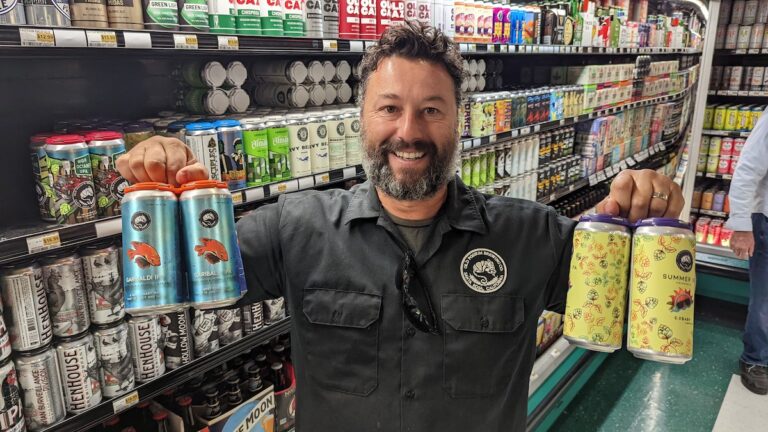
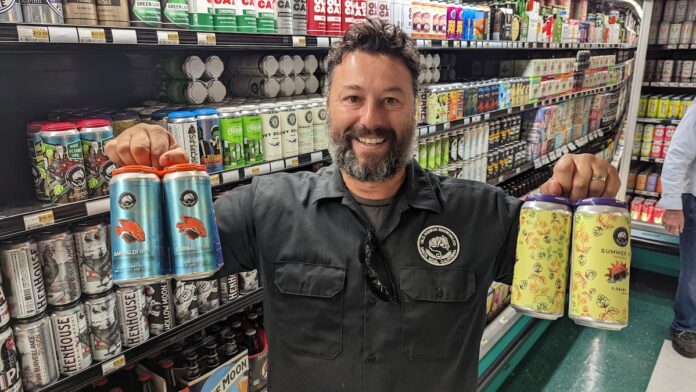
Santa Rosa-based Old Possum Brewing Co.’s owner and brewer, Sandro Tamburin, is a man who knows how to be in the right place at the right time. Not only are his brews now topping shelves in markets throughout the area (I found him in the epic beer aisle of the Petaluma Market), he knows how to make the most of a chance encounter with the media (see photo evidence on page 14).
Old Possum’s Garibaldi IPA (featuring a handsome image of California’s orange-hued state fish) is a juicy and hazy West Coast-style IPA that one will either take to like a fish to water or at least drink like a fish. Both are wins in my book. Keeping with the West Coast spirit, Petaluma Market also stocks Tamburin’s High Octane, an IPA with the fabled Idaho 7 hops, which is redolent of tropical fruits from ruby grapefruit to papaya.
“We do a lot of Comet Hops and a little bit of Citra,” says Tamburin. “As a brewery, we’re focused on dry fermentations, so the beer will be dry— it will be bitter [thanks to] the expression of the Idaho 7, which is a beautiful hop, and we love it.”
Meanwhile, Napa, long known for its fruit bomb cabernet sauignons and blistering price points, has an antidote for the Wine Country blues with its legendary Stone Brewing Hazy IPA. Don’t let the psychedelic can art fool you—coming in with a relatively low (for local craft brews) 6.7% ABV, the easy drinking IPA rolls back on the bitter and lets its El Dorado and Azacca hops frontline their buoyant fruit and citrus notes with tropical notes of pineapple and mango, courtesy of the Sabro hops.
As always, I encourage readers to never imbibe and drive, but I’ll happily ride shotgun with you, bellied-up at the brew pub bar. Email dh*****@*****ys.com.
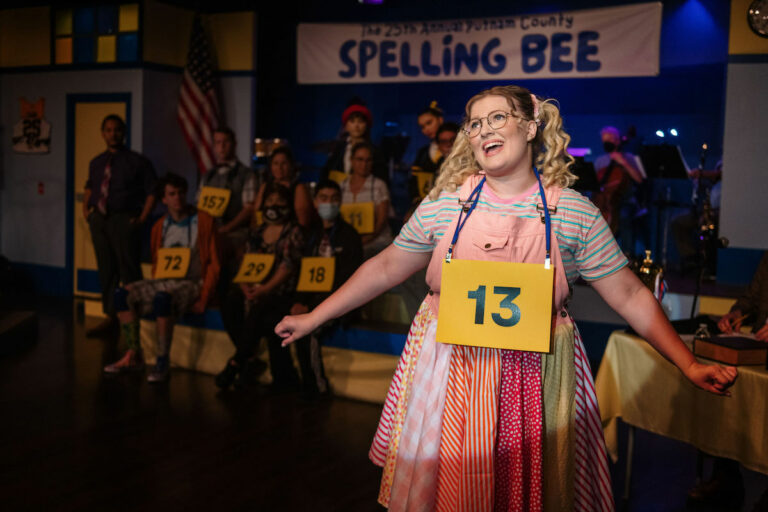
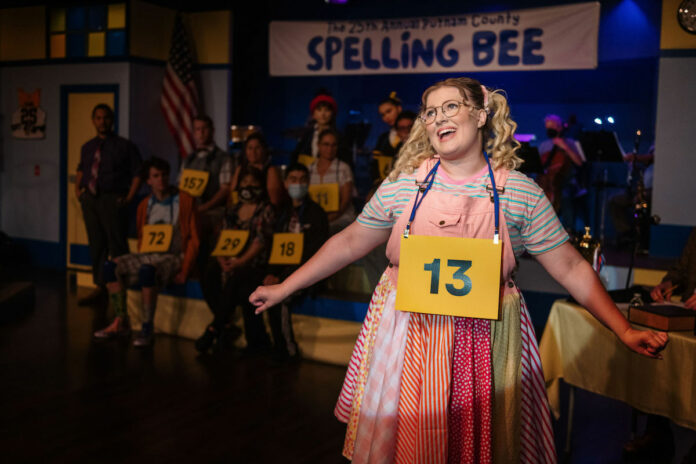
Petaluma’s Cinnabar Theater opens its 50th season with a solid production of the Tony Award-winning musical, The 25th Annual Putnam County Spelling Bee. The show runs through Sept. 25.
Set in a midwestern middle school, it tells the story of six kooky fourth-grade spelling champions: Leaf Coneybear (Zane Walters), William Barfee (Trevor Hoffman), Logainne “Schwartzy” Schwartzandgrubenierre (Tina Traboulsi), Olive Ostrovsky (Krista Joy Serpa), Marcy Park (Gabi Chun) and Charlito “Chip” Tolentino (Alejandro Eustaquio). The adults-as-kids give their characters varying levels of zaniness, with Walters working a step up in the Zane-y scale.
The “kids” are joined by three wacky, not ill-willed, but not exactly responsible adults who are administering the County Spelling Bee: former champion Roona Lisa Peretti (Karen Miles), comfort counselor Mitch M. Mahoney (Sam Minniefield) and the fragile but loveable oddball Vice Principal Douglas Panch (an on-brand John Browning). Silliness and pandemonium ensue as each contestant faces the trials, tribulations and terrors common in a competitive spelling bee.
Along the way, they battle erections (Eustaquio’s self-aware performance makes this funny rather than cringe-worthy), deep ethical dilemmas about throwing the game, lack of parental oversight or too much parental oversight and, of course, the dreaded bell that signals an incorrectly-spelled word.
Things get more chaotic as audience members are added to the mix as guest spellers. If you’re tempted to cameo, sign up when you buy your tickets. If you’re chosen, don’t forget to always ask for both the definition and a sentence using your word. Don’t worry though, the cast is filled with kind people who will make it a fun experience.
Speaking of the cast, director Zachary Hasbany has assembled a tight ensemble for the show and delivers a well-staged, professional play. This script can be problematic if you are a member of the global majority due to some harmful stereotypes. It is fortunate that Hasbany had the foresight to tackle the issue head-on with his multi-cultural cast, and his empathy results in a play where everyone feels protected and allowed to just have some fun.
Nothing in this show is going to make you think too deeply (unless you are chosen as a guest speller), so consider turning off your brain for two hours and laughing along with the talented, good-natured cast of this live-action cartoon of a show.
‘The 25th Annual Putnam County Spelling Bee’ runs through Sept. 25 at Cinnabar Theater, 3333 Petaluma Blvd. N., Petaluma. Fri–Sat, 7:30pm; Sun, 2pm. $30–$45. Masking is encouraged. 707.763.8920. cinnabartheater.org
ARIES (March 21-April 19): Even when your courage has a touch of foolhardiness, even when your quest for adventure makes you a bit reckless, you can be resourceful enough to avoid dicey consequences. Maybe more than any other sign of the zodiac, you periodically outfox karma. But in the coming weeks, I will nevertheless counsel you not to barge into situations where rash boldness might lead to wrong moves. Please do not flirt with escapades that could turn into chancy gambles. At least for the foreseeable future, I hope you will be prudent and cagey in your quest for interesting and educational fun.
TAURUS (April 20-May 20): In 1946, medical professionals in the UK established the Common Cold Unit. Its goal was to discover practical treatments for the familiar viral infection known as the cold. Over the next 43 years, until it was shut down, the agency produced just one useful innovation: zinc gluconate lozenges. This treatment reduces the severity and length of a cold if taken within 24 hours of onset. So the results of all that research were modest, but they were also much better than nothing. During the coming weeks, you may experience comparable phenomena, Taurus: less spectacular outcomes than you might wish, but still very worthwhile.
GEMINI (May 21-June 20): Here’s a scenario that could be both an invigorating metaphor and a literal event. Put on rollerblades. Get out onto a long flat surface. Build up a comfortable speed. Fill your lungs with the elixir of life. Praise the sun and the wind. Sing your favorite songs. Swing your arms all the way forward and all the way back. Forward: power. Backward: power. Glide and coast and flow with sheer joy. Cruise along with confidence in the instinctive skill of your beautiful body. Evaporate thoughts. Free yourself of every concern and every idea. Keep rambling until you feel spacious and vast.
CANCER (June 21-July 22): I’m getting a psychic vision of you cuddled up in your warm bed, surrounded by stuffed animals and wrapped in soft, thick blankets with images of bunnies and dolphins on them. Your headphones are on, and the songs pouring into your cozy awareness are silky smooth tonics that rouse sweet memories of all the times you felt most wanted and most at home in the world. I think I see a cup of hot chocolate on your bed stand, too, and your favorite dessert. Got all that, fellow Cancerian? In the coming days and nights, I suggest you enjoy an abundance of experiences akin to what I’ve described here.
LEO (July 23-Aug. 22): For 15 years, Leo cartoonist Gary Larson created The Far Side, a hilarious comic strip featuring intelligent talking animals. It was syndicated in more than 1,900 newspapers. But like all of us, he has had failures, too. In one of his books, Larson describes the most disappointing event in his life. He was eating a meal in the same dining area as a famous cartoonist he admired, Charles Addams, creator of The Addams Family. Larson felt a strong urge to go over and introduce himself to Addams. But he was too shy and tongue-tied to do so. Don’t be like Larson in the coming weeks, dear Leo. Reach out and connect with receptive people with whom you’d love to communicate. Make the first move in contacting someone who could be important to you in the future. Be bold in seeking new links and affiliations. Always be respectful, of course.
VIRGO (Aug. 23-Sept. 22): “Love your mistakes and foibles,” Virgo astrologer William Sebrans advises his fellow Virgos. “They aren’t going away. And it’s your calling in life—some would say a superpower—to hone in on them and finesse them. Why? Because you may be able to fix them or at least improve them with panache—for your benefit and the welfare of those you love.” While this counsel is always relevant for you, dear Virgo, it will be especially so in the coming weeks.
LIBRA (Sept. 23-Oct. 22): Tips for making the most of the next three weeks: 1. Be proud as you teeter charismatically on the fence. Relish the power that comes from being in between. 2. Act as vividly congenial and staunchly beautiful as you dare. 3. Experiment with making artful arrangements of pretty much everything of which you are part. 4. Flatter others sincerely. Use praise as one of your secret powers. 5. Cultivate an open-minded skepticism that blends discernment and curiosity. 6. Plot and scheme in behalf of harmony, but never kiss ass.
SCORPIO (Oct. 23-Nov. 21): Poet Mary Oliver wrote, “There is within each of us a self that is neither a child, nor a servant of the hours. It is a third self, occasional in some of us, tyrant in others. This self is out of love with the ordinary; it is out of love with time. It has a hunger for eternity.” During the coming weeks, Scorpio, I will be cheering for the ascendancy of that self in you. More than usual, you need to commune with fantastic truths and transcendent joys. To be in maximum alignment with the good fortune that life has prepared for you, you must give your loving attention to the highest and noblest visions of your personal destiny that you can imagine.
SAGITTARIUS (Nov. 22-Dec. 21): Tips to get the most out of the next three weeks: 1. Use your imagination to make everything seem fascinating and wonderful. 2. When you give advice to others, be sure to listen to it yourself. 3. Move away from having a rigid conception of yourself and move toward having a fluid fantasy about yourself. 4. Be the first to laugh at and correct your own mistakes. (It’ll give you the credibility to make even better mistakes in the future.) 5. Inspire other people to love being themselves and not want to be like you.
CAPRICORN (Dec. 22-Jan. 19): Capricorn poet William Stafford wrote, “Saying things you do not have to say weakens your talk. Hearing things you do not need to hear dulls your hearing.” Those ideas are always true, of course, but I think it’s especially crucial that you heed them in the coming weeks. In my oracular opinion, you need to build your personal power right now. An important way to do that is by being discriminating about what you take in and put out. For best results, speak your truths as often and as clearly as possible. And do all you can to avoid exposing yourself to trivial and delusional “truths” that are really just opinions or misinformation.
AQUARIUS (Jan. 20-Feb. 18): You are an extra authentic Aquarius if people say that you get yourself into the weirdest, most interesting trouble they’ve ever seen. You are an ultra-genuine Aquarius if people follow the twists and pivots of your life as they would a soap opera. And I suspect you will fulfill these potentials to the max in the coming weeks. The upcoming chapter of your life story might be as entertaining as any you have had in years. Luckily, imminent events are also likely to bring you soulful lessons that make you wiser and wilder. I’m excited to see what happens!
PISCES (Feb. 19-March 20): In a poem to a lover, Pablo Neruda wrote, “At night I dream that you and I are two plants that grew together, roots entwined.” I suspect you Pisceans could have similar deepening and interweaving experiences sometime soon—not only with a lover, but with any treasured person or animal you long to be even closer to than you already are. Now is a time to seek more robust and resilient intimacy.
If the lyrics, “It’d feel so empty without meat” or “Think I’m just too white and nerdy” ring a bell, then look no further for a mid-week activity. The one, the only, the inimitable Weird Al Yankovic takes the stage at Mountain Winery this Wednesday. On his “The Unfortunate Return of the Ridiculously Self-Indulgent, Ill-Advised Vanity Tour,” Yankovic will be performing from his 14 studio albums. And surprisingly, rather than focusing on his radio hits, he’ll be performing from his non-parody material—apologies for the radio hit lure—songs that have generally flown under the radar. The show will be bare bones, costume free—just Yankovic and his band of nearly 40 years. Come check out the man behind the hilarity. Weird Al plays Wednesday, Sept. 21 at The Mountain Winery, 14831 Pierce Rd., Saratoga. Doors at 5:30pm; show starts at 7:30pm. Tickets $50-$450. www.mountainwinery.com
Sausalito
Artists at Work
Come explore the history and talent at ICB this Saturday at the Artists at Work event. Some may not yet be familiar with the epic space that is ICB—once the Industrial Center Building, the space was built in 1942 as part of a shipyard complex and was originally where the templates and mock-ups were made to produce liberty ships. ICB is an active artists’ association of over 100 San Francisco Bay Area, Marin County and Sausalito professional artists. Included at the event will be work in oil and acrylics, pastels, egg tempera, clay, fiber, photography, jewelry, sculpture and digital media. This laid back and friendly event gives attendees an inside look into the process of art making in its myriad forms. Forty plus artists will be in action—wildly experimenting, messing with paint, weaving, sculpting, collaging and more. Artists at Work is Saturday, Sept. 24 at ICB Artists Association, Industrial Center Building, 480 Gate 5 Rd., Sausalito. 11am-5pm. Free. www.icbartists.com
Santa Rosa
Dia de los Muertos
Harvest season is officially upon us! Spend time celebrating at the 26th Annual Día de los Muertos Exhibition.Dia de los Muertos is a holiday celebrated throughout Latin America, joyfully honoring friends and family members who have passed on. The Museum of Sonoma County will be holding three community art days in preparation for the exhibition, which will be held in the sculpture garden. Come make papel picados, colorful flags that will decorate the entire museum. Its doors opened in 1985 as the Sonoma County Museum, housed in the historic 1910 post office, a landmark on the National Register of Historic Places. Located in downtown Santa Rosa, the Museum of Sonoma County invites community members and visitors to explore Sonoma County history and exceptional contemporary art. Join the Museum of Sonoma County in preparing for the exhibition Saturday, Sept. 24 at 425 Seventh St., Santa Rosa. 11am-2pm. Free. www.museumssc.org
Sonoma
Bonny Light Horseman
Composed of Anaïs Mitchell, Josh Kaufman and Eric D. Johnson, Bonny Light Horseman trio is headlining Sonoma Winery Barn at Gundlach Bundschu, promoting their highly anticipated album, Rolling Golden Holy, which comes out Oct. 7. The album follows their self-titled debut album, which was met with music critic praise and garnered two Grammy nominations, for Best Folk Album and Best American Roots Performance. The album landed on “Best Albums of 2020” lists in Paste, Boston Globe, MOJO, Uncut Magazine and more. We’re all anxiously awaiting the next release! Join Bonny Light Horseman for a night of easy folky blues that will pull at the heartstrings and give the soul wings. The trio’s music begs the question: Where does traditional folk music end and modern folk music begin, if there even is such a binary? Bonny Light Horseman plays Friday, Sept. 30 at Gundlach Bundschu, 2000 Denmark St., Sonoma. 6-
Fall. An incredible season. Full of death, decay, mystery—full of, also, an incredible expansive beginning.
The crackle of potential moves through the air; the atoms extra-charged with the transition from summer towards winter. Fall is a bardo period—a magnificent, liminal, in between state. There is an invitation to look inward, to reflect on our lives, loves, heartaches, changes, as the season whirls and moves around us.
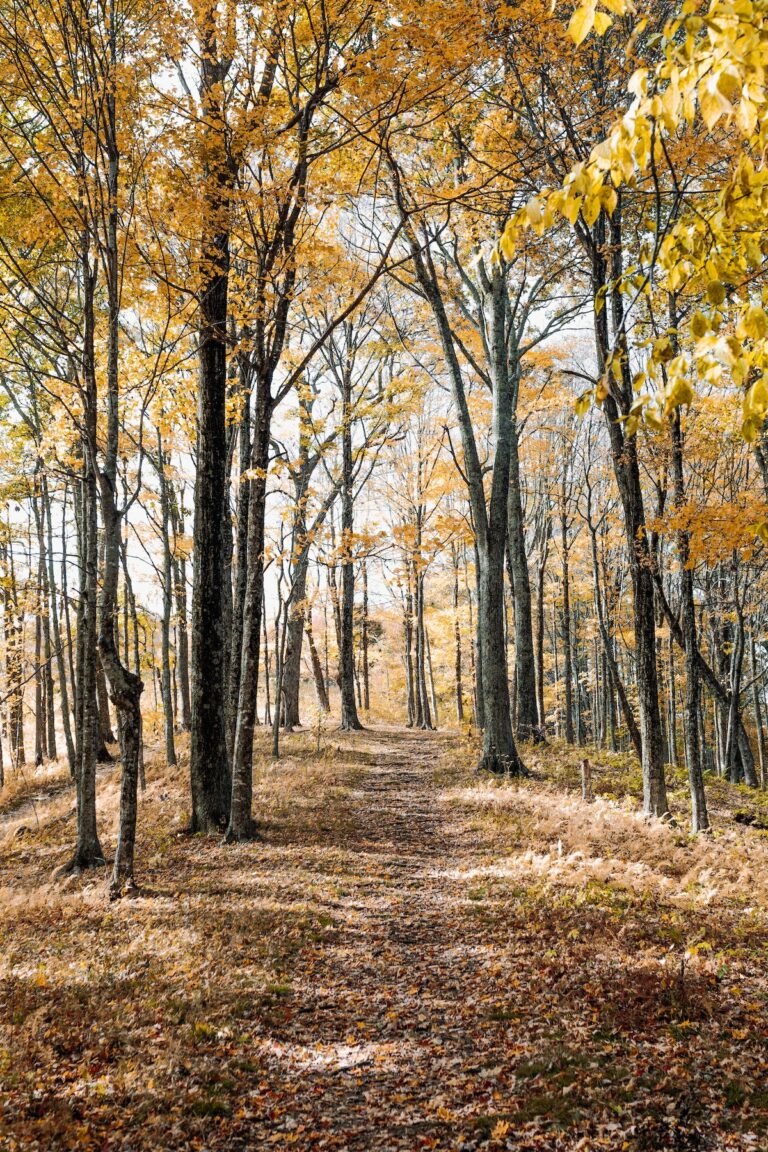
Marin, Sonoma and Napa counties are particularly spectacular places to experience fall. The oak and sycamore and maple trees become a pantheon of color; the air becomes crisp; rain comes and fills still-open windows with an aromatic petrichor. We shiver with anticipation for what? We don’t quite know.
Our artists know particularly, the magic of fall and how to pay homage to the season. Here are their words, as we embrace, invite and welcome harvest season.
“Autumn in Marin is the most beautiful season. The weather is usually very hospitable, and the light glows. I always look forward to all the fall arts’ events, such as the Mill Valley Film Festival and Larry the Hat’s Mill Valley Block Party. At O’Hanlon Center in Mill Valley, we have an annual Wabi Sabi exhibition in the gallery each fall that heralds the turn of the season. Since the work is primarily made with natural objects, and the aesthetic honors the transitory nature of life and death, the show deepens the viewer’s appreciation of the season. The fallen leaves from the maple trees blow into the gallery, and they are invited to stay.”
-Erma Murphy, executive director, O’Hanlon Arts Center, Mill Valley
“I love fall! This time of year is such a transition, physically and metaphorically. This season really ignites and invites an energetic slowing down. I’m extremely inspired by nature and the process of shedding and slowing in preparation for the slower and colder months. It’s a time to turn inward. I find myself wanting to cozy up and crochet sweaters to adorn my body. This time also inspires me to give myself a break, to trust in my creative process and to be really present in what my needs are. I invite people to turn to the trees; as they shed their leaves, what are you shedding? And how are you caring for yourself in the shedding process?”
-Kathryn Warren, artist and creator, Sebastopol
“Fall is definitely my favorite season. More than any other season, I feel a sense of anticipation in the fall. Living in the North Bay, there are of course the festivities around harvest, and the gratitude for the bounty given before winter. But what I love most about harvest is that it’s really the end of the outdoor season. During the summer, we gather as groups to meet strangers and acquaintances, to revel in all that spring and summer has provided. But in the fall, the celebrations become more select. We feel the wind, heavy with anticipation of a storm; we see the vibrant urgencies of yellow ginko trees, and orange maple leaves, telling us to hurry and find shelter, as we travel to more intimate gatherings. It’s not a time to meet new crowds, but to celebrate the love we have with those closest to us.
“The anticipation of those warm rooms, full of laughter, when you’re running in from the rain; the anticipation of those fiery leaves falling away and making room for regrowth; the anticipation of renewal to come after the letting go. That feeling is what energizes and inspires me during the fall.
“We are so blessed to be in the North Bay, where Mother Nature paints herself so spectacularly. When I’m not snuggling up with family or a good book, and I need some inspiration from outdoors, the Marin Arts and Garden Center is gorgeous year-round. And one of my very favorite fall pastimes is Tomales Bay at sunset. September and October are incredible for the bioluminescence. When I kick up the sand, I feel like I’m walking among stars. It’s magical.”
-Sarah Rodebaugh, artist, CDO Chronic Biophiliac, Henry Mae, Petaluma
“Harvest season isn’t for potatoes. When you are young, it is sad—the end of freedom and beginning of the discomfort of the schools, without enough sun at the end of the school day for relief. It is an end of play and a reminder of death, at an age when death shouldn’t weigh on your thoughts. When you are old, it is comforting, because the world is beginning to reflect you. And the neighbors are tucked away to cause no anxiety. And with no distractions, your creations are more relaxed and carefree, and not the fortress of spirits energized by the sun.”
-Art Moura, artist, Sebastopol
“Harvest season has always been an inspiration to me, because the change of season ignites a new creative spark in me spiritually, emotionally and mentally. Many of my fragments of creativity seem to come together as a new story ready to be birthed during this crisp and melancholy time. Fall season is a time of reflection and rejuvenation, with many memories had and to be made. After moving to the Bay area, I feel I was truly able to witness my favorite season in a different view, which only magnified my love for this time even more. The one major magical attribute to the harvest season in Marin County is the somber yet reinvigorating breath of freshness that dances in the atmosphere, ready to be captured on a canvas. We are so fortunate to be in the valley of one of the most beautiful places in the States.
“I urge people to get outside and be amongst nature. To hear the North Bay songs dedicated especially for this time, whether it’s a hike in the mountains, around the lakes or in the redwoods. Regardless of the location, know that you will witness something special that will feed your spirit and your soul. As an artist, you can’t ask for a better reference for creative perfection.”
-Dr. Orin Carpenter, artist, visual and performing arts director, Petaluma
“Fall has taken on a new feel in recent years. No longer the loss of summer fun and frolic, fall in California means relief is on the way, the end of fire season, the end of heat waves, the beginning of the rains. At least what rains may come.
“A bounteous season as the last of the sun’s most generous output of the year starts to wane. Plants put the final rush of energy into growth and bloom before yielding to our hands. It is a tactile time… Get outside even as the weather cools, as the first rains wash the stick of summer away. Make sure to touch, look, listen. Prepare your mind toward the darkening months, the gathering of families, the challenges of gloom and the turning back that follows.”
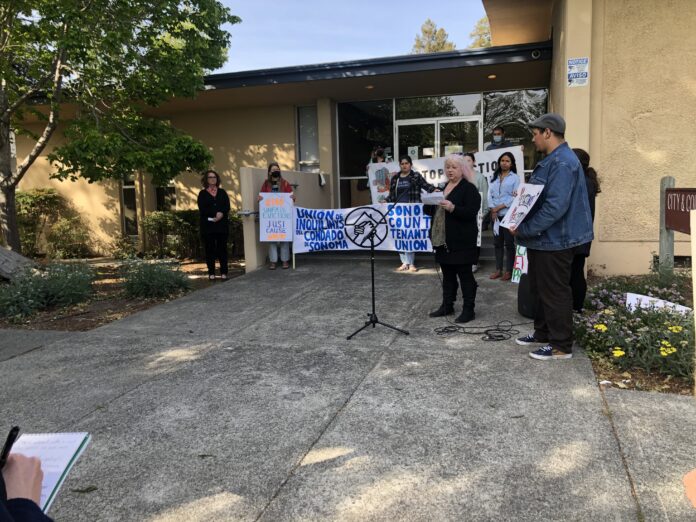
The Petaluma City Council last week approved additional protections for renters in the face of opposition from property owners.
Petaluma’s new rules, known as the Residential Tenancy Protections, will extend “Just Cause” protections to a far broader array of rental properties than a current state law governing evictions, including covering tenants in single family homes.
The ordinance also places new restrictions on evictions under the Ellis Act, a state law which allows landlords to evict tenants when they decide to take a rental property off the market. Tenant advocates have long argued that some bad-actor landlords use the Ellis Act to kick out a tenant and then quickly place a unit back on the market asking for a higher rent. Petaluma’s new ordinance would require property owners to give tenants at least 120-days’ notice for Ellis Act evictions.
However, the protections may not last for long, at least in their current form. Due to the concerns that the city did not conduct adequate outreach, the council agreed to make the ordinance sunset on March 1, 2023. Council members said the date will give the city time to speak to more stakeholders and gather data about evictions. However, the addition will also make the new tenant protections a debate topic in the city’s Nov. 8 elections for a new mayor and council members.
Four candidates, including two current council members, are running for at-large mayor. Eight candidates are running for three council positions in the city’s first district-based election.
The new council members and mayor will be appointed in January, meaning that the new tenant protections could be significantly changed by the new council next year.
The Sept. 12 vote concluded a multi-year push by tenant advocates. In May, the council added strengthening tenant protections to its list of legislative priorities. On Aug. 1, the council passed the protections, drafted by city staff, with a 4-2 vote. Council members Mike Healy and Dave King dissented, and council member Kevin McDonnell recused himself because he rents a property to a family member.
The council passed the legislation on second reading with the same vote split at its Monday, Sept. 12 meeting. The same night, the council extended Sonoma County’s emergency COVID-era eviction protections for Petaluma residents until the new protections go into effect. The county is expected to allow the COVID eviction protections to expire on Sept. 30.
Supporters of the added protections, led by the North Bay Organizing Project, Sonoma County Tenants Union and Legal Aid of Sonoma County, celebrated the victory in a press release after the vote.
“Passage of local tenant protections is truly historic in Sonoma County. We have been operating under the antiquated belief that the market will self-correct, while housing costs far exceed inflation, housing discrimination has reached endemic levels and we have endured a multi-year housing and homelessness crisis,” Margaret DeMatteo, Legal Aid’s housing policy attorney, said in the statement.
Tenants who spoke at the meetings shared stories of their struggles to find and hold on to affordable housing in Petaluma.
In a letter to the council, Petaluma tenant Joseph Alvarez wrote that he had faced an illegal 17% increase in rent when his lease came up for renewal at the beginning of the year.
“Please help those who can’t help themselves. I’m asking you as a Man who just wants the best for his kids and there (sic) future,” Alvarez wrote.
Meanwhile, in letters and comments at council meetings, local landlords and property managers raised concerns about the policy’s possible economic impacts and invoked the threat of possible legal challenges.
Critics of the Petaluma ordinance also argued that existing statewide tenant protections are adequate. In 2019, state lawmakers passed the Tenant Protection Act (TPA), which, among other things, prevents owners of certain kinds of rental properties from increasing existing tenants’ rents more than 10% per year.
“Our members reject the notion that the city of Petaluma needs to implement a local ‘Just Cause’ [ordinance] when AB 1482, the Tenant Protection Act of 2019, already exists statewide, and especially when the city does not have the data to justify why it wants to enact a stricter law,” Rhovy Lyn Antonio, a vice president with the California Apartment Association, a statewide industry group, said at the Aug. 1 meeting.
But supporters of increased protections pointed out problems with state regulations. The TPA exempts many units, including any rental building constructed in the past 15 years; single family homes and condos owned by non-corporate landlords; and units with on-site landlords.
The North Bay Business Journal reported in February that rents increased 14.5% in Petaluma in 2021, above the 10% maximum allowed for units covered by the TPA. Asked about this discrepancy at the council’s Aug. 1 meeting, Dylan Brady, an assistant city attorney, said that the increase was probably due to increases on units not covered by the TPA—including single family homes—and some landlords illegally raising rents.
According to aPetaluma staff presentation from last May, the median income of a family in Petaluma is $65,396, significantly lower than the $88,160 income needed to comfortably afford rent. According to city data, 81% of Petaluma low-income residents are spending more than 30% of their income on housing costs.
Although Petaluma’s “Just Cause” legislation is a first for Sonoma County, rent increases have led other California cities and counties to pass stricter rent control and tenant protections this year.
On Aug. 28, the Los Angeles Times reported that cities around the state, including Antioch, Bell Gardens and Santa Ana, have passed local rent control ordinances which restrict rent increases more than the current state regulations. In Marin County, tenant advocates pushed Fairfax and San Anselmo to pass additional local tenant protections earlier this year.
Many commenters raised concerns about the process Petaluma followed in writing and introducing the legislation, which was drafted by staff and published online days before the council’s Aug. 1 meeting. A few council members on both sides of the vote acknowledged that issue.
At the Sept. 12 meeting, council member Brian Barnacle said, “I don’t think this is a particularly good piece of legislation. What I’m really excited about with this is [that we’re] starting to track things… I want better data, and we’re going to start getting better data because we’re putting this into place.”
Barnacle added that he wants to hear from tenants and landlords in the coming months to inform the council’s approach to the legislation when they revisit it next year.
At the same meeting, Mayor Teressa Barrett, who supported the protections and is retiring from office at the end of the year, said, “I know that this is not the end, unfortunately. But I hope as it goes forward, there will be more communication [from both sides].”
ARIES (March 21-April 19): My reader, Monica Ballard, has this advice for you Aries folks: “If you don’t vividly ask for and eagerly welcome the gifts the Universe has in store for you, you may have to settle for trinkets and baubles. So never settle.” That’s always useful counsel for you Rams. And in the coming weeks, you will be wise to heed it with extra intensity. Here’s a good metaphor to spur you on: Don’t fill up on junk snacks or glitzy hors d’oeuvres. Instead, hold out for gourmet feasts featuring healthy, delectable entrées.
TAURUS (April 20-May 20): I will remind you about a potential superpower that is your birthright to develop: You can help people to act in service to the deepest truths and strongest love. You can even teach them how to do it. Have you been ripening this talent in 2022? Have you been bringing it more to the forefront of your relationships? I hope so. The coming months will stir you to go further than ever before in expressing this gift. For best results, take a vow to nurture the deepest truths and strongest love in all your thoughts and dealings with others.
GEMINI (May 21-June 20): Your mind is sometimes a lush and beautiful maze that you get lost in. Is that a problem? Now and then it is, yes. But just as often, it’s an entertaining blessing. As you wander around amidst the lavish finery, not quite sure of where you are or where you’re going, you often make discoveries that rouse your half-dormant potentials. You luckily stumble into unforeseen insights you didn’t realize you needed to know. I believe the description I just articulated fits your current ramble through the amazing maze. My advice: Don’t be in a mad rush to escape. Allow this dizzying but dazzling expedition to offer you all its rich teachings.
CANCER (June 21-July 22): “Poetry is a life-cherishing force,” said Pulitzer Prize-winner Mary Oliver, who published 33 volumes of poetry and read hundreds of other poets. Her statement isn’t true for everyone, of course. To reach the point where reading poetry provides our souls with nourishment, we may have to work hard to learn how to appreciate it. Some of us don’t have the leisure or temperament to do so. In any case, Cancerian, what are your life-cherishing forces? What influences inspire you to know and feel all that’s most precious about your time on Earth? Now would be an excellent time to ruminate on those treasures—and take steps to nurture them with tender ingenuity.
LEO (July 23-Aug. 22): Please promise me you will respect and revere your glorious star power in the coming weeks. I feel it’s important, both to you and those whose lives you touch, that you exalt and exult in your access to your magnificence. For everyone’s benefit, you should play freely with the art of being majestic, regal and sovereign. To do this right, you must refrain from indulging in trivial wishes, passing fancies and minor attractions. You must give yourself to what’s stellar. You must serve your holiest longings, your riveting dreams and your thrilling hopes.
VIRGO (Aug. 23-Sept. 22): It’s impossible to be perfect. It’s neither healthy nor productive to obsess on perfectionism. You know these things. You understand you can’t afford to get bogged down in overthinking, overreaching and overpolishing. And when you are at your best, you sublimate such manic urges. You transform them into the elegant intention to clarify and refine and refresh. With grace and care, you express useful beauty instead of aiming for hyper-immaculate precision. I believe that in the coming weeks, dear Virgo, you will be a master of these services—skilled at performing them for yourself and others.
LIBRA (Sept. 23-Oct. 22): According to Libran poet T. S. Eliot, “What we call the beginning is often the end. And to make an end is to make a beginning. The end is where we start from.” Those are your guiding thoughts for the coming days, Libra. You’re almost ready to start fresh; you’re on the verge of being able to start planning your launch date or grand opening. Now all you have to do is create a big crisp emptiness where the next phase will have plenty of room to germinate. The best way to do that is to finish the old process as completely as possible.
SCORPIO (Oct. 23-Nov. 21): Now and then, you slip into phases when you’re poised on the brink of either self-damage or self-discovery. You wobble and lurch on the borderline where self-undoing vies with self-creation. Whenever this situation arises, here are key questions to ask yourself: Is there a strategy you can implement to ensure that you glide into self-discovery and self-creation? Is there a homing thought that will lure you away from the perverse temptations of self-damage and self-undoing? The answers to these queries are always yes—if you regard love as your top priority and if you serve the cause of love over every other consideration.
SAGITTARIUS (Nov. 22-Dec. 21): “Sometimes serendipity is just intention unmasked,” said Sagittarian author Elizabeth Berg. I suspect her theory will be true for you in the coming weeks. You have done an adroit job of formulating your intentions and collecting the information you need to carry out your intentions. What may be best now is to relax your focus as you make room for life to respond to your diligent preparations. “I’m a great believer in luck,” said my Uncle Ned. “I’ve found that the harder I work, the more luck I have.” He was correct, but it’s also true that luck sometimes surges your way when you’ve taken a break from your hard work.
CAPRICORN (Dec. 22-Jan. 19): Tips to get the most out of the next six weeks: 1. Be the cautiously optimistic voice of reason. Be the methodical motivator who prods and inspires. Organize as you uplift. Encourage others as you build efficiency. 2. Don’t take other people’s apparent stupidity or rudeness as personal affronts. Try to understand how the suffering they have endured may have led to their behavior. 3. Be your own father. Guide yourself as a wise and benevolent male elder would. 4. Seek new ways to experience euphoria and enchantment, with an emphasis on what pleasures will also make you healthier.
AQUARIUS (Jan. 20-Feb. 18): Aquarian author Richard Ford has advice for writers: “Find what causes a commotion in your heart. Find a way to write about that.” I will amend his counsel to apply to all of you non-writers, as well. By my reckoning, the coming weeks will be prime time to be gleefully honest as you identify what causes commotions in your heart. Why should you do that? Because it will lead you to the good decisions you need to make in the coming months. As you attend to this holy homework, I suggest you direct the following invitation to the universe: “Beguile me, mystify me, delight me, fascinate me and rouse me to feel deep, delicious feelings.”
PISCES (Feb. 19-March 20): “I am lonely, yet not everybody will do,” observed Piscean author Anaïs Nin. “Some people fill the gaps, and others emphasize my loneliness,” she concluded. According to my reading of the astrological omens, Pisces, it’s your task right now to identify which people intensify your loneliness and which really do fill the gaps. And then devote yourself with extra care to cultivating your connections with the gap-fillers. Loneliness is sometimes a good thing—a state that helps you renew and deepen your communion with your deep self. But I don’t believe that’s your assignment these days. Instead, you’ll be wise to experience intimacy that enriches your sense of feeling at home in the world. You’ll thrive by consorting with allies who sweeten your love of life.
Over the past year, the U.S. has experienced a surge in labor organizing.
After decades of decline in union participation and real wages, workers at Amazon, Starbucks, REI and numerous other companies big and small have voted to form unions or participated in other forms of labor actions, often in the face of fierce resistance. The surge in labor action has been accompanied by historic popularity of unions, with 71% of respondents to an August Gallup poll voicing approval for unions, the highest rate since 1965.
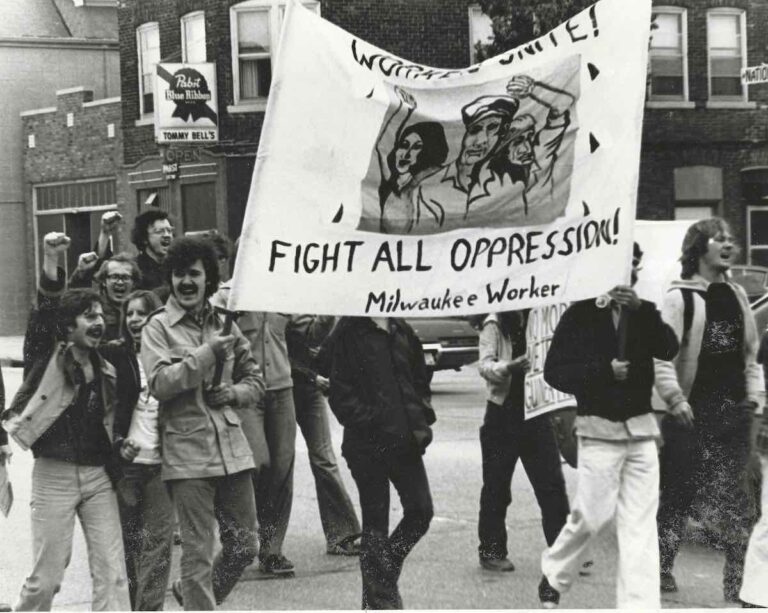
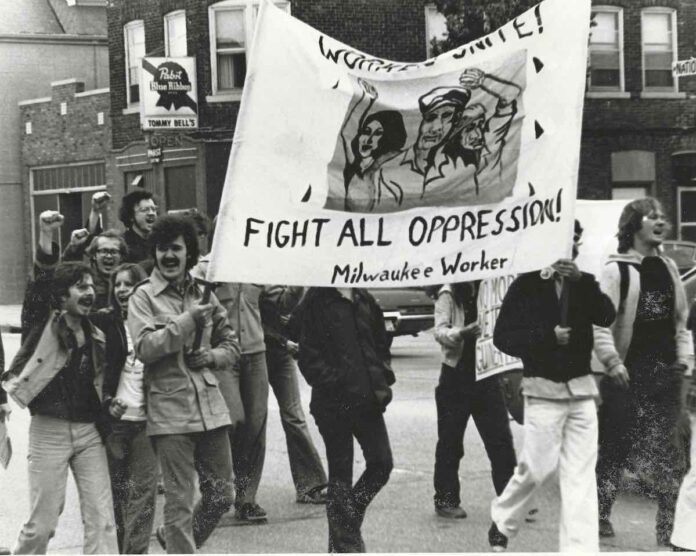
This makes it a fitting time for the publication of Sonoma County resident Jonathan Melrod’s new memoir, ‘Fighting Times: Organizing on the Front Lines of the Class Struggle.’ The book centers on Melrod’s 13-year effort to “harness working class militancy and jump start a revolution on the shop floor of the American Motors’ auto assembly plant.”
After cutting his teeth as a college radical, Melrod takes a union job at an American Motors’ factory and begins to make trouble. Melrod and his colleagues publish a radical workers’ newsletter titled ‘Fighting Times,’ lead numerous strikes and walkouts, and, ultimately, face down the American Motors-funded defamation lawsuit against the newsletter’s editors.
Much has changed in the world since the 1970s, but Melrod’s memoir, jam-packed with stories from the front lines, makes for an entertaining, educational and timely read. An excerpt from the book follows.
‘Fighting Times,’ published by PM Press, will be available in stores and online on Sept. 27. Melrod will speak at the Sebastopol Copperfield’s Books on Thursday, Oct. 6 at 7pm. The event is free, but RSVPing online is recommended. —Will Carruthers, News Editor
—
The ups and downs in auto, based largely on consumers’ preference for this or that model, meant assembly plants went through cycles of layoffs and expanded employment. The Kenosha American Motors’ plant saw a mass hiring of young workers who were rebellious and not cowed by the company or the union. And dissatisfaction with Department 838 long-term chief steward Russ Gillette reached a tipping point.
Gillette’s name did not even appear on the vote tally for the 1979 stewards’ election. I can no longer recall if Gillette went on sick leave or chose not to run, but he’d had enough. Gillette’s departure fractured his clique’s standing.
When election results were posted, I had placed second with 132 votes, topped only by Peggy Applegate, the only woman steward.
For the election, I organized a team of fresh, young activists, loosely affiliated with the UWO United Workers Organization, to run for stewards’ positions. Of the twelve positions, four of our candidates won in addition to me. The most significant victory accrued to Jimmy Graham as the first steward of color in Department 838.
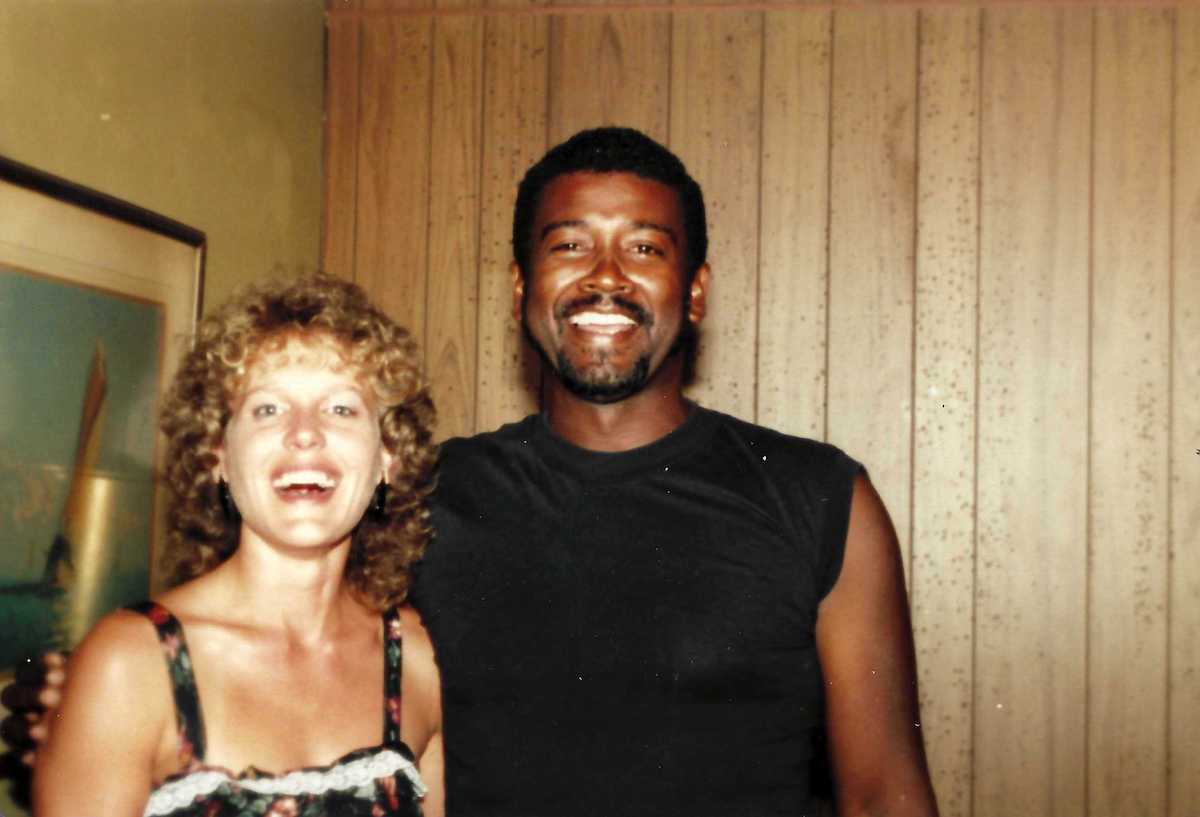
Joanne Tank and Jimmy Graham were elected as union stewards in the 1979 department elections that dislodged the conservative “all-white” clique. Photo courtesy of Jonathan Melrod.
The vote totals presented a conundrum. Kojak, my former Milwaukee head steward, was elected and announced his intent to run for chief. Jim Gathings, who had placed behind me with 127 votes, also announced he was running for chief.
Gathings hailed from the 838 old school and was a pickup-driving, tobacco-chewing, self-proclaimed cowboy with an inflated belly hanging over a large turquoise belt buckle. Like quite a few in the plant, Gathings’s other job was tending his farm, and he also held a semiskilled repair job.
Rather than run for chief, I opted to let Kojak challenge Gathings, planning to devote the year to teaching UWO-affiliated candidates how to become effective union reps. I could be patient, as I was down for the long haul.
Gathings, still able to rally Gillette’s base, beat Kojak, who had appealed primarily to former Milwaukee guys who had previously transferred to the Kenosha plant.
By virtue of being chief, Gathings gained entitlement to overtime if any worker in 838 on his shift was scheduled to work overtime. Gathings sucked up every minute of overtime, providing a fat paycheck but also inextricably tying him to management, as a piglet latched to its mother’s teat.
While daily interaction between Gathings and me remained superficially cordial, underlying tension tinged our every conversation. Our clashing outlooks surfaced with venom one Monday morning. Heading for nine thirty break, I ran into an animated scrum of young department members. “Melrod, did you hear? Gathings told Cathy (the steward) she shouldn’t be kissin’ on a nigger. It’s way fucked up.”
A group of Department 838 folks had been partying behind Madore’s bar after work the preceding Friday. Cathy and Jessie Sewell, a Black worker, exchanged a kiss. A kiss between a Black guy and a white woman—nothing more.
Nevertheless, the incident was stoking a brushfire, and I needed to get the facts down.
Jessie worked one station up the line. I had spent hours hanging with Jessie, and other regulars, behind Madore’s, drinking pints. Jessie was also a solid Fighting Times ally.
As soon as I could get a utility worker to relieve me, I checked in with Cathy. She was a new steward, and I had been mentoring her to adopt a more confrontational stance with management.
“Hey, Cathy—heard some bullshit’s going down with Gathings. He’s been running his mouth spouting racist shit about Jessie and you. What’s up?”
“Jon, I’m afraid for this to turn into a big public incident. I don’t want Gathings coming down on me.”
“I hear you, Cathy, and I get it, but Gathings got no right to talk about you. Just because he’s chief doesn’t mean he’s got any business getting in your face about who you want to party with or who you kiss! That’s sexist, racist b.s. Plus you’re a steward now, and you need to set an example of good unionism. Gathings, and I don’t care if he’s chief, can’t go around mouthing racist bullshit. He’s gotta treat you like a grown woman, with respect. Gathings is way out of line.”
“Jon, please let me think about it.”
“Cathy, it’s not you causing trouble—it’s Gathings. But if you feel like it’s over and want to drop it, I’m cool.”
By lunch, the whole department buzzed. Blacks were outraged. Many grabbed me, wanting to know what could be done. In the past, a racist incident might have sparked an angry reaction and then fade; not this time, I thought.
As department chair, I put the incident on the agenda. I met with the other stewards who had run with me, and we discussed our obligation to address racism at the department meeting. Graham took a strong position, as he had previously complained about Gathings’s shit attitude toward Blacks.
With increasing intensity, word spread of a confrontation going down. Black people, many of whom had never thought of attending a department union meeting, beat the drum to call out Gathings. Similarly, many younger whites took offense at Gathings’s behavior.
I needed to get Jessie onboard. “Hey, bro. Que pasa? What’s up with this Gathings bullshit? He’s been mouthing some nasty name calling ’bout you.”
A pained look crossed Jessie’s face, a stark contrast to his usual clowning demeanor. He looked hurt and embarrassed. Even though he was free and equal to Gathings, he felt stuck taking shit from a self-proclaimed cowboy whose primary reason for being chief was greed.
“Melrod, what I’m gonna do? Ain’t nobody care. Gathings is chief.”
“Fuck that, bro! We got our guys—Ernie, your main man—and Pedro got the Mexicans. We got the Blacks who are tired of racist shit. We got the young people and the Fighting Times people. We don’t gotta let this slide. We gotta jack Gathings up. It’s on the agenda for the department meeting. Ya with me?”
Tension on the floor ratcheted up. I noticed Gathings huddling with his white repair buddies (there being only one Black 838 repair worker).
It might have been the largest department meeting in 838’s history. I looked out, and many of our people had shown up, particularly Blacks. I also noticed a gaggle of repair workers and a smattering of old-school, conservative types who I assumed had attended at Gathings’s urging. I called the meeting to order. Old business first.
“Hey, Melrod, we ain’t here for no old business. We’re here ’bout what Gathings said about Jessie.”
“All right then, new business.”
I called an audible, turning toward Gathings sitting next to me, a rather uncomfortable seating plan.
“Jim, I believe folks want to hear about the incident with Jessie and Cathy that involves you.”
“Yeah, yeah. I wasn’t serious. I was just joking ’bout what I said. It ain’t that big a deal.”
I’d been watching Jessie; his face tightened. He sat for a few uncomfortable seconds. I waited for the slightest movement of his hand and immediately called on him before he put it back down.
“I been hearing Gathings has been talking about me. He got no business talkin’ about me being Black or any color.”
Gathings, in a voice barely audible, said, “Yeah, I shouldn’ta said nottin’.” This can’t be the end of it, I thought. This is too important.
I saw Graham’s hand. “Jimmy.”
“That ain’t an acceptable apology. If Gathings is chief, he can’t be talkin’ racist shit about no one. The union is about us all. The union’s strong only if we are together. I never want to hear no one using language calling a brother or sister that fucked-up word! You hear me, Gathings?”
“I didn’t mean no harm.”
“Gathings—ain’t the point. Your talk is harmful. You got no right talkin’ about Jessie or Cathy. Ain’t your business.”
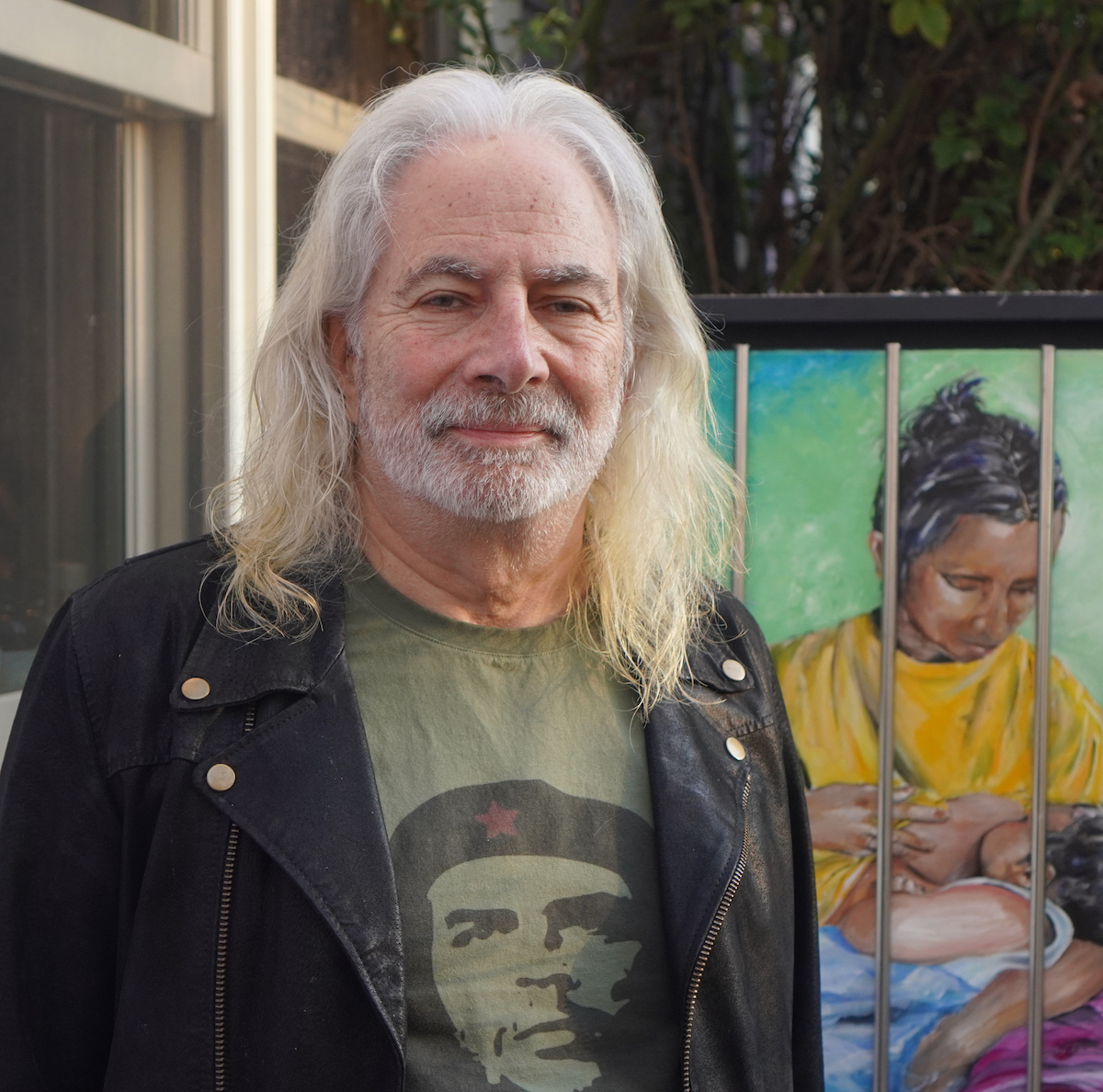
After his years as a labor organizer, Jonathan Melrod moved to the Bay Area to attend law school. Photo courtesy of Jonathan Melrod.
For the first time, Blacks in the department stood their ground and made their voices heard, not just about the incident with Jessie and Cathy but also how they felt ignored and disregarded by the union. Gathings had been the catalyst, but the discussion was cathartic for airing long-held grievances about discriminatory treatment and favoritism—from both management and union.
Somebody tapped a keg, and I noticed people filling big red cups with beer. Beer on an empty stomach, particularly as tempers flared, didn’t portend well.
“I think we covered the agenda, but I have a few comments. First off, I want to thank the huge turnout. Anyone who’s got something to say can say it here. Having said that—the bottom line is there’s no place for racism in our union, no way, no how! Adjourned.”
Steward John Leyendecker and I chatted in the beer line. Beers in hand, we talked. In the drift of the crowd, we ended up across from Gathings andanother old-school steward. You could cut the tension.
Gathings stared at me with palpable scorn. We couldn’t have come from two more different worlds. I had left the East Coast for college in Madison. He had stayed on the farm and gone to work young at AMC. He chewed tobacco. I smoked pot. His proudest moment was when his daughter placed first at 4-H for her cow, and I had come from Milwaukee and uprooted his world, in his eyes.
“Hey, Melrod. I don’t like what you been saying about me.”
“Only talkin’ truth, Gathings. You had a chance to call me out but didn’t. I don’t like hearing how you dissed my partner Jessie. I can’t change your thinking, but we all got to act right in the union.”
“Fuck you, Melrod. I’ll say what the fuck I want.”
The space between us shrank. I braced for incoming, but then Leyendecker [one of the recently elected young stewards] inserted himself between us. Leyendecker, at least according to him, had been a Navy SEAL. I admit, he threw down like a guy who knew how to fight.
“Go ahead, you redneck, bring it.”
The other old-school steward jumped in. “Let’s all cool it. Meeting’s over.”
“Yeah,” I said as Leyendecker and I turned to leave.
In a testament to the power of grassroots union democracy, the department meeting had taken up the key issue of racism, previously ignored or swept under the carpet.
Theater is like any other art form—sometimes a job, sometimes a chore—but every once in a while, the right artists meet the right project and magic is born. That magic can be found in Sonoma Arts Live’s (SAL) season-opening production of Ain’t Misbehavin’, running now through Sept. 25.
Directed by Aja Gianola-Norris, choreographed by Tyehimba Kokayi and with FIRST TIME musical director Neil Fontano, this musical revue of the works of Thomas “Fats” Waller is a breath of fresh air in this community. The cast of five—Gianola-Norris, D’Artagnan Riviera, Serena Elize Flores, Phillip Percy Williams and Jonathen Blue—are absolutely effervescent.
Set loosely in early 20th-century Harlem, the show opens with the high-energy titular song, then swirls into the brilliant camp of “Yacht Club Swing” (featuring Gianola-Norris), a comedically effective “Cash for Trash” (Elize Flores), a classy “Lounging at the Waldorf” (Riviera), the funny “Your Feet’s Too Big” (Williams), a heartbreaking “Mean to Me” (Blue) and the immaculately sorrowful strength of an all-cast “Black and Blue.”
There is less of a plot here than a theme. That theme is joy: the joy of living, the joy of being human, the joy of being Black. Ain’t Misbehavin’ shines a sparkling spotlight on a topic that is often overlooked in American theater: the humanity and happiness of Black people. That happiness explodes from the Rotary Stage.
It would be disingenuous to pretend this show was perfect and the few things “wrong” with this show can be easily fixed if SAL would be willing to do so.
The sound mixing was not up to par, and it was sometimes difficult to hear performers over the excellent band.
More egregious was that Sonoma Arts Live sent the performers of color on stage with white body microphones that were distracting at the best of times and downright insulting during tender moments. Body mics are a required expense of doing musicals. The purchase or rental of mics for non-white actors should be an expectation of any theater doing this or any musical.
Despite these issues, I still come to an obvious conclusion: Go see this show! Take your family and your friends. Treat yourself to a second or third trip. These artists are more than worthy of your admiration, and it is impossible not to feel joy in their presence.
‘Ain’t Misbehavin’’ runs through Sept. 25 on the Rotary Stage at Andrews Hall in the Sonoma Community Center, 276 E. Napa St., Sonoma. Thurs-Sat, 7:30pm; Sun, 2pm. $25 -$42. Masking is encouraged. 707-484-4874. sonomaartslive.org
A recent study revealed that a majority of Americans think our best days are behind us.
This confirms the view of metaphysicians a hundred years ago, who warned that our civilization was in the throes of the Kali Yuga, or era of dissolution. In the Hindu tradition, Kali is a female deity of destruction, who goes around chopping off heads...
Like Lloyd Bridges quipped in 1980’s Airplane!, “I picked the wrong week to quit sniffing glue,” and I picked the wrong week to quit drinking beer.
I quote the line because I was mulling a rollback in my consumption of ice cold beer as a coping mechanism for the heat now that the “heat dome” has subsided. Then I looked...
Petaluma’s Cinnabar Theater opens its 50th season with a solid production of the Tony Award-winning musical, The 25th Annual Putnam County Spelling Bee. The show runs through Sept. 25.
Set in a midwestern middle school, it tells the story of six kooky fourth-grade spelling champions: Leaf Coneybear (Zane Walters), William Barfee (Trevor Hoffman), Logainne “Schwartzy” Schwartzandgrubenierre (Tina Traboulsi), Olive Ostrovsky...
ARIES (March 21-April 19): Even when your courage has a touch of foolhardiness, even when your quest for adventure makes you a bit reckless, you can be resourceful enough to avoid dicey consequences. Maybe more than any other sign of the zodiac, you periodically outfox karma. But in the coming weeks, I will nevertheless counsel you not to barge...
Saratoga
Weird Al Yankovic
If the lyrics, “It’d feel so empty without meat” or “Think I’m just too white and nerdy” ring a bell, then look no further for a mid-week activity. The one, the only, the inimitable Weird Al Yankovic takes the stage at Mountain Winery this Wednesday. On his “The Unfortunate Return of the Ridiculously Self-Indulgent, Ill-Advised Vanity Tour,”...
Fall. An incredible season. Full of death, decay, mystery—full of, also, an incredible expansive beginning.
The crackle of potential moves through the air; the atoms extra-charged with the transition from summer towards winter. Fall is a bardo period—a magnificent, liminal, in between state. There is an invitation to look inward, to reflect on our lives, loves, heartaches, changes, as the...
The Petaluma City Council last week approved additional protections for renters in the face of opposition from property owners.
Petaluma’s new rules, known as the Residential Tenancy Protections, will extend “Just Cause” protections to a far broader array of rental properties than a current state law governing evictions, including covering tenants in single family homes.
The ordinance also places new restrictions...
ARIES (March 21-April 19): My reader, Monica Ballard, has this advice for you Aries folks: “If you don’t vividly ask for and eagerly welcome the gifts the Universe has in store for you, you may have to settle for trinkets and baubles. So never settle.” That's always useful counsel for you Rams. And in the coming weeks, you will...
Over the past year, the U.S. has experienced a surge in labor organizing.
After decades of decline in union participation and real wages, workers at Amazon, Starbucks, REI and numerous other companies big and small have voted to form unions or participated in other forms of labor actions, often in the face of fierce resistance. The surge in labor action...
Theater is like any other art form—sometimes a job, sometimes a chore—but every once in a while, the right artists meet the right project and magic is born. That magic can be found in Sonoma Arts Live’s (SAL) season-opening production of Ain’t Misbehavin’, running now through Sept. 25.
Directed by Aja Gianola-Norris, choreographed by Tyehimba Kokayi and with FIRST TIME...