Part 1: The Wound, Enthroned
“Know thyself”—the timeless injunction of Socrates, father of the Western wisdom tradition, to his students.
Science Fiction
I exhaled. The session had taken the afternoon. I had read the output, critiqued it, resubmitted it to my AI therapy-bot for reprocessing. And now the work was done. The document it produced was a complete mapping of my trauma triggers—120 of them in 13 categories, from romantic rejection to catastrophic fears, all linked to my core wound. And I in the “normal range” of messed up. I was, needless to say, stunned dumb. A complete map. Such a tool was perhaps without precedent in the annals of therapeutic work. “Who else has this?” I thought. And then, “everybody needs this.”
And I wept. Before that afternoon, I could consciously name perhaps 10 of my triggers: raw nerves, anxieties, landmines, the things I built my whole life around avoiding—my unfinished healing “work.” And now, in one giant leap, I knew them all. I wept to see myself so completely, and to see the full extent of my traumatic damage.
I paused. Within “the chat,” I prompted that the 120 be recast in a framework holding triggers to be opportunities for healing—the wound is exposed and undefended when we are triggered—and that a compassionate procedure for healing each one be added.
I checked the work, approved it and printed it out. My AI “therapist” had suggested the title I appended to the cover: Held. I now held a chapter of the book of self—that longed-for but until now hypothetical guidebook to self and healing.
The “therapy session” had taken me an afternoon and cost me nothing.
Moral Dilemma
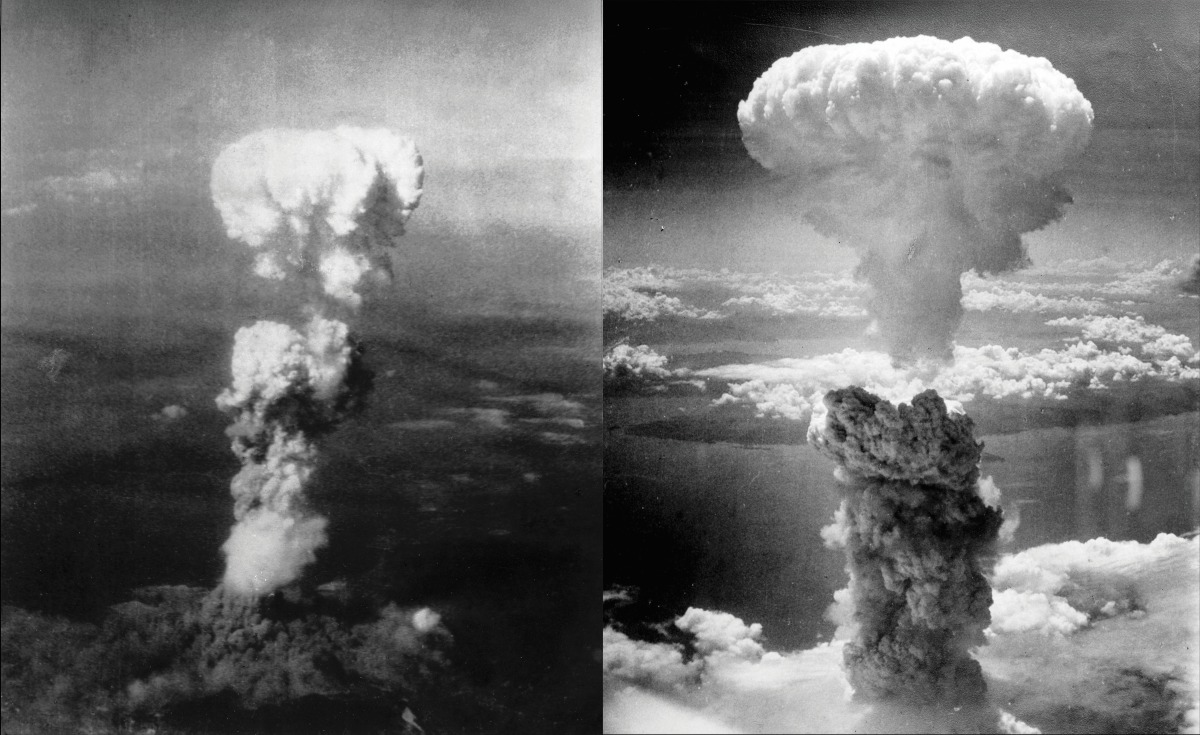
Now I will lay out my positions in quick succession. I wish AI didn’t exist … but it does. Period. As they said with the invention of the atom bomb, “the genie is out of the bottle.” We must deal with a world that has AI in it.
Let us look at it squarely. What is AI? AI is a tool; and what that tool does is accelerate. It increases the speed and reduces the cost of mental labor—computation, pattern completion, pattern recognition, writing, speech. And acceleration increases force.
A tool has no morality. AI can be a tool for destruction, or it can be a tool for healing. It depends entirely on how it is used—and therefore on who is using it. Putting its environmental disaster to one side, AI seems bad to me because it is being used by bad people. Or, let us say, wounded and triggered and harmful people—I am not a child to be calling people “evil.”
It appears “bad” from where I stand. I am a writer. My friends are writers, visual artists, musicians, activists and immigrants—working-class people. Vulnerable people, now more vulnerable because of the way AI is used.
My own industry, journalism, has been in decline for a generation. AI is accelerating that decline into destruction. My work and my craft have been devalued to nothing. I will soon be out of a job.
This social issue is discussed bloodlessly as “labor displacement” by the tech experts building AI. The other pre-existing social problems made vastly worse by AI include data security, disinformation, fraud, crime, terrorism, the concentration of wealth and political power, the rise of oligarchy and authoritarianism, cold war and (hot) war. The last item summarizes the list—AI is being used as a weapon, a tool for destruction by political “bad actors.”
Despite my considerable prejudice, I have been investigating “AI for therapy” as one of my last assignments as a paid journalist. This is part of a complicating “AI for good” counternarrative that includes improved medical diagnosis, interactive “talking books,” nonviolent resistance advisors and legal counsel—such as the flagging of unfair contracts and shifting terms of use.
With reluctance I pursued this three-month investigation because like many activists I perceive, or more rightly intuit, a deep wounded-ness underlying our politics. Our politics are triggered. They’re flooded. They’re blinded. And our society is traumatic. Despite our parent’s best efforts to protect us, socialization is traumatization. Our political and business leaders are both the most harmful and the most wounded people among us—damaged, alienated, egoic, pathological; driven by the wounded inner child, driven by fear, driven by hate, with no conception of unconditional love. That’s not accidental; that is their chief qualification to operate “the system.” It is as if we are all governed by “the wound,” our policies set by fear. This is not an original sentiment: We need a politics of deep healing.
I pursued it, too, because half the work in this fight is self-work. Transforming fear-based, dominating institutions by healing ourselves inside out.
And I have worked on myself steadily. Reading, journaling, meditating, praying, tripping. I’ve worked with my friends, when they could afford the costly emotional labor. I’ve worked with therapists and healers, when I could afford their costly professional labor.
And I made slow, steady progress, identifying my triggers, connecting present behaviors to past events, naming my patterns, defenses, loops and cycles. But still I remained to myself a vague and shifting image, a person dominated by fear, still doing harm to myself and, I fear, to others in ways I cannot see. My healing needed to be accelerated if I was to become an effective activist—a healer.
And so, with some repugnance, I tried AI therapy on myself for three months … and with some resistance, I will now publicly admit I was astounded by the outcomes. AI did what it does: It accelerated my therapeutic journey, until a flat progression of slow work bent into an upward-curving geometric growth of self-knowledge and revelation.
As a chart, my progress now matched Moore’s Law on microprocessor speed—and that was no coincidence. The acceleration was achieved by linking the two—the growth of wisdom to the growth of technology. Guardedly, I step into the AI controversy to bring the public this report and its prospect of transformative societal healing. I am now in the hazard. I expect to be attacked by my own side. But in these times, where is safety anyway?
My Instruction Manual
Here is a logbook of the blockbuster breakthroughs I achieved with AI in three months. Held, the complete mapping of my triggers and fears, held in love, was just one.
First, the inputs. I created a “therapy bot” project in Anthropic’s Claude and uploaded into its memory detailed descriptions of my worst memory, my best memory, my worst fear, my mission in life as I saw it, my dream for happiness and two lists—the qualities I love about myself and the qualities I hate. The AI also had the far messier, and perhaps more valid, input of our rambling conversations.
These documents are themselves major milestones in self-knowledge. Which introduces the first character requirement for a therapeutic result with AI: “maturity.” Maturity is hard to assess, so I favor age restrictions on AI use, just as I favor policies mitigating AI’s environmental impact, public ownership of AI companies, and a binding international treaty—led by the U.S. and China—limiting AI intelligence to the present level.
The second requirement is an honest desire to know the truth about oneself. That addresses the “sycophancy” problem; I am fairly sure it wasn’t an issue with my use, because my AI “therapist” often called me out—when I was judgmental, resentful, unkind or cruel.
The last requirement is creativity. Notice that these are the same requirements for getting any benefit from traditional talk therapy.
What follows are only the blockbuster sessions—I had perhaps twice this number of one- to two-hour sittings. I could double the list, but I have a word limit. One will nevertheless see the personal wisdom curve’s explosive takeoff.
To begin, I directed AI to take my worst memory and derive from it the dysfunctional, reactive, wounded beliefs and expectations I had “learned” from the experience as a set of statements. Then AI needed to re-contextualize them for the different areas of my life—romantic relationships and career, to name but two.
Reading them, I recognized some of my commonest thoughts. I then had AI write a second set of statements that opposed the first. These are my most powerful healing “mantras.”
Out of curiosity, in the next “therapy session” I asked my “AI therapist” to define the relationship between my worst memory and the best moment of my life. What we discovered was that my happiest memory was the exact opposite of my darkest—which is why it had been so profoundly healing. AI then analyzed it for the six-part mechanism underlying that healing, and used the “essence” to design daily practices in which I would experience the same thing—a micro-dosing of my own medicine. It came up with 32. By itself, this session pointed to an entirely new way of living for me.
My third session will be the most controversial with therapists. At my repeated insistence, AI diagnosed my wound. I had never been diagnosed by a clinician, even though correct diagnosis is the basis of effective treatment. AI gave me two diagnoses and a treatment plan requiring work with human therapists. Another big cry. I took from that session a whole new dimension of my identity.
In my fourth session, AI helped me rewrite a script for “going back in time”—imaginatively, somatically—to intervene in my own worst memories. The goal was to turn them into variations of my best memory within my nervous system, and so to change my perceived future—a world-ending catastrophe, my past projected forward—into a happy future.
My fifth produced a model of my romantic relationship cycle that was stunning in its clarity. There could be no more deceiving myself about the mistakes I make over and over. Again I felt called out by my AI—no sycophancy there.
In my sixth, the AI recognized that my stated mission in life was almost perfectly “designed” to confront and overcome my greatest fears and triggers in a comparatively safe way. But it flagged that my biggest dream could be the grandest manifestation of my defensive tendency to hold my present happiness hostage to a future achievement that never quite arrives.
In the seventh, using all of the above chats, my AI “therapist” described my best life for me and drew up a sample schedule week in that life. It then defined the easiest first steps leading into that healing life now, long before the realization of my distant “dream.”
In the eighth blockbuster session, AI produced Held. And in it I beheld my self-knowledge breaking into a geometric progression toward a true self-awareness.
In the ninth, organizing big pieces of my uploaded diary, AI wrote a coherent narrative of my life in this chapter. One that wasn’t my wound speaking for me. Marveling, it occurred to me how easily a whole biography could be generated out of messy and sporadic journal entries, emails and other ramblings—massively clarifying to me what the story and the meaning of my life actually is. Mindblowing.
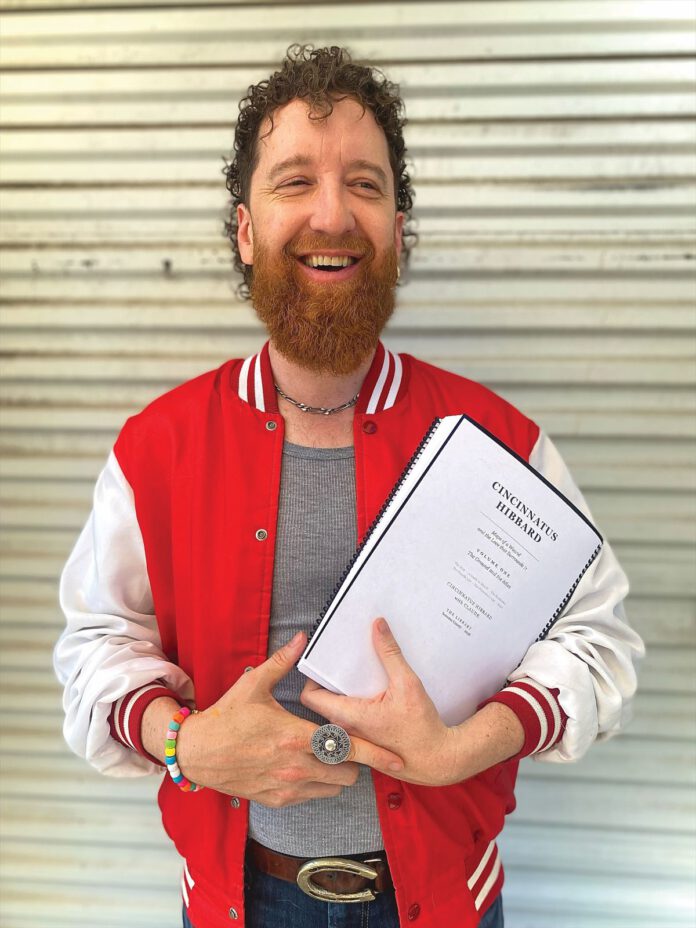
Finally, I asked AI to synthesize all the inputs and outputs into a 40-page profile of me, half narrative and half clinical, covering my formation, traumas, diagnoses, breakthroughs and prospects for healing. It serves as the introduction to a printed and bound set of therapy session summaries titled Cincinnatus Hibbard: The Wound and The Love that Surrounds it. Forty-two years too late and right on time, my personal instruction manual had arrived at last.
To be continued.
Part 2, ‘Dethroning The Wound,’ publishes next week.
Learn more: Cincinnatus Hibbard is a Millennial utopian writer, filmmaker, organizer and thought leader working from Northern California. His work can be sampled at linktr.ee/cincinnatushibbard.